Home › Blog › Can wet drywall be saved?
Can wet drywall be saved?
Wet drywall can usually be saved if it was soaked by clean water, drying starts within a day or two, and the board is still firm. It should be removed if the water was contaminated, the board is soft or sagging, insulation behind it is wet, or mold has started. Moisture readings decide. See structural drying.
In this article
- Can wet drywall be saved?
- What decides whether drywall stays or goes?
- How can you tell if drywall is too damaged to keep?
- What about the insulation behind the drywall?
- What is a flood cut, and how high does it go?
- How do crews dry drywall in place?
- When is wet ceiling drywall a safety problem?
- What should you do with wet drywall right now?
- Questions homeowners ask
Can wet drywall be saved?
Often, yes. Drywall soaked by clean water can usually be dried in place if drying starts within a day or two and the board is still firm. It has to come out when the water was contaminated, when the board has gone soft or sagged, or when it sat wet long enough for mold to start.
Drywall is a gypsum core wrapped in paper. The gypsum handles a soaking better than most people expect. The paper is the weak part. Wet paper peels, loses its grip on the core, and is the first place mold grows because it is food. So the real question is less about how wet the board got and more about what the water carried, how long it stayed, and what condition the paper and core are in now.
| Situation | Usual outcome |
|---|---|
| Clean water from a supply line or water heater, found within a day or two, board still firm | Usually dried in place |
| Clean water that sat for several days, or a musty smell has started | Often removed, at least the lower section |
| Washing machine or dishwasher water | Case by case, cleaned and dried if found early, otherwise cut out |
| Sewage, toilet water with waste, or outdoor flood water | Removed above the water line |
| Board is soft, crumbling, swollen, or sagging | Removed, no matter the water source |
| Ceiling drywall with water pooled on top | Usually removed in the wet area, and treated as a safety concern first |
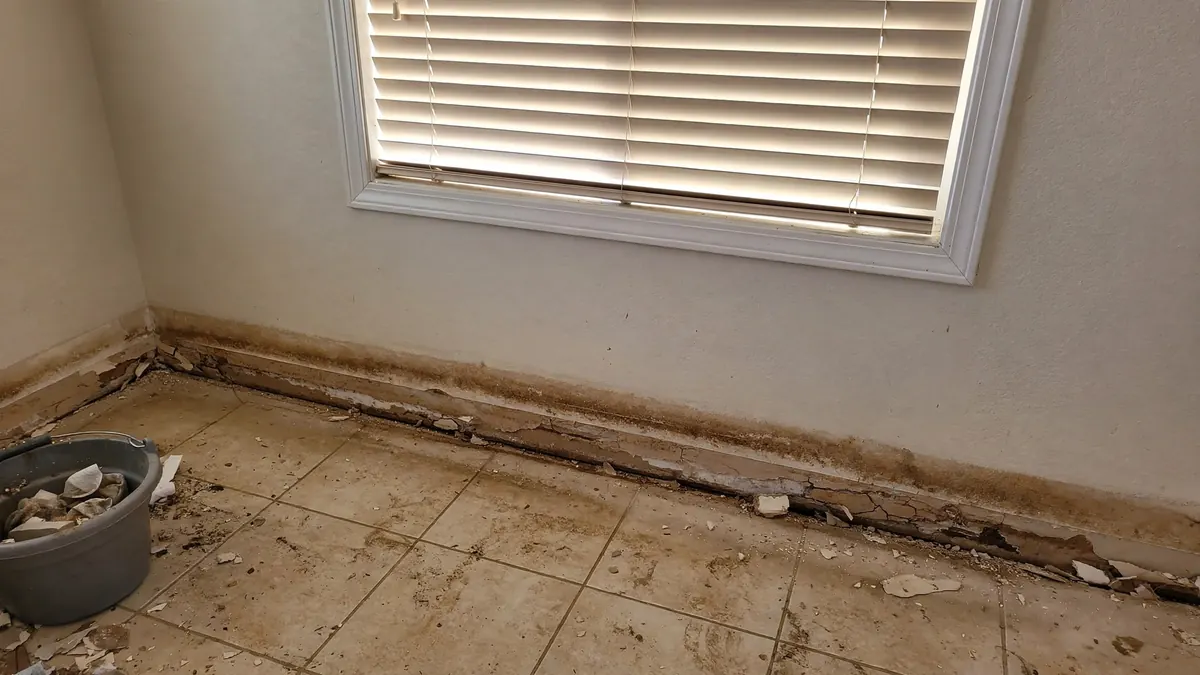
What decides whether drywall stays or goes?
Four things decide it: the category of the water, how long the board stayed wet, its physical condition, and what is behind it in the wall cavity. A crew looks at all four before cutting anything.
The water category
Clean water from a burst supply line, a leaking ice-maker line, or a failed water heater is Category 1. Drywall touched only by clean water is a drying job. Gray water from a washing machine drain or dishwasher is Category 2 and needs cleaning and judgment. Category 3 water, which includes sewage and the muddy runoff that comes in under a door during a monsoon, contaminates porous material, and drywall is porous. That board comes out even if it would dry perfectly, because you cannot clean bacteria out of gypsum and paper.
Time
Clean water does not stay clean. It picks up whatever is in the carpet, the dust inside the wall, and the soil along the bottom plate, and summer heat in a closed-up Casa Grande house speeds that along. Drywall that has been wet for a few hours is in a very different position from drywall that has been wet since the weekend.
Condition of the board
Firm drywall with dry-looking paper can be saved. Board that has softened, swollen, or started to crumble has lost its structure and will not come back.
What is behind it
Interior walls in most homes here are empty cavities between studs, and those dry fairly well. Exterior walls hold insulation, and that changes the picture, which is covered below.
How can you tell if drywall is too damaged to keep?
Press on it. Drywall that gives under your thumb, feels mushy, or crumbles at the bottom edge is done. Peeling paper, sagging, swelling at the seams, and a musty smell are the other main signs.
- Softness. Push gently with your thumb a few inches above the floor and again higher up. Firm is good. Soft means the gypsum core has broken down.
- Crumbling at the base. When the bottom edge breaks off in chalky pieces or the baseboard nails pull through, that section needs to go.
- Paper bubbling or peeling. The facing has let go of the core. Even if it dries, it will not bond back, and paint over it will crack.
- A musty or earthy smell. That usually means growth has started inside the wall, on the back side of the paper where you cannot see it.
- Dark spots or fuzz. Visible mold on drywall means removal of that area and a proper cleanup. Our page on mold remediation explains how that work is contained.
Paint and wall finish can fool you. Satin or semi-gloss paint, and especially vinyl wallpaper, slow drying through the face of the board. The surface may feel dry while the gypsum behind it is still wet. A moisture meter reading is the only reliable answer.

What about the insulation behind the drywall?
Wet insulation usually comes out. Fiberglass batts hold water against the back of the drywall and the framing, flatten when soaked, and take a long time to dry inside a closed wall, so crews commonly remove the drywall on exterior walls just to get the insulation out.
In most newer Casa Grande homes, such as those in Villago, Mission Royale, or McCartney Ranch, exterior walls are wood-framed with stucco outside and batt insulation in the cavities. When water reaches the bottom of an exterior wall, the drywall might be dry enough to keep, but the batt behind it is sitting in a damp pocket against the sill plate.
Some older homes in Coolidge and Eloy have block exterior walls with drywall over thin furring strips. The block absorbs water and releases it slowly, so that drywall can read wet longer than you would expect.
Interior partition walls usually have no insulation, so air can be pushed into the cavity to dry it without opening the wall.
What is a flood cut, and how high does it go?
A flood cut is a straight, level cut along the wall above the highest wet point, removing everything below it. The height is set by moisture readings, not by where the water stain stops, because water wicks higher in drywall than the visible mark.
The crew takes readings up the wall until they reach dry board, then cuts a margin above that. Many cuts land at a height that lines up with standard sheet sizes, since a sheet hung horizontally is four feet tall, and cutting at two or four feet makes the patch easier to hang and finish. That is a convenience, not a rule. The readings decide the minimum.
Flood cuts make sense when:
- The water was Category 2 or 3.
- Insulation behind the board is wet.
- The lower board is soft or moldy.
- The wall has to be opened anyway to reach a leaking pipe or fitting.
A cut wall dries quickly once it is open, because the studs and bottom plate are exposed to moving, dehumidified air. The rebuild is a strip of new drywall, tape, and a texture matched to the knockdown or orange peel finish common here.
Walls that need special handling
The wall between an attached garage and the house is usually fire-rated drywall. If any of it is cut out, the patch should use the same rated board and be finished properly so the wall still does its job.
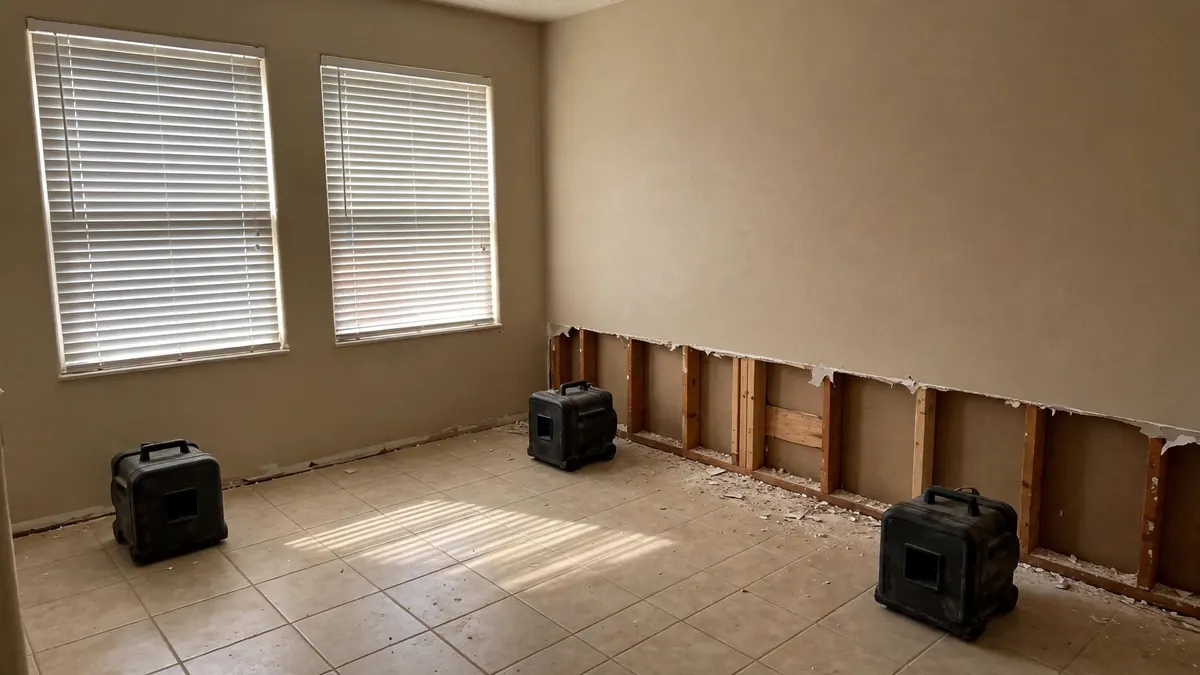
How do crews dry drywall in place?
They take the baseboard off, open small holes near the floor if needed, and push dry air into the wall cavity while dehumidifiers pull moisture out of the room. Readings are taken at the same marked spots each day until the board matches the dry standard.
- Map the wet area. A thermal camera shows cool patches where water is evaporating, and a moisture meter confirms each one. Pin meters push two small probes into the gypsum and give a direct reading.
- Set the target. The crew reads drywall in a room that never got wet. That number becomes the goal for the wet walls.
- Remove the baseboard. Baseboard traps water against the bottom of the wall, and pulling it exposes the edge of the drywall and the tack strip area.
- Open the cavity if needed. Small holes drilled low in the wall, hidden behind where the baseboard sits, let a cavity drying system force air between the studs.
- Run air movers and dehumidifiers. Air movers aimed along the wall speed evaporation, and the dehumidifier removes that moisture from the room. The mechanics are covered on our structural drying page.
- Log readings daily. The same spots are measured every visit and recorded. When the readings hit the target and stay there, the wall is dry.
Drywall itself often dries within a few days with proper equipment. Walls on a wet slab can take longer, because the concrete keeps feeding moisture into the bottom of the board until the slab dries too.
When is wet ceiling drywall a safety problem?
A ceiling that sags, bulges, or holds a bubble of water is a hazard and should be treated as one before anything else. Wet gypsum is heavy, and a soaked section can drop without warning, along with whatever water is sitting on top of it.
- Keep people and pets out from under it.
- Turn off power to light fixtures or fans in that ceiling if you can do it safely at the breaker.
- Put a tarp and bucket below it.
Ceiling drywall that got wet and sagged even slightly almost always comes out, because it will not return to flat and the fasteners have usually pulled. Ceiling water here often comes from a roof leak during a monsoon or an AC condensate pan overflowing in the attic. Our page on ceiling water damage covers those sources and what happens to the insulation above.
What should you do with wet drywall right now?
Stop the water, get standing water off the floor, and keep the wall exposed to air while you arrange proper drying. Do not paint, patch, or close anything up yet.
- Shut off the water at the fixture or the main.
- Photograph the wall, the stain line, and the source before anything is removed.
- Run the AC to keep the house cool and dry, and close the windows during monsoon humidity.
- Note what kind of water it was and when it started, which matters for both the drywall decision and your insurance claim.
- Have the wall measured with a moisture meter before anyone decides to keep or cut it.
If the drywall is soft, the water was dirty, or you cannot tell how far it spread, a local restoration crew can take readings and tell you what can stay. Call (520) 380-1551, a 24/7 line that connects you with restoration companies in Casa Grande and nearby Pinal County towns.
Questions homeowners ask
How long can drywall stay wet before it has to be replaced?
Can I dry wet drywall with fans and a space heater?
Does wet drywall always grow mold?
Is it safe to paint over a water stain on drywall?
More from the blog
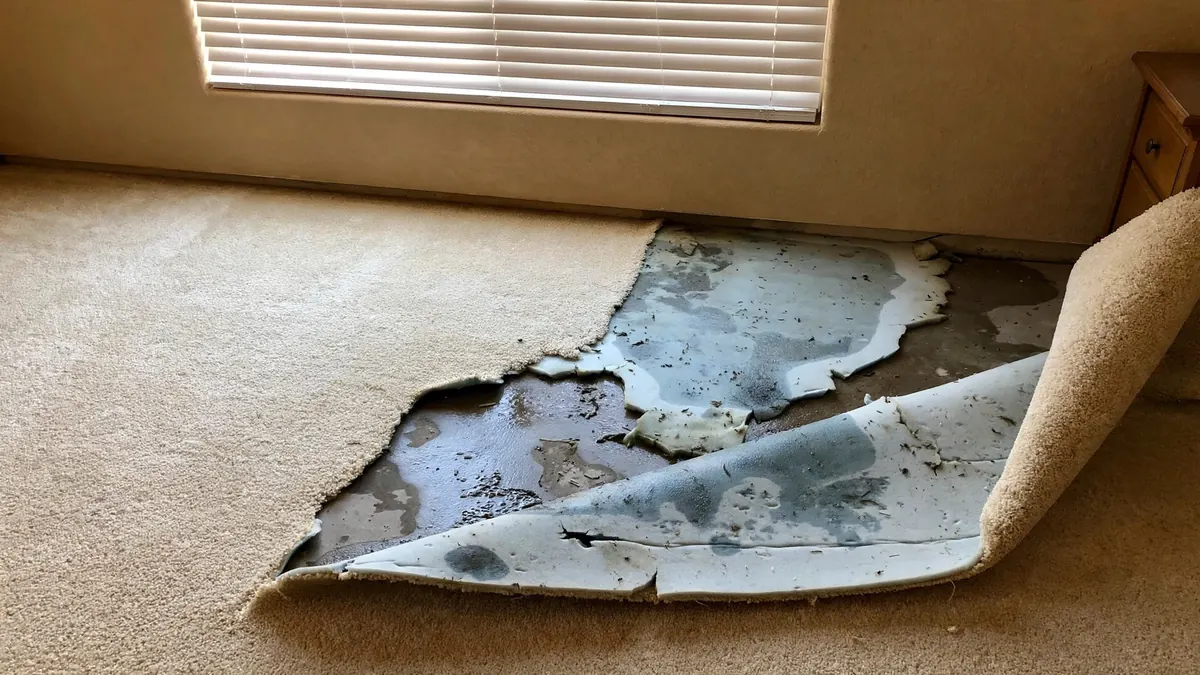 Drying & MoldWet carpet: when it can be saved and when the pad must goWet carpet can usually be saved if the water was clean and extraction starts within a day or two, before the backing separates. The pad underneath...
 Drying & MoldHow fast mold grows after a leak in Arizona heatMold can start growing within 24 to 48 hours once drywall, wood, carpet pad, or insulation stays wet, even in dry Arizona. Visible spots and a...
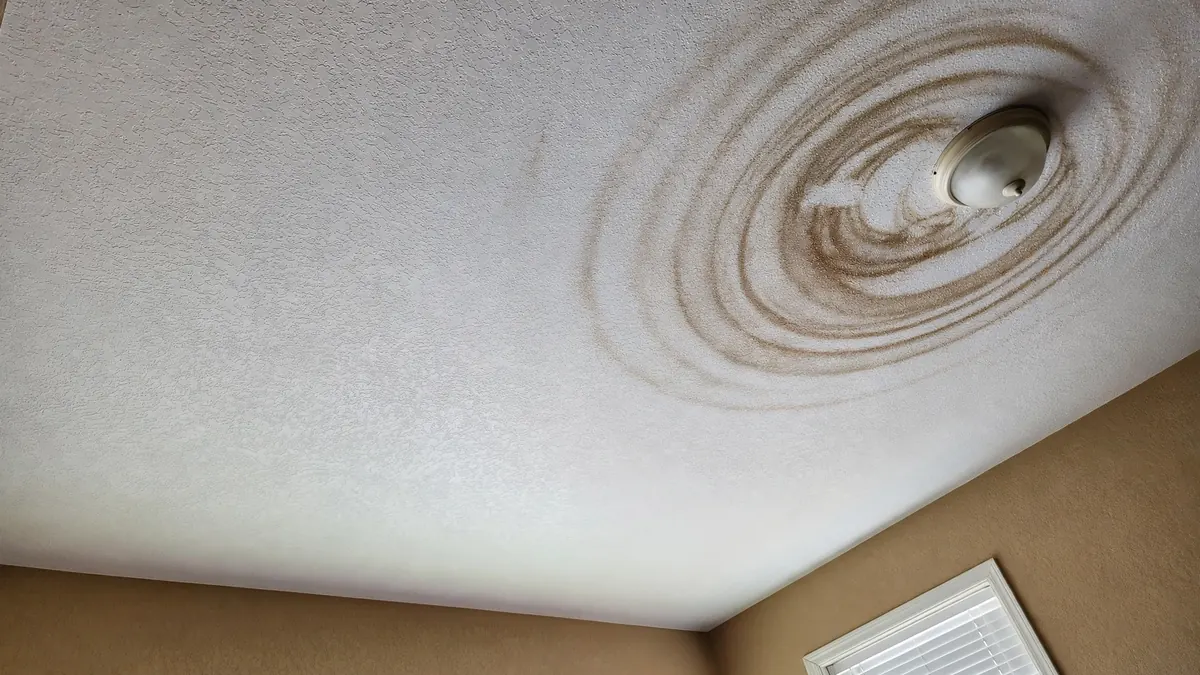 Drying & MoldCeiling water stain: what it means and when to worryA ceiling water stain means water soaked through the drywall from above and dried, leaving a ring. Find out first if it is active: a stain...
Need help with damage right now?
Speak to a local restoration specialist on the 24/7 line, any time of day.
Call (520) 380-1551When you call: enter your ZIP code, then press 1 for water damage, 2 for fire damage or 4 for sewage backup.