Home › Blog › Wet carpet: when it can be saved and when the pad must go
Wet carpet: when it can be saved and when the pad must go
Wet carpet can usually be saved if the water was clean and extraction starts within a day or two, before the backing separates. The pad underneath is usually replaced because it holds water and dries slowly. Carpet and pad soaked by sewage or flood water are removed. See wet carpet extraction.
In this article
- Can wet carpet be saved?
- How does the type of water change the answer?
- How long can carpet stay wet before it is ruined?
- What is carpet delamination, and how do you check for it?
- Why does the carpet pad almost always get replaced?
- What does floating a carpet mean?
- What can go wrong after wet carpet dries?
- What should you do with wet carpet right now?
- Questions homeowners ask
Can wet carpet be saved?
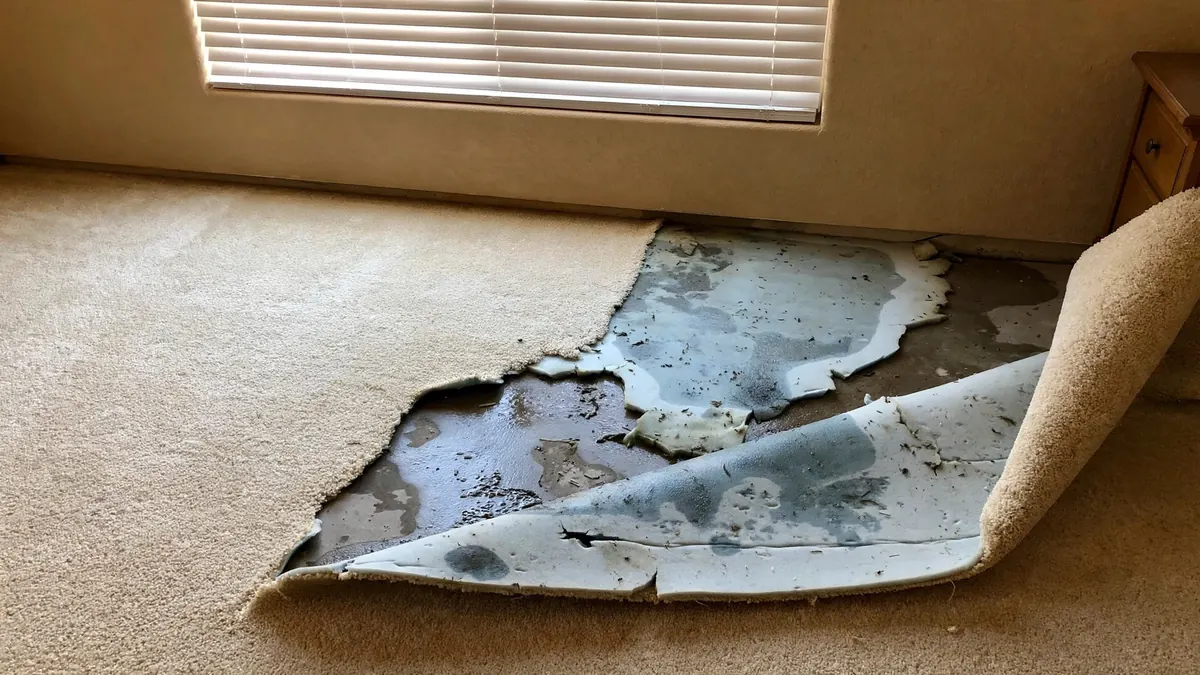
Wall-to-wall carpet soaked by clean water can usually be saved if the water is extracted and drying starts within a day or two. The pad underneath is a different story. It is cheap, it holds water like a sponge, and it is replaced in most wet carpet jobs even when the carpet itself stays.
So the useful way to think about it is as two separate decisions. The carpet is judged on the water category, how long it was wet, and whether the backing has separated. The pad is judged mostly on cost, because drying it fully in place takes longer than replacing it, and a pad that stays damp is where odor and mold start.
| Situation | Carpet | Pad |
|---|---|---|
| Clean water, caught within a day or two | Usually saved | Often replaced, sometimes dried |
| Clean water that sat for several days | Possible if the backing is intact and no odor | Replaced |
| Washing machine or dishwasher water | Sometimes saved after cleaning and disinfecting | Replaced |
| Toilet water with waste, sewage, or outdoor flood water | Removed | Removed |
| Backing separated, or odor returns after drying | Replaced | Replaced |
How does the type of water change the answer?
The water category is the first filter. Clean water leaves carpet salvageable, gray water makes it a judgment call, and contaminated water means the carpet and pad come out no matter how well they would dry.
- Category 1, clean water. A burst supply line, a leaking water heater, an ice-maker line, or a toilet tank. This is where carpet is most often saved.
- Category 2, gray water. Washing machine drain water, dishwasher water, or a toilet bowl overflow with no waste. The carpet may be kept after a thorough cleaning and antimicrobial treatment, but the pad goes.
- Category 3, contaminated water. Sewage, a toilet overflow with waste, or the muddy water that runs in under a door during a monsoon. Carpet fibers and backing trap bacteria that cleaning cannot reach, so both layers are removed and the slab is cleaned and sanitized. See sewage backup cleanup for how that work is handled.
Water also changes category on its own. Clean water that soaks into carpet picks up dust, pet dander, and whatever was tracked in, and in a Casa Grande summer the warmth inside a closed house helps bacteria along. Clean water left sitting for a couple of days can start to behave like gray water, which is one more reason extraction early matters more than anything you do afterward.
How long can carpet stay wet before it is ruined?
There is no exact hour, but carpet that is extracted within the first day or two has the best odds. Once it has been wet for more than two or three days, delamination, odor, and mold growth in the pad become much more likely.
A few things move that window:
- How much water. A wet edge along one wall is a smaller problem than a bedroom soaked to the middle.
- What is under it. Nearly every home in Casa Grande sits on a concrete slab, and concrete stays damp longer than the carpet above it. A wet slab keeps feeding moisture back into the pad.
- Temperature. A house closed up in July with the AC off, which happens with snowbird homes in Mission Royale and Robson Ranch, can turn a clean leak into a smelly one quickly.
- Carpet fiber. Most carpet here is nylon or polyester, which handles water reasonably well. Wool carpet is more prone to shrinking and staining when it gets wet.
What is carpet delamination, and how do you check for it?
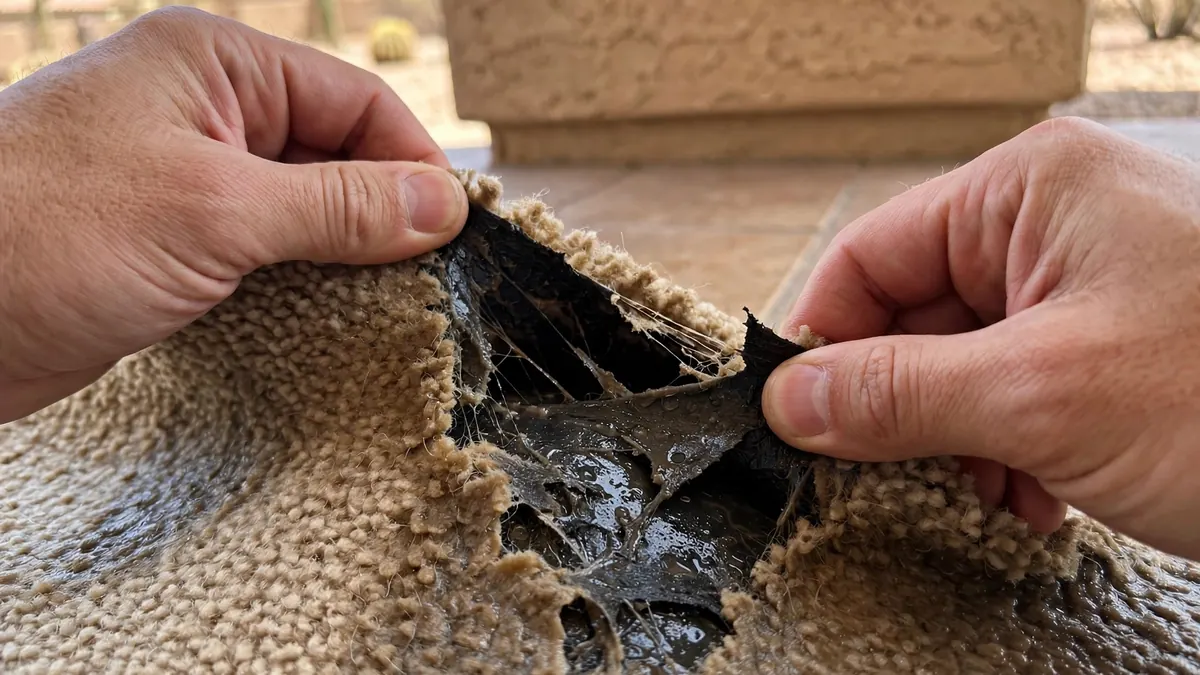
Delamination is when the carpet's two backing layers come apart because the latex glue between them has softened or broken down. A delaminated carpet will not lie flat again and is normally replaced.
Most residential carpet is built in layers. The yarn is stitched through a primary backing, then a coat of latex binds it to a secondary backing on the bottom. That latex is what holds the carpet together and gives it shape. When it stays wet, especially with foot traffic on top, the bond weakens and the layers slide apart.
To check, find a corner or an edge you can lift, such as inside a closet:
- Pull the carpet back gently from the tack strip.
- Pinch the bottom backing and try to peel it away from the top layer.
- If it separates easily or you see the woven backing loose from the yarn side, that section is delaminated.
- Look for bubbles or wrinkles on the top of the carpet that do not flatten when you press them.
Stay off wet carpet as much as you can. Walking on it pushes water deeper into the pad and works the backing layers against each other, which speeds up delamination. If you have to cross the room, lay down a path of old towels.
Why does the carpet pad almost always get replaced?
Because pad holds far more water than carpet, dries much more slowly, and costs much less to replace than it does to dry properly. Replacing it is usually the cheaper and safer choice.
The most common pad in homes here is rebond, the multicolored foam made from bonded scraps. It is open-celled, so water fills every space in it. Even after commercial extraction, the pad stays wet much longer than the carpet face, and it is pressed against a slab that is also wet. That combination is where the musty smell comes from a week after a leak.
There are exceptions. A small clean-water leak caught quickly, with weighted extraction that squeezes most of the water out, may leave a pad that a crew can dry in place. That decision should come from moisture readings, not from how the pad feels to your hand. On anything gray or contaminated, the pad is removed.
Pulling the pad also lets the crew see the slab. Moisture readings on the concrete, stains along the tack strip, and a warm spot that points to a slab leak all show up once the pad is out. Our page on water extraction and wet carpet drying covers the extraction equipment itself.
What does floating a carpet mean?
Floating is a drying method where the carpet is lifted off the tack strip and air movers blow underneath it, so it rises like a bubble and dries from both sides. It is used on clean-water losses where the carpet is worth saving.
- Extraction first. Weighted extraction tools remove as much water as possible from the carpet and pad.
- Release the edge. The carpet is pulled off the tack strip along one or two walls, leaving the rest attached.
- Remove or keep the pad. Usually the wet pad is pulled out at this stage, and the carpet is floated over the bare slab.
- Set air movers. Air movers are aimed under the lifted edge, filling the space so the carpet floats above the floor.
- Run dehumidifiers. They pull the evaporated water out of the room air, so it does not settle back into the carpet or drywall. This is the same structural drying setup used on walls and slabs.
- Take daily readings. The crew checks the carpet, the slab, and the lower drywall until they reach the dry standard.
- Reinstall. New pad goes down, and the carpet is stretched back onto the tack strip.
Floating is not right for every job. If the water was contaminated, or the backing has already separated, there is nothing worth floating. It also does not work well on carpet glued directly to the slab, which you sometimes see in older homes and commercial spaces.

What can go wrong after wet carpet dries?
The most common problems are stains wicking up, shrinkage, ripples, and odor that returns. Most of these trace back to slow drying or skipping the pad replacement.
- Stains that rise to the surface. As carpet dries from the top, water moves up through the fibers and carries dirt and residue with it. That can leave brown or yellow marks at the tips, a problem cleaners call browning. Fast, even drying reduces it.
- Shrinkage and gaps. Carpet can shrink slightly as it dries, pulling away from a wall or seam. It may need to be restretched.
- Ripples and wrinkles. Carpet that was stretched while wet, or a backing that weakened, can ripple once dry. Restretching often fixes it if the backing is intact.
- Odor that keeps coming back. A smell that shows up again on hot afternoons usually means the pad, the slab, or the bottom of the drywall is still damp. That needs moisture readings, not air freshener.
- Tack strip damage. Wood tack strip that stayed wet can rot or rust its pins. It is inexpensive and is often replaced when the pad comes out.
What should you do with wet carpet right now?
Stop the water, get as much out as you can, keep foot traffic off the carpet, and get a professional extraction scheduled before it sits overnight if possible.
- Shut off the water at the fixture or the main.
- Photograph the wet area, the source, and any damaged furniture for your insurance claim.
- Move furniture off the carpet, or put foil or plastic under the legs to prevent rust and stain transfer.
- Pick up rugs, shoes, and anything stored on the floor in closets.
- Run the AC and close the windows if it is humid outside.
- Use a wet vac for standing water, knowing it will not reach the pad.
- Note the type of water and when it started, which helps decide what can be kept.
Prices are set by the restoration company and vary with the job, but extraction and drying for a room or two of clean water caught early is often in the range of about $400 to $1,500, with pad replacement and larger areas adding to it. If you have carpet that is soaked or a smell you cannot explain, call (520) 380-1551. The line is open 24/7 and connects you with local restoration crews in Casa Grande and nearby Pinal County.
Questions homeowners ask
Can I dry wet carpet myself with a shop vac and fans?
How do I know if my carpet pad is still wet?
Will insurance pay to replace wet carpet?
Does wet carpet smell even after it dries?
More from the blog
 Drying & MoldCan wet drywall be saved?Wet drywall can usually be saved if it was soaked by clean water, drying starts within a day or two, and the board is still firm....
 Drying & MoldHow fast mold grows after a leak in Arizona heatMold can start growing within 24 to 48 hours once drywall, wood, carpet pad, or insulation stays wet, even in dry Arizona. Visible spots and a...
 Drying & MoldCeiling water stain: what it means and when to worryA ceiling water stain means water soaked through the drywall from above and dried, leaving a ring. Find out first if it is active: a stain...
Need help with damage right now?
Speak to a local restoration specialist on the 24/7 line, any time of day.
Call (520) 380-1551When you call: enter your ZIP code, then press 1 for water damage, 2 for fire damage or 4 for sewage backup.