Home › Blog › How fast mold grows after a leak in Arizona heat
How fast mold grows after a leak in Arizona heat
Mold can start growing within 24 to 48 hours once drywall, wood, carpet pad, or insulation stays wet, even in dry Arizona. Visible spots and a musty smell often take days to a couple of weeks to appear. Drying wet materials fully within that first window is the best prevention. See mold remediation.
In this article
- How fast does mold grow after a leak?
- What does mold need to start growing?
- What happens hour by hour and day by day after a leak?
- Doesn't the dry desert air prevent mold?
- How do AC, evaporative coolers and monsoon humidity change the risk?
- Where does mold hide in Casa Grande homes?
- Why do slow leaks cause more mold than big ones?
- How do you stop mold from starting after a leak?
- When should you call for help?
- Questions homeowners ask
How fast does mold grow after a leak?
Mold can begin growing within 24 to 48 hours once a material such as drywall, wood, carpet pad, or insulation stays wet. You usually will not see it that soon. Visible spots and a musty smell tend to show up days to a couple of weeks later, by which point the growth behind the surface has been going for a while.
That 24 to 48 hour window is the same one the EPA uses in its general guidance: dry wet building materials and furnishings within that time to prevent mold. It is not a countdown to disaster. It is the point where drying stops being a simple cleanup and starts being a race. Clean water on tile that gets mopped up in an hour is not a mold problem. Clean water that soaked into the bottom of a wall on Friday and is still there on Monday very likely is.
Arizona heat does not slow this down. If anything, the warm, closed-up conditions inside a house in summer suit mold well, as long as there is water in the material.

What does mold need to start growing?
Mold needs four things: spores, food, a comfortable temperature, and moisture. The first three are present in nearly every home all the time, so moisture is the only one you can realistically control.
- Spores. Mold spores are in all indoor and outdoor air, everywhere, including the desert. Dust storms in the monsoon move a lot of them around. You cannot keep them out of a house.
- Food. Mold eats organic material. The paper facing on drywall, wood framing, the jute or latex in carpet backing, cardboard boxes, and the dust that collects in wall cavities and on insulation all qualify.
- Temperature. Most common indoor molds grow well at the same temperatures people find comfortable. A home kept at 78°F inside while it is 112°F outside is right in the range.
- Moisture. This is the trigger. Mold needs water in or on the material for long enough to germinate and spread. Take that away and growth stops.
Air movement and light matter too, in the opposite direction from what you might hope. Mold does best in still, dark spaces: the inside of a wall, under a sink, under carpet pad, above a ceiling. Those are also the places where water hides longest.
What happens hour by hour and day by day after a leak?
The timeline depends on how much water, what it soaked into, and how warm the space is, but the general sequence is consistent. Here is how it usually plays out for a clean-water leak in a typical slab home.
| Time since the leak | What is happening | What you can still do |
|---|---|---|
| First few hours | Water spreads across the floor, wicks into the bottom of drywall and baseboards, and soaks into carpet pad | Stop the source, remove standing water, start drying. Mold is not a factor yet. |
| Roughly 24 to 48 hours | Spores on wet surfaces can start to germinate, especially on paper facing and in the pad. Wood and drywall swell. | Professional drying in this window usually prevents growth. Materials are often still salvageable. |
| Several days | Early growth on the back of drywall, under baseboards, and in the pad. Musty odor may start. Clean water may have degraded toward gray water. | Some materials may need to be removed. Containment may be needed before cutting. |
| One to a few weeks | Visible spots or fuzz may appear on walls, baseboards, and cabinet bases. Odor is noticeable. | This is usually a mold remediation job, with removal of affected porous materials. |
| Months (slow leak) | Growth spread through the wall cavity or under flooring, sometimes with rot in wood | Larger removal, repair of framing or subfloor, and a harder insurance conversation. |
The table assumes the water stays put. A leak that keeps running feeds the growth continually, which is why slow leaks, covered below, are often worse than a single big spill.
Doesn't the dry desert air prevent mold?
No. Dry outdoor air helps surfaces you can see dry quickly, but it does almost nothing for water trapped inside a wall, under tile, or under carpet pad. Mold grows in the material, not in the air, and inside a closed cavity the conditions can stay damp for weeks no matter how dry it is outside.
This is probably the most common belief that leads to mold in Arizona homes. Someone has a dishwasher leak, mops the floor, sees it dry by evening, and assumes the desert took care of the rest. Meanwhile, water ran under the cabinet toe-kick and into the bottom of the wall, where there is no airflow and no sun.
A few reasons the dry climate is less protective than it seems:
- Slabs hold water. Almost every home in Casa Grande sits on concrete, often a post-tension slab with tile on top. Concrete soaks up water and releases it slowly, keeping the bottom of the walls and the carpet pad above it damp.
- Tile hides moisture. Water slips through grout lines and spreads under tile, sometimes into the next room. The tile surface feels dry while the slab below is wet.
- Houses are sealed. In summer, homes are closed tight to keep the heat out. The inside of the house is its own climate, and the outdoor humidity number on your phone does not describe it.
- Monsoon season adds moisture. From mid-June through September, outdoor humidity rises sharply during and after storms, and the same storms are when roof and door leaks happen.
How do AC, evaporative coolers and monsoon humidity change the risk?
Refrigerated air conditioning dries indoor air as it cools, which helps. Evaporative coolers do the opposite, adding moisture to the house, and AC systems themselves produce water that can leak. Each of these changes how quickly a small problem turns into mold.
Refrigerated AC
A central AC pulls moisture out of the air as it cools, and that water drains away through the condensate line. In a house with the AC running, indoor humidity is usually low, which helps exposed surfaces dry. The catch is the condensate itself. A clogged condensate line or a cracked pan under an air handler in the attic or a hall closet can drip all summer, soaking a ceiling or closet floor out of sight. See our page on AC condensation water damage for how those leaks happen.
Evaporative coolers
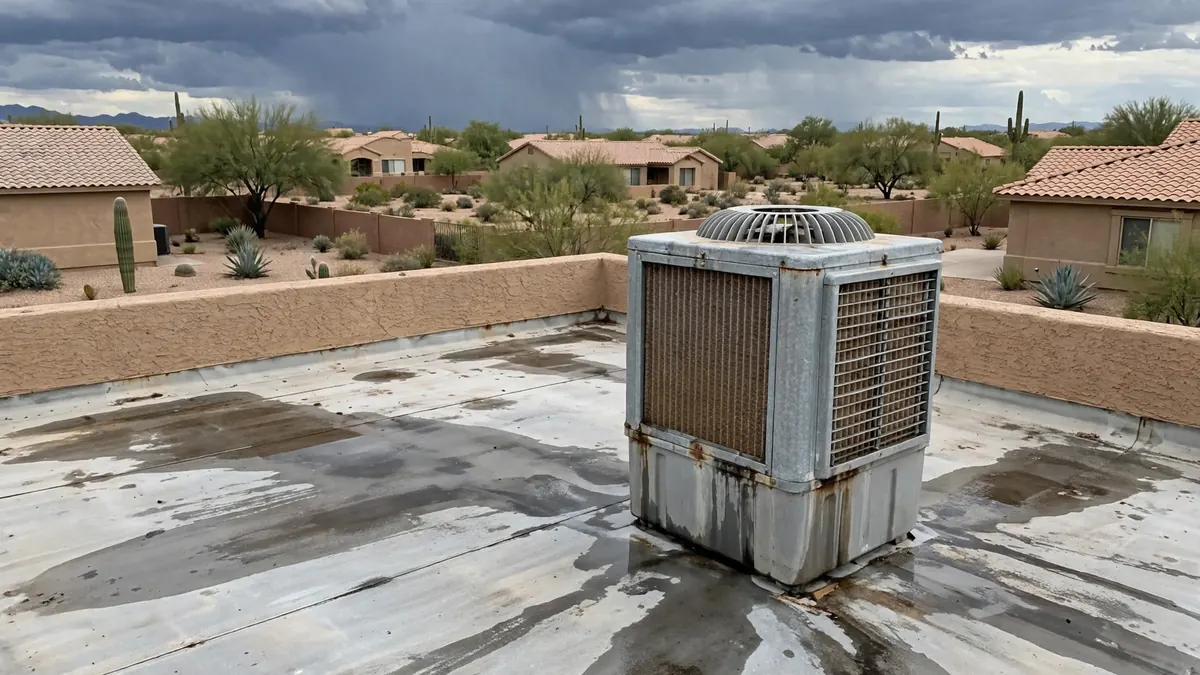
Many older homes in Casa Grande, Coolidge, and Eloy still use evaporative coolers, at least for part of the year. They cool by adding water to the air, so indoor humidity runs much higher than in a refrigerated home. That makes wet materials dry more slowly. The coolers themselves sit on roofs or alongside the house, and a leaking pan, overflowing float valve, or worn roof jack can send water into the ceiling below.
Monsoon weeks
During the monsoon, outdoor air is far more humid than the rest of the year, and homes with coolers become noticeably damper inside. Drying equipment has to work harder, and a leak that would dry in a few days in April may take longer in August. Cold supply ducts in a hot attic can also sweat on humid days.
Vacant and seasonal homes
Snowbird homes in Mission Royale, Robson Ranch, and Arizona City are often left with the AC set high or off for the summer. If a leak starts in June, there is nobody to notice it, no airflow, and plenty of heat. Those are the conditions where mold spreads furthest before anyone sees it.
The EPA's general guidance is to keep indoor relative humidity below 60 percent, ideally between 30 and 50 percent. An inexpensive digital hygrometer from a hardware store lets you check. If your home reads above that range for long stretches, especially with a cooler running, look for a moisture source.
Where does mold hide in Casa Grande homes?
Mold grows where water collects and air does not move: inside walls, under floors, above ceilings, and inside cabinets. The places below are where it most often starts in homes around here.
| Location | Usual water source | What to check |
|---|---|---|
| Sink and dishwasher cabinets | Drain fittings, supply lines, dishwasher hoses | Swollen cabinet floor, stains, a musty smell when you open the door |
| Behind the refrigerator | Ice-maker supply line | Wet floor or warped baseboard when you slide it out |
| AC closet or attic air handler | Clogged condensate line, rusted drain pan | Water in the pan, stains on the closet floor or ceiling below |
| Ceilings under a cooler or flat roof | Cooler pan leaks, clogged scuppers, cracked roof coating | Brown rings, soft spots, peeling paint near vents |
| Bottom of walls and baseboards | Slab leaks, toilet and water heater leaks | Paint bubbling, baseboard swelling, a warm floor spot |
| Under carpet pad | Any leak that reached carpet | Odor in the room, damp pad when you lift a corner |
| Behind shower and tub walls | Failed grout, valve or drain leaks | Loose tile, stains on the other side of the wall |
| Laundry area | Washer hoses, drain box overflow | Stains behind the washer, soft drywall at the floor |
| Garage water heater closet | Tank, fittings, relief valve discharge | Rust, wet base of the drywall, crusted mineral scale |
For a broader list of the warning signs that point to water you cannot see, see our guide to the signs of hidden water damage.
Why do slow leaks cause more mold than big ones?
Because nobody notices them. A burst pipe floods a room and gets dealt with that day. A drip under a sink or a weeping slab line can run for weeks or months, keeping the same materials wet the whole time, which is exactly what mold needs.
Slow leaks also tend to sit in the least visible spots: behind the dishwasher, inside a wall cavity, under the slab, or in the attic pan. By the time a stain or smell shows up, the material around the leak has been wet long enough for growth to spread well past the area you can see.
There is an insurance side to this as well. Most standard homeowners policies cover sudden and accidental water damage, but they commonly exclude damage from a leak that went on for a long time, and many cap or limit mold coverage. Mold that grew because a known leak was left alone is a common reason for denied claims. Check your declarations page and the mold language in your policy, and keep any records that show when you found the leak and when drying started.
How do you stop mold from starting after a leak?
Dry everything that got wet, fully and quickly, and confirm it with moisture readings. Mold prevention after a leak is really just good drying.
- Stop the water. Close the fixture valve or the main shutoff. A leak that keeps running defeats any drying.
- Remove standing water. Mop, towel, or wet vac it up right away, including under cabinets and behind appliances.
- Pull wet items off the floor. Rugs, boxes, shoes, and anything stored in closets or under sinks.
- Keep the house cool and dry. Run refrigerated AC if you have it. Turn off an evaporative cooler while you dry the house, since it adds moisture.
- Open up hidden spaces. Open sink cabinet doors, slide appliances out, and pull baseboards that are wet so air can reach the wall.
- Measure, do not guess. A surface that feels dry can still be wet inside. Moisture meters show what is actually happening in drywall, wood, and the slab.
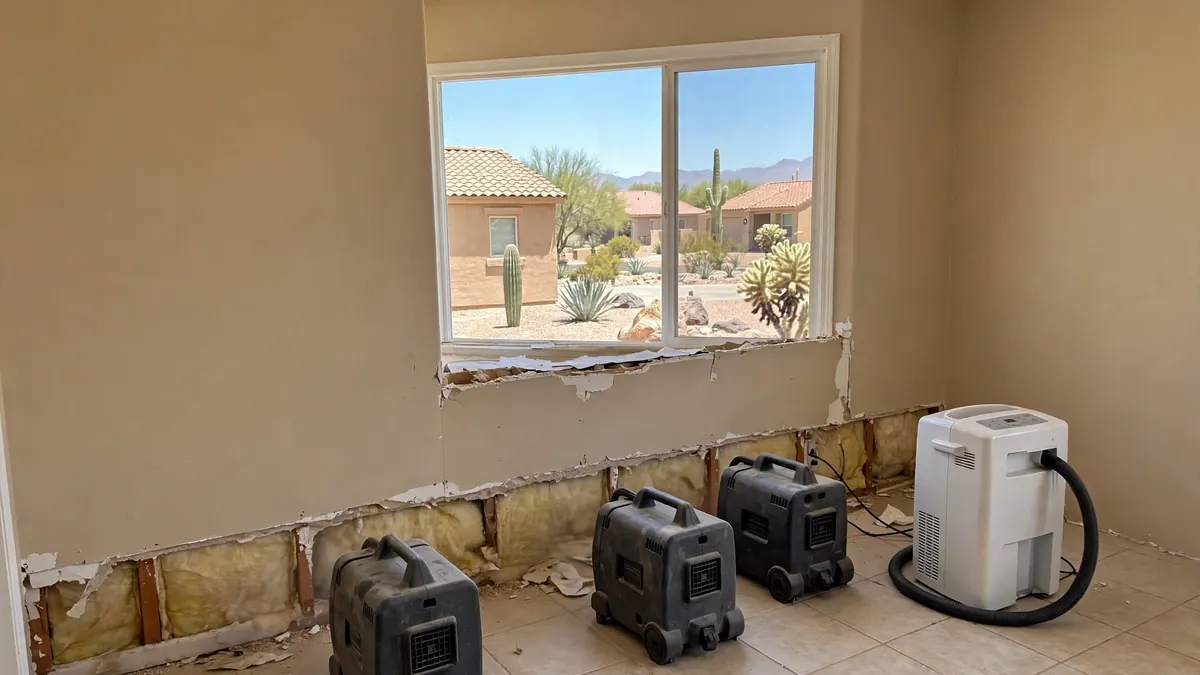
- Dry with dehumidification. Fans alone move moisture into the room air. Commercial dehumidifiers remove it. That combination is what a restoration crew sets up during water damage restoration.
- Do not seal it up wet. No paint, caulk, new baseboard, or new flooring until readings are back to normal.
- Watch it afterward. Check the area again a few weeks later for odor, stains, or swelling, especially after a hot spell.
Bleach is not a prevention step. It does not reach inside porous materials, it adds water, and on drywall it can leave the growth behind the paper untouched.
When should you call for help?
Call for professional drying if water soaked into walls, carpet, or under flooring, if the area was wet for more than a day, or if you cannot tell how far it spread. Call for mold remediation if you see growth larger than a small patch or smell mustiness you cannot trace.
- The water came from a slab leak, a water heater, an AC pan, or a roof or cooler leak where you cannot see the full extent.
- Baseboards are swelling, paint is bubbling, or tile sounds hollow.
- The leak happened in a vacant or seasonal home and nobody knows how long it ran.
- Someone in the house has asthma, allergies, or a weaker immune system.
- The water was gray or contaminated, such as washer drain water, toilet overflow, or storm runoff.
If you have a leak now or a musty smell you cannot explain, call (520) 380-1551. The line is open 24/7 and connects you with local restoration crews in Casa Grande and nearby towns in Pinal County. Prices are set by each restoration company and vary with the job.
Questions homeowners ask
Can mold grow in 24 hours?
Does Arizona heat kill mold?
How long after a leak will I smell mold?
Will a dehumidifier prevent mold after a leak?
Is mold after a leak covered by insurance?
More from the blog
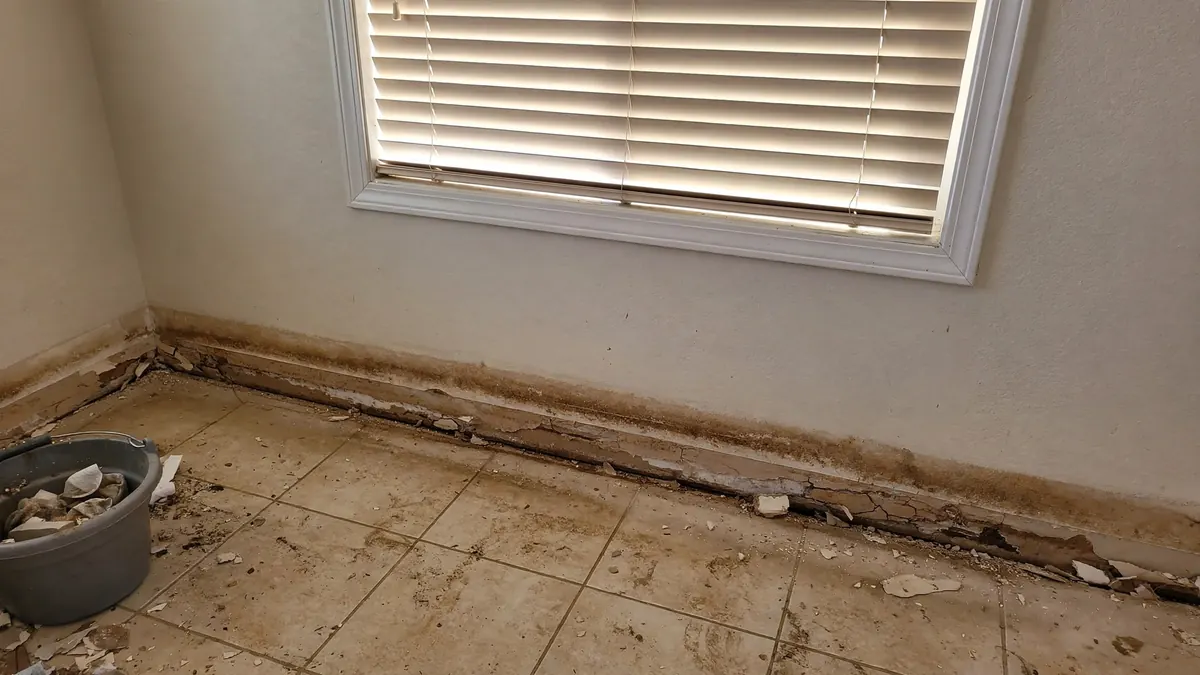 Drying & MoldCan wet drywall be saved?Wet drywall can usually be saved if it was soaked by clean water, drying starts within a day or two, and the board is still firm....
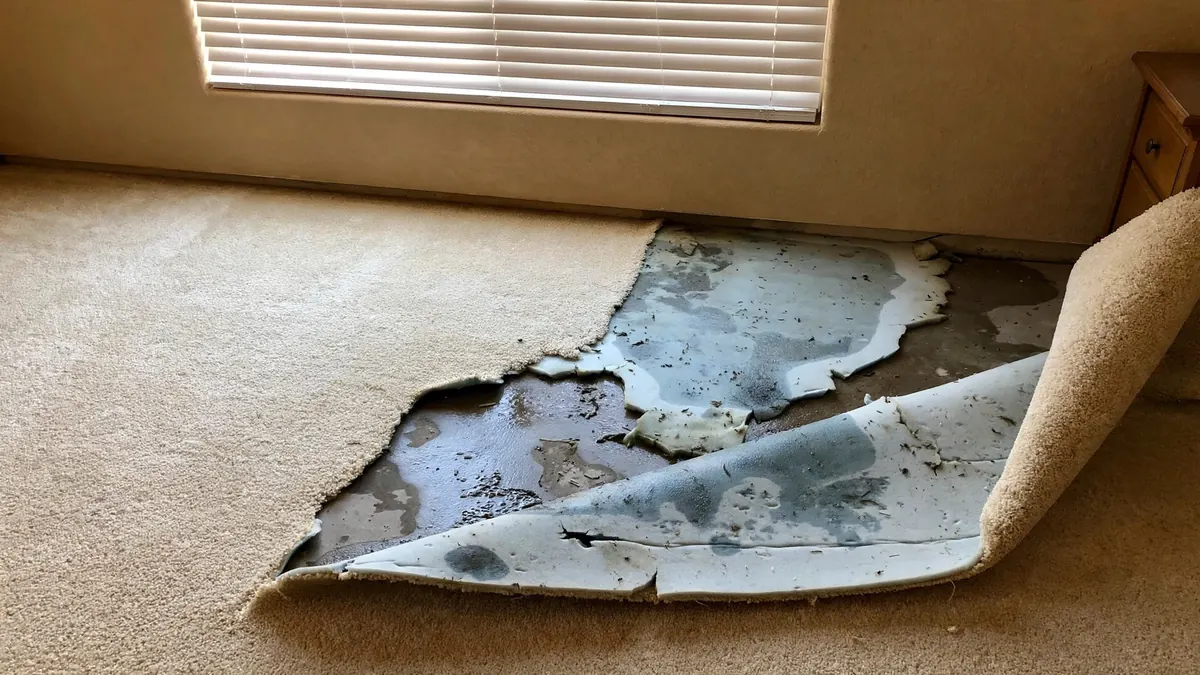 Drying & MoldWet carpet: when it can be saved and when the pad must goWet carpet can usually be saved if the water was clean and extraction starts within a day or two, before the backing separates. The pad underneath...
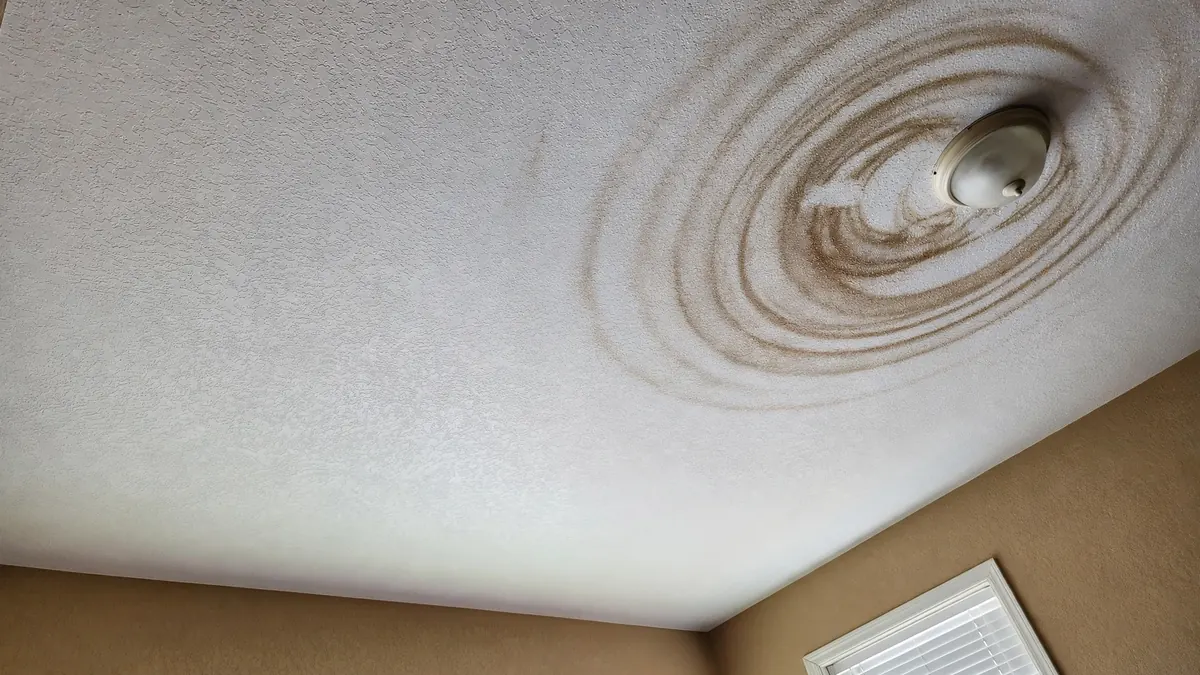 Drying & MoldCeiling water stain: what it means and when to worryA ceiling water stain means water soaked through the drywall from above and dried, leaving a ring. Find out first if it is active: a stain...
Need help with damage right now?
Speak to a local restoration specialist on the 24/7 line, any time of day.
Call (520) 380-1551When you call: enter your ZIP code, then press 1 for water damage, 2 for fire damage or 4 for sewage backup.