Home › Blog › Attic water damage in Arizona summers
Attic water damage in Arizona summers
Attic water damage in Arizona summers usually comes from an AC air handler or its condensate drain, monsoon roof leaks, a rooftop cooler, or water lines in the attic. Heat dries the surface but leaves insulation, drywall and framing wet, so soaked materials are removed and the attic is dried with dehumidifiers. See roof leak water damage.
In this article
- What causes attic water damage in an Arizona summer?
- Doesn't Arizona attic heat dry everything out on its own?
- Why are attic air handlers such a common source?
- How do water lines in the attic fail?
- How do you check your attic safely in summer?
- Can wet attic insulation be saved?
- What does drying an attic involve?
- Will insurance cover attic water damage?
- How can you prevent attic water damage?
- Questions homeowners ask
What causes attic water damage in an Arizona summer?
In a Casa Grande summer, attic water usually comes from four places: the AC air handler and its condensate drain, the roof during monsoon storms, a rooftop evaporative cooler, and water lines that run through the attic. Most of it is slow and out of sight, so the first sign is often a stain on the ceiling below.
| Source | Where the water shows up | When it tends to happen |
|---|---|---|
| Air handler and condensate drain | Under or around the unit, in the secondary pan, on the ceiling below | Spring through fall, worst in humid monsoon weeks |
| Roof leak | Under valleys, around vents, skylights and flashing, along rafters | Monsoon storms, mid-June to end of September, plus winter rain |
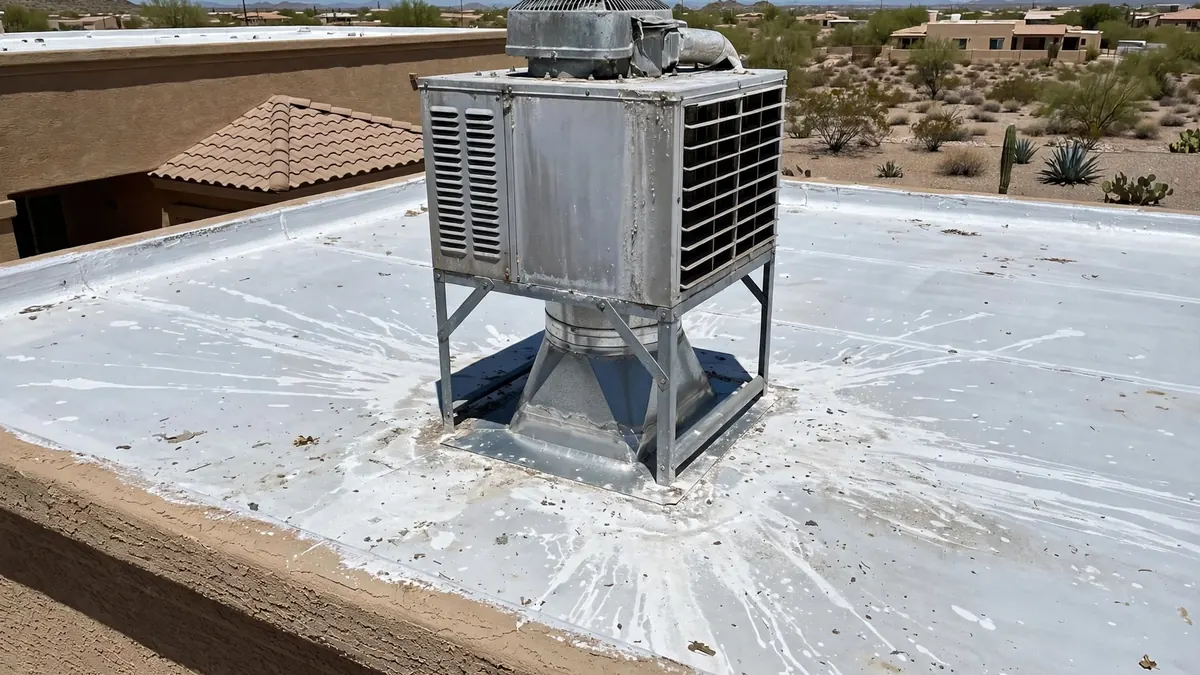
| Evaporative cooler | Around the cooler duct and roof jack | Cooling season, often mistaken for a storm leak |
| Water lines in the attic | Along the pipe path, often at fittings and bends | Any time, often in homes rerouted after a slab leak |
| Bath fan or dryer duct problems | Damp insulation near a loose or disconnected duct | Less common here, more likely in cooler months |
The site has separate pages for AC condensation leaks and roof leak water damage. This guide is about the attic itself: what heat does to wet materials, how to check it without getting hurt, and what has to come out.
Doesn't Arizona attic heat dry everything out on its own?
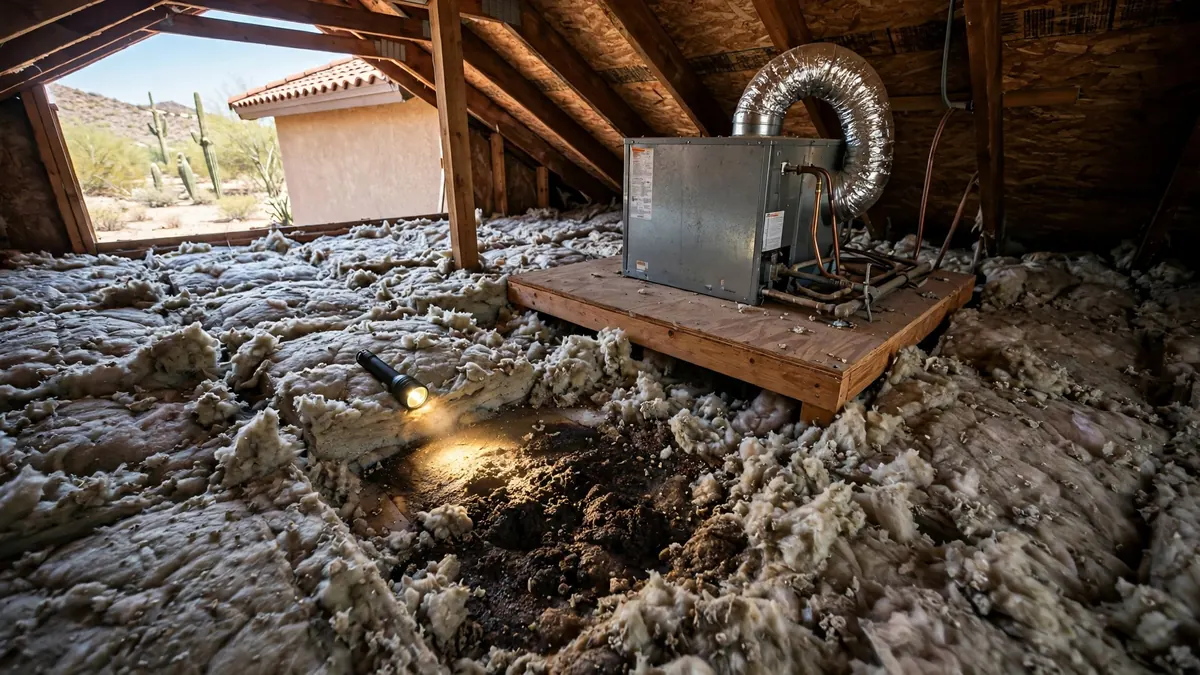
No. Attic heat dries the surface of wood and the top of the insulation, but it does not dry soaked insulation, the inside of framing or the drywall underneath. Heat with trapped moisture can actually make mold more likely, not less.
This is the most common reason attic damage gets worse here. A homeowner sees a wet spot, goes back two days later, finds the top of the insulation feels dry, and decides the problem solved itself. Meanwhile:
- Insulation holds water at the bottom. Water settles to where the insulation sits on the drywall. The top layer dries in the heat while the bottom stays wet against the ceiling.
- Drywall dries slowly from above. The paper and gypsum stay damp under a layer of insulation even on a hot day.
- Heat drives moisture into nearby wood. Water evaporating in a closed, hot space has to go somewhere. Without ventilation and dehumidification it raises humidity around the rafters, top plates and roof deck.
- Warm, damp and dark suits mold. Mold needs moisture and something to feed on. A hot attic supplies everything else.
The only reliable way to know is a moisture meter reading on the drywall, the framing and the deck, compared with a dry area of the same attic.
Why are attic air handlers such a common source?
Because many Casa Grande homes put the furnace and air handler in the attic, directly above finished ceilings, and they run most of the year. The unit makes water every hour it cools, and that water has to leave through a small drain line and stay out of the pans.
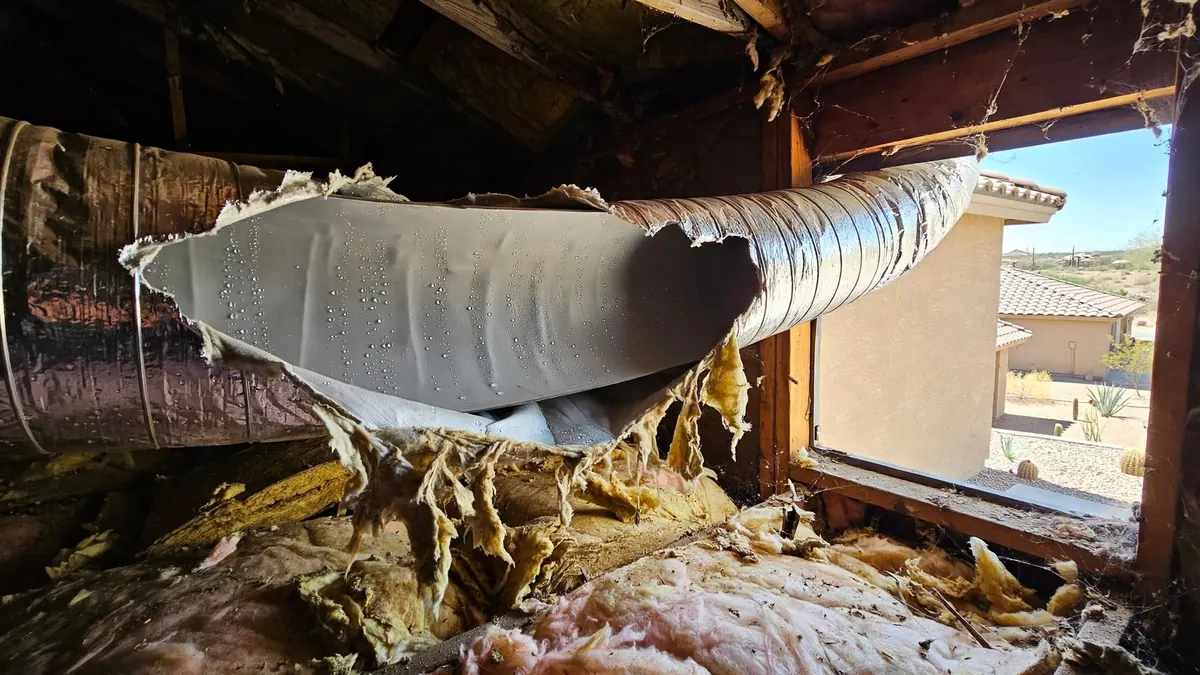
In an attic, the usual weak points are a rusted secondary pan, a condensate line that has sagged between supports and holds standing water, a float switch that sticks, and duct connections that sweat. Sweating ducts happen when cold supply air runs through a duct with torn or missing insulation in a hot, humid attic. The outside of the duct beads with water, which drips onto the insulation below. You see this most in monsoon weeks, when attic air is both hot and humid.
A dripping duct leaves a line of small wet spots along its path rather than one big stain. That pattern helps tell it apart from a roof leak.
How do water lines in the attic fail?
Water lines in an attic fail at fittings, at bends, and where they rub against framing or sit close to hot surfaces. A leak there lands right on the insulation and ceiling, and it runs under pressure until someone shuts the water off.
- Rerouted lines after a slab leak. When a plumber abandons a line under the slab and reroutes it overhead, the new PEX or copper often runs through the attic. That avoids breaking the slab, and it also puts a pressurized line above your ceiling.
- Fittings. Crimp and expansion fittings on PEX can leak if they were not made up correctly. Copper joints can develop pinholes over time.
- Heat and sunlight. PEX should be kept out of sunlight. Lines near a gable vent, a skylight well or an open attic hatch can get UV exposure they were not meant for.
- Water heaters. A few homes have a water heater in the attic. If yours does, it needs a pan and a drain line just like an air handler.
A pressurized line leak is a different emergency from a slow drip. If water is coming through the ceiling fast, shut off the main water valve first.
How do you check your attic safely in summer?
Go up early in the morning, step only on joists or a walkway, keep power off near any wet area, and do not stay up long. An Arizona attic in July can be far hotter than the outside air by late morning.
- Pick the time. Before about 8 or 9 in the morning in summer. Bring water and tell someone in the house you are going up.
- Turn off what is leaking. Turn the AC off at the thermostat, shut off a cooler, or close the main water valve, depending on the source.
- Watch the wiring. Water near a light fixture, a junction box or the air handler wiring is a shock risk. Turn off the breaker for that area before you touch anything wet, and if you are unsure, stay away from it.
- Stay on the framing. Never step between joists. Wet drywall gives way easily.
- Use a strong flashlight. Look at the underside of the roof deck, along rafters, around the air handler pan and along any pipe or duct.
- Feel the insulation. Press down gently with a gloved hand. Wet insulation feels heavy, cold and matted.
- Take photos of the source, the wet area and the pan or pipe before anything is moved.
If a ceiling is sagging or bulging, keep people and pets out from under it and do not walk the attic above it. A bulge can be holding pooled water, and it can come down without warning.
Can wet attic insulation be saved?
Usually not, if it was soaked. Wet blown-in insulation compresses, clumps and loses much of its insulating value, and it holds water against the drywall. Insulation that got a light, brief wetting from clean water and dried quickly can sometimes stay.
- Blown-in fiberglass mats down when wet and rarely fluffs back to its original depth.
- Cellulose, which is common in some homes, absorbs water, clumps and stays wet a long time. Soaked cellulose is nearly always removed.
- Batts sag and hold water in the paper or foil facing.
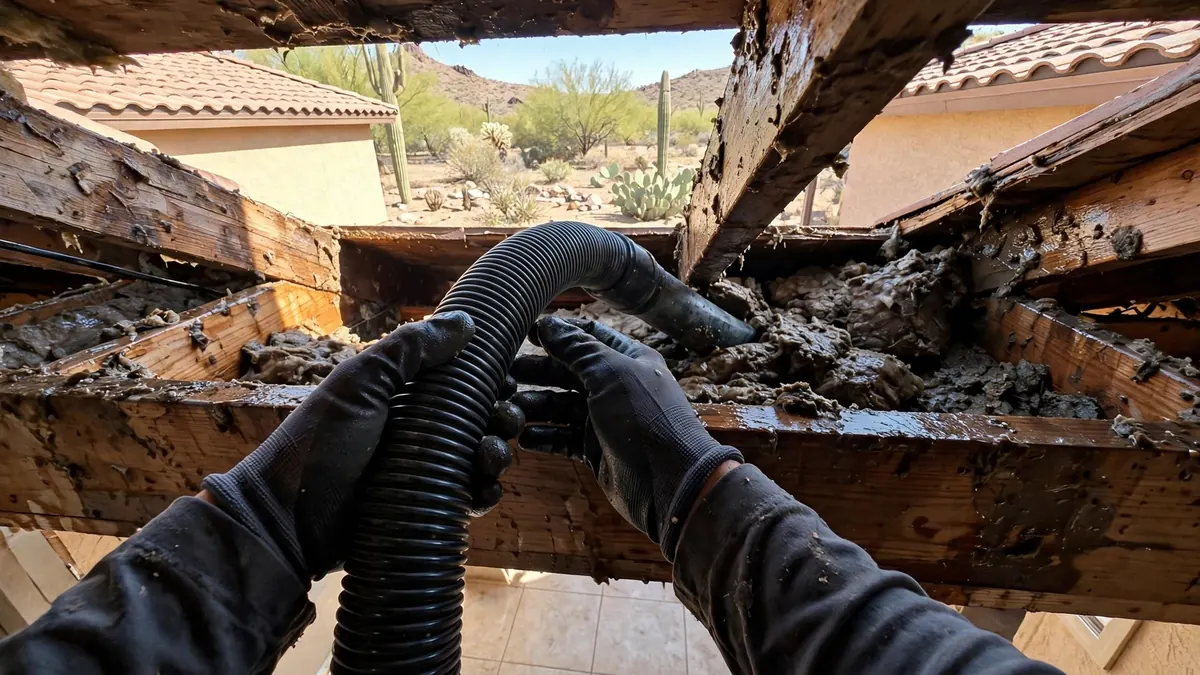
Removal is done with large vacuums and bags so the insulation does not spread through the house. In a summer attic, the restoration crew usually plans this work for the cooler hours. Once the cavity is dry, new insulation is blown or laid back to the right depth. Missing insulation in a Casa Grande attic shows up quickly in your summer power bill.
What does drying an attic involve?
Drying an attic means removing wet insulation and any ceiling drywall that is soaked or sagging, then drying the framing and roof deck with dehumidifiers and air movers until moisture readings match dry areas. The roof or the source has to be fixed first, or the work starts over.
- Moisture readings map the wet area on the deck, rafters, ceiling joists, top plates and drywall. It is often larger than the stain.
- Wet insulation and failed drywall come out.
- Wood is cleaned and, where water sat a while or came from a pan or a cooler, treated.
- Dehumidifiers and air movers run, often with the ceiling opened from below, and readings are checked each day.
- Walls below are checked too. Water that reaches a top plate can run down inside the wall.
- Once readings are dry, insulation and drywall are replaced.
Roof leak damage in attics typically dries in a few days once wet insulation is out. A slow leak that ran for weeks can take longer and may need a mold assessment before the ceiling is closed. For what a stain looks like from the room side, see ceiling water damage.
Will insurance cover attic water damage?
It depends on the cause and how long it went on. Most standard homeowners policies cover sudden, accidental water damage, such as a fitting that let go or a storm that tore off roofing. Slow condensate leaks, worn roofs and long-running drips are often treated as maintenance and denied.
- Photograph the source and the damage before cleanup.
- Keep the HVAC technician's, plumber's or roofer's invoice that names the cause.
- Keep the failed part, such as the rusted pan or the leaking fitting.
- Note the date you found the water and the date drying started.
Check your declarations page and the water damage section of your policy, or ask your agent. A monsoon roof claim may fall under a separate wind or hail deductible, so read that part too.
How can you prevent attic water damage?
Most attic water damage is prevented by a twice-a-year look: once in spring before the AC runs hard, and once after the first monsoon storms. Ten minutes with a flashlight catches most problems before they reach the ceiling.
- Check the air handler's secondary pan. It should be dry, with no rust holes.
- Flush the condensate line and test the float switch.
- Look for torn duct insulation and beaded water on supply ducts in humid weeks.
- Follow any water lines and look at the fittings.
- After a storm, look at the roof deck under valleys, vents and the cooler duct.
- If the home sits empty in summer, have someone check the attic during monsoon season.
If water has already reached the insulation or the ceiling, call (520) 380-1551. The 24/7 line connects you with a local restoration crew in Casa Grande and nearby Pinal County towns who can check moisture and dry the attic. Prices are set by the restoration company and vary with the job.
Questions homeowners ask
Will a hot attic dry out a small leak by itself?
Is it safe to go into my attic in summer?
Why is there water dripping along my AC ducts in the attic?
More from the blog
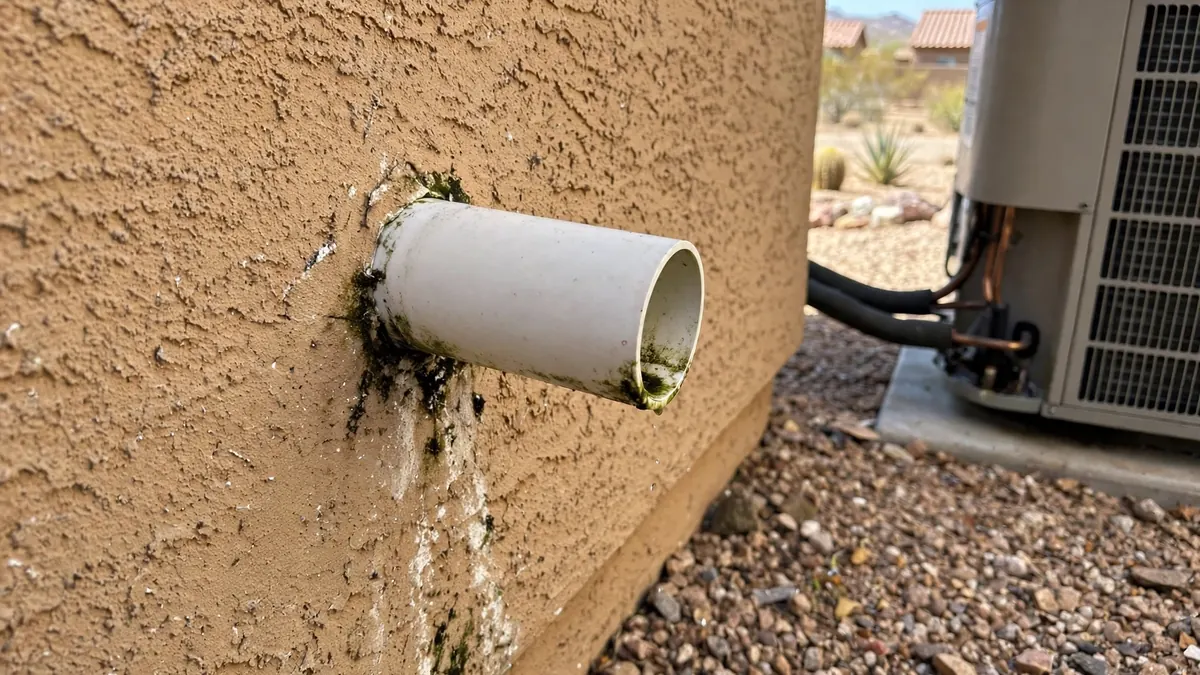 Summer & HVACAC condensate line clogged: how summer AC water damages Arizona homesAn AC condensate line clogs when algae, slime and dust build up in the small drain pipe and trap, so water backs into the pan and...
 Summer & HVACEvaporative cooler leaks: the roof damage you don't seeA swamp cooler leak usually damages the roof in places you cannot see: the roof jack where the duct passes through the roof, the roofing under...
 Fire & SmokeSmoke damage cleanup after a house fire: what to do firstStart smoke damage cleanup only after the fire department clears the house. Then keep the AC off, photograph everything, throw out exposed food, and do not...
Need help with damage right now?
Speak to a local restoration specialist on the 24/7 line, any time of day.
Call (520) 380-1551When you call: enter your ZIP code, then press 1 for water damage, 2 for fire damage or 4 for sewage backup.