Home › Blog › Water damage under tile floors
Water damage under tile floors
Water gets under tile through porous grout and thinset, or up from a leak under the slab. Signs include grout that stays dark, hollow-sounding tiles, white powder in grout and warm spots. The slab holds the water under the tile, so it needs drying mats, dehumidifiers and readings. See slab leak cleanup.
In this article
- Can water get under a tile floor?
- Where does water under tile usually come from?
- What are the signs of water under tile?
- Why is water under tile so hard to dry?
- How do crews dry water under tile?
- Does the tile have to come up?
- What about wood-look tile, vinyl plank and laminate over a slab?
- What does drying water under tile cost?
- What should you do if you suspect water under your tile?
- Questions homeowners ask
Can water get under a tile floor?
Yes. The tile itself sheds water, but the grout between tiles and the thinset mortar under them are porous, so water soaks down through grout lines and spreads across the slab underneath. It can also come up from below, from a leaking pipe under the slab, or in sideways from a wall, a shower or an appliance.
Once water is under tile, it is hard to see and slow to leave. The tile acts like a lid, the concrete slab holds water like a sponge, and the only easy way out is back up through the grout. That is why water under tile is one of the most common reasons a drying job in Pinal County runs longer than expected.

Where does water under tile usually come from?
In Casa Grande homes, the usual sources are a leaking water line under the slab, a failed shower pan or tub drain, a toilet wax ring, and appliances such as dishwashers, refrigerators, washers and water heaters. Exterior water at doors and along outside walls is less common but does happen.
- Slab leaks. A supply line under the concrete fails, often a copper line worn by hard water in an older home or a fitting in a newer PEX home. The water pushes up through the slab and wets the underside of the tile. See slab leak detection and cleanup for how those are found.
- Showers and tubs. A cracked shower pan, a failed drain gasket or old grout and caulk lets water out past the edge of the shower and into the tile outside it.
- Toilets. A worn wax ring leaks a little with every flush. The water spreads under the tile around the base, and because it comes from the drain side, it is not clean. A toilet overflow cleanup handles the same contamination concerns.
- Appliances. Dishwasher drain and supply connections, refrigerator ice maker lines, washer hoses and water heaters in closets all sit on tile in many homes.
- Exterior water. During a monsoon cell, water can blow under a patio door threshold or pond against an outside wall where the grade slopes toward the house, and wick in along the slab edge.
What are the signs of water under tile?
The main signs are grout that stays dark after it should have dried, tiles that sound hollow or feel loose, cracked tiles or grout, white powder in the grout lines, and a warm or damp spot on the floor. A musty smell near the floor or swelling baseboards next to the tile also point to it.
| Sign | What it usually means | Notes |
|---|---|---|
| Dark grout lines that stay dark | Moisture coming up from below or spreading from a nearby source | Mop water dries in hours, so dark grout days later is a clue |
| Dark grout spreading out in a rough circle | A point source such as a slab leak or wax ring | The center of the darkest area is a starting point, not proof |
| Hollow sound when tapped | Tile no longer bonded to the thinset or slab | Can also come from a poor original install, so it needs a moisture check |
| Cracked tile or grout in a line | Movement in the slab, or bond failure spreading | Slab cracks also happen without leaks |
| White powder or crust in grout | Water carrying salts up through the slab and grout | Called efflorescence, a sign water has been moving for a while |
| Warm spot on tile | Hot-water line leaking under the slab | Often noticed barefoot first |
| Swollen baseboard or damp drywall edge | Water spreading under tile to the wall | MDF baseboards swell quickly and do not recover |
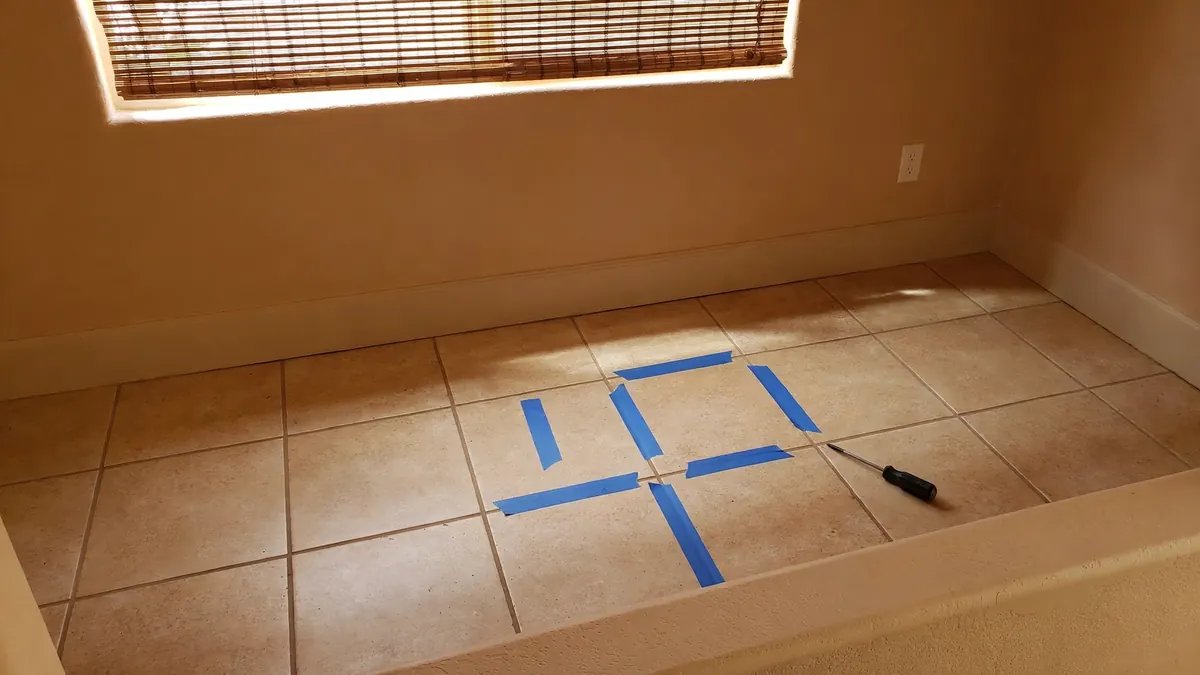
To check for hollow tiles, tap across the floor with the plastic handle of a screwdriver or a coin and listen. A sharp, solid click is normal. A dull, hollow sound means the tile has lost its bond. Mark those tiles with painter's tape so you can see whether they cluster around a likely source.
Why is water under tile so hard to dry?
Because the water is trapped between two materials that barely let it out. Tile is nearly waterproof, concrete holds a lot of water and releases it slowly, and grout lines are a small fraction of the floor area. Normal airflow across the room barely touches it.
Most homes here sit on concrete slabs, and many newer ones in Villago, McCartney Ranch, Mission Royale and Cottonwood Ranch are post-tension slabs with tile through the main living areas. Water that gets under that tile can travel a long way sideways. A leak in a kitchen can show up as dark grout in the hallway or a damp baseboard in the next room.
Arizona's dry air helps once drying equipment is running, but dry room air does not reach the slab under the tile on its own. Opening windows or running box fans dries the grout surface and leaves the water underneath. Our page on structural drying explains why moving air and dehumidification have to work together.
How do crews dry water under tile?
They use equipment that pulls air and moisture through the floor rather than across it, combined with dehumidifiers and daily moisture readings. The approach depends on how much water there is, how long it sat, and whether it is clean.
- Find and stop the source. A slab leak gets located and repaired by a plumber. A toilet or appliance leak gets disconnected or fixed.
- Map the wet area. Moisture meters on grout lines and at the base of walls, plus thermal imaging, show how far the water spread. Readings through tile are limited, so crews often check grout joints, wall edges and the slab where baseboards come off.
- Open the edges. Baseboards are pulled so air can reach the slab edge and the bottom of the drywall.
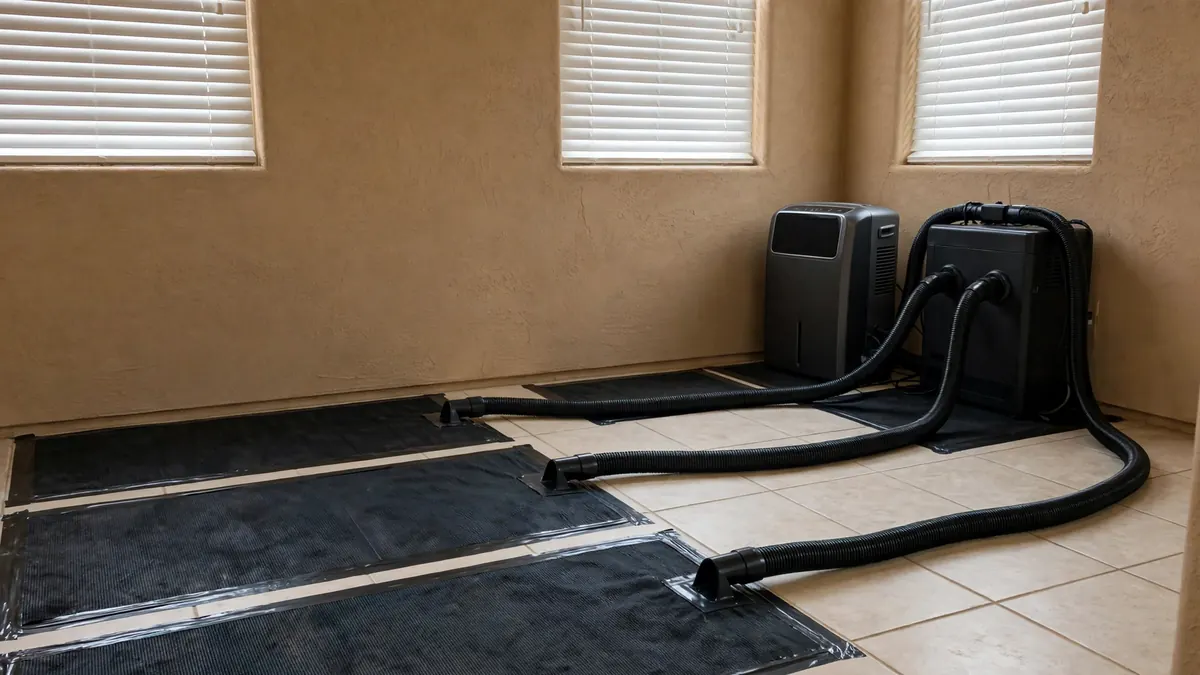
- Use drying mats or panels. Flat mats are sealed to the tile surface and connected to a vacuum or blower system that draws moisture up through the grout lines.
- Drill small holes if needed. In some cases, small holes are drilled in grout lines so air can be pushed or pulled under the tile. These are patched with grout afterward.
- Dehumidify and log. Commercial dehumidifiers run around the clock, and readings are taken at the same points each day until they match a dry reference area.
Tile floors often take longer than the three to five days typical for a room of carpet and drywall. The slab gives up water slowly, and a long-running slab leak may have soaked a wide area.
Does the tile have to come up?
Not always. Tile that is still well bonded to the slab, over clean water that is caught early, can often be dried in place. Tile usually has to come up when it is loose or hollow over a wide area, when the water was contaminated, or when the slab will not dry with the tile on top.
- Often dried in place: clean water from a supply line or appliance, found within a day or so, with tiles that still sound solid.
- Often partly removed: a few hollow or cracked tiles near the source, or a strip removed to reach a slab leak repair.
- Often removed: wide areas of hollow tile, water from a toilet or drain that soaked under the floor, or a floor that stays wet after reasonable drying time.
Matching tile is the hard part. If your floor was installed years ago, the same tile may not be available. Before any tile is removed, ask whether the crew or installer can save a few pieces for patching, and check whether leftover boxes are in the garage.
If a plumber needs to open the floor to reach a slab leak, ask them to cut in a straight line along grout joints where possible. Clean cuts make it much easier to patch the floor later.
What about wood-look tile, vinyl plank and laminate over a slab?
Wood-look porcelain tile behaves like any other tile. Vinyl plank and laminate are different, because they float over the slab on a thin underlayment, and water spreads under them with no grout lines to show it.
Vinyl plank itself handles water well, but water trapped between the plank and the slab stays there, and planks often have to be pulled up so the slab and underlayment can dry. Laminate has a fiberboard core that swells when it stays wet, so it is commonly replaced. Signs include planks that lift at the seams, a soft spot underfoot, or a musty smell near the floor.
What does drying water under tile cost?
Prices are set by each restoration company and vary with the job. On this site's published ranges, a single room of clean water caught early is often about $400 to $1,500, and slab leak detection plus extraction and drying of the affected rooms is often about $2,000 to $5,000, not counting the plumbing repair or replacing flooring.
What raises the number most is how long the water ran, how many rooms it reached, whether the tile has to come up, and whether the water was contaminated. On insurance, most standard policies cover sudden and accidental water damage, and many also cover the cost to access a leaking pipe under the slab, while the pipe repair itself and long-term seepage are commonly excluded. Check your declarations page or ask your agent, and keep dated photos of the grout, hollow tiles and any warm spot, along with the plumber's invoice and the crew's moisture readings.
What should you do if you suspect water under your tile?
Confirm it, find the source, and get moisture readings before the problem spreads into walls and baseboards.
- Note which grout lines stay dark and tap the area for hollow tiles.
- Check the water meter with everything off to see whether water is moving.
- Look at the nearest shower, toilet, dishwasher, refrigerator line and water heater.
- Shut off the fixture or the main if you find an active leak.
- Photograph the floor and any warm or damp spots with the date.
- Move rugs and furniture off the area.
To have tile floors checked and dried in Casa Grande, Coolidge, Eloy or nearby Pinal County towns, call (520) 380-1551. The line is open 24/7 and connects you with a local restoration crew that can meter the floor and set drying equipment.
Questions homeowners ask
Will water under tile dry on its own?
Do hollow-sounding tiles always mean water damage?
Why is my grout dark in one area of the floor?
Can a crew dry under tile without removing it?
More from the blog
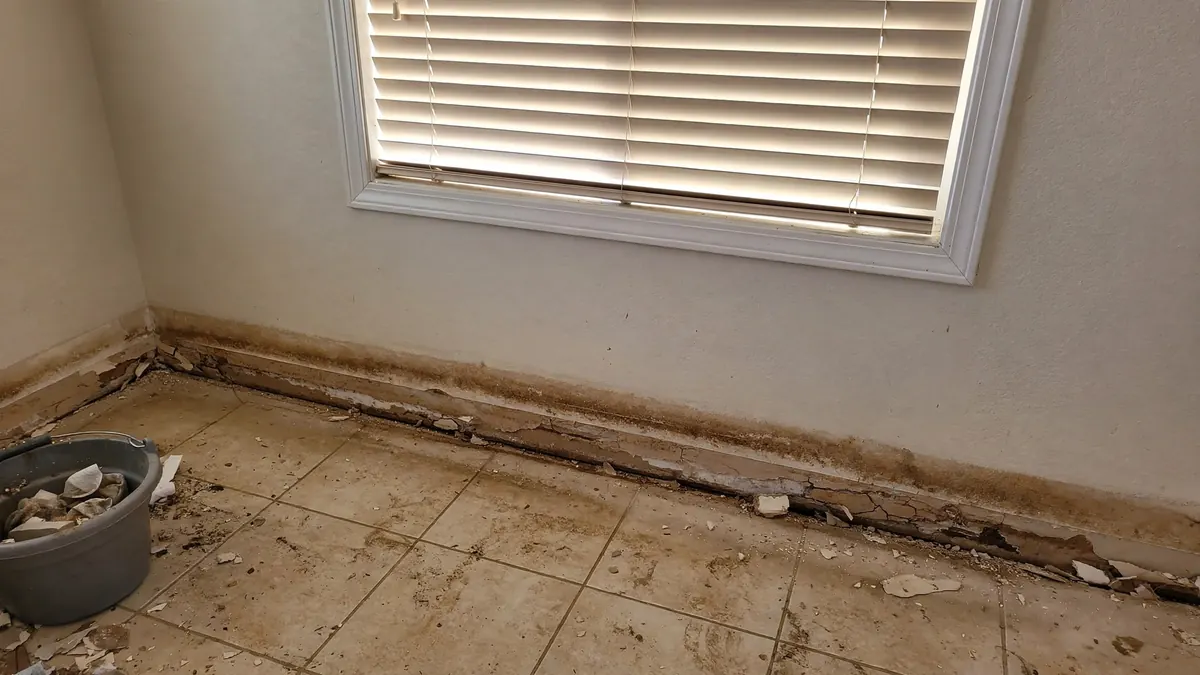 Drying & MoldCan wet drywall be saved?Wet drywall can usually be saved if it was soaked by clean water, drying starts within a day or two, and the board is still firm....
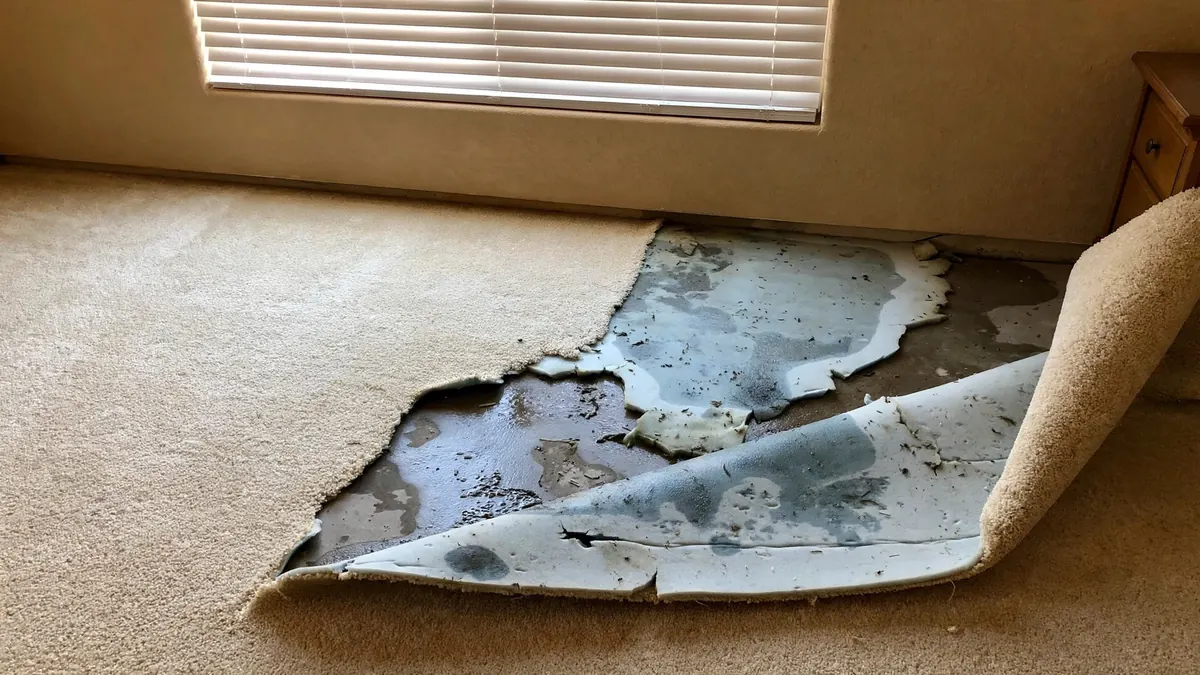 Drying & MoldWet carpet: when it can be saved and when the pad must goWet carpet can usually be saved if the water was clean and extraction starts within a day or two, before the backing separates. The pad underneath...
 Drying & MoldHow fast mold grows after a leak in Arizona heatMold can start growing within 24 to 48 hours once drywall, wood, carpet pad, or insulation stays wet, even in dry Arizona. Visible spots and a...
Need help with damage right now?
Speak to a local restoration specialist on the 24/7 line, any time of day.
Call (520) 380-1551When you call: enter your ZIP code, then press 1 for water damage, 2 for fire damage or 4 for sewage backup.