Home › Toilet Overflow Cleanup
Toilet Overflow Cleanup in Casa Grande, AZ
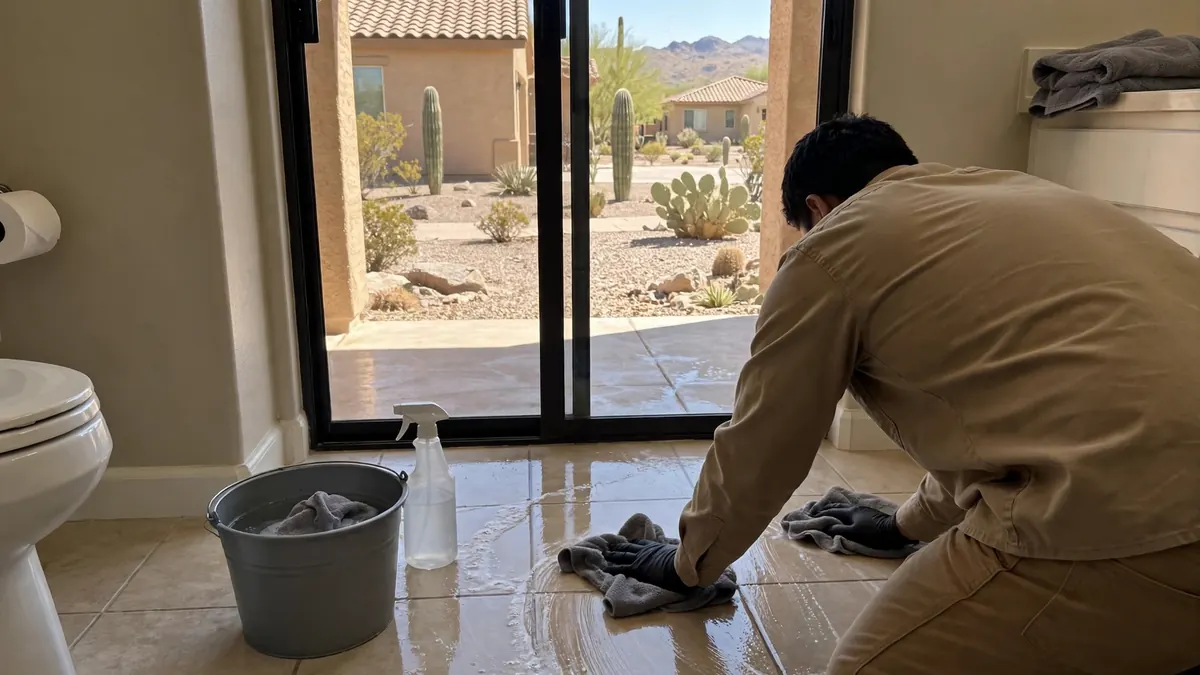
A toilet that overflows or leaks around its base can soak the subfloor, the baseboards, and the ceiling below. Our network's local restoration crews extract, sanitize, and dry it, 24/7 across Casa Grande and Pinal County.
When you call: enter your ZIP code, then press 1 for water damage, 2 for fire damage or 4 for sewage backup.
Last updated: October 26, 2026
Toilet overflow cleanup means removing the water, sanitizing anything it touched, and drying the floor, walls, and subfloor before mold starts. Clean water from the tank is the easiest to handle; water from the bowl that contains waste must be treated as contaminated. Shut the supply valve behind the toilet first, then call (520) 380-1551.

First steps when a toilet overflows
- Shut off the supply valve behind the toilet by turning it clockwise. If it is stuck, shut off the main water valve.
- Do not flush again. A second flush only adds more water.
- Lift the tank lid and push the flapper down if water is still running into the bowl.
- Keep people and pets out if the water came from the bowl, and wear gloves if you have to step in it.
- Take photos of the water and the room before cleanup starts, for your insurance claim.

Clean water or contaminated water?
Restoration crews sort water into three categories, and the category decides what can be saved:
- Category 1, clean water: a supply line or tank leak. Flooring and drywall can often be dried in place if extraction starts early.
- Category 2, gray water: an overflowing bowl with no solid waste. Carpet pad is usually removed, and surfaces are cleaned and treated.
- Category 3, black water: an overflow that contains waste, or a sewer backup through the toilet. Porous materials it touched, such as carpet, pad, and the bottom of drywall, are removed and the area is sanitized. See sewage backup cleanup.
Clean water that sits for a day or two in Arizona heat can turn into Category 2, which is one more reason to start early.

The slow leak at the toilet base
Not every toilet problem is a flood. A failed wax ring or loose closet bolts let a little water escape every time the toilet is flushed. Over months it rots the subfloor, darkens the grout around the base, and makes the toilet rock. In a two-story home the first sign is often a brown stain on the ceiling below. If you notice a toilet that wobbles, a musty smell in the bathroom, or stained grout around the base, have it checked before the floor gives way. See ceiling water damage and signs of hidden water damage.
Why toilets overflow in Casa Grande homes
- Clogs from wipes, paper, or objects, the most common cause.
- Fill valves that stick open after years of hard water mineral buildup, so the tank keeps running into the bowl.
- Main sewer line blockages, often from roots or grease. If several drains back up at once, the problem is the main line, not the toilet.
- Cracked tanks or supply lines, which leak clean water onto the floor.
How the cleanup works
- Call and triage. You describe the source and how far the water spread. The specialist lines up an available local crew.
- Moisture mapping. Moisture meters and thermal imaging show where water traveled, including under flooring and inside walls.
- Extraction. Standing water is pulled out of flooring, carpet, and pad before it wicks into drywall.
- Drying. Air movers and commercial dehumidifiers run while readings are logged daily. Most homes reach a dry standard in about 3 to 5 days.
- Repairs and paperwork. Damaged materials are replaced, and photos and moisture logs go to your insurer.
Cost and insurance
A single bathroom of clean water caught early is often $400 to $1,500. Contaminated water costs more because materials are removed and the room is sanitized, and damage to a ceiling below adds drywall work. A sudden overflow is usually covered by a standard Arizona homeowners policy, while a leak at the base that went on for months is often treated as gradual and excluded. See the cost guide and our insurance guide.
What should I do first when a toilet overflows?
Is toilet overflow water dangerous?
Can water from an upstairs toilet damage the ceiling below?
Does homeowners insurance cover a toilet overflow?
How long does it take to dry after a toilet overflow?
Toilet overflow? Get the water out now.
24/7 extraction, sanitizing, and drying across Casa Grande and Pinal County.
Call (520) 380-1551When you call: enter your ZIP code, then press 1 for water damage, 2 for fire damage or 4 for sewage backup.