Home › Blog › Washing machine hose burst: cleanup, drying and prevention
Washing machine hose burst: cleanup, drying and prevention
When a washing machine hose bursts, close the supply valves behind the washer or the main shutoff, cut power to the outlet if it is safe, and photograph the damage. On a slab, water spreads under flooring and into walls, so it needs moisture readings and proper drying. Braided hoses and automatic shutoff valves prevent most repeats.
In this article
- What should you do the moment a washing machine hose bursts?
- Why do washing machine hoses burst?
- Which washing machine hoses last longest?
- Where does the water go in a slab home?
- How is a laundry room flood dried out properly?
- Can you dry a washing machine leak yourself?
- Are automatic water shutoff valves worth installing?
- Does insurance cover a washing machine hose burst?
- Questions homeowners ask
What should you do the moment a washing machine hose bursts?
Close the two supply valves behind the washer, or the main shutoff if you cannot reach them, then unplug the machine if you can do it without standing in water. A burst hose is fed by full house pressure, so it keeps pouring until someone stops it.
- Stop the water. The hot and cold valves are usually in a recessed box in the wall above the washer. Turn both clockwise. If they are behind a stacked unit or will not turn, close the main shutoff to the house.
- Deal with power. If the floor is wet around the outlet, switch off that circuit at the breaker before you touch the plug. Only do this if the panel is dry and you can reach it without walking through water.
- Find the edges of the water. Walk the rooms next to the laundry area. Look under doors, along baseboards, and in the closet or garage that shares a wall.
- Take photos and video. Get the broken hose, the valve box, and every wet area before you start moving things.
- Get water off the floor. Towels and a wet-dry vacuum rated for water help on a small spill. A regular household vacuum does not belong anywhere near it.
- Move rugs, baskets, and anything stored on the floor. Cardboard and fabric wick water and hold it against the floor.
Keep the burst hose. It shows the failure was sudden, which matters if you file a claim.
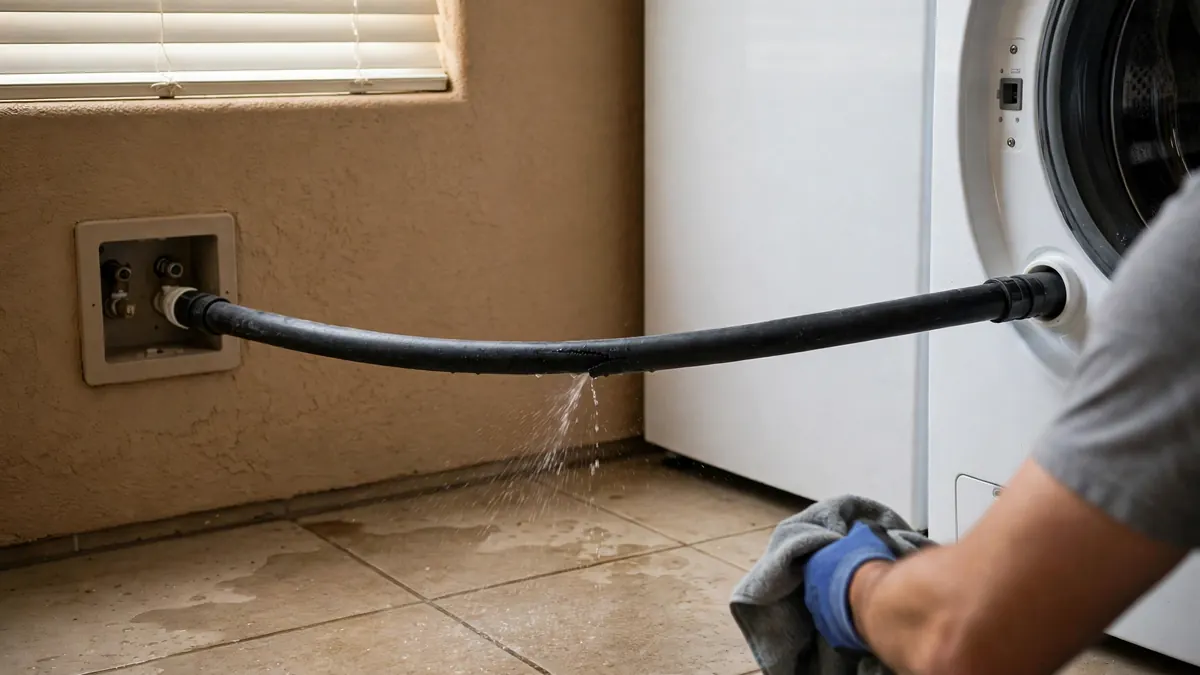
Why do washing machine hoses burst?
Supply hoses sit under constant water pressure every hour of the day, not just when the washer runs. Over years the hose material ages and the crimped metal ends corrode, until one day it splits, usually at or near the fitting.
A few things speed that up in Casa Grande homes:
- Hard water. Minerals corrode the brass fittings and the crimp collars where the hose meets the connector.
- Heat. Laundry rooms in garages get very hot in summer, and heat ages rubber faster.
- Kinks and tight bends. Pushing the washer too close to the wall bends the hose sharply right behind the connection, which is where most splits happen.
- Water hammer. Modern washers open and close their valves quickly. That sends a pressure spike back through the hose each time.
- Age. Many hoses are the ones that came in the box, sometimes from a previous owner's machine.
Which washing machine hoses last longest?
Braided stainless steel hoses hold up better than plain rubber, and hoses with a built-in flow stop add another layer of protection. No hose lasts forever, so whichever type you have, plan to replace it on a schedule.
| Hose type | How it is built | Strengths | Weak points |
|---|---|---|---|
| Plain rubber | Rubber tube, often the one included with the washer | Cheap and flexible | Ages, bulges and splits, especially in heat |
| Reinforced rubber | Rubber with a fabric or polyester mesh layer inside | Better than plain rubber at holding pressure | Still rubber on the outside, still ages |
| Braided stainless steel | Rubber or polymer inner tube wrapped in a stainless braid | Resists bulging and bursting much better | The inner tube still ages, and the crimped ends can corrode |
| Flow-stop or burst-resistant | Braided hose with a valve that closes if flow suddenly surges | Limits the flood if the hose breaks | Does not catch slow drips, and the valve can trip on some machines |
Many hose makers and insurers suggest replacing supply hoses about every five years, whatever the type. Write the install date on a piece of tape on the hose. When you install new ones, leave a few inches between the washer and the wall so the hoses do not kink.

Where does the water go in a slab home?
On a concrete slab there is nowhere for the water to drain, so it spreads sideways. It runs under the baseboards, into the bottom of the walls, under flooring, and into whatever rooms sit lower or closer than you think.
Laundry room in the garage
The water runs toward the garage door, which usually sits lower, but it also soaks the drywall at the base of the wall the garage shares with the house. If the house door sits close to the slab, water can get under the threshold.
Interior laundry room or closet
This is the bigger problem. Water flows under the door into the hallway and spreads under carpet, tile, and laminate. Carpet pad soaks it up like a sponge. Laminate and vinyl plank trap water underneath, where it cannot dry on its own. Tile looks fine on top while water sits in the grout lines and on the slab below.
Inside the wall
The wall behind the washer often has plumbing in it and drywall that runs down near the floor. Water wicks up the drywall and into the bottom plate, the wood at the base of the wall. That is where hidden damage and mold usually start after a laundry flood.
The wet area is almost always bigger than it looks. In a slab home, water from a laundry room can travel under flooring well past the doorway, often into the next room. A moisture meter is the only reliable way to see where it stopped.
How is a laundry room flood dried out properly?
Drying a laundry flood means getting the water out of the materials, not just off the floor. A restoration crew maps the moisture, extracts what is left, opens up spots where water is trapped, and runs drying equipment until readings show the materials are back to normal.
- Moisture mapping. Meters and often a thermal camera trace how far the water went under flooring and up the walls.
- Extraction. Standing water and water held in carpet and pad are pulled out with extraction equipment.
- Removing what traps water. Wet carpet pad, baseboards, and sometimes the bottom of the drywall come out. Laminate or vinyl plank over wet slab often has to be lifted.
- Drying. Air movers push air across wet surfaces and dehumidifiers pull the moisture out of the room. On a slab, this takes time, since concrete gives up water slowly.
- Daily readings. The crew checks and records moisture each day until the materials reach normal dry levels.
Washer supply water is usually clean water. If it sits, or if the drain hose overflowed with dirty wash water, it is treated as gray water and more material may need to be removed. The structural drying page explains the equipment, and the wet carpet extraction page covers when carpet can be saved.

Can you dry a washing machine leak yourself?
A small spill on tile or sealed concrete, caught right away, can often be handled with towels, a wet-dry vacuum, and fans. Once water has gone under flooring, into carpet pad, or up drywall, household fans dry the surface and leave water underneath.
A few questions help you decide:
- Did the water stay on a hard surface and get cleaned up in the first hour or so?
- Is any carpet, laminate, or baseboard in the next room wet?
- Is the drywall behind the washer soft or darker at the bottom?
- Did the leak run while you were away, even for a few hours?
If any answer after the first one is yes, the water likely went further than you can dry with fans. Casa Grande's warm indoor air helps mold get started in 24 to 48 hours on damp drywall and wood.
Are automatic water shutoff valves worth installing?
For a laundry room, yes. An automatic shutoff closes the water when it detects a leak, so a hose that bursts while you are at work, asleep, or out of town does not run for hours. There are three common types.
| Type | How it works | Good for |
|---|---|---|
| Flow-stop hoses | A valve in the hose closes if flow jumps suddenly | A simple upgrade at the washer only |
| Laundry shutoff valve with a floor sensor | A powered valve at the wall box closes when a sensor on the floor gets wet | Catching both bursts and slow drips at the washer |
| Whole-house shutoff with sensors | A valve on the main line closes when any sensor in the house detects water, or when it sees unusual flow | The whole home, and seasonal homes left empty for months |
A plumber installs the whole-house type. Some models connect to an app so you can see an alert from anywhere, which suits snowbird homes in Mission Royale or Robson Ranch. Even without one, a single-lever washer valve makes it easy to shut off the supply between loads or before a trip.
Other simple habits help: do not run the washer when nobody is home, check the hoses for bulges or cracking when you clean behind the machine, and make sure the drain hose is clipped into the standpipe so it cannot jump out during a spin.
Does insurance cover a washing machine hose burst?
A hose that bursts suddenly and floods a room is usually treated as sudden and accidental under a standard homeowners policy, minus your deductible. Damage from a slow drip that went on for weeks is often denied as gradual.
Keep the broken hose, take photos before cleanup, and save receipts for anything you bought to limit damage. Moisture readings from a crew help show how far the water went. Check your declarations page and ask your agent before assuming either way.
The appliance leak page covers dishwashers, fridge lines, and other connections. If water from the laundry has already reached flooring or walls beyond the room, call (520) 380-1551. The line is open 24/7 and connects you with a local restoration crew in Casa Grande and nearby towns.
Questions homeowners ask
How much water can a burst washing machine hose release?
How often should washing machine hoses be replaced?
Should I turn off the washer valves when I am not using it?
Can water from a washer leak get into the wall?
More from the blog
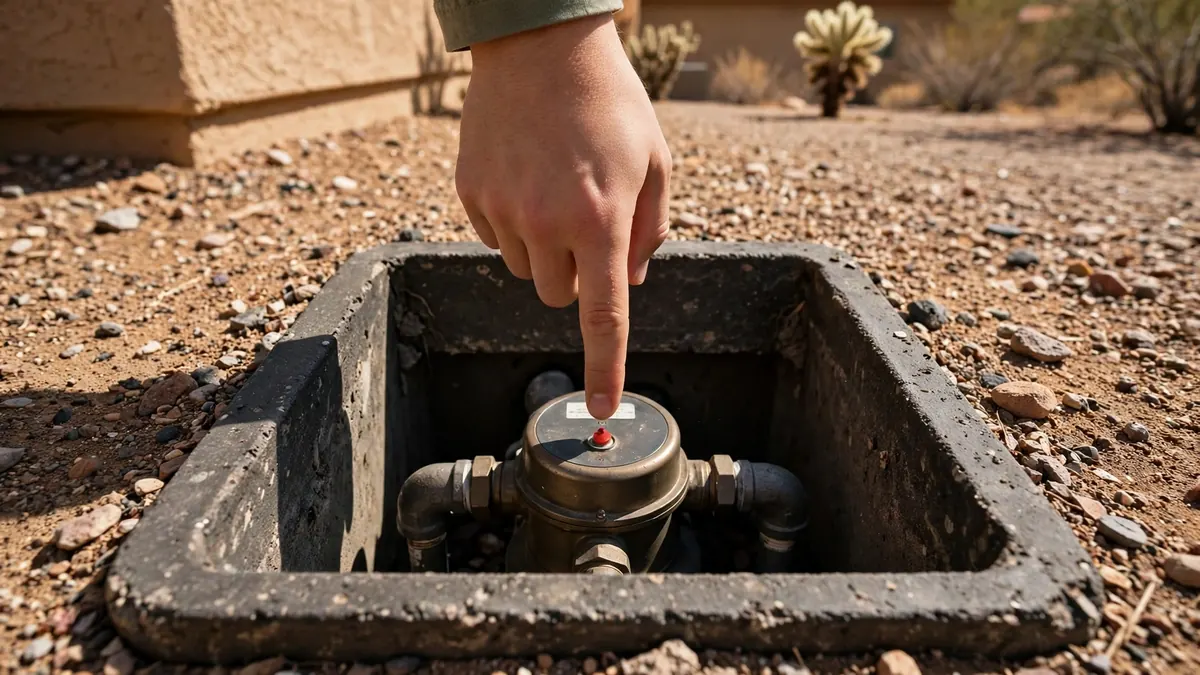 Leaks & PipesHow leak detection works: finding hidden leaks without tearing up your homeLeak detection finds hidden leaks without tearing up your home by narrowing the search step by step. A meter test confirms water is escaping, pressure tests...
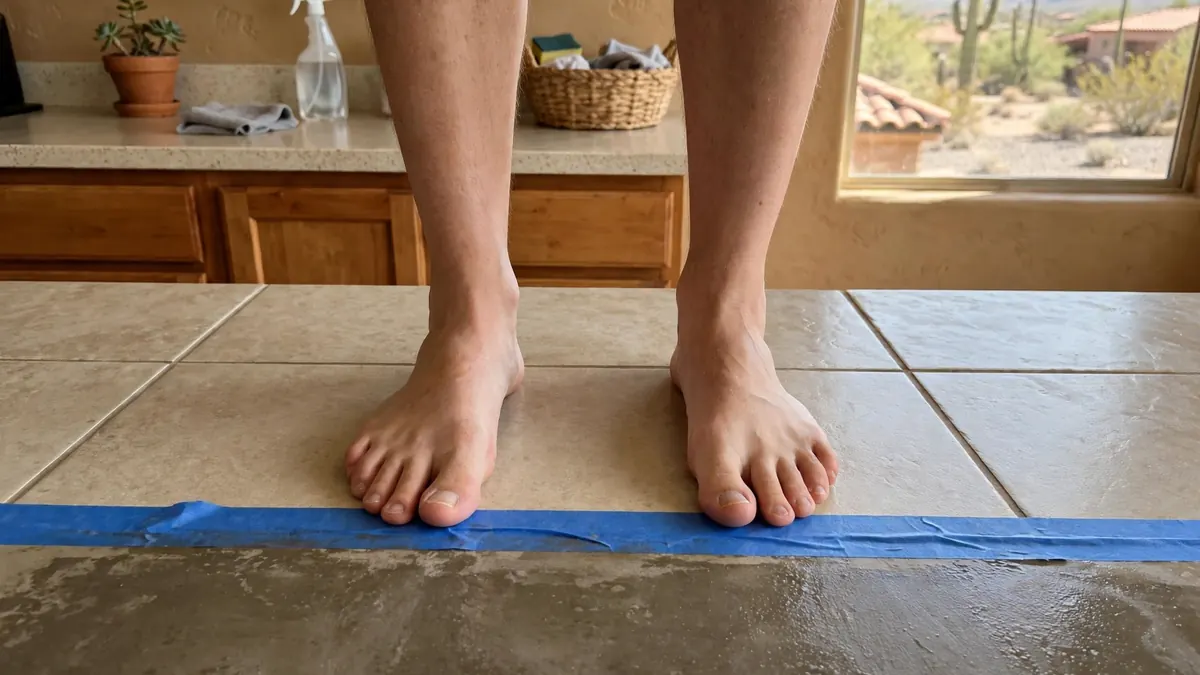 Leaks & PipesSlab leak signs in Casa Grande homes and what each one meansThe clearest slab leak signs are a warm spot on the floor, a water bill that rises with no change in habits, running water sounds with...
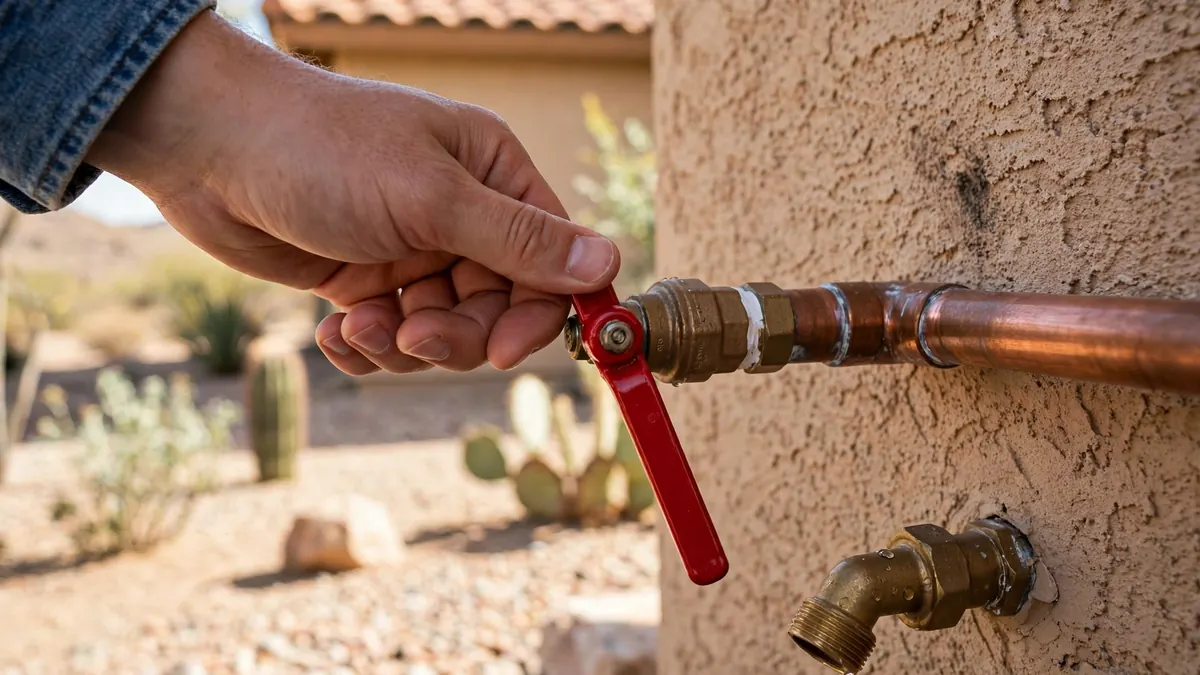 Leaks & PipesBurst pipe in your house: what to do in the first 15 minutesIn the first 15 minutes after a pipe bursts, shut off the water at the main, keep away from water near outlets and cut power only...
Need help with damage right now?
Speak to a local restoration specialist on the 24/7 line, any time of day.
Call (520) 380-1551When you call: enter your ZIP code, then press 1 for water damage, 2 for fire damage or 4 for sewage backup.