Home › Blog › Slab leak signs in Casa Grande homes and what each one means
Slab leak signs in Casa Grande homes and what each one means
The clearest slab leak signs are a warm spot on the floor, a water bill that rises with no change in habits, running water sounds with everything off, a water heater that runs constantly, and cracked or loose tile. Two or more together usually mean a line under the slab failed. See slab leak cleanup in Casa Grande.
In this article
- What are the most common signs of a slab leak?
- Why does a warm spot on the floor point to a slab leak?
- What does a higher water bill tell you about a slab leak?
- Can a slab leak crack tile or loosen flooring?
- Do slab leaks cause foundation cracks?
- What does a slab leak sound like?
- What other signs show up around the house?
- Which signs are a slab leak and which are something else?
- Why do Casa Grande homes show these signs so often?
- What should you do when you notice a slab leak sign?
- Questions homeowners ask
What are the most common signs of a slab leak?
The most common signs are a warm or damp patch on the floor, a higher water bill, a hissing or trickling sound in a quiet house, a water heater that seems to run all day, and tile, grout, or flooring that cracks, loosens, or darkens. Each one points to a different part of the problem, so it helps to know what you are looking at.
A slab leak is a supply line that has failed under or inside the concrete your house sits on. Almost every home in Casa Grande, Coolidge, Eloy, and Maricopa is built slab on grade, so there is no crawlspace or basement where you would see a drip. The water stays under the floor, spreads sideways, and only shows itself through indirect clues. That is why these signs matter. They are the only early warning you get.
Think of the signs in three groups:
- Signs you feel or hear: warm floors, damp carpet, the sound of water.
- Signs you pay for: the water bill, and on the hot side, the gas or electric bill.
- Signs you see: cracked tile, dark grout, lifting plank flooring, wet baseboards, stains at the bottom of drywall.
Visible damage usually shows up last, which means the water has often been running for a while by the time you see it.
Why does a warm spot on the floor point to a slab leak?
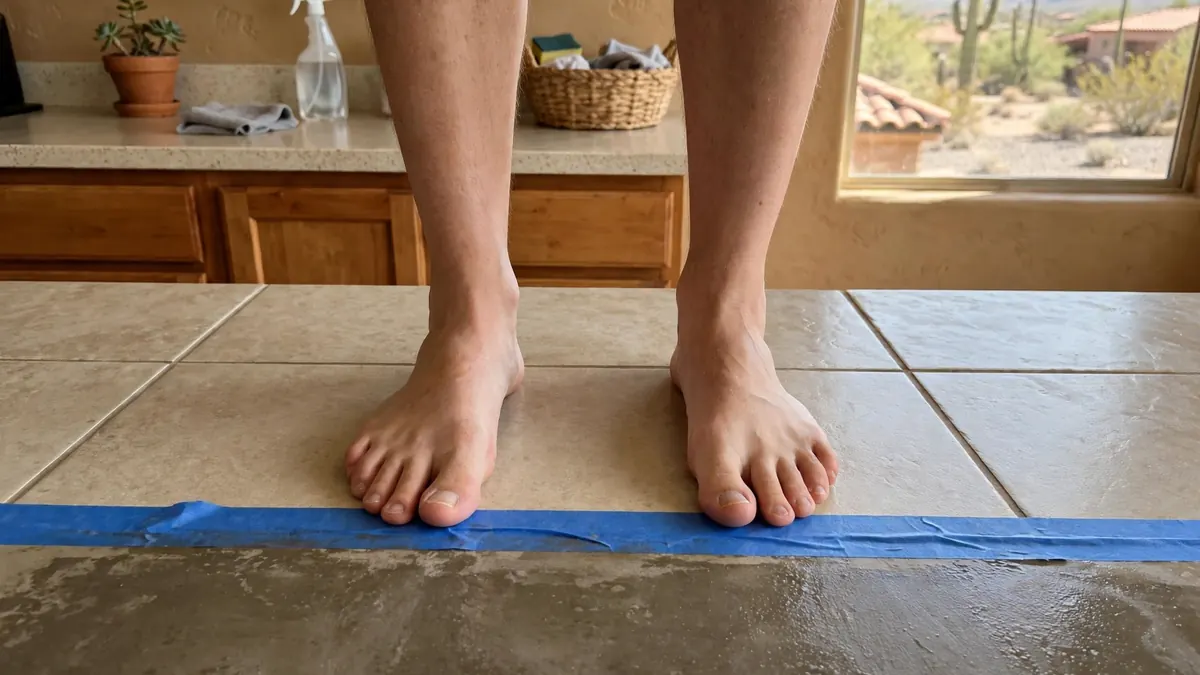
A warm spot usually means a hot-water line under the slab is leaking. Water from the water heater runs well above room temperature, and as it soaks into the concrete it warms the floor above it. You tend to notice it barefoot, or because a pet keeps lying in the same place on the tile.
A few details tell you more:
- Where it is. Hot lines run from the water heater, which in most Casa Grande homes sits in the garage, toward the kitchen, the laundry, and the bathrooms. A warm patch along that general path is a strong clue. A warm patch in the middle of a bedroom with no plumbing nearby is less likely to be a hot line.
- Whether it grows. A leak that keeps running spreads the warm area over days. Put a piece of painter's tape at the edge of the warm patch and check it again in two or three days.
- The season. A warm spot is easy to feel in winter and harder to pick out in July. Tile near a sunny window can also feel warm for reasons that have nothing to do with plumbing.
A cold-water leak does not warm the floor, so the lack of a warm spot does not rule out a slab leak. It only means a hot line is less likely.
What does a higher water bill tell you about a slab leak?
A water bill that rises with no change in how you use water is often the first hard evidence of a slab leak. It means water is leaving your plumbing somewhere, and if you cannot find a drip, a running toilet, or an irrigation problem, the slab is a likely place.
Compare the bill to the same month last year, not to last month. Casa Grande bills swing with the seasons because of irrigation, pool top-offs, and evaporative coolers, so a July bill higher than a May bill tells you very little. A January bill that looks like a July bill tells you a lot.
Two more things are worth watching:
- The usage line, not just the dollar amount. Rate changes move the total. Gallons used show a leak.
- The gas or electric bill. A leak on the hot side means the water heater keeps refilling and reheating water that drains into the ground. If your water bill and your water-heating energy both climbed at the same time, a hot line is the prime suspect.
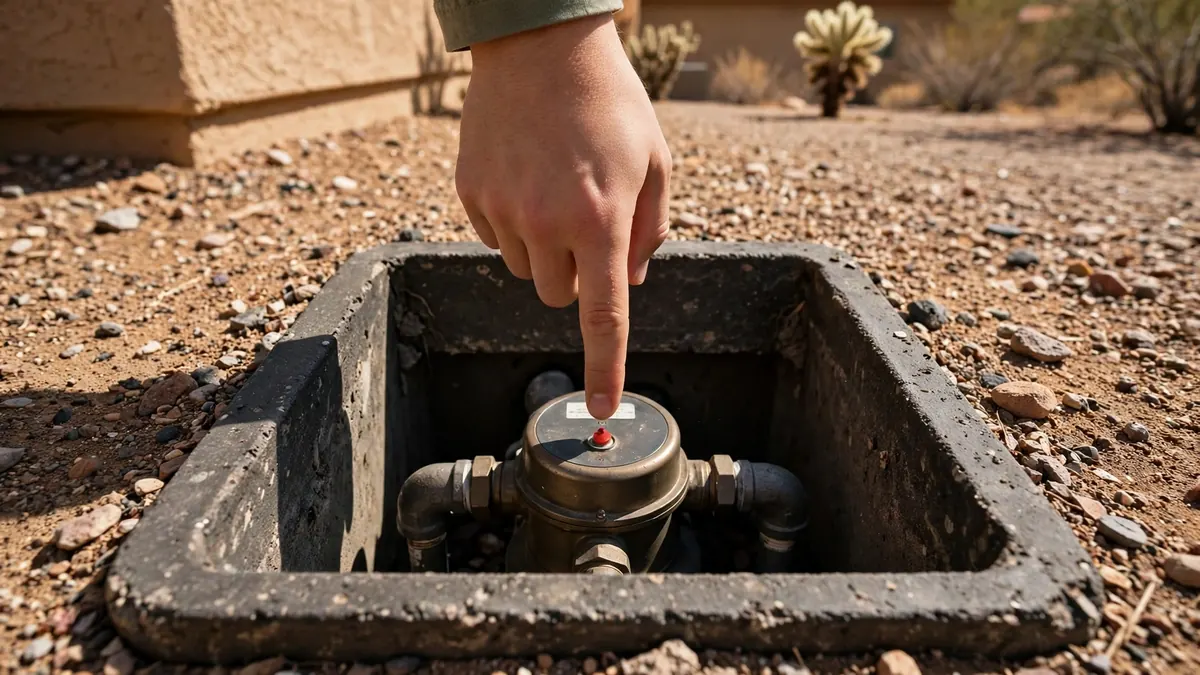
The quick way to confirm is the water meter test: shut off every fixture and watch the leak indicator on the meter. If it moves, water is escaping. The full steps, and how pros pinpoint the spot after that, are in our page on slab leak detection and cleanup.
Can a slab leak crack tile or loosen flooring?
Yes. Water under the floor can crack grout, loosen tile so it sounds hollow when tapped, and make vinyl plank or laminate swell and lift at the seams. Most of this damage comes from the water itself soaking the materials, not from the slab moving.
Here is how it usually looks on the floor types common in Pinal County homes:
- Ceramic and porcelain tile. Grout lines darken in one area and stay dark long after you mop. Over time the thinset under the tile loses its grip and tiles start to sound hollow when you tap them with a coin or the handle of a screwdriver. A line of cracked grout that tracks in one direction can follow the path of the water.
- Vinyl plank and laminate. Edges swell, seams peak, or planks feel soft. Laminate has a fiberboard core that swells and does not shrink back.
- Carpet. A damp patch, often along a wall where the tack strip sits, or a musty smell when you press on it. The pad soaks up water before the carpet face shows it.
- Wood floors. Boards cup, with the edges higher than the centers, because the bottom of the board is wetter than the top. On a slab this is a strong sign of moisture coming up from below. Our hardwood floor water damage page covers what happens next.
One hollow tile in an old house proves nothing, since tile can lose its bond with age. A growing cluster of hollow tiles with dark grout is what points to a leak.

Do slab leaks cause foundation cracks?
They can contribute, but most cracks you see in a Casa Grande slab are not caused by a leak. Hairline shrinkage cracks are normal in concrete. A leak becomes the likely cause when a crack is new, is growing, or shows up with water, warmth, or damp soil around it.
Many local soils are expansive clays that swell when wet and shrink when dry. A steady leak can keep one area of soil wet for weeks while the rest of the pad stays dry. That uneven moisture can lift or shift part of the slab slightly. You may see:
- A new crack in tile that runs straight across several tiles, especially one that keeps widening.
- Interior doors that start sticking or will not latch, when they used to close fine.
- Diagonal cracks at the corners of door frames or windows in drywall.
- Wet or soft soil along the outside of the foundation when it has not rained or been irrigated.
Many newer homes in subdivisions like Villago, McCartney Ranch, Mission Royale, and Cottonwood Ranch sit on post-tension slabs, which have steel cables running through the concrete under high tension. These slabs resist cracking well, so a new crack in one is worth paying attention to. The cables also change how the leak gets repaired later, because nobody should cut into the slab until the cables are located.
Never drill, core, or chip into a slab yourself to look for a leak. On a post-tension slab, damaging a cable is a structural problem, and on any slab you can hit a live water or electrical line.
What does a slab leak sound like?
A slab leak usually sounds like a faint, steady hiss or a light trickle, like a toilet refilling far away, when no fixture is running. It is easiest to hear at night, when the AC is off and the house is quiet.
Listen near the water heater, inside lower kitchen and bathroom cabinets, and with your ear against plumbing walls near the floor.
Rule out the usual false alarms first. A toilet with a worn flapper hisses or refills on its own. Refrigerator ice makers fill on a cycle. Irrigation valves can hum or leak by when they are supposed to be closed. A water softener runs a regeneration cycle, often overnight. If the sound stops when you close the main shutoff at the house, the water was going somewhere inside the home. If it stops only when you close the valve at the meter, the leak may be in the service line in the yard instead.
A small leak or a noisy house can hide the sound completely, so hearing nothing does not mean there is no leak.
What other signs show up around the house?
Several quieter clues point to a slab leak, especially when they show up alongside one of the main signs above. On their own, each has other possible causes.
- The water heater runs more than it should. A gas heater that fires up often with nobody using hot water, or an electric heater you can hear cycling, suggests it is refilling to replace water that is leaking out.
- Hot water runs out sooner. If a shower goes lukewarm faster than it used to and the heater is not old or full of scale, some of the hot water may be going into the ground.
- Lower water pressure. A drop in pressure at several fixtures at once can mean a leak is bleeding off flow. In Casa Grande, hard water scale in aerators and shower heads causes this too, so clean those first.
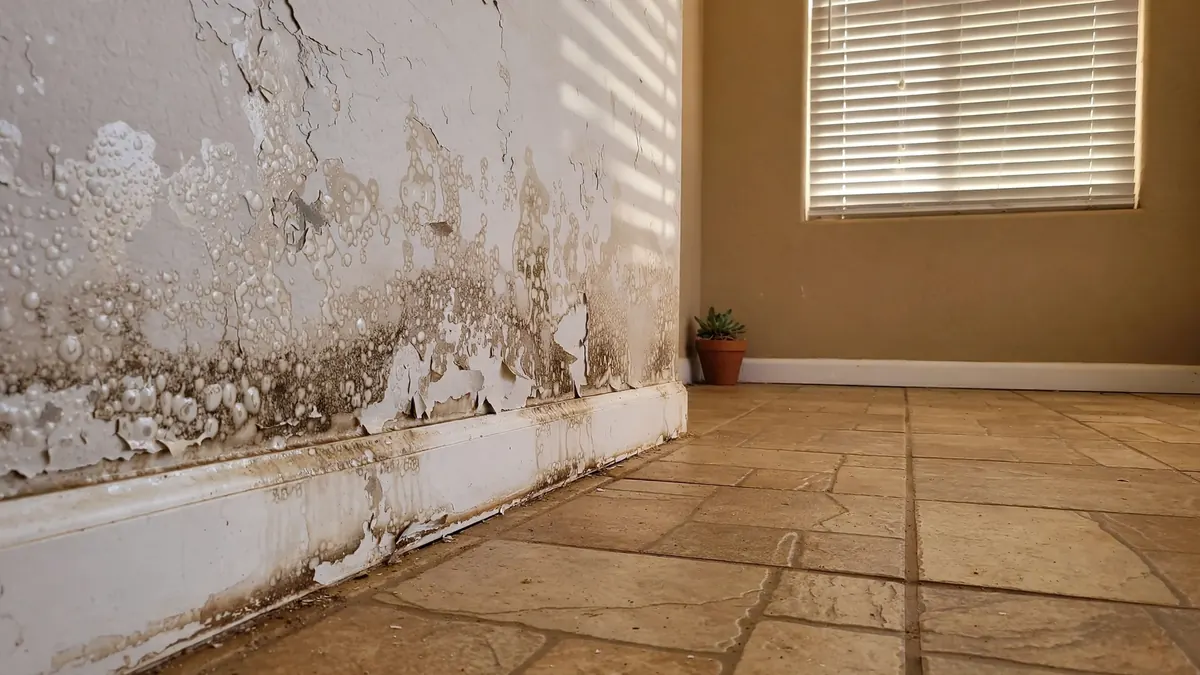
- Damp baseboards or bubbling paint at the floor. Water wicks up drywall from the slab. You might see a stain that starts at the floor and climbs a few inches, often a few feet away from the actual leak.
- A musty smell near the floor. A damp, earthy smell in one room or closet, especially in summer with the house closed up, means moisture has been sitting long enough to matter. Our guide to the signs of hidden water damage covers smells and stains in more detail.
- Water pooling outside. A wet patch of gravel or soil against the foundation, with no sprinkler or drip line nearby, can mean water from under the slab is surfacing at the edge.
Which signs are a slab leak and which are something else?
Most of these signs have a common look-alike. Checking the look-alike first saves you a detection visit you did not need and makes the visit you do need more focused.
| Sign | Points to a slab leak when | More likely something else when |
|---|---|---|
| Warm spot on the floor | It is near plumbing, keeps spreading, and the heater runs often | It is in direct sun or over a garage wall and stays the same size |
| Higher water bill | Usage is up compared to the same month last year and the meter moves with everything off | Irrigation timers changed, the pool auto-fill is stuck, or a toilet is running |
| Sound of running water | It continues with all fixtures off and stops when the house shutoff is closed | It matches a toilet refill, ice maker, softener cycle, or irrigation valve |
| Cracked or hollow tile | Several tiles in one area, with dark grout or warmth | One old tile, or cracks that have not changed in years |
| Damp baseboard or wall stain | It starts at the floor and climbs, with no fixture on the other side | A sink, toilet, washer, or AC closet is on the other side of the wall |
| Musty smell | It is near the floor and comes with another sign on this list | It is near an AC air handler, a cooler, or a sink cabinet |
| Low water pressure | It hits every fixture and the meter moves with everything off | Only one or two fixtures, and the aerators are crusted with white scale |
| Wet soil at the foundation | It stays wet in dry weather with no irrigation nearby | A drip emitter, downspout, or cooler bleed line runs there |
If two or more signs line up in the same part of the house, that is usually enough to have it looked at.
Why do Casa Grande homes show these signs so often?
Because of how the homes are built and the water that runs through them. Nearly every house here sits on a slab with supply lines underneath or inside it, the groundwater is hard, and the soil moves with the seasons. When a line fails, the signs above are the only way the house can tell you.
- Copper in older homes. Many older homes in Casa Grande, Coolidge, and Eloy have copper lines under the slab. Hard water and water chemistry wear copper from the inside over years. Hot lines also expand and contract every time hot water runs, and where the pipe rubs against gravel, concrete, or another pipe, that motion can wear a hole through the wall over time.
- PEX in newer homes. Subdivisions built in the last couple of decades were largely plumbed with PEX. The tubing handles hard water well, but fittings can fail, and a fitting under or in the slab gives the same signs as a copper leak.
- Seasonal homes. In Robson Ranch, Mission Royale, and other snowbird communities, nobody may be home to feel a warm floor for months, so the water bill is often the first sign.
What should you do when you notice a slab leak sign?
Confirm it, limit it, and write it down. Run the meter test, close the main shutoff if water is clearly escaping, and record what you noticed and when, because the date you first saw it matters for both the drying and the insurance claim.
- Run the meter test and the toilet dye test. These rule out the most common false alarm and confirm water is leaving the plumbing.
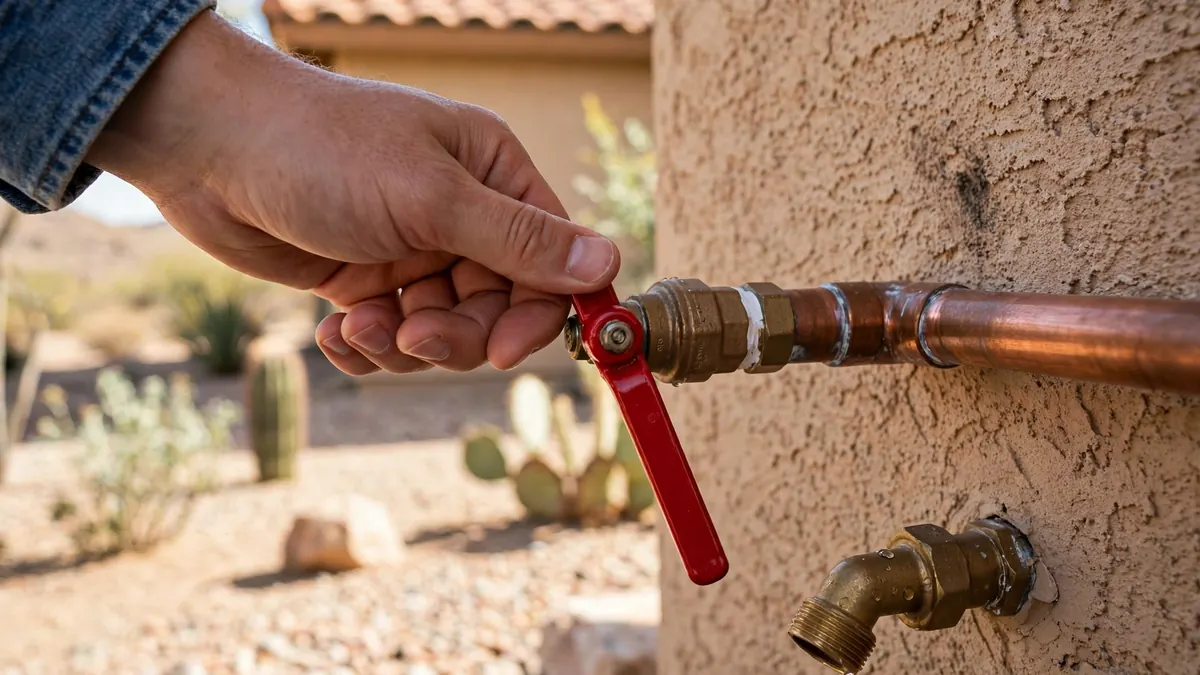
- Close the main shutoff if the meter moves. You can open it briefly when you need water, but every hour it stays open soaks more of the slab.
- Turn off the water heater if you suspect the hot side. Use the gas valve or the breaker. This also stops it from heating water that is going into the ground.
- Photograph every sign. The warm patch with tape marking its edge, dark grout, hollow tiles, baseboard stains, the meter dial, and the last few water bills.
- Write down a timeline. When you first felt the warm spot, when the bill went up, when you heard the sound. Most standard homeowners policies treat sudden leaks differently from long-running ones, so an honest, clear timeline helps.
- Get the leak located and repaired, then get the area dried. A plumber handles the pipe. The water left in the slab, tack strip, baseboards, and drywall needs structural drying with moisture readings to confirm it is actually dry.
If you have confirmed a leak, or you already see wet flooring, a spreading warm spot, or a smell you cannot trace, call (520) 380-1551. The line is open 24/7 and connects you with the restoration companies we work with in Casa Grande and nearby Pinal County towns, who can check moisture and dry out what the leak soaked. Prices are set by each company and vary with how far the water spread.
Questions homeowners ask
What is usually the first sign of a slab leak?
Can you have a slab leak without a warm spot?
How long can a slab leak go unnoticed?
Does homeowners insurance care when I first noticed the signs?
More from the blog
 Leaks & PipesHow leak detection works: finding hidden leaks without tearing up your homeLeak detection finds hidden leaks without tearing up your home by narrowing the search step by step. A meter test confirms water is escaping, pressure tests...
 Leaks & PipesBurst pipe in your house: what to do in the first 15 minutesIn the first 15 minutes after a pipe bursts, shut off the water at the main, keep away from water near outlets and cut power only...
 Leaks & PipesWater heater leaking from the bottom: what to do and what it meansA water heater leaking from the bottom may have a failed tank, but the water often comes from the drain valve, the relief valve, a fitting...
Need help with damage right now?
Speak to a local restoration specialist on the 24/7 line, any time of day.
Call (520) 380-1551When you call: enter your ZIP code, then press 1 for water damage, 2 for fire damage or 4 for sewage backup.