Home › Blog › Burst pipe in your house: what to do in the first 15 minutes
Burst pipe in your house: what to do in the first 15 minutes
In the first 15 minutes after a pipe bursts, shut off the water at the main, keep away from water near outlets and cut power only if the panel is dry, open a low faucet to drain the lines, move belongings off the floor, photograph everything, then call for extraction and a plumber. See burst pipe cleanup.
In this article
- What should you do the moment a pipe bursts?
- Minutes 0 to 2: how do you stop the water?
- Minutes 2 to 4: is it safe to be in the room?
- Minutes 4 to 6: how do you drain the lines and protect the water heater?
- Minutes 6 to 10: what should you move and what should you leave?
- Minutes 10 to 13: what should you photograph?
- Minutes 13 to 15: who do you call, and in what order?
- Why do pipes burst in Arizona homes?
- Questions homeowners ask
What should you do the moment a pipe bursts?
Stop the water first. Everything else, from the towels to the phone calls, matters less than closing a valve, because a broken supply line keeps pushing water into the house for as long as it is open. Once the water is off, you have time to make the room safe, protect what you can, and record what happened.
Here is the whole plan on one screen. The times are a guide, not a stopwatch. If one step takes longer, move on to the next as soon as you can.
| Minutes | Task | Why it matters |
|---|---|---|
| 0 to 2 | Shut off the water | Stops the loss from getting bigger |
| 2 to 4 | Check for electrical and ceiling hazards | Keeps you and your family safe |
| 4 to 6 | Drain the lines and deal with the water heater | Empties water still in the pipes and protects the heater |
| 6 to 10 | Move belongings and open up wet areas | Limits stains, swelling and wicking |
| 10 to 13 | Photograph and write down the time | Builds the record your insurer will ask for |
| 13 to 15 | Make the calls in the right order | Gets extraction, the plumbing repair and the claim started |
Find your main shutoff today, while nothing is wrong. The first two minutes go much better when you already know where to walk.
Minutes 0 to 2: how do you stop the water?
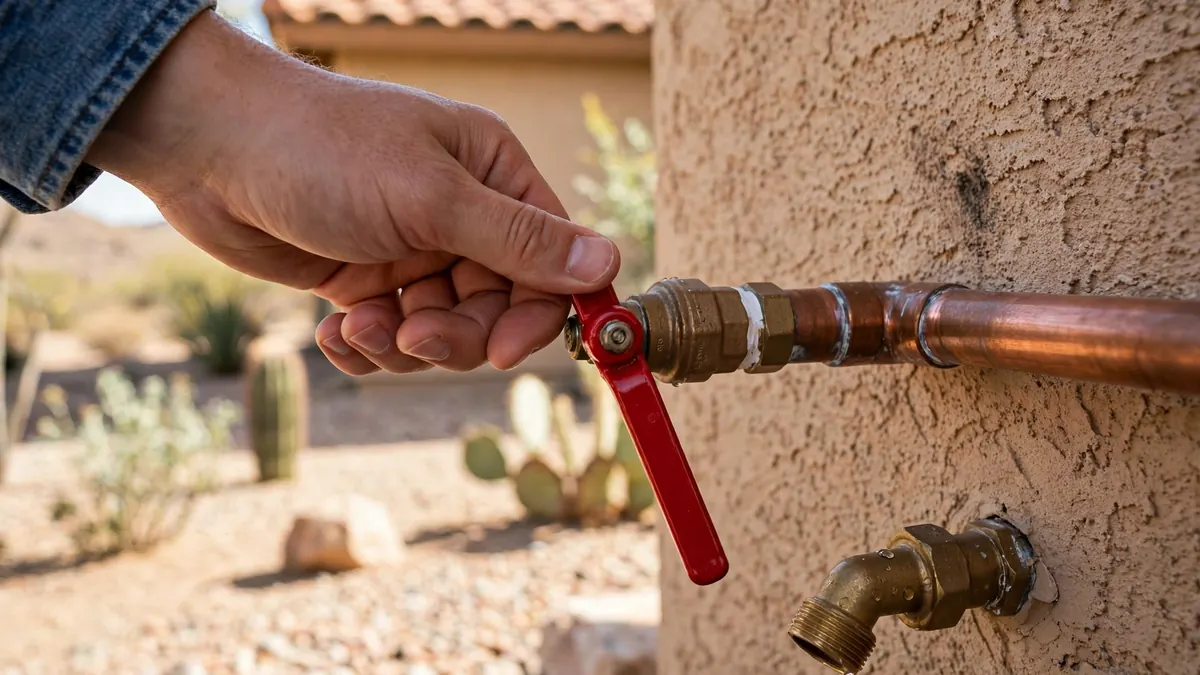
Close the main shutoff valve where the water line enters the house. If you cannot find it or it will not turn, close the valve at the meter box near the curb. If the leak is at a single fixture, its own shutoff under the sink or behind the toilet can stop it faster.
- The main shutoff. In most Casa Grande homes it is on the outside wall near the front hose bib, or inside the garage, often near the water heater or softener. A lever-handle ball valve closes with a quarter turn. A round-handle gate valve needs several full turns clockwise.
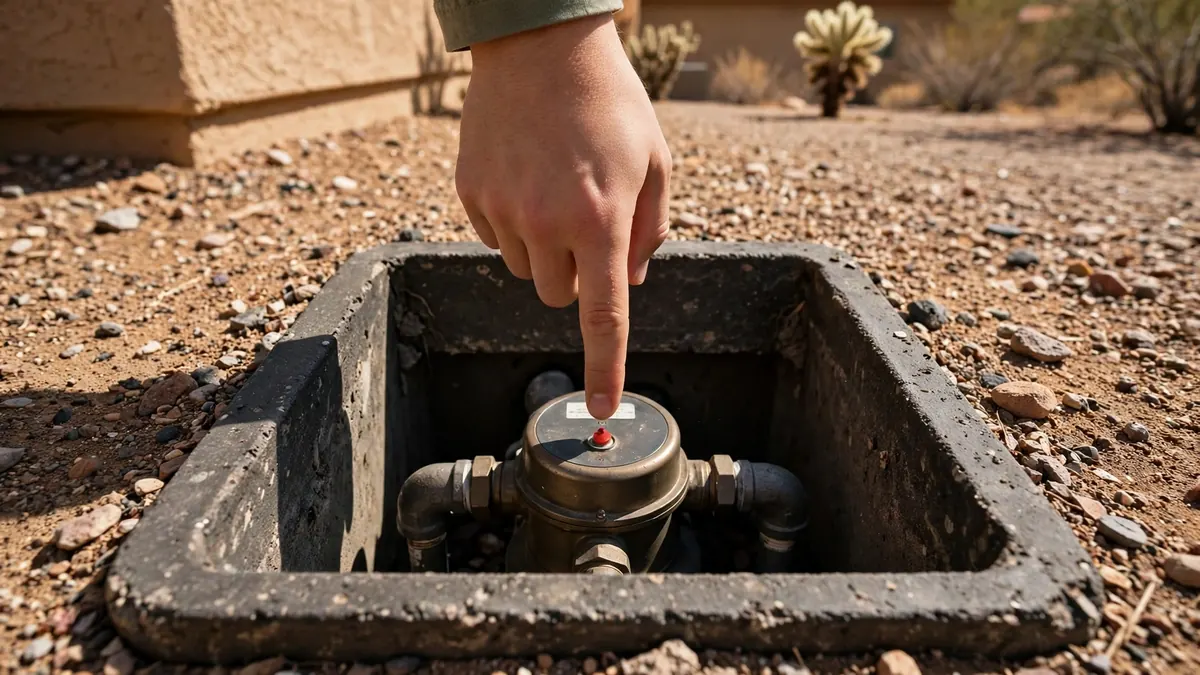
- The meter valve. If the house valve fails, the meter box near the street has a valve on the supply side of the meter. Many need a meter key or a large adjustable wrench. Lift the lid carefully, since scorpions and spiders like those boxes in warm weather.
- Fixture stops. A burst toilet supply line, sink line or washing machine hose can be stopped at its own small valve. Turn it clockwise until it stops. Old fixture stops can be stiff or can leak once moved, so if it does not seal, go to the main.
- The water heater cold inlet. If water is pouring from the heater or its lines, close the cold valve on top of the tank, then close the main.
If a valve is stuck, do not hang your weight on it with a pipe wrench. A cracked valve body can make the leak worse. Go to the next valve down the line instead.
Minutes 2 to 4: is it safe to be in the room?
Look before you walk in. Water near outlets, power strips, extension cords or the electrical panel is a shock hazard, and a ceiling that sags or bulges can come down. If either is present, stay out and keep others out.
- Check the panel. If the breaker panel is dry and you can reach it without standing in water, switch off the breakers for the wet rooms. If the panel is wet or you would have to stand in water to reach it, leave it and call the utility or an electrician.
- Check the ceiling. A burst line in the attic, which is common in homes with attic air handlers or rerouted lines, can fill a ceiling with water. A bulging or sagging spot means water is pooling on the drywall. Keep people and pets out from under it.
- Watch the floor. Wet tile and vinyl plank are slippery. Wear shoes with grip, not socks.
Never use a household vacuum on standing water, and never plug in a fan or extension cord in a wet room. A household vacuum is not built for water and can shock you.
Minutes 4 to 6: how do you drain the lines and protect the water heater?
Open a faucet at the lowest point in the house, usually an outdoor hose bib or a tub faucet, to let the water left in the pipes drain out there instead of through the break. Then decide whether to turn off the water heater.
Closing the main stops new water, but the pipes are still full and under some pressure. Opening a low faucet drains that water to a place you choose. Open a faucet on the hot side too if the burst was on a hot line.
On the water heater:
- If the tank itself is leaking or the hot line burst, turn the heater off. On a gas heater, turn the control knob to off or pilot. On an electric heater, switch off its breaker.
- If you drained the hot side, turn an electric heater off before the tank level drops. Heating elements that run without water around them can burn out.
- If the burst was a cold line far from the heater and you only closed the main, the tank stays full and can usually be left alone. Turning it off is still a reasonable precaution if you are not sure.
Write down which valves you closed and which faucets you opened.
Minutes 6 to 10: what should you move and what should you leave?
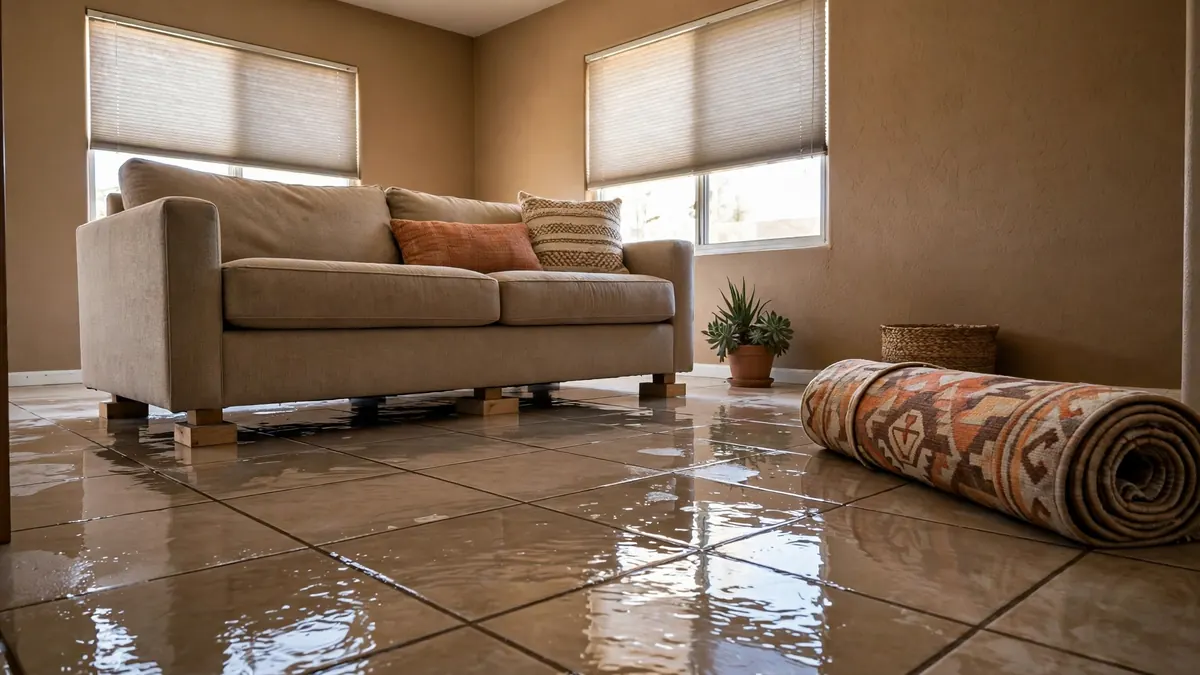
Move anything that can be damaged by water or can damage the floor: electronics, papers, rugs, books, shoes, and anything in a lower cabinet. Leave the heavy lifting, like pulling up carpet or removing baseboards, for the restoration crew.
- Lift furniture. Put aluminum foil, plastic lids or wood blocks under the legs of sofas and tables. Wet wood legs and metal glides stain carpet and tile.
- Pull rugs off wet floors. An area rug traps water against the floor and can bleed dye into carpet.
- Empty lower cabinets. If the burst was under a sink, take everything out and leave the doors open so the cabinet floor can start to breathe.
- Get electronics out of the room. Unplug them only if the outlet and your hands are dry and you are not standing in water.
- Blot, do not spread. Towels can soak up a small puddle. Pushing water around with a mop just spreads it under more baseboard.
- Leave damaged items. Set them aside in the garage or a dry room. Your insurer may want to see them.
On a slab home, the water runs sideways under baseboards and flooring into the next room. Check the rooms on the other side of the wall from the burst, not just the room it happened in.
Minutes 10 to 13: what should you photograph?
Photograph the source, every wet area, and the damage, before anything else gets moved or cleaned. Take wide shots that show the room and close-ups that show detail. Video while you walk through is even better.
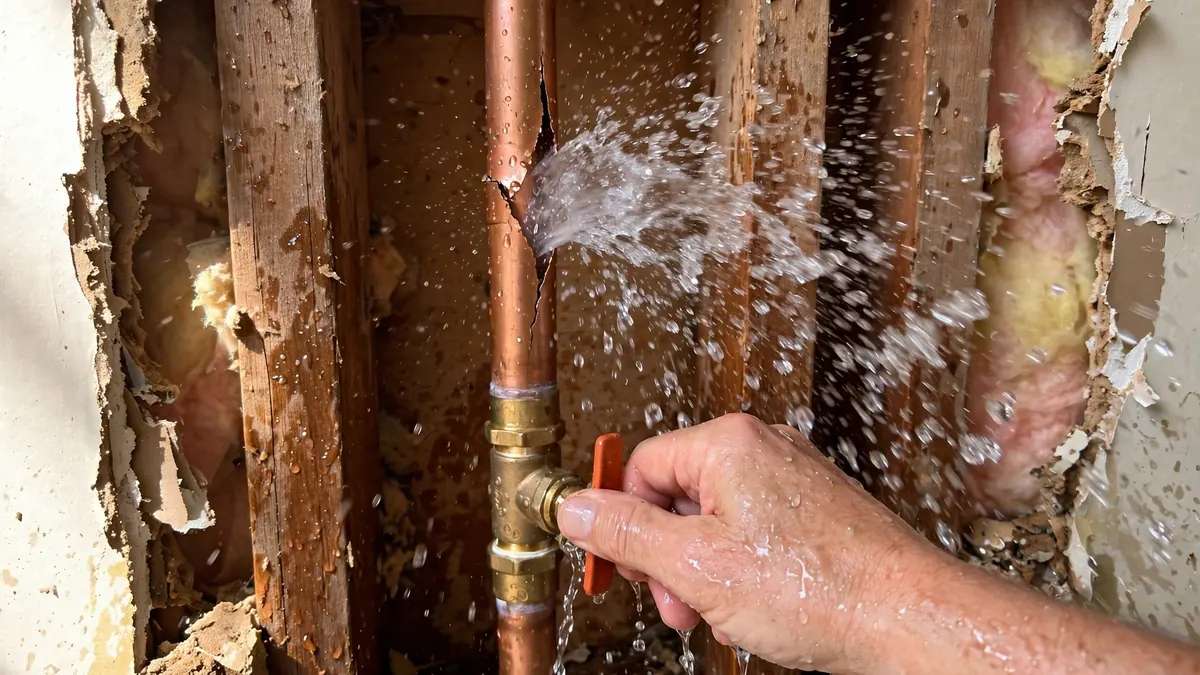
- The break itself, close up, including the pipe, fitting or hose that failed.
- The valve you closed and the position it is in.
- Each wet room from the doorway, then the floor, walls and baseboards up close.
- Any ceiling stain or bulge, and the attic above it if you can see it safely.
- Damaged belongings, before you set them aside.
- The time on your phone or a clock, so the start of the loss is on record.
Keep the failed part. If a plumber removes a section of pipe, a fitting or a burst hose, ask for it in a bag. It is the best evidence that the failure was sudden, and most standard homeowners policies treat sudden damage differently from slow leaks. Write a few lines about when you found the water and what you did, while you still remember it clearly.
Minutes 13 to 15: who do you call, and in what order?
Call for water extraction first, then a plumber, then your insurer. The water already in the house keeps soaking in while you wait, and most policies expect you to take reasonable steps to limit further damage before the adjuster arrives.
- Water extraction and drying. A local restoration crew pulls the standing water and sets up drying equipment. Our emergency water damage page explains how the 24/7 line works.
- A plumber. The pipe still needs repairing before the water goes back on. We do not do plumbing repairs, so that call is to a plumber of your choosing.
- Your insurer. Report the loss and get a claim number. Ask what they need from you.
- Your landlord or HOA, if you rent or live in a townhome or condo where a neighbor's unit may also be affected.
Keep receipts for anything you buy, from towels to a hotel room if the house cannot be used. For what your policy is likely to cover, see our guide on whether homeowners insurance covers water damage in Arizona.
Why do pipes burst in Arizona homes?
Mostly from wear, heat and pressure, not cold. Hard water thins copper over years, plastic fittings fail with age and heat, and water pressure that runs high puts constant stress on every joint. Freezes are rare here but do happen on a few winter nights.
- Heat in the attic. Lines and fittings in Pinal County attics sit in very high temperatures every summer. Over time that heat can age plastic fittings and the pipe near them.
- High water pressure. Many homes have a pressure reducing valve near the main. When it fails, pressure in the house can climb, and the weakest joint or hose gives first.
- Thermal expansion. Water expands when the heater warms it. Without an expansion tank or a working relief valve, that pressure has to go somewhere.
- Supply hoses. Washing machine, toilet, faucet and ice maker lines are common culprits. Rubber hoses and old braided lines fail without warning.
- The occasional freeze. A hard January freeze can split exposed lines: hose bibs, irrigation backflow preventers, and supply lines to rooftop evaporative coolers. These often leak when they thaw later in the day, not at night.
If you want more detail on what crews do after extraction, see our page on burst pipe cleanup in Casa Grande. When water is on the floor right now, call (520) 380-1551. The line is open 24/7 and connects you with the restoration companies we work with in Casa Grande and nearby Pinal County towns. Prices are set by each company and vary with the job.
Questions homeowners ask
Should I turn off the water heater when a pipe bursts?
What if my main shutoff valve will not turn?
Does insurance cover a burst pipe in Arizona?
More from the blog
 Leaks & PipesHow leak detection works: finding hidden leaks without tearing up your homeLeak detection finds hidden leaks without tearing up your home by narrowing the search step by step. A meter test confirms water is escaping, pressure tests...
 Leaks & PipesSlab leak signs in Casa Grande homes and what each one meansThe clearest slab leak signs are a warm spot on the floor, a water bill that rises with no change in habits, running water sounds with...
 Leaks & PipesWater heater leaking from the bottom: what to do and what it meansA water heater leaking from the bottom may have a failed tank, but the water often comes from the drain valve, the relief valve, a fitting...
Need help with damage right now?
Speak to a local restoration specialist on the 24/7 line, any time of day.
Call (520) 380-1551When you call: enter your ZIP code, then press 1 for water damage, 2 for fire damage or 4 for sewage backup.