Home › Water Extraction & Wet Carpet
Water Extraction & Wet Carpet Drying in Casa Grande, AZ
Water that sits in carpet and pad wicks into baseboards and drywall within hours. Our network's local restoration crews extract it with commercial equipment and dry what can be saved, 24/7 across Casa Grande.
When you call: enter your ZIP code, then press 1 for water damage, 2 for fire damage or 4 for sewage backup.
Last updated: October 28, 2026
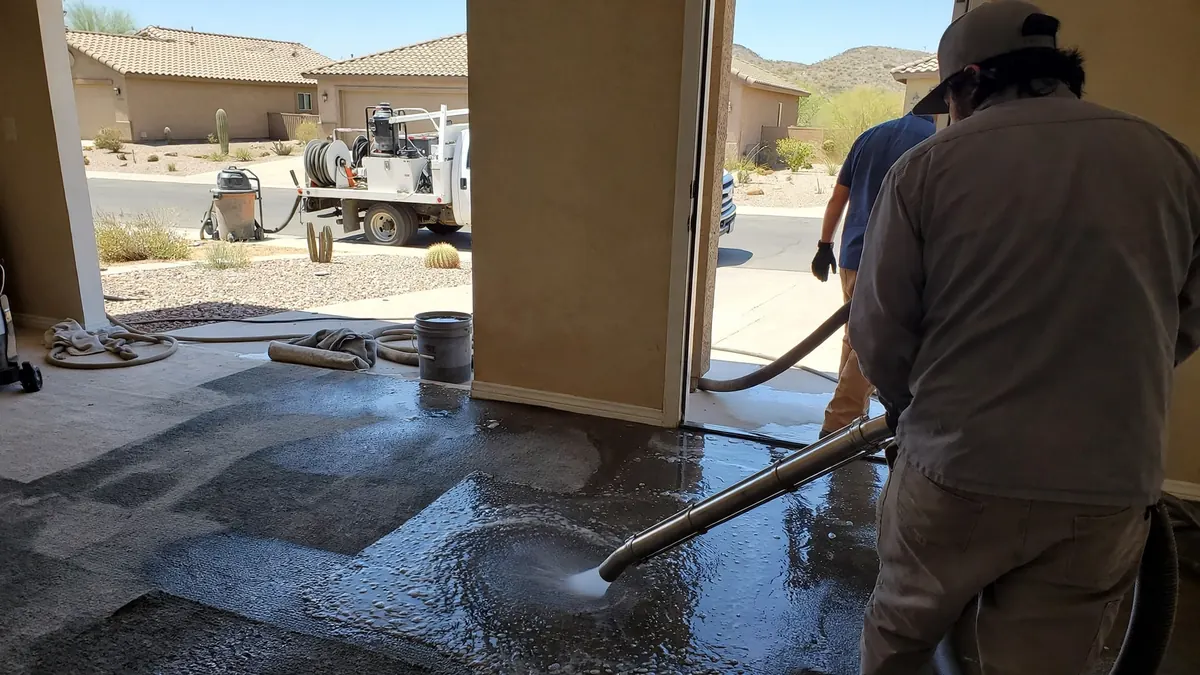
Water extraction is the first step of any water damage job: pulling standing water out of carpet, pad, tile, and subfloor with truck-mounted or portable extractors before it spreads. Extraction removes far more water than fans or a shop vac, which shortens drying time and is often the difference between saving carpet and replacing it. Call (520) 380-1551.
Why a shop vac and fans are not enough
A household wet vac picks up the water you can see. The rest is in the carpet pad, which holds water like a sponge, and in the tack strip and the bottom inches of drywall. Commercial extraction does two things differently:
- Weighted extraction tools press down on the carpet while vacuuming, squeezing water out of the pad instead of just the surface.
- Moisture mapping with meters and thermal cameras shows how far water traveled under tile, behind baseboards, and into the next room.
Box fans dry the top of the carpet and leave the pad and subfloor wet, which is how a musty smell shows up a week later.
Can wet carpet be saved?
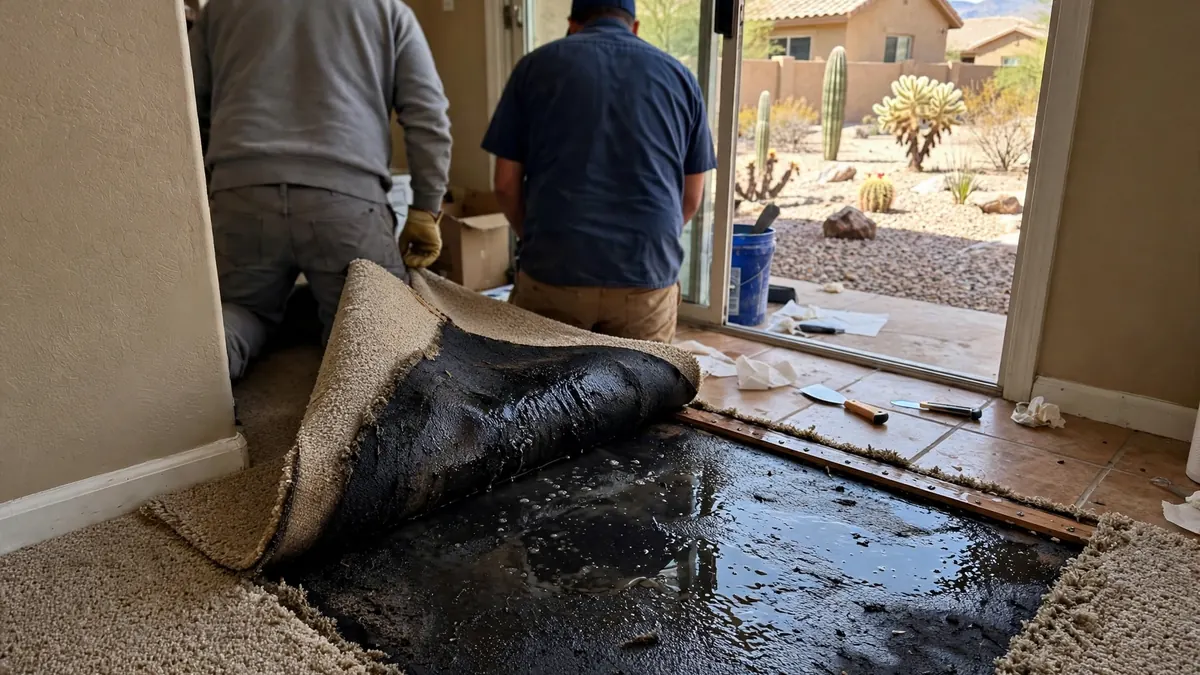
- Usually yes if the water was clean (a supply line, water heater, or ice-maker line) and extraction starts within a day or two. Carpet is often floated in place with air movers underneath, and the pad may be replaced.
- Sometimes if the water came from a washing machine or dishwasher. The carpet is cleaned and disinfected, and the pad is usually replaced.
- No if sewage or outdoor flood water soaked it. Carpet and pad are removed and the floor is sanitized. See sewage backup cleanup.
Signs carpet is past saving include delamination (the backing separating), a smell that returns after drying, and water that sat more than two to three days.
Tile, wood, and laminate floors
Most Casa Grande homes have tile in the main living areas. Tile itself does not absorb much, but water runs under it through grout lines and sits on the slab, which shows up as loose or hollow-sounding tiles later. Laminate and engineered wood swell at the seams and usually have to be replaced once wet. Solid hardwood can often be saved with floor drying mats; see hardwood floor water damage.

How the cleanup works
- Call and triage. You describe the source and how far the water spread. The specialist lines up an available local crew.
- Moisture mapping. Moisture meters and thermal imaging show where water traveled, including under flooring and inside walls.
- Extraction. Standing water is pulled out of flooring, carpet, and pad before it wicks into drywall.
- Drying. Air movers and commercial dehumidifiers run while readings are logged daily. Most homes reach a dry standard in about 3 to 5 days.
- Repairs and paperwork. Damaged materials are replaced, and photos and moisture logs go to your insurer.

What extraction and carpet drying cost
Extraction and drying for one or two rooms of clean water is often about $400 to $1,500. Larger areas, pad replacement, and drywall removal raise the cost. See the cost guide for more ranges, and the insurance guide for what a policy typically covers.
How long does wet carpet take to dry?
Do I need to replace the carpet pad?
Can I walk on wet carpet?
What is the difference between water extraction and water mitigation?
Does insurance pay for water extraction?
Standing water or soaked carpet? Get it extracted.
24/7 water extraction and carpet drying across Casa Grande and Pinal County.
Call (520) 380-1551When you call: enter your ZIP code, then press 1 for water damage, 2 for fire damage or 4 for sewage backup.