Home › Blog › Tile roof leaks: why Arizona tile roofs leak under the tile
Tile roof leaks: why Arizona tile roofs leak under the tile
Arizona tile roofs usually leak under the tile, not through it. The tiles shed most of the water, but the underlayment beneath them is the real waterproof layer, and after years of heat it cracks. Slipped tiles, clogged valleys, worn flashing, and wind-driven monsoon rain then push water onto that worn layer. See roof leak water damage.
In this article
- Why do tile roofs leak when the tiles look fine?
- How does a tile roof keep water out?
- How long does tile roof underlayment last in Arizona?
- What happens when tiles crack or slip?
- Why do valleys and wall flashings leak first?
- How does wind-driven monsoon rain get under tile?
- What does a tile roof leak look like inside?
- What are the repair options for a leaking tile roof?
- What should you do if your tile roof is leaking?
- Questions homeowners ask
Why do tile roofs leak when the tiles look fine?
Because the tile is not what keeps the water out. Concrete and clay tiles shed most of the rain, but some water always gets underneath them, and the layer below, called the underlayment, is what actually stops it from reaching the roof deck. When that layer wears out, the roof leaks even though every tile looks perfect from the street.
Concrete tile can last for decades, so it is easy to assume the roof is fine for the life of the house. The underlayment does not last nearly as long in Arizona heat, and many Casa Grande homes built in the 1990s and early 2000s are reaching the age where it gives out.
How does a tile roof keep water out?
A tile roof works in layers. Each one has a job, and a leak means one of them has failed.
- The roof deck. Plywood or OSB sheathing nailed to the trusses. It is the base, not a waterproof surface.
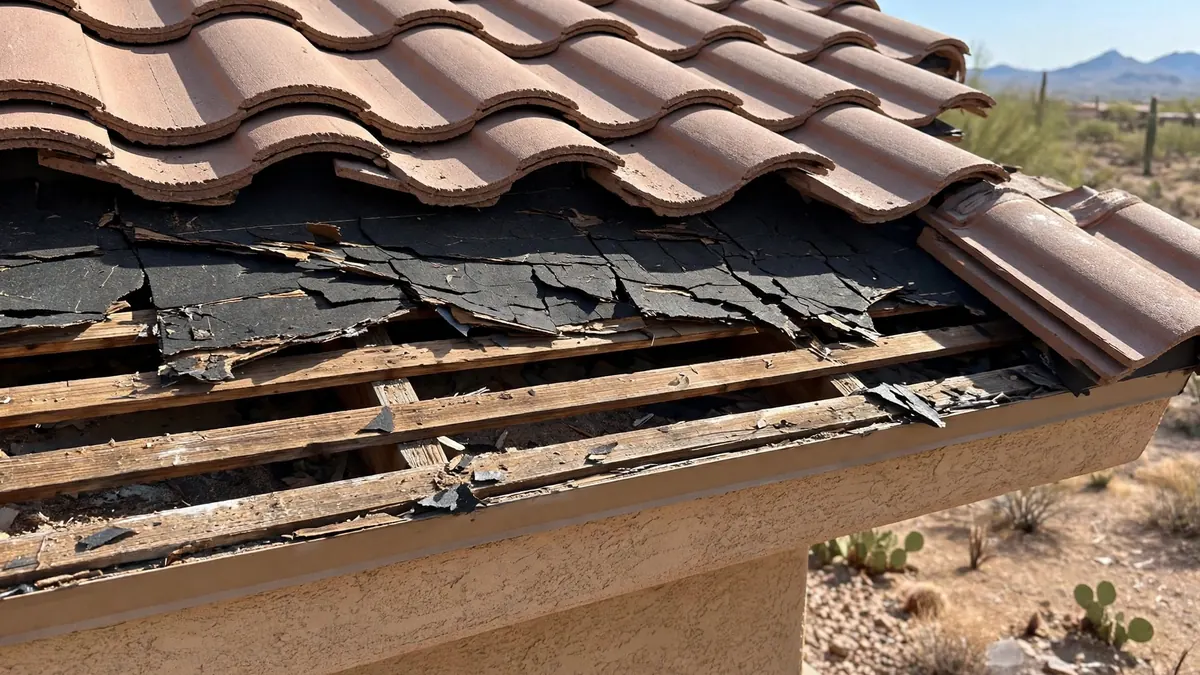
- The underlayment. Felt or a synthetic sheet laid over the deck, overlapped so water runs down and off. This is the main waterproof layer.
- Battens. Strips of wood on many tile roofs that the tiles hang from. They hold the tiles up off the underlayment so water can run underneath.
- The tiles. They block sun, wind, and most of the rain, and protect the underlayment from UV light.
- Flashing. Metal pieces at valleys, walls, chimneys, vents, and skylights that direct water where tiles meet something else.
- Edge pieces. Bird stops at the eaves, ridge and hip caps, and mortar or foam that hold the edges together and keep animals out.
Water that gets past the tiles is supposed to run down the underlayment to the eave and drip out. When the underlayment is cracked, torn, or has slipped, that water reaches the wood deck and then the attic.
How long does tile roof underlayment last in Arizona?
Underlayment under concrete tile can start cracking after roughly 15 to 25 years in Arizona heat, depending on the material, how well the attic is ventilated, and how much sun the roof gets. Older felt underlayment tends to dry out and get brittle. Newer synthetic products are made to last longer, but none of them last as long as the tile above.
Heat is the main reason. Summer afternoons bake the roof, the space under the tile gets very hot, and the felt slowly loses the oils that keep it flexible. It shrinks, cracks along the folds and at the battens, and in bad cases crumbles when touched. South and west-facing slopes usually age first because they get the most afternoon sun.
Signs the underlayment is wearing out
- Leaks that appear in several places over a few seasons, not just one spot.
- Daylight visible through the roof deck from the attic, or dark water streaks on the underside of the sheathing.
- A roofer who lifts a tile and finds felt that is brittle, cracked, or torn at the batten lines.
- The roof is past about 15 years and has never had the underlayment replaced.
What happens when tiles crack or slip?
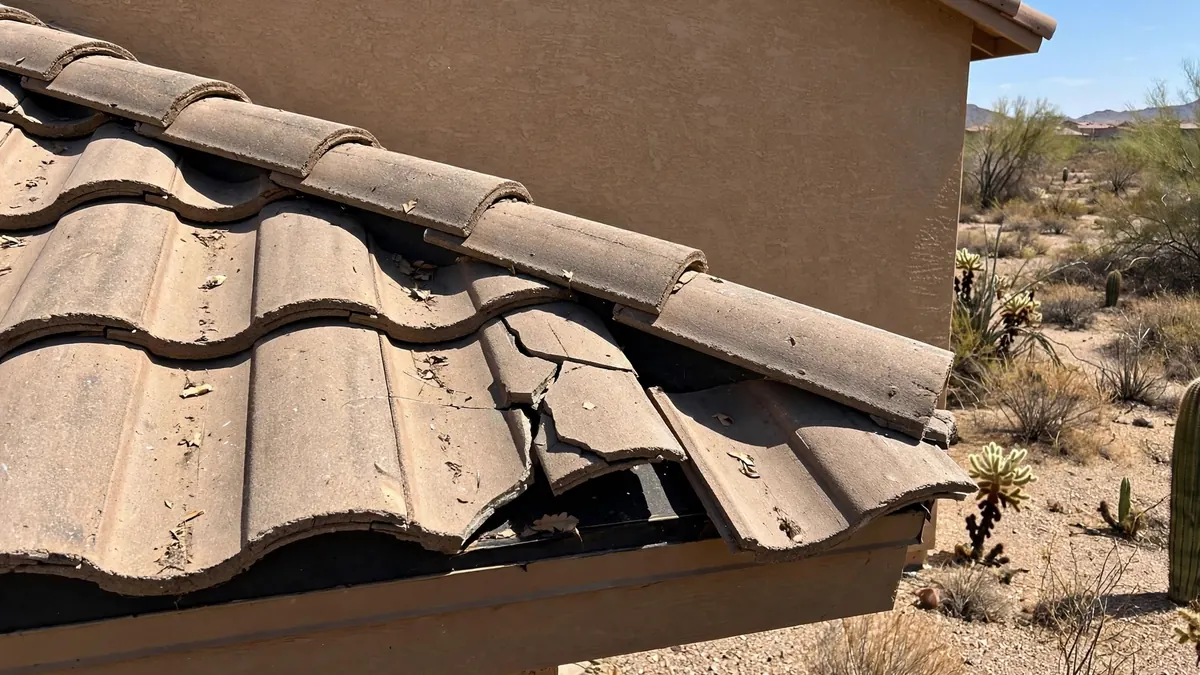
A cracked or slipped tile lets much more water reach the underlayment in one spot, and it exposes that underlayment to sun, which wears it out faster. A single broken tile on a roof with good underlayment may never cause a leak. The same broken tile over old felt often does.
- Foot traffic. Concrete tile is strong against weather but cracks when stepped on in the wrong place. Satellite installers, solar crews, holiday lights, and roof cooler service are common causes.
- Slipped tiles. Tiles can slide down when a nail or fastener lets go, leaving a gap at the top where water runs straight in.
- Wind. Gusts ahead of monsoon storms lift and shift tiles, especially at edges, ridges, and hips.
- Old solar or satellite mounts. Brackets removed without proper repair can leave cracked tiles and open holes in the underlayment.
From the ground, look for tiles that sit out of line with their neighbors, a darker gap where a tile has slid, or broken pieces in the gutter or on the ground below the roof edge. Binoculars help. Avoid walking the roof yourself, since that is how many cracked tiles start.
Why do valleys and wall flashings leak first?
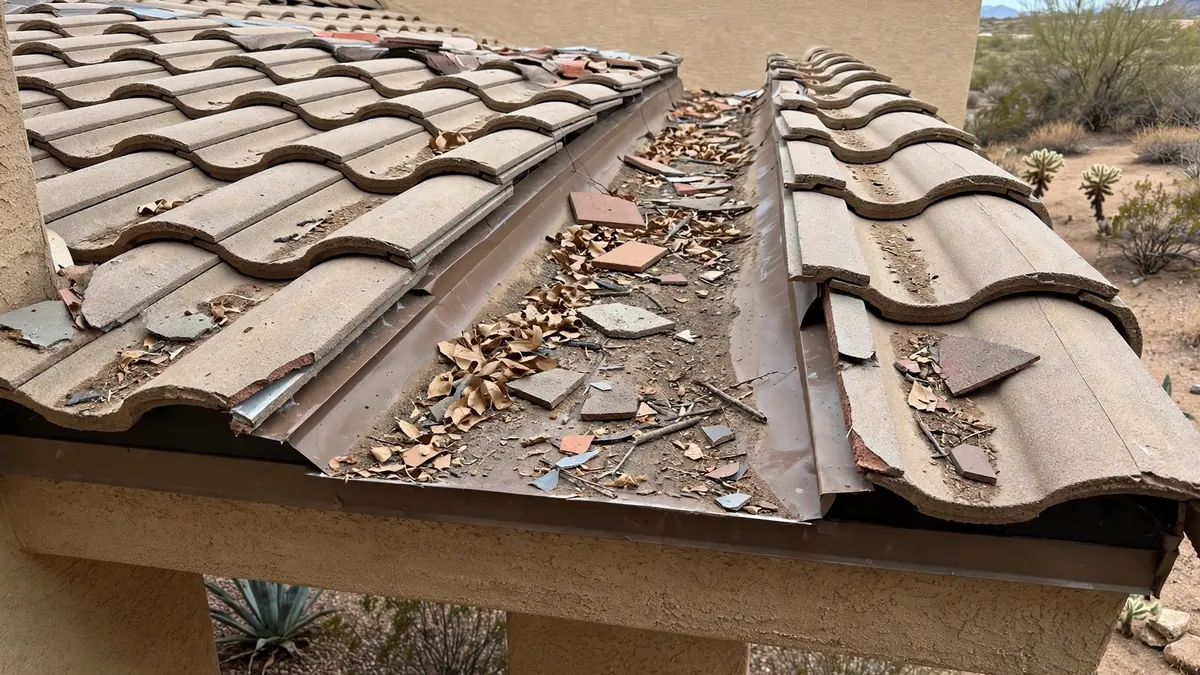
Valleys and flashings handle the most water on the roof. A valley collects runoff from two slopes, and the flashing where a roof meets a wall, a chimney, or a pipe has to turn water around a corner. When those spots clog or wear out, they overflow onto the underlayment.
| Spot | Why it leaks | What helps |
|---|---|---|
| Valleys | Leaves, dust, and tile debris pile up in the metal channel, so water spills sideways under the tiles | Keeping valleys cleared, especially after dust storms and before monsoon season |
| Wall flashing | Where a lower roof meets a higher wall, water running down the wall gets behind worn or poorly lapped flashing | Checking where second-story walls, patio roofs, and additions tie in |
| Pipe and vent flashing | Lead or rubber boots and sealant crack in the heat | Inspecting every penetration when the roof is serviced |
| Skylights and roof cooler openings | Curb flashing and sealant break down, and tile around them gets disturbed during service | Having the curb checked when the cooler or skylight is serviced |
| Eaves and bird stops | Old felt rots at the bottom edge where water collects, and missing bird stops let nests in | Replacing edge pieces and checking the lowest course of felt |
Many tile roof leaks appear right where a valley ends or below a wall flashing, which is why roofers look there first.
How does wind-driven monsoon rain get under tile?
Monsoon rain often moves sideways. Strong gusts push it up and under the tiles, past the overlaps that keep out normal rain, so a roof that has never leaked in a steady winter rain can leak in a summer storm.
The overlaps between tiles are designed for water running downhill. When a storm drives rain across the roof or even up the slope, it gets into the joints and under the tile laps. A healthy underlayment catches that water and lets it drain. An aging one does not. Gusts also lift loose tiles for a second at a time, which lets more water in with each push.
If a leak only appears during storms with strong wind from one direction, on the side of the house that faced the wind, wind-driven rain over weak underlayment or flashing on that slope is the likely cause. When a storm has lifted or broken tiles, the storm damage and roof tarping page covers covering the roof until it is repaired.
What does a tile roof leak look like inside?
Most tile roof leaks show up first in the attic and only later on the ceiling. By the time you see a stain, the insulation above it has often been wet for a while.
- Ceiling stains with brown edges that grow a little after each storm.
- Stains near exterior walls, because water runs down the deck toward the eaves before it drips.
- Matted or darkened insulation in the attic, often in a line downhill from the entry point.
- Dark streaks or soft spots on the underside of the roof sheathing.
- A musty smell from ceiling vents or light fixtures after the monsoon ends.
Water often travels along the deck or a truss before it drops, so the stain on your ceiling may be several feet from the actual leak. Wet insulation and drywall need to be removed or dried with structural drying before mold starts, and a local restoration crew handles that inside work while a roofer repairs the roof. For what ceiling repairs involve, see ceiling water damage.
What are the repair options for a leaking tile roof?
The fix depends on whether the problem is a few tiles, one detail like a valley, or the underlayment across the whole roof. A good roofer lifts tiles to look at the underlayment before recommending anything.
| Repair | What it involves | When it makes sense |
|---|---|---|
| Replace broken or slipped tiles | Swap or reset individual tiles and fasten them properly | Underlayment is still in good shape and the damage is local |
| Section repair | Lift tiles in one area, replace the underlayment and flashing there, reset the tiles | A single valley, wall, or penetration has failed |
| Underlayment replacement, often called lift and relay or re-felt | Remove all the tiles, replace the underlayment and battens as needed, and reinstall the original tiles with replacements for broken ones | Underlayment is aging across the roof but the tiles are still sound |
| Full roof replacement | New tiles or a different roofing material entirely | Tiles are failing, discontinued, or the owner wants a change |
Lift and relay is common in Arizona because concrete tile often outlasts several layers of underlayment. Ask whether the quote includes new battens, flashing, and bird stops, and how broken tiles will be matched.
Insurance usually looks at the cause. Most standard policies cover sudden storm damage, such as wind lifting or breaking tiles, and the water damage it causes inside. Underlayment that wore out with age is commonly treated as maintenance. Photograph storm damage soon after it happens, keep roof repair records, and check your policy's wording on wear and tear.
What should you do if your tile roof is leaking?
Catch the water inside, document the damage, have a roofer look under the tile, and get the attic and ceiling dried. Stay off the roof yourself, since stepping on tile is a common way to make the leak worse.
- Put a bucket under any drip and move belongings out of the way.
- Photograph the ceiling, the attic, and the roof from the ground.
- Have a roofer lift tiles near the leak and check the underlayment and flashing.
- Have wet insulation and drywall checked with a moisture meter and dried or removed.
- Keep invoices and photos for your records and any claim.
If water is already coming through the ceiling or the attic insulation is soaked, call (520) 380-1551. The line is open 24/7 and connects you with a local restoration crew in Casa Grande and nearby Pinal County towns to dry out the inside while the roof is repaired.
Questions homeowners ask
Can a tile roof leak if no tiles are broken?
What is a tile roof lift and relay?
How long do concrete tile roofs last in Arizona?
Is it safe to walk on a tile roof?
More from the blog
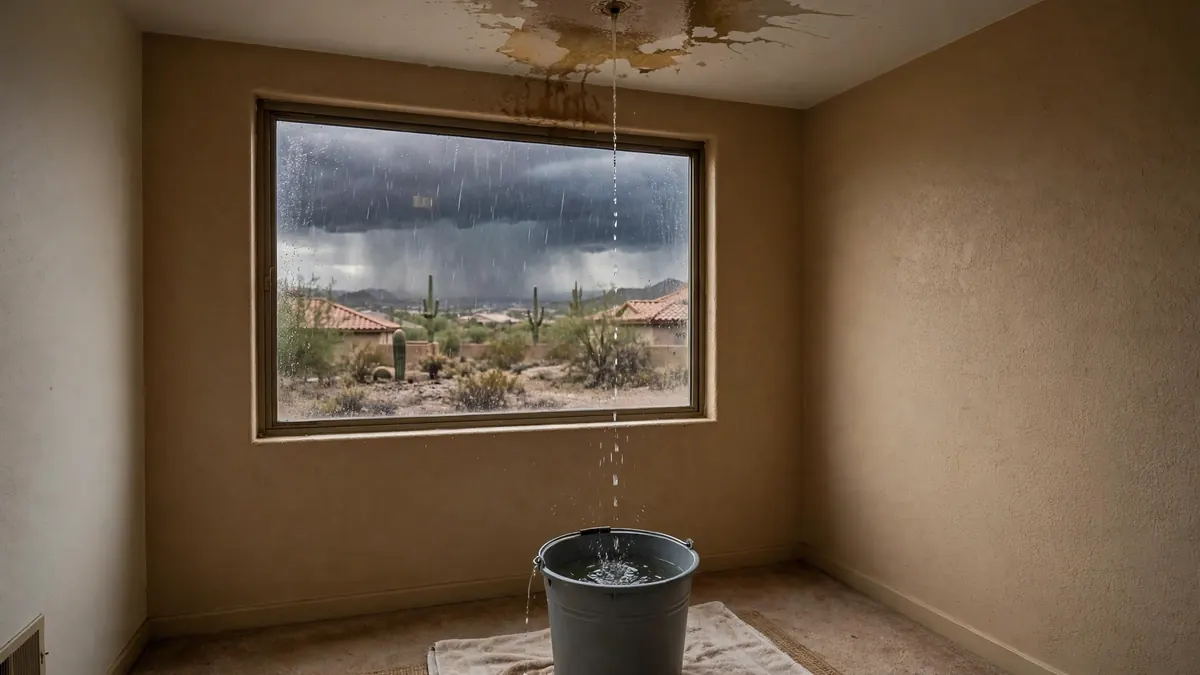 Monsoon & RoofRoof leaking during a monsoon: what to do right nowWhen your roof leaks during a monsoon, stay off the roof, cut power to any wet light fixture, catch the drip in a bucket, move belongings,...
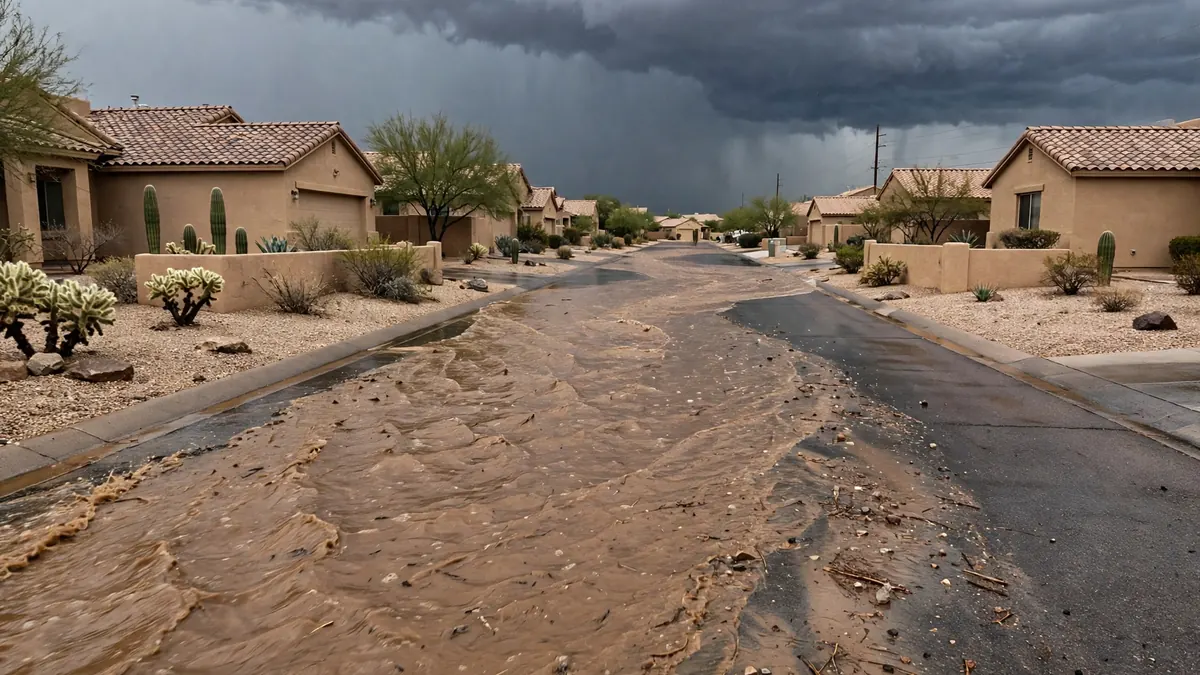 Monsoon & RoofMonsoon flooding in Casa Grande: why homes flood and how to clean upCasa Grande homes flood in monsoon storms because hard, dry ground sheds heavy rain instead of absorbing it, and flat terrain sends runoff toward low lots,...
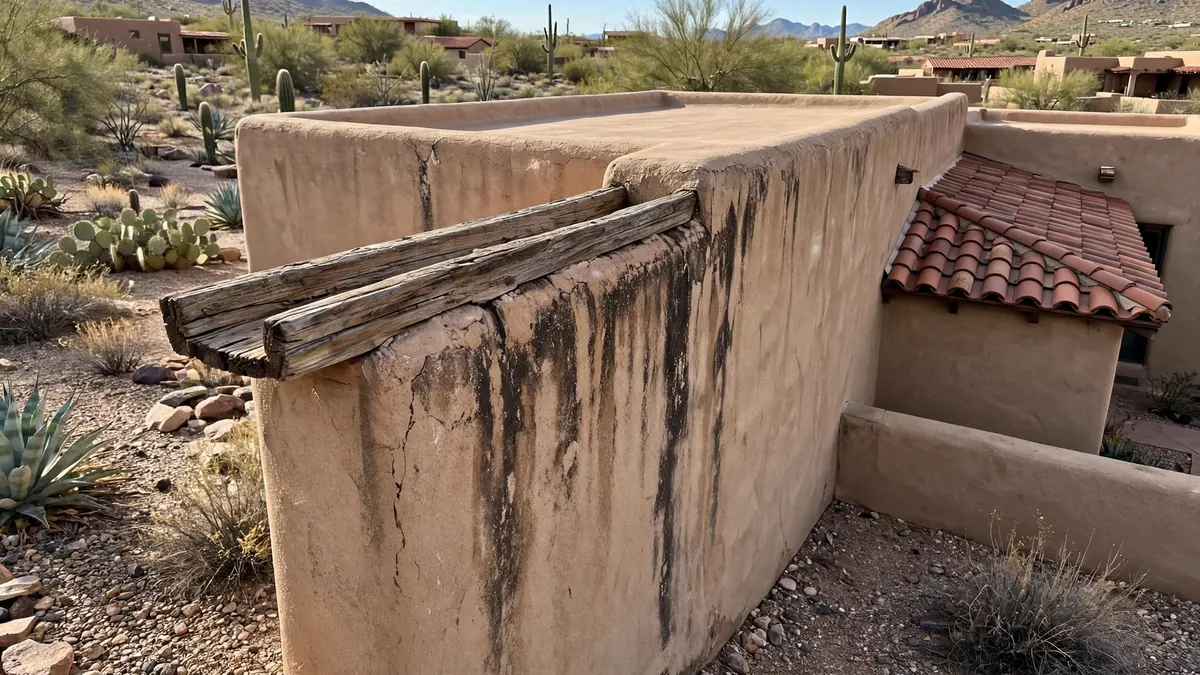 Monsoon & RoofFlat roof leaks and clogged scuppers in ArizonaFlat roofs in Arizona usually leak because water cannot get off them. Scuppers and canales clog with dust and debris, water ponds against the parapet, and...
Need help with damage right now?
Speak to a local restoration specialist on the 24/7 line, any time of day.
Call (520) 380-1551When you call: enter your ZIP code, then press 1 for water damage, 2 for fire damage or 4 for sewage backup.