Home › Blog › Moisture meters and thermal cameras: how crews know a home is dry
Moisture meters and thermal cameras: how crews know a home is dry
Crews know a home is dry by measuring, not touching. They take a reference reading from the same material in an area that never got wet, then meter the wet areas daily with pin and pinless moisture meters, using thermal cameras to find missed spots. Drying ends when readings match. See structural drying.
In this article
- How do restoration crews know a home is actually dry?
- What is a dry standard?
- What is the difference between pin and pinless moisture meters?
- What does a thermal camera actually show?
- Which tool answers which question?
- What goes into a daily drying log?
- Why do moisture readings matter for an insurance claim?
- How can you tell if drying was checked properly?
- What should you do if you are not sure your home is dry?
- Questions homeowners ask
How do restoration crews know a home is actually dry?
They measure it. A crew takes moisture readings from the same materials in a part of the house that never got wet, uses those as the target, and then meters the wet areas every day until they match. A surface that feels dry does not count.
Three kinds of tools do most of the work. Moisture meters read how much water is inside drywall, wood and other materials. Thermal cameras show temperature patterns on a surface, which point to where moisture may be hiding. Thermo-hygrometers read the air, so the crew knows whether the room conditions are helping or holding the job back. None of them is enough alone. Used together and written down each day, they turn drying from a guess into a record you can read.
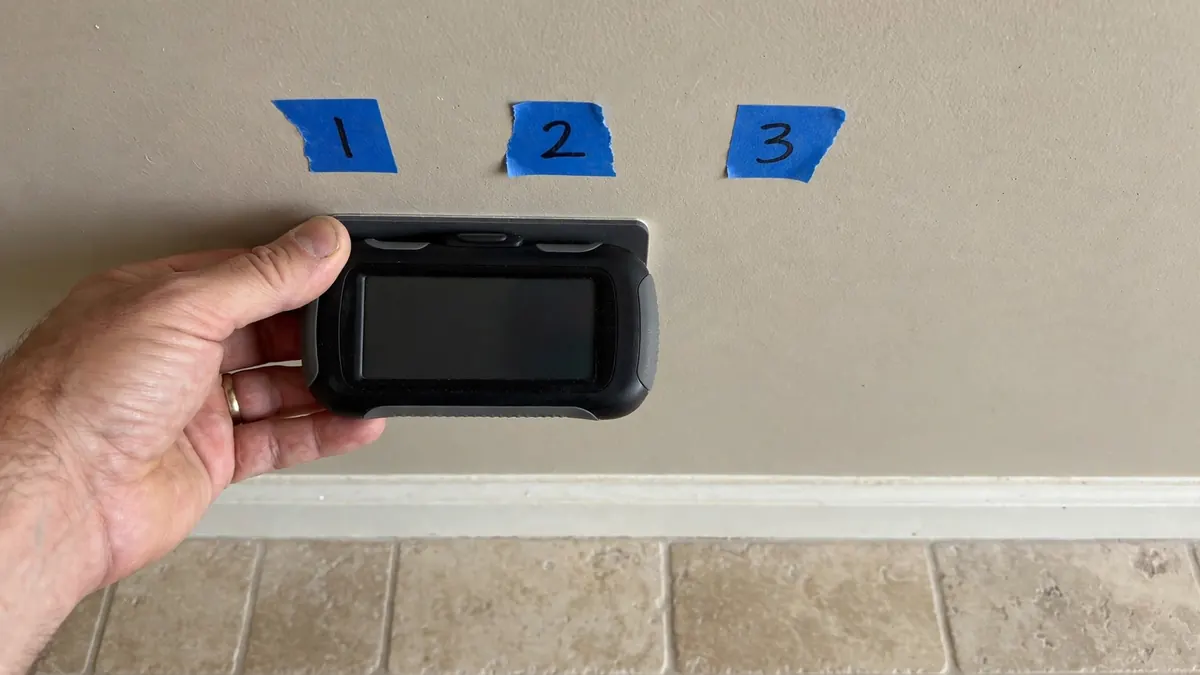
What is a dry standard?
A dry standard is the normal moisture reading for a material in your house, taken from an area that was not affected. It becomes the finish line for the same material in the wet area.
The reason crews do not use one number from a chart is that materials and houses vary. Drywall, framing lumber, cabinet boxes and baseboards all read differently, and the same stud reads differently in a desert home than in a humid one. So the technician finds a dry wall in another room, a closet that never got wet, or the far end of the same hallway, and meters it with the same tool and the same setting. That reading is the target.
A good crew sets a reference for each material type that got wet. If water reached drywall, baseboards and the bottom of a kitchen cabinet, there should be three dry standards, not one. Restoration work in the industry generally follows the IICRC S500 standard for water damage, which treats this kind of reference reading as a basic part of deciding when drying is complete.
What is the difference between pin and pinless moisture meters?
A pin meter pushes two small metal probes into the material and measures how easily electricity passes between them, which rises with moisture. A pinless meter presses flat against the surface and reads a short distance into it without leaving holes. Crews usually carry both.
Pin meters
Pin meters give a reading at the depth of the pins. That makes them good for checking a specific spot, such as the bottom plate behind a removed baseboard or the edge of a subfloor. Some models take insulated pins on longer probes that can be pushed into the baseboard joint or through a small hole to read deeper. The tradeoff is a pair of tiny holes, which is why crews often take pin readings low on the wall where the baseboard will cover them.
Pinless meters
Pinless meters scan fast. A tech can sweep across a wall or floor in a minute and find where the readings jump, which is how the edge of the wet area gets mapped. They read only a limited depth, usually a fraction of an inch to around an inch depending on the meter, and they can be thrown off by metal behind the surface, such as corner bead or a metal stud plate.
Reading scales
Many meters have a wood scale, which gives a percentage, and a reference or relative scale for drywall and other materials. Relative readings are only meaningful compared to each other, which is another reason the dry standard matters. A reading on drywall is not a percent of water in the wall.
What does a thermal camera actually show?
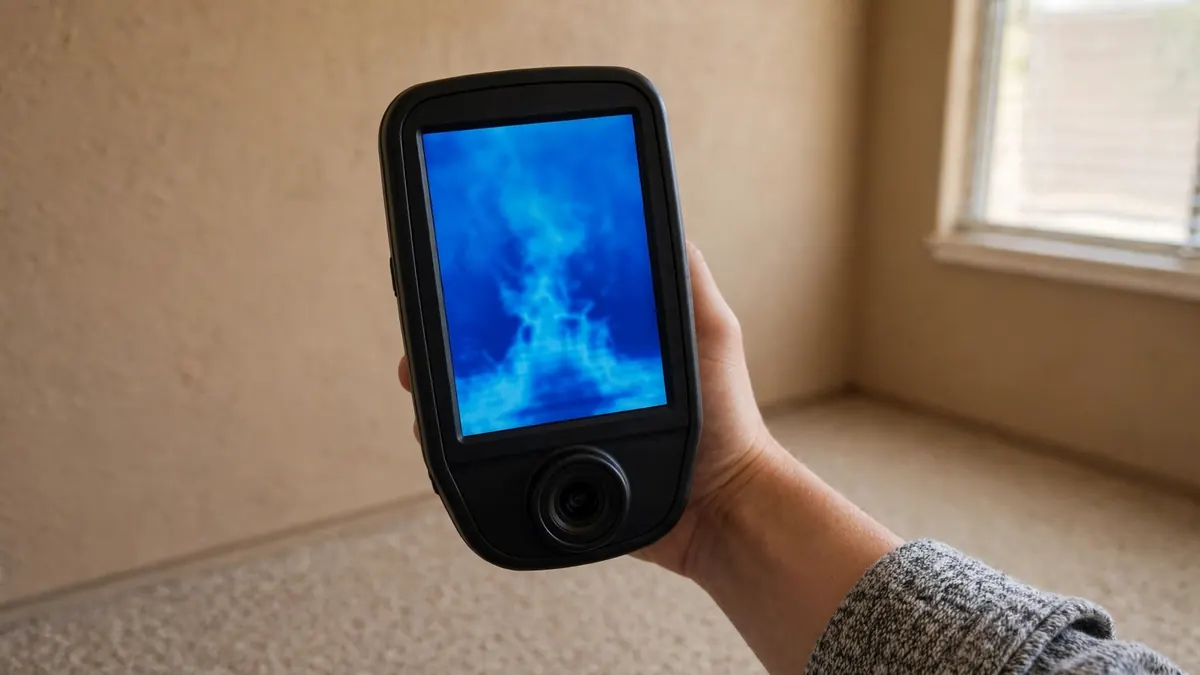
A thermal camera shows surface temperature, not water. Wet materials often read cooler than dry ones because evaporation cools them, so a damp area can show up as a darker or cooler patch. The tech then confirms that patch with a moisture meter.
Thermal imaging is useful because it sees a whole wall or ceiling at once. It can show a pattern climbing up drywall from the floor, a cool spot on a ceiling under an attic leak, or a warm streak on tile above a hot-water line under the slab. But many things change surface temperature that have nothing to do with water:
- Missing or settled insulation in an exterior wall or ceiling
- Air blowing from a supply register or leaking around a window
- Sun hitting one side of the house in the afternoon, which is strong here most of the year
- Framing, ductwork and plumbing behind the drywall
- A recently moved piece of furniture that shaded the floor
Cameras also need a temperature difference to work well. In the middle of a Casa Grande summer, with the AC running hard and the exterior walls heating up, a skilled tech reads the image in context. A thermal picture without a matching meter reading is a lead, not proof.
Which tool answers which question?
Each tool answers a different question, so a complete drying check uses all three.
| Tool | What it measures | Best use | Limits |
|---|---|---|---|
| Pin moisture meter | Moisture at the depth of the pins | Exact spots, framing, baseboards, final checks | Leaves small holes, one point at a time |
| Pinless moisture meter | Moisture a short distance below the surface | Mapping the edge of the wet area fast | Limited depth, affected by metal behind the surface |
| Thermal camera | Surface temperature patterns | Spotting likely damp areas across a whole wall or ceiling | Does not measure water, needs confirming |
| Thermo-hygrometer | Air temperature and humidity | Checking room conditions and dehumidifier output | Says nothing about the materials directly |
What goes into a daily drying log?
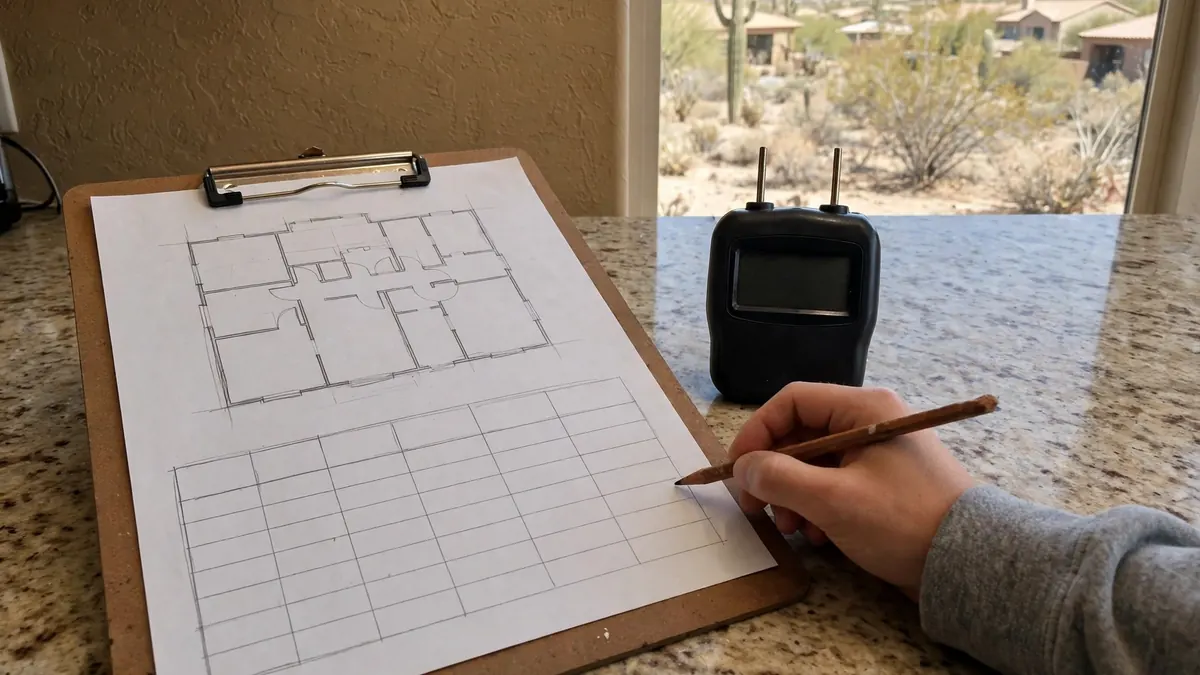
A daily drying log records the same readings at the same marked spots each day, along with the air conditions and the equipment on site. Laid out over several days, it shows the numbers falling toward the dry standard.
A typical log includes:
- A sketch or map of the affected rooms with numbered reading points.
- The dry standard for each material, with where it was taken.
- Material readings at each point, each day, with the date and time.
- Air readings outdoors, in an unaffected room, in the affected area, and at the dehumidifier exhaust.
- Equipment: how many air movers and dehumidifiers, where they sit, and any changes.
- Notes on anything removed, such as pad, baseboards or a section of drywall, and why.
Here is a simplified example of how a few points might look over a three-day job on drywall after a clean-water supply line leak. It describes the trend rather than real numbers.
| Point | Location | Day 1 | Day 2 | Day 3 | Dry standard |
|---|---|---|---|---|---|
| 1 | Hall wall, 2 in. above floor | High | Falling | At target | Closet wall reading |
| 2 | Hall wall, 12 in. above floor | Above target | At target | At target | Closet wall reading |
| 3 | Kitchen toe kick | High | High | Falling | Pantry cabinet reading |
Point 3 in that example is the kind of spot that keeps a job running an extra day. The typical drying timeline of three to five days stretches when one stubborn area, often under a cabinet or tile, holds its water.
Why do moisture readings matter for an insurance claim?
Readings are the evidence that the home was dried properly and that the drying was needed. Adjusters generally give much more weight to a dated log than to a homeowner's description.
A log helps in a few ways. It shows how far the water spread, which supports the square footage on the estimate. It shows why equipment stayed for the number of days it did. It shows when mitigation started, which matters because most standard policies require you to limit further damage after a sudden loss. And if mold or swelling shows up later, a log that ends at the dry standard is a strong record that the home was not left wet. Coverage still depends on your policy and the cause of the loss, so check your declarations page and ask your agent about anything you are unsure of.
Ask the crew for a copy of the drying log and the final readings when the equipment comes out. Keep it with your photos and the plumber's or roofer's invoice.
How can you tell if drying was checked properly?
Look for reference readings, the same points measured every day, and a final set of readings at or below the dry standard before the equipment leaves. Gaps in any of those are worth asking about.
- Good signs: numbered points marked on tape or the baseboard, readings taken low on the wall where wicking starts, cabinets and toe kicks checked, a thermal scan used to look for missed areas, and equipment moved as some areas dry.
- Questions to ask: where the dry standard was taken, whether the floor under tile or cabinets was checked, and what the last day's numbers were.
- Warning signs: no reference readings, a single reading in the middle of the room, or equipment pulled because the surface feels dry.
Slab homes in Pinal County add one more wrinkle. Concrete under tile gives up water slowly, and surface meters read only so deep. Crews may take readings through grout lines, at the edges where baseboards were removed, or with probes in small holes, and they often keep drying mats or extra air on tile areas after the walls are done. Our page on structural drying in Casa Grande covers how that equipment is set up.
What should you do if you are not sure your home is dry?
Get readings rather than waiting for a sign. A musty smell, swelling baseboards or bubbling paint near the floor are late signals that moisture stayed behind.
- Note where the water was and where it might have traveled, including closets and cabinets on the other side of the wall.
- Find any log or readings from earlier work.
- Do not paint, reinstall baseboards or lay new flooring until materials read dry.
- If something smells or looks wrong weeks later, read about mold remediation and get the area checked.
To have moisture checked in a home in Casa Grande, Coolidge, Eloy, Maricopa or nearby, call (520) 380-1551. The line is open 24/7 and connects you with a local restoration crew that can meter the area and set drying equipment if it is still wet.
Questions homeowners ask
Can I buy a moisture meter and check my own walls?
Does a thermal camera see through walls?
What moisture reading means drywall is dry?
Should I get a copy of the drying log?
More from the blog
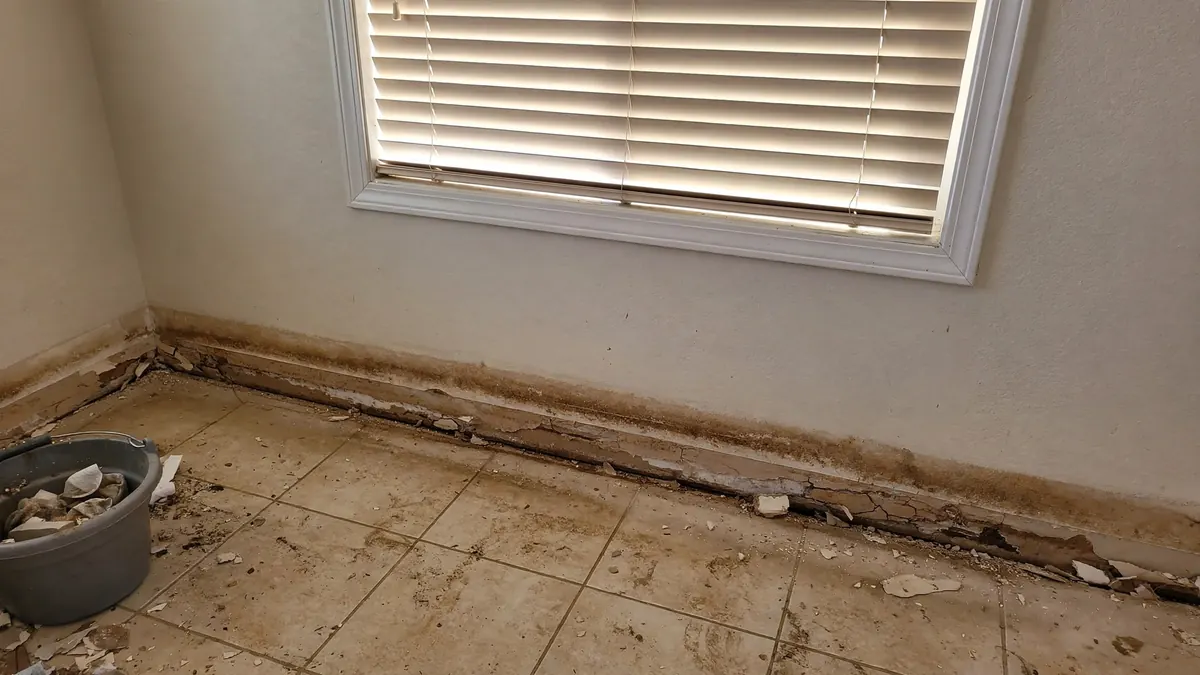 Drying & MoldCan wet drywall be saved?Wet drywall can usually be saved if it was soaked by clean water, drying starts within a day or two, and the board is still firm....
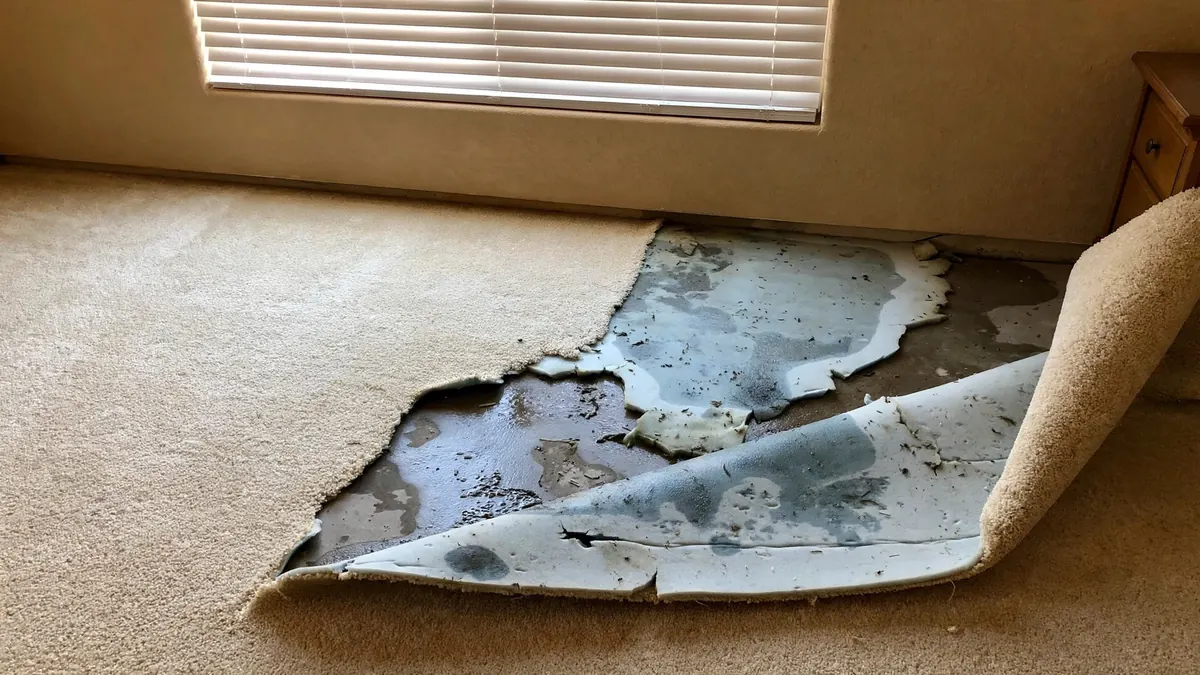 Drying & MoldWet carpet: when it can be saved and when the pad must goWet carpet can usually be saved if the water was clean and extraction starts within a day or two, before the backing separates. The pad underneath...
 Drying & MoldHow fast mold grows after a leak in Arizona heatMold can start growing within 24 to 48 hours once drywall, wood, carpet pad, or insulation stays wet, even in dry Arizona. Visible spots and a...
Need help with damage right now?
Speak to a local restoration specialist on the 24/7 line, any time of day.
Call (520) 380-1551When you call: enter your ZIP code, then press 1 for water damage, 2 for fire damage or 4 for sewage backup.