Home › Blog › Dishwasher and refrigerator leaks: the slow damage you don't see
Dishwasher and refrigerator leaks: the slow damage you don't see
Dishwasher and refrigerator leaks do slow, hidden damage because they usually drip under cabinets or behind the appliance for weeks before anyone notices. The water soaks the cabinet base, the slab, and the bottom of the wall. Many policies exclude long-term leakage, so regular checks behind the toe-kick and fridge matter.
In this article
- Why are dishwasher and refrigerator leaks so damaging?
- Where do dishwashers leak?
- Where do refrigerators leak?
- What does slow water damage look like under cabinets?
- How can you check for a hidden kitchen leak?
- Does homeowners insurance cover slow dishwasher or fridge leaks?
- What should you do when you find a kitchen leak?
- Questions homeowners ask
Why are dishwasher and refrigerator leaks so damaging?
Because they are usually slow and hidden. A dishwasher or fridge line rarely floods the kitchen in one go. It drips a little each day under a cabinet or behind an appliance, where nobody looks, and the damage builds for weeks or months before it shows.
A burst pipe gets noticed in minutes. A drip under the dishwasher can go on through an entire season. By the time you see a swollen cabinet toe-kick or a soft spot in the floor, the water has soaked the cabinet base, the bottom of the wall, and the flooring around it, and mold may already be growing. That slow timeline also creates a problem with insurance, which is covered further down.
Where do dishwashers leak?
Most dishwasher leaks come from the door seal, the supply line connection, the drain hose, or the pump and its seals. Only a door leak tends to show on the floor in front. The rest usually drip under the machine and into the cabinet space next to it.
- Door gasket. A worn, torn, or dirty rubber gasket lets water out during the wash. You may see drips on the floor right below the door.
- Supply line and inlet valve. A small line runs from the hot water shutoff under the sink to a valve under the dishwasher. The fitting at either end can weep, and hard water scale can keep the inlet valve from closing all the way.
- Drain hose. The hose runs from the dishwasher to the garbage disposal or the sink drain. A loose clamp or a crack in the hose leaks only when the machine drains, which makes it easy to miss.
- Pump and motor seals. Seals under the tub wear out with age and let water drip under the machine.
- Overfilling. A stuck float switch can let the tub fill past its normal level and spill out the door.
- Not level. A dishwasher that tilts forward can push water past the door seal.
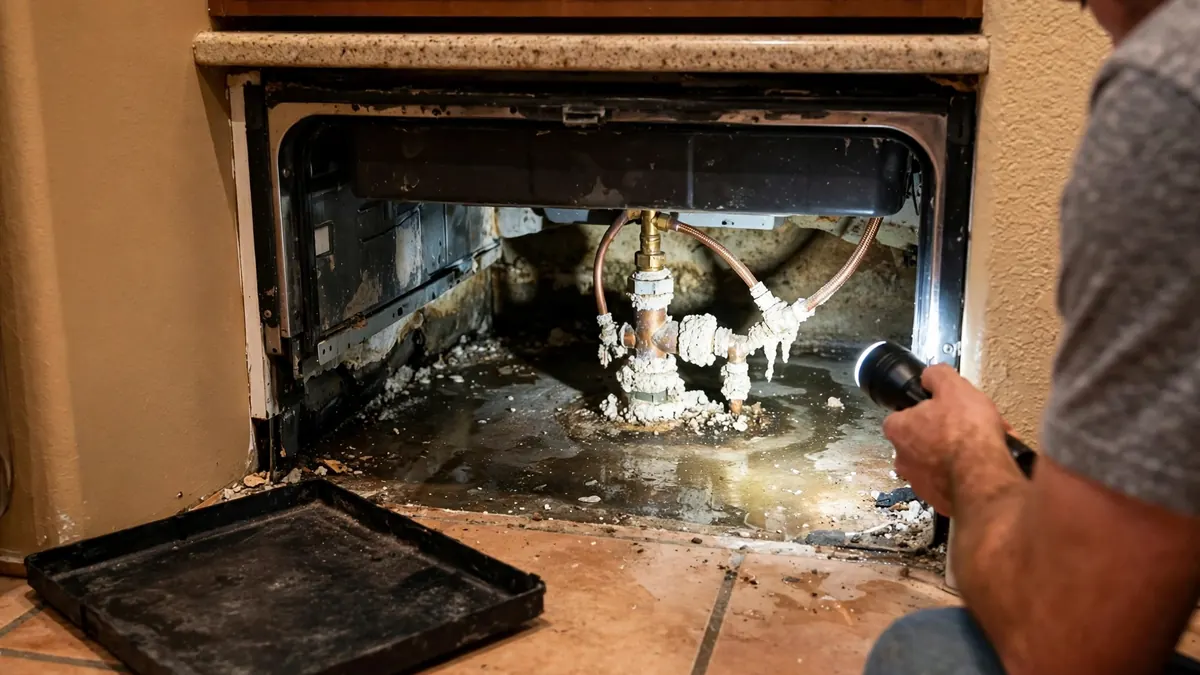
The kickplate on the front of the dishwasher, below the door, usually comes off with two screws. With a flashlight you can see the supply connection and much of the floor under the machine. Look for water, white mineral crust, rust, or dark staining.
Where do refrigerators leak?
A refrigerator with an ice maker or water dispenser has a supply line, a fill valve, and often a filter, and each can leak. Fridges without a water line can still leak from a clogged defrost drain or a cracked drain pan.
- The water line. A thin plastic or copper line runs from a shutoff valve, often under the sink or in the wall behind the fridge, to the back of the refrigerator. Plastic lines crack with age and get crushed when the fridge is pushed back. Copper lines can kink.
- Saddle valves. Some older installs tap the line with a saddle valve that clamps onto a copper pipe and pierces it. These are known for slow leaks and valves that will not shut. If you have one, a plumber can replace it with a proper shutoff.
- Push-in fittings. The connection at the back of the fridge can work loose when the fridge is moved.
- Fill valve and ice maker. Scale can keep the fill valve from closing, which overfills the ice maker and sends water into the freezer and onto the floor.
- Water filter housing. A filter that is cross-threaded or not seated fully can drip inside or under the fridge.
- Defrost drain and drain pan. If the drain tube clogs, melt water collects and drips out. A cracked pan underneath spills it onto the floor.
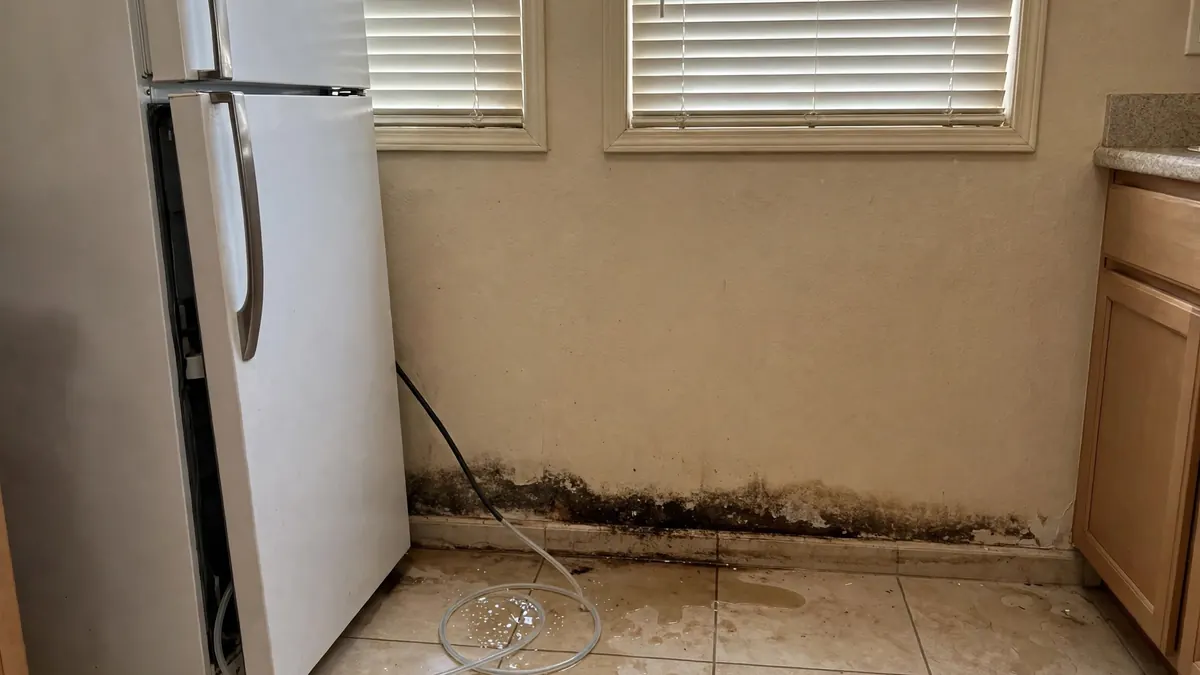
Leaks behind the fridge are the hardest to catch because the water spreads under the unit and into the wall or the cabinet beside it. Pull the refrigerator out at least once a year and look at the floor and the wall behind it.
What does slow water damage look like under cabinets?
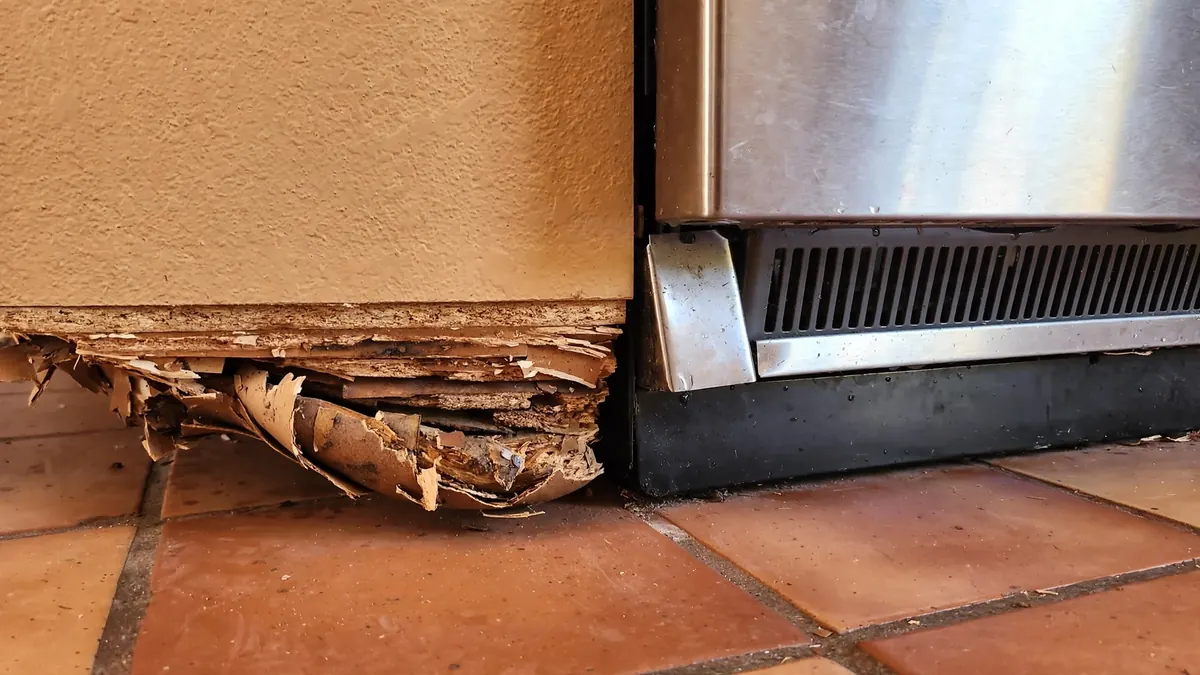
The first signs are usually at the bottom front of the cabinets: a toe-kick that swells, peels, or darkens, a cabinet floor that feels soft, and a musty smell when you open the sink cabinet. Flooring in front of the dishwasher may lift, cup, or show dark edges.
Most kitchen cabinets are built from particleboard or MDF with a laminate or painted finish. Those materials soak up water and swell, and they do not shrink back once they dry. On a concrete slab, which is what nearly all Casa Grande homes sit on, water under the cabinets has nowhere to drain. It sits on the slab, wicks into the cabinet base, and creeps under the flooring. Laminate and vinyl plank trap it underneath. Tile can hide it for a long time.
| What you notice | What it often means |
|---|---|
| Toe-kick bubbling or peeling at the bottom | Water has been wicking into the cabinet base for a while |
| Soft or warped floor in the sink cabinet | A drip from the sink, the dishwasher supply, or the fridge line valve |
| Musty smell when you open the cabinet | Moisture has been there long enough for mold to start |
| Flooring cupped or lifted near the dishwasher | Water is under the flooring, not just on top |
| Dark stain on the baseboard beside the fridge | The fridge line or drain pan has been leaking behind the unit |
| White crust on a fitting or valve | The fitting has been weeping, and the water evaporated and left minerals |
| Ice maker making less ice, or a puddle in the freezer | A fill valve or line problem that may also leak outside |
A swollen toe-kick is not a cosmetic problem. It means water has reached the cabinet base, and almost always the slab and the bottom of the wall behind it. That is the time to find the source and check the moisture, not to replace the trim piece.
How can you check for a hidden kitchen leak?
Do a short check every month or two. Look and feel under the sink, behind the dishwasher kickplate, and behind the fridge, and use the water meter if you suspect something you cannot see.
- Run the dishwasher and look under the sink while it drains. Watch the drain hose connection and the supply valve.
- Take off the dishwasher kickplate. Shine a flashlight under the machine. A dry paper towel pressed to the floor shows dampness you might not see.
- Feel the cabinet floor under the sink. Press on it. It should be firm and dry.
- Pull the fridge out. Check the floor, the water line, the fitting at the back of the fridge, and the wall behind it.
- Look at the bottom edge of every base cabinet near the sink, dishwasher, and fridge for swelling or dark spots.
- Do a meter test if something seems off. Turn off all water use, then watch the leak indicator on your water meter. If it moves, water is going somewhere.
Low-cost battery leak sensors placed under the sink, under the dishwasher, and behind the fridge sound an alarm when they get wet. Some connect to a phone app. For a seasonal home, they are worth having.
Does homeowners insurance cover slow dishwasher or fridge leaks?
Often not. Most standard homeowners policies cover sudden and accidental water damage, but many exclude damage from continuous or repeated leakage over a period of weeks or months. A slow drip under a dishwasher is the kind of loss that exclusion is written for.
How an adjuster looks at it:
- A supply line that bursts and floods the kitchen is usually treated as sudden and accidental, minus your deductible.
- A drip that rotted the cabinet base and caused mold is often treated as long-term leakage or a maintenance issue, and may be denied.
- Mold often has its own limits or exclusions, separate from the water damage.
- The failed part, such as the dishwasher pump or the fridge line, is usually not covered either way.
Signs like layers of mineral crust, old staining, and rot tell an adjuster the leak ran for a long time. That is another reason the monthly check pays off: it keeps a small leak in the sudden category. Check your declarations page and the water damage and mold sections of your policy, and ask your agent if the wording is unclear. The site's guide to homeowners insurance and water damage in Arizona explains sudden versus gradual in more detail.
What should you do when you find a kitchen leak?
Shut off the water to the appliance, take photos, and find out how far the moisture went before anything is replaced. Repairing the dishwasher or fridge line fixes the source. It does not dry the cabinet base, the slab, or the wall.
- Close the dishwasher shutoff under the sink, or the fridge line valve. If you cannot find or turn them, close the main.
- Unplug the dishwasher or switch off its breaker before reaching under it.
- Photograph the source, the cabinet base, the toe-kick, the flooring, and the wall.
- Keep the failed hose, line, or fitting after it is replaced.
- Have the area checked with a moisture meter. The wet area under cabinets and flooring is usually larger than what you can see.
- Do not seal it back up wet. Installing a new dishwasher or new toe-kick over a wet slab traps the moisture and invites mold.
Drying under cabinets often means removing toe-kicks or drilling small vent holes so air can reach the cabinet base, and sometimes pulling the dishwasher out. A restoration crew sets air movers and dehumidifiers and checks readings until the materials are dry. The appliance leak water damage page covers that process, and mold remediation covers what happens if growth has started. If you have found swelling, soft flooring, or a musty smell around the kitchen, call (520) 380-1551. The line is open 24/7 and connects you with a local restoration crew.
Questions homeowners ask
How do I know if my dishwasher is leaking under the cabinet?
Can a refrigerator water line leak without me seeing it?
Is a saddle valve on my fridge line a problem?
Will insurance pay for cabinets damaged by a slow leak?
More from the blog
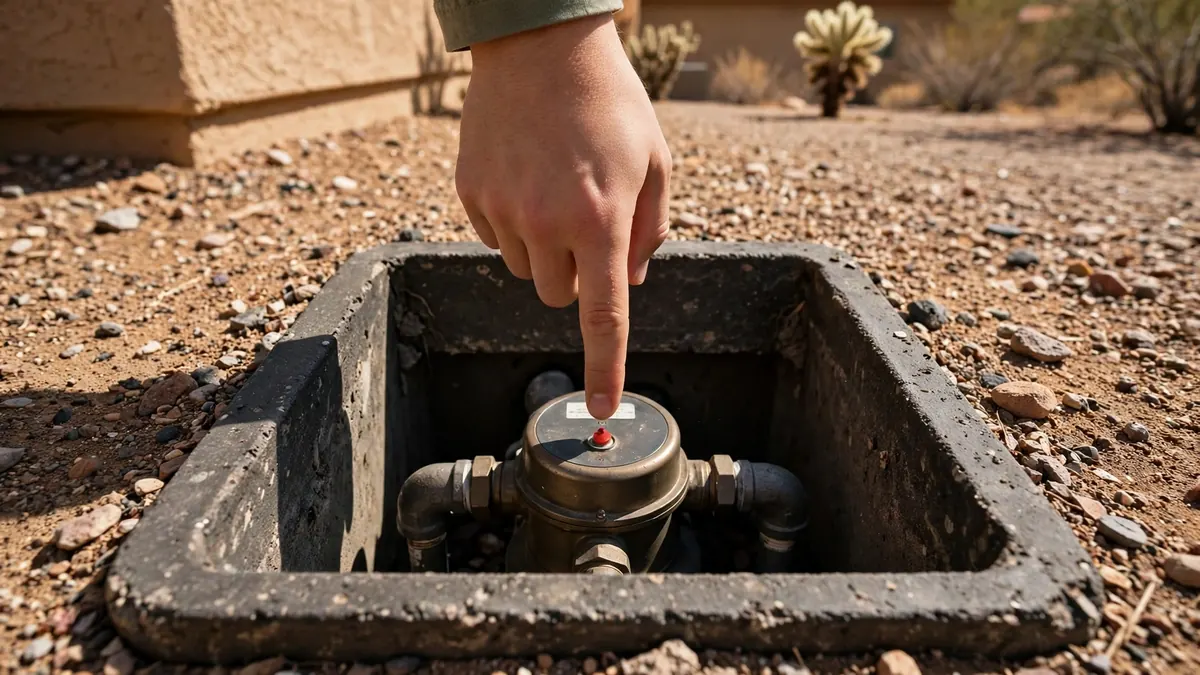 Leaks & PipesHow leak detection works: finding hidden leaks without tearing up your homeLeak detection finds hidden leaks without tearing up your home by narrowing the search step by step. A meter test confirms water is escaping, pressure tests...
 Leaks & PipesSlab leak signs in Casa Grande homes and what each one meansThe clearest slab leak signs are a warm spot on the floor, a water bill that rises with no change in habits, running water sounds with...
 Leaks & PipesBurst pipe in your house: what to do in the first 15 minutesIn the first 15 minutes after a pipe bursts, shut off the water at the main, keep away from water near outlets and cut power only...
Need help with damage right now?
Speak to a local restoration specialist on the 24/7 line, any time of day.
Call (520) 380-1551When you call: enter your ZIP code, then press 1 for water damage, 2 for fire damage or 4 for sewage backup.