Home › Blog › Category 1, 2 and 3 water: what the restoration terms mean
Category 1, 2 and 3 water: what the restoration terms mean
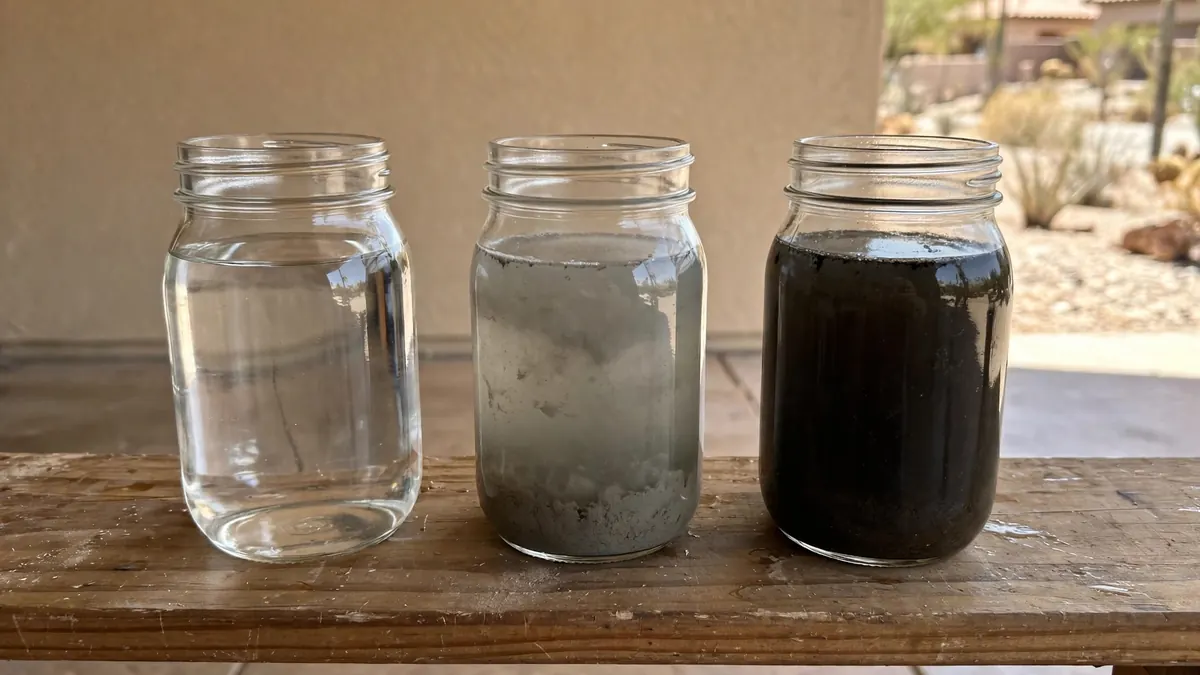
Water categories describe how contaminated the water is. Category 1 is clean water from a supply line, Category 2 is gray water with some contamination, like a washer drain, and Category 3 is black water, such as sewage or outside flood water. The category decides what gets dried and what gets removed. See water damage restoration.
In this article
- What do Category 1, 2 and 3 water mean?
- Which category is common Casa Grande water damage?
- How does a crew decide the category?
- How does water change category over time?
- What gets removed in each category?
- What are classes of water loss, and how are they different?
- How does the category affect cost, insurance and safety?
- What should you do if you are not sure which category you have?
- Questions homeowners ask
What do Category 1, 2 and 3 water mean?
They are contamination levels. Category 1 water comes from a clean source and is not a health risk when it first escapes. Category 2 carries enough contamination to make people sick if they touch or swallow it. Category 3 is grossly contaminated and can carry bacteria, viruses and parasites, with sewage as the clearest example.
The terms come from the IICRC S500, the industry standard most restoration companies and many adjusters use to describe water losses. The standard does not tell a crew what to charge. It gives everyone the same vocabulary, so when an estimate says Category 2, your adjuster knows what that implies for cleaning and removal.
- Category 1, clean water. Sanitary at the source. A broken supply line, a leaking water heater tank, an overflowing sink with only tap water in it.
- Category 2, gray water. Some contamination from use or from what it touched. Washing machine or dishwasher discharge, a toilet bowl overflow with urine but no solids.
- Category 3, black water. Grossly contaminated. Sewage, a toilet overflow with feces, and water that came in from outside across the ground during a storm.
Category is about how dirty the water is, not how much of it there is. A cup of sewage is Category 3. A thousand gallons from a burst supply line, caught early, is still Category 1.
Which category is common Casa Grande water damage?
Most indoor plumbing failures start as Category 1, appliance drain water is usually Category 2, and sewage or monsoon water that enters from outside is usually Category 3. The table below shows how crews commonly classify the losses they see most in Casa Grande, though the final call depends on what the water touched and how long it sat.
| Source | Usual starting category | Notes |
|---|---|---|
| Supply line under a sink or toilet | 1 | Clean until it soaks into dirty materials or sits |
| Water heater tank failure | 1 | Sediment from hard water does not usually change the category |
| Slab leak on the supply side | 1 | Often runs for weeks, so it may not stay Category 1 |
| Ice maker or refrigerator line | 1 | Slow leaks under cabinets often degrade before they are found |
| AC condensate overflow | 1 or 2 | Drain pans and clogged lines grow algae and slime |
| Evaporative cooler leak | Often 2 | Recirculated water with mineral scale and bacteria in the pan |
| Washing machine or dishwasher drain | 2 | Soap, food, lint and body soil |
| Toilet tank or supply leak | 1 | Tank water is the same as tap water |
| Toilet bowl overflow, no solids | 2 | Treated as contaminated |
| Toilet overflow with waste, sewer backup | 3 | See sewage cleanup below |
| Monsoon rain through a roof leak | 1 or 2 | Picks up dust, insulation and debris on the way down |
| Monsoon runoff under doors or into a garage | 3 | Ground water carries soil, animal waste and chemicals |
| Septic system backup | 3 | Same as sewage |
For a toilet in particular, the difference between tank water and bowl water changes the whole cleanup. Our page on toilet overflow cleanup covers that case.
How does a crew decide the category?
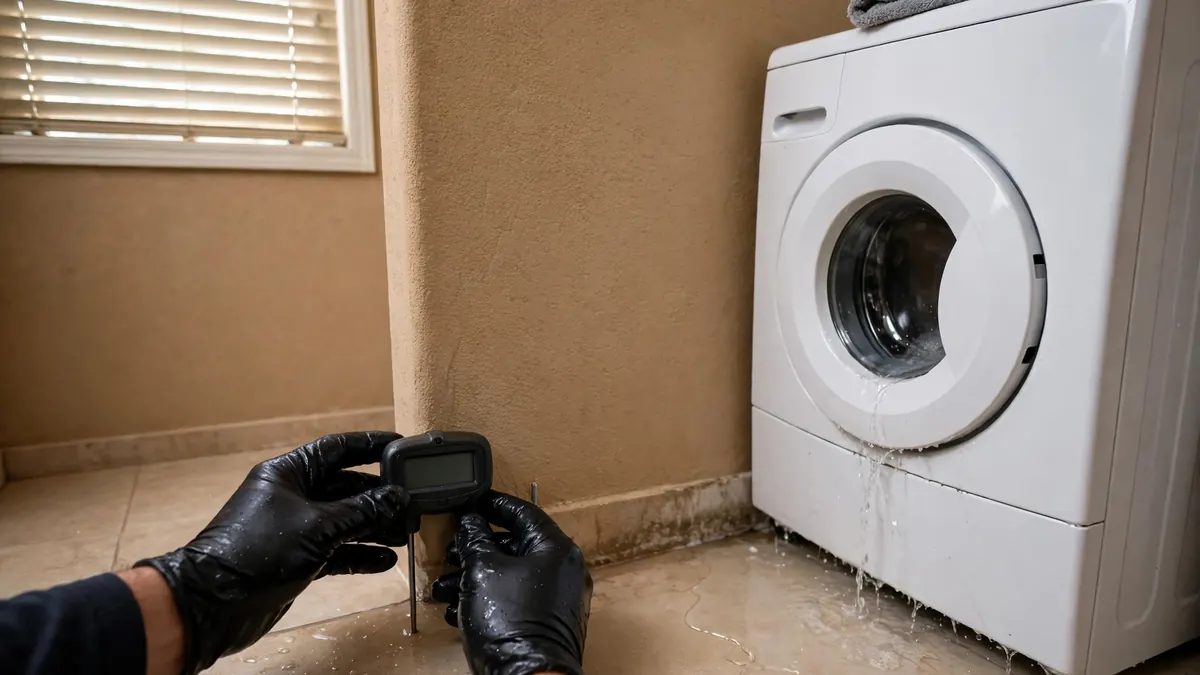
A crew looks at four things: where the water came from, what it passed through, how long it sat, and how warm the space was. The source sets the starting point, and the other three can only move it up.
- Source. Supply water, appliance drain water and sewage start in different places. Finding the true source is the first job, which is why a crew may trace water back through a wall before deciding anything.
- Path. Clean water that runs across a dusty garage floor, through attic insulation, or under a cabinet full of cleaning products picks up whatever it touches.
- Time. Water that sits starts growing bacteria. A loss found the same day is judged differently from one found after a long weekend away.
- Conditions. Heat speeds bacterial growth. A closed house in July with the AC off or set high for a vacation is about as warm as indoor air gets in Casa Grande.
Smell and appearance help too. Water that is cloudy, discolored or smells sour or musty has usually moved past Category 1, whatever its source. Crews note the category on the first visit and record why, often with photos of the source and the water itself.
How does water change category over time?
Water only moves in one direction: from cleaner to dirtier. Category 1 left sitting in a warm house can become Category 2 within a day or two, and Category 2 can become Category 3 if it keeps sitting. Drying or cleaning the water does not move it back down.
This matters most for the losses that hide. A slab leak on the hot line under tile, a slow drip from a dishwasher fitting into the cabinet base, or an AC drain pan overflowing into a ceiling can run for weeks before anyone sees it. By then the water inside the wall or under the floor has been warm and still for a long time. The source was clean, but the water the crew finds is not.
Seasonal homes are a common example. A supply line that fails in a closed-up house in Mission Royale or at Robson Ranch in Eloy while the owners are away for the summer may be found weeks later. Even though it started as tap water, crews will usually treat it as Category 3 by the time they arrive, with removal to match.
The fastest way to keep a loss in Category 1 is to stop the water and get it out. Shut the main or the fixture valve, then get extraction and drying started. Waiting to see if it dries on its own is how clean water becomes contaminated water.
What gets removed in each category?
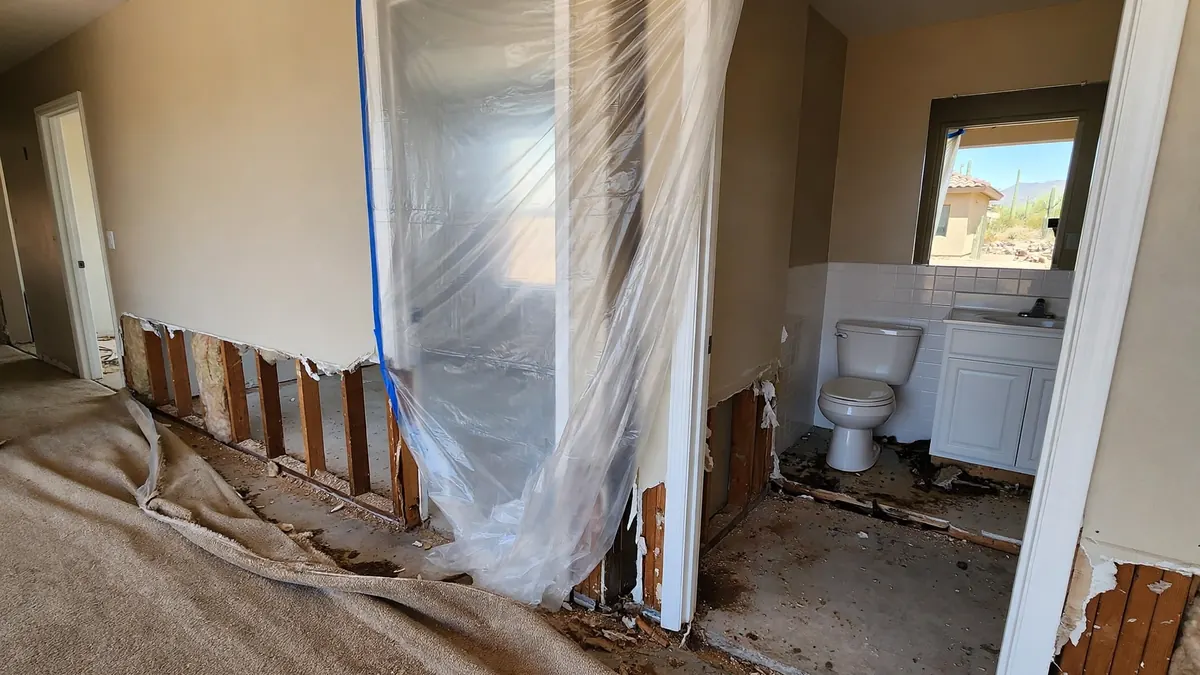
The higher the category, the more porous material comes out instead of being dried. With Category 1 caught early, most materials can be dried in place. With Category 3, porous materials it touched are removed and the area is disinfected.
| Material | Category 1 | Category 2 | Category 3 |
|---|---|---|---|
| Carpet | Usually dried in place | Often cleaned and treated, sometimes replaced | Removed |
| Carpet pad | Often dried or replaced cheaply | Usually removed | Removed |
| Drywall | Dried in place if caught early | Cleaned and dried, or cut low | Cut out above the wet line |
| Insulation in walls | Sometimes dried | Usually removed | Removed |
| Particleboard cabinet bases | Saved if not swollen | Often replaced | Removed |
| Tile, sealed concrete, metal, glass | Dried | Cleaned and disinfected | Cleaned and disinfected |
| Upholstered furniture, mattresses | Often dried and cleaned | Case by case | Usually discarded |
The reason is simple. Hard surfaces can be washed and disinfected. Porous materials hold contaminated water deep inside where cleaners do not reach, so drying them would leave the contamination in your house. For what a Category 3 cleanup involves step by step, see our page on sewage backup cleanup in Casa Grande.
What are classes of water loss, and how are they different?
Class describes how much water the building absorbed and how hard it will be to dry, from Class 1 for a small area of hard surfaces up to Class 4 for water soaked into dense materials like concrete or hardwood. Category says how dirty the water is. Class says how much drying equipment the job needs.
Every loss gets both. A clean supply line that ran overnight under tile is Category 1 but may be Class 4, because water in a post-tension slab gives itself up slowly. A toilet bowl overflow on a bathroom tile floor mopped up quickly might be Category 2 but only Class 1. Our structural drying page explains how crews size equipment and set dry targets for each situation.
How does the category affect cost, insurance and safety?
A higher category usually costs more, can change which part of your policy applies, and changes who should be in the house. Category 3 jobs need containment, protective equipment, removal of porous materials and disinfection, all of which add labor.
Cost
Clean water caught early is the least expensive loss. One room of Category 1 water dealt with quickly often runs about $400 to $1,500 in the Casa Grande area, while most water damage jobs land around $1,300 to $5,500. Category 3 starts higher because of the extra removal and sanitizing. Prices are set by each restoration company and vary with the job.
Insurance
Category itself does not decide coverage. The cause does. A sudden Category 1 pipe burst is often covered. A sewer backup is usually excluded on a base policy unless you added a water backup endorsement. Outside surface water from a monsoon is generally flood, which needs a separate flood policy. What category does change is the scope your adjuster sees, so the crew's notes on why they chose a category should be in the file.
Safety
- Category 1: Usually safe to stay in the home, with care around electricity and wet floors.
- Category 2: Wear gloves, keep children and pets away, and wash hands after touching wet items.
- Category 3: Stay out of the affected area. Children, older adults and anyone with a weakened immune system should be out of the house until it is cleared.
What should you do if you are not sure which category you have?
Treat it as the higher category until someone checks. That means gloves, no household vacuums or fans, and keeping people and pets away from the water.
- Stop the source if you can do it safely.
- Photograph where the water came from and how far it spread.
- Write down when you found it and when you think it started.
- Note any smell or discoloration in the water.
- Do not throw anything out before it is documented.
- Ask the crew to write the category and the reason on the estimate.
The restoration companies we work with classify the water on the first visit and set removal and drying to match. If you have water in your home in Casa Grande or nearby Pinal County and are not sure how contaminated it is, call (520) 380-1551. The line is open 24/7.
Questions homeowners ask
Is water from a water heater Category 1?
Is AC condensate water clean?
Can Category 3 carpet be cleaned and saved?
Who decides what category my water damage is?
More from the blog
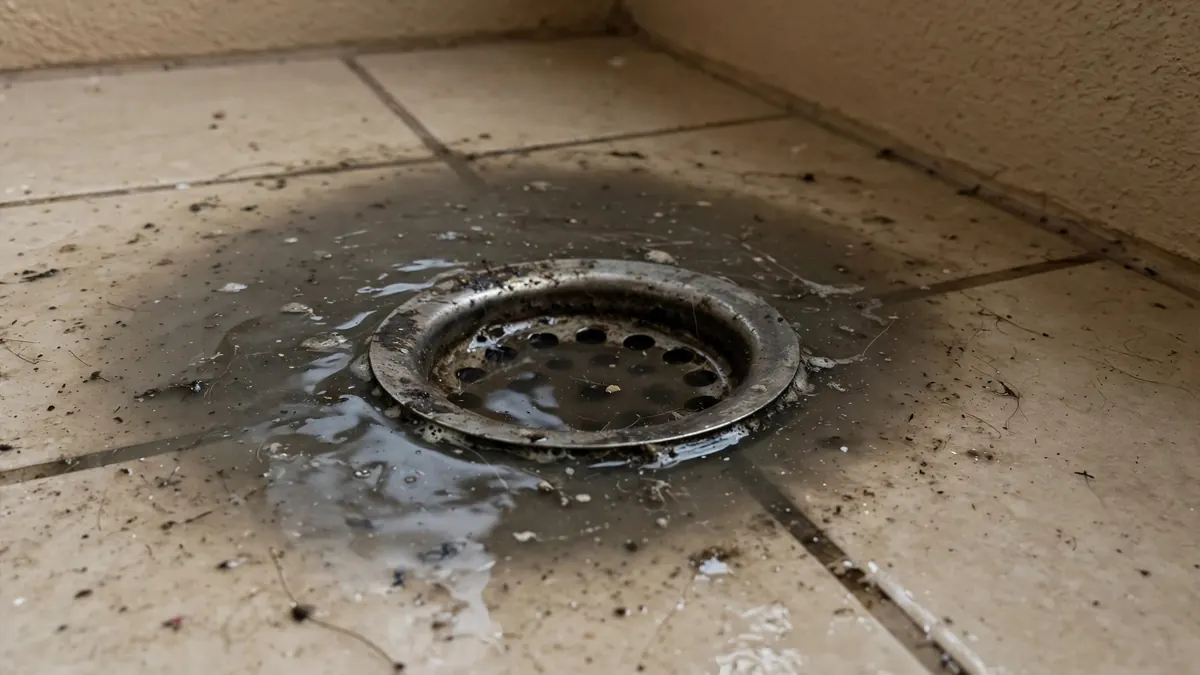 SewageSewage backup in your house: why it's a biohazard and what to doA sewage backup is a biohazard because raw sewage is Category 3 water that carries bacteria, viruses and parasites from human waste. Get people and pets...
 SewageSewer backup insurance in Arizona: endorsements, limits and claimsMost standard Arizona homeowners policies exclude water that backs up through sewers or drains. Coverage usually comes from a water backup endorsement added to the policy,...
 SewageToilet overflow: clean water vs contaminated water and what to doWater from the toilet tank or supply line is clean. Water that came out of the bowl is contaminated, and water with waste in it is...
Need help with damage right now?
Speak to a local restoration specialist on the 24/7 line, any time of day.
Call (520) 380-1551When you call: enter your ZIP code, then press 1 for water damage, 2 for fire damage or 4 for sewage backup.