Home › Blog › Water damage in Maricopa, AZ homes: slab leaks, HOAs and newer builds
Water damage in Maricopa, AZ homes: slab leaks, HOAs and newer builds
Most Maricopa homes were built in the 2000s and later on concrete slabs, and many are now old enough that original water heaters, supply lines, washer hoses and roof underlayment are reaching the end of their life. Slab leaks, appliance leaks while owners commute, and monsoon water at doors and roofs cause most of the damage.
In this article
- Why are Maricopa homes getting more water damage as they age?
- What fails first in a 15 to 20 year old Maricopa home?
- Why are slab leaks so common in Maricopa?
- What is different about water damage in two-story homes?
- How does monsoon water get into Maricopa homes?
- How does living in an HOA change a water damage claim?
- How should seasonal and 55+ homeowners protect an empty house?
- What should you do if you come home to water?
- Questions homeowners ask
Why are Maricopa homes getting more water damage as they age?
Because a large share of Maricopa's houses went up in the same few years, their original parts are wearing out at roughly the same time. Water heaters, toilet and faucet supply lines, washer hoses, shutoff valves and roof underlayment all have a working life, and many homes from the building boom of the mid-2000s are past the point where those parts were designed to last.
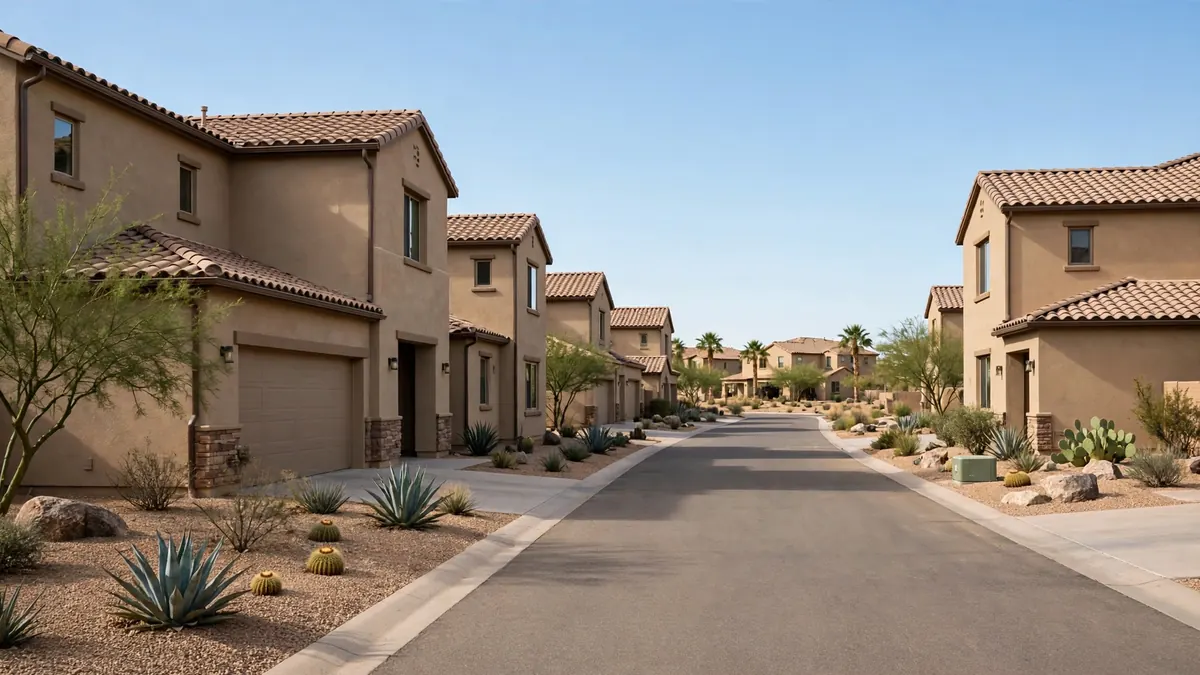
Maricopa incorporated in 2003 and grew quickly through master-planned communities along John Wayne Parkway and the SR 238 corridor. A second wave of building followed in the last decade. That gives the city two broad groups of homes, and each one tends to have different water problems.
- Homes from the first boom. Much of Rancho El Dorado and the other early neighborhoods went up in that first wave. These houses are now old enough that original builder-grade parts are failing.
- Newer homes. Recent construction has newer plumbing and roofs, but brand-new houses have their own early problems: fittings that were not crimped right, grading that sends water toward the house, and settling.
The local overview on our Maricopa water damage page lists the common causes. This guide goes into what is actually wearing out, how to spot it before it fails, and what is different about two-story homes, HOA rules and empty houses.
What fails first in a 15 to 20 year old Maricopa home?
The parts that fail first are the ones that hold pressure every day and sit out of sight: the water heater, the flexible supply lines under sinks and toilets, washer hoses and the ice maker line. Hard water speeds up the wear on all of them.
| Part | How it usually fails | Warning sign | What the water damages |
|---|---|---|---|
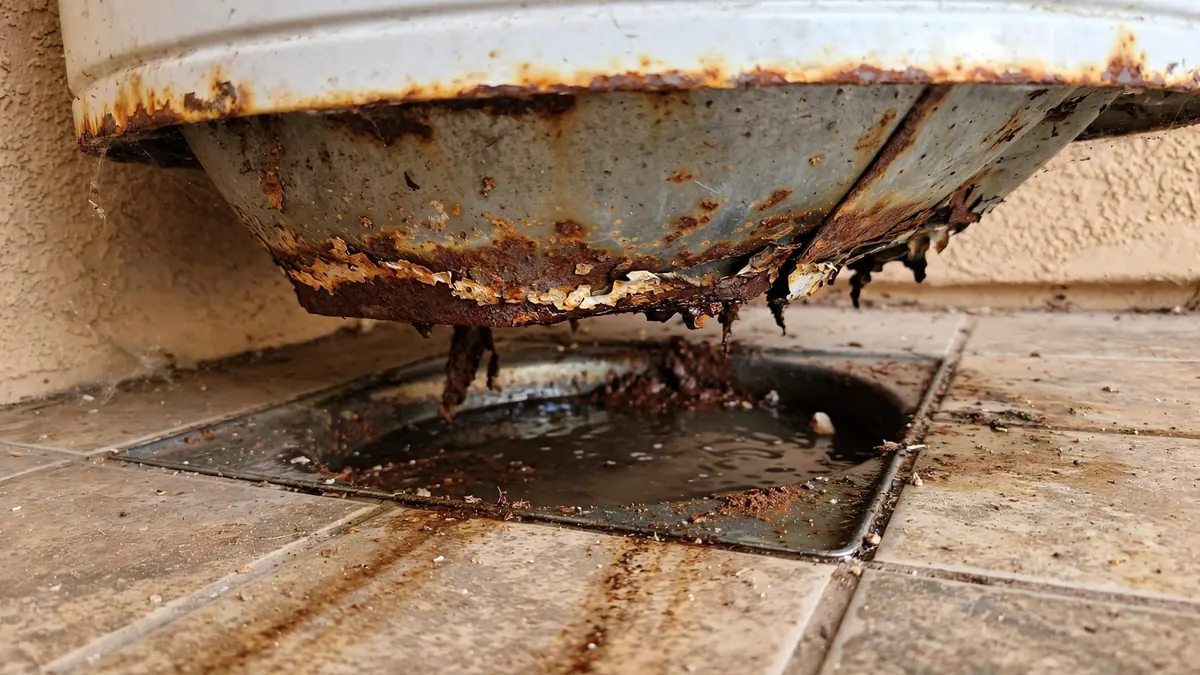
| Tank water heater in the garage | Tank corrodes and leaks from the bottom, or the relief valve drips | Rust at the base, rumbling, water in the drain pan | Garage floor, then carpet and drywall past the house door |
| Braided supply lines at toilets and sinks | Crimped end lets go or the hose bursts | Rust or bulging on the braid, drip at the nut | Bathroom floor, vanity base, wall behind |
| Washing machine hoses | Rubber hose splits under pressure | Cracks, bulges, stains on the wall box | Laundry room, nearby rooms, ceiling below in two-story homes |
| Refrigerator ice maker line | Plastic line cracks or the fitting loosens | Damp floor under the fridge, swollen base cabinet edge | Kitchen floor, cabinet toe-kicks, subfloor near the wall |
| Angle stop valves | Seize open, or leak at the stem when turned | Crust of white scale around the stem | Small leaks inside the vanity or behind the toilet |
| Hot and cold lines under the slab | Pinhole leak or failed fitting under the floor | Warm spot on tile, higher water bill, sound of water | Slab, tile, carpet tack strip, bottom of walls |
| Tile roof underlayment | Underlayment under the tile dries and cracks with age and heat | Ceiling stain after storms, slipped or cracked tiles | Attic insulation, ceiling drywall |
None of these are on an exact schedule. Hard water, how hot the water heater is set, and whether parts were ever replaced all change the timing. If you bought a resale home and do not know whether the supply lines or water heater were ever swapped, assume they are original until you see a date or a receipt.
A quick walk-through you can do this weekend
- Look at the data label on the water heater. Many labels show the manufacture date, sometimes coded into the serial number.
- Open every sink cabinet with a flashlight. Look for stains on the cabinet floor and crust or rust on the supply lines.
- Pull the washer forward enough to see the hoses. Rubber hoses with any cracking are due.
- Check behind the refrigerator for a damp floor or a kinked line.
- Find your main shutoff, usually near the front hose bib or in the garage, and make sure it turns.
- Read the water meter with everything off, then again an hour later. A change means water is going somewhere.
Why are slab leaks so common in Maricopa?
Nearly every Maricopa home is built on a concrete slab with the water lines running underneath or through it, so any supply line failure below the floor stays hidden until it shows up as heat, damage or a bill. Hard water and soil movement add stress over time.
What makes slab leaks expensive here is how long they run. A leak under a tile floor can soak the slab across several rooms before the grout darkens or a baseboard swells. Signs worth acting on:
- A warm patch on tile you notice barefoot, usually from a hot-water line.
- A water bill that jumps in a month when you did not change irrigation or fill the pool.
- A water heater that seems to run more than it used to.
- Grout that stays dark in one area, or tiles that sound hollow.
- Carpet that feels damp along one wall with no spill nearby.
Two separate jobs follow: a plumber repairs the line, and a restoration crew dries the slab and flooring. Many newer Maricopa homes sit on post-tension slabs, so tendons must be located before anyone cuts concrete. Our page on slab leak detection and cleanup covers what the drying side involves.
What is different about water damage in two-story homes?
In a two-story house, a leak upstairs comes down through a ceiling, so one failed hose can damage two floors at once. Many Maricopa floor plans put the laundry room, the primary bath or a kids' bathroom on the second floor, which puts water-using appliances right above living space.
- Upstairs laundry. A burst washer hose upstairs can run through the floor framing, soak ceiling drywall and insulation below, and come out at light fixtures. A washer pan with a drain line, and steel-braided hoses, reduce the risk. See appliance leak cleanup for what that damage looks like.
- Tubs and showers. Failed grout or caulk around a second-floor tub lets small amounts of water into the floor every day. It often shows up as a stain on the ceiling below months later.
- Toilet wax rings. A leaking wax ring upstairs wets the subfloor slowly. The ceiling below may sag before anything shows upstairs.
- AC air handlers. Many two-story homes have an air handler in the attic. A clogged condensate line or rusted pan overflows onto the ceiling of the upstairs rooms.
If a ceiling is bulging with water, stay out from under it and keep people and pets out of the room. Ceiling drywall full of water can come down without warning.
How does monsoon water get into Maricopa homes?
Mostly through roofs, through doors and sliders that face the storm, and at the base of stucco walls where yard grading or landscaping sends water toward the house. Maricopa's flat terrain means heavy rain does not drain away quickly, so it ponds against walls and patios.
The city sits on flat former farmland, and storm water moves slowly across it. The Santa Cruz Wash crosses the area and runs during heavy storms. Short, intense monsoon cells from July to September, often with dust storms first, test every weak point:
- Tile roofs. The concrete tiles are rarely the problem. The underlayment beneath them does the waterproofing, and on older homes it can be brittle. Wind-driven rain gets under slipped or cracked tiles and finds the weak spots. See roof leak water damage.
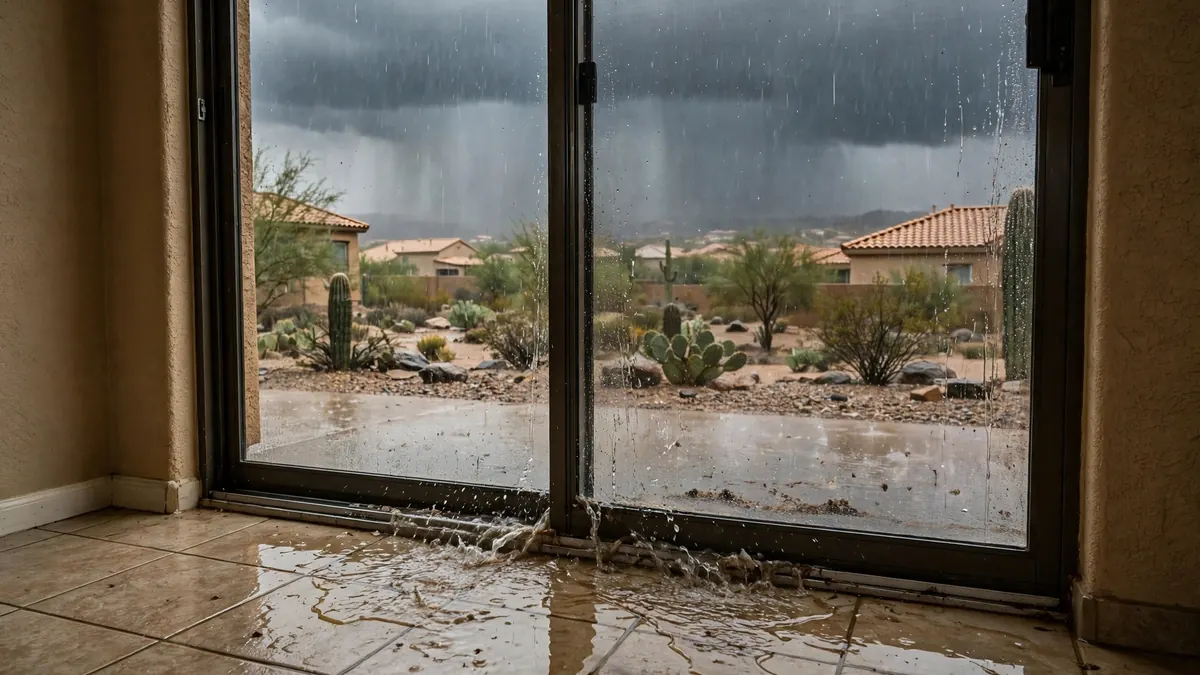
- Sliding doors. Rain driven sideways fills the door track. If the weep holes in the track are clogged with dust, water spills over onto the floor inside.
- Stucco at the base of walls. Stucco walls are built with a gap above the soil at the bottom. When owners add gravel, pavers or planting beds that bury that gap, water can wick into the wall.
- Yard grading. Lots are graded to drain away from the house and toward the street or a basin. Pools, pavers and landscaping changes can undo that grading.
- Dust before rain. A dust storm ahead of the rain fills gutters, scuppers and door tracks with fine dirt, so water backs up where it normally would drain.
Water that rises off the ground and comes in under doors is flood for insurance purposes and is usually not covered by a standard homeowners policy. Rain that comes through a storm-damaged roof often is. Photograph where the water entered.
How does living in an HOA change a water damage claim?
In most Maricopa HOAs, you are responsible for your house and the association for common areas, so your own homeowners policy handles water damage inside your home. The HOA matters when the water came from something it maintains, like common-area irrigation or a retention basin, and when repairs change the outside of the house.
- Report common-area problems in writing. If an HOA sprinkler line or drainage channel sent water toward your house, email the management company the same day with photos.
- Exterior repairs may need approval. Replacing a roof, changing exterior paint after a stucco repair, or regrading a yard can require architectural review. Ask before work on the outside starts, not after.
- Drying inside does not wait. Interior drying does not usually need HOA approval. Start it while the paperwork catches up.
- Townhomes are different. If you own an attached home, read the CC&Rs to see whether the roof and exterior walls are yours or the association's.
How should seasonal and 55+ homeowners protect an empty house?
Shut off the main water before leaving, set the water heater to vacation mode, and make sure someone local can get in. A leak in an empty house runs the longest, so it causes the most damage of any water loss.
Province and other age-restricted neighborhoods in Maricopa have many owners who spend summers elsewhere. Commuters have a smaller version of the same problem: a house empty from early morning until evening while they drive SR 347 to work.
- Automatic shutoff valves. A valve on the main line that closes when a sensor detects water, or when flow runs too long, stops most leaks before they spread.
- Leak sensors. Small sensors under the water heater, sinks, the washer and the refrigerator can alert your phone.
- AC left on. Owners who leave for the summer usually keep the AC running at a higher setting. Ask your HVAC company to clear the condensate line before you go, since a clog with nobody home can soak a ceiling.
- A local contact. Give a neighbor or property manager a key and permission to call a restoration crew and meet them.
What should you do if you come home to water?
Shut off the main, stay away from wet outlets and sagging ceilings, photograph everything, and get moisture readings started. If you were away, try to work out how long the water ran, because it affects both the drying plan and the insurance claim.
- Close the main shutoff or the valve at the failed fixture.
- Turn off breakers to wet rooms if you can reach the panel without standing in water.
- Photograph the source and every wet room before moving anything. Keep the failed hose or line.
- Write down when you left and when you found the water. Note the water meter reading too.
- Check upstairs and downstairs. In a two-story home, look at the ceiling below any upstairs leak.
- Call your insurer, and tell the HOA if anything it maintains was involved.
- Have a local restoration crew map the moisture and start drying.
Most Maricopa jobs land between about $1,300 and $5,500, with one room of clean water caught early often $400 to $1,500 and a slab leak with detection and drying about $2,000 to $5,000. Prices are set by the restoration company. Sudden, accidental damage is usually covered by a standard policy minus the deductible, while gradual leaks and outside flood water are commonly excluded. Our guide to Arizona water damage insurance covers the details.
If you find water in your Maricopa home, call (520) 380-1551. The line is open 24/7 for the 85138 and 85139 zip codes and connects you with a local restoration crew.
Questions homeowners ask
How long do water heaters last in Maricopa?
Should I replace the supply lines in an older Maricopa home?
Does my Maricopa HOA pay for water damage inside my house?
Why does my ceiling leak only during monsoon storms?
More from the blog
 Local GuidesWater damage restoration cost in Florence, AZMost water damage restoration jobs in Florence, AZ run about $1,300 to $5,500. One room of clean water caught early is often $400 to $1,500, and...
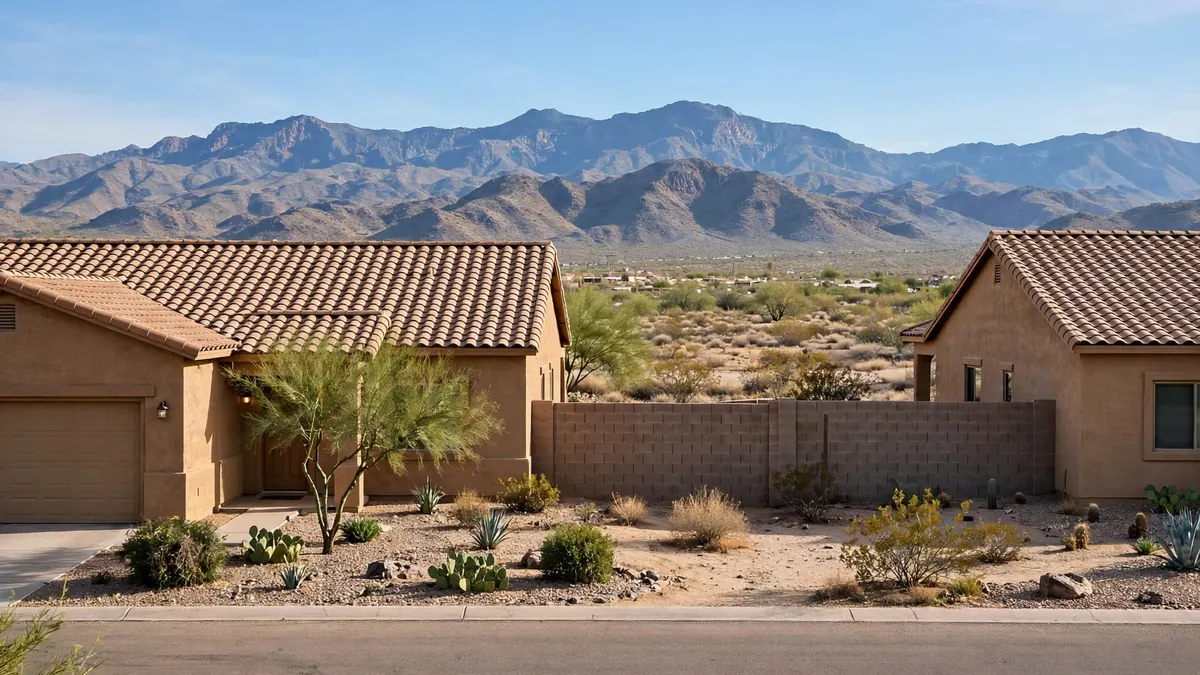 Local GuidesSan Tan Valley water damage: what homeowners should knowSan Tan Valley is mostly newer slab homes in HOA subdivisions, so the common water problems are slab leaks, PEX fitting failures in walls and ceilings,...
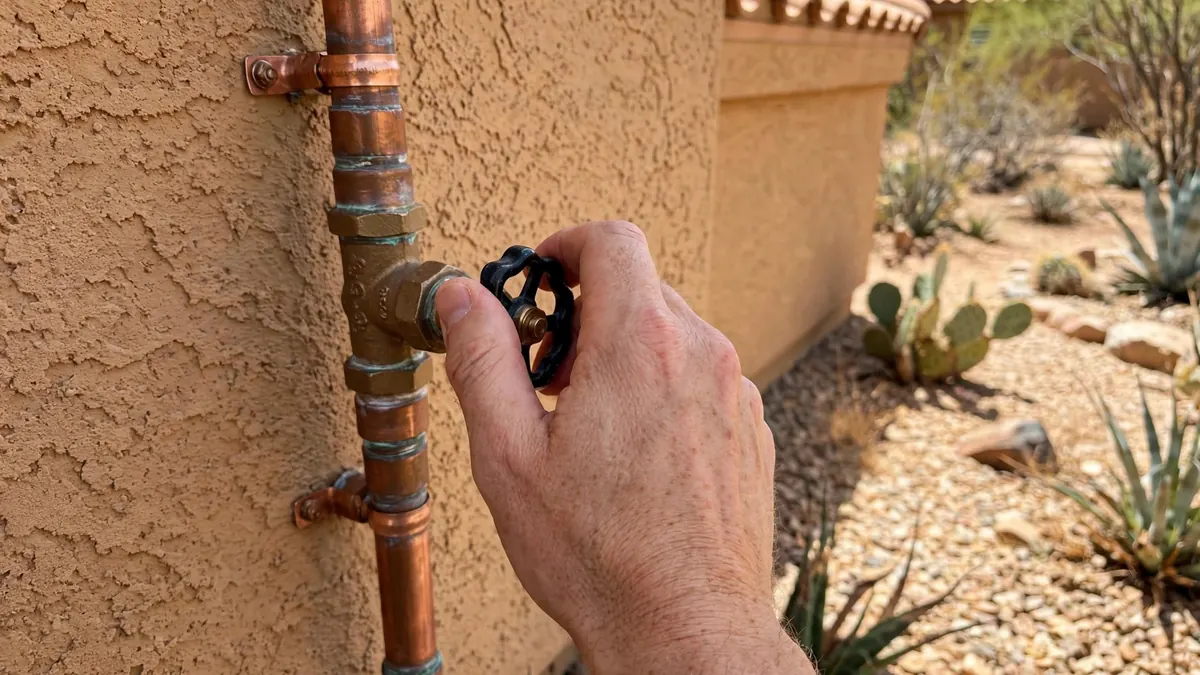 Local GuidesSnowbird and vacant home leak checklistBefore leaving a home empty, close the main water valve, turn off the water heater, keep the AC on at a higher setting, clear the condensate...
Need help with damage right now?
Speak to a local restoration specialist on the 24/7 line, any time of day.
Call (520) 380-1551When you call: enter your ZIP code, then press 1 for water damage, 2 for fire damage or 4 for sewage backup.