Home › Blog › Snowbird and vacant home leak checklist
Snowbird and vacant home leak checklist
Before leaving a home empty, close the main water valve, turn off the water heater, keep the AC on at a higher setting, clear the condensate line and roof drains, place leak sensors, and arrange a house checker. Then read your policy's vacancy clause and tell your insurer. See seasonal home water damage.
In this article
- What should you do before leaving your Arizona home empty for the season?
- The before-you-leave checklist
- Should you shut off the main water or leave it on?
- What should you set the AC to while the house is empty?
- Do smart leak sensors and automatic shutoff valves work?
- What should a house checker look for on each visit?
- How do vacancy clauses in homeowners insurance work?
- What happens if a leak is found while you are away?
- What should you check when you get back in the fall?
- Questions homeowners ask
What should you do before leaving your Arizona home empty for the season?
Before you leave, close the main water valve, turn off the water heater, set the AC to a higher temperature instead of off, clear the roof drains, and line up someone to check the house on a schedule. Then read your policy for vacancy rules and tell your insurer how long the home will sit empty.
Most snowbirds in Casa Grande, Eloy and Arizona City leave in spring and come back in fall. That timing matters. The house sits through the hottest months and the whole monsoon, from mid-June through September, with nobody inside to hear a hiss under the sink or see a ceiling stain growing after a storm. A supply line that would be a mop-up job in an occupied house can run for weeks in an empty one.
Our Mission Royale page explains why these leaks get so expensive. This guide is the practical side: what to do, in what order, before you lock the door.
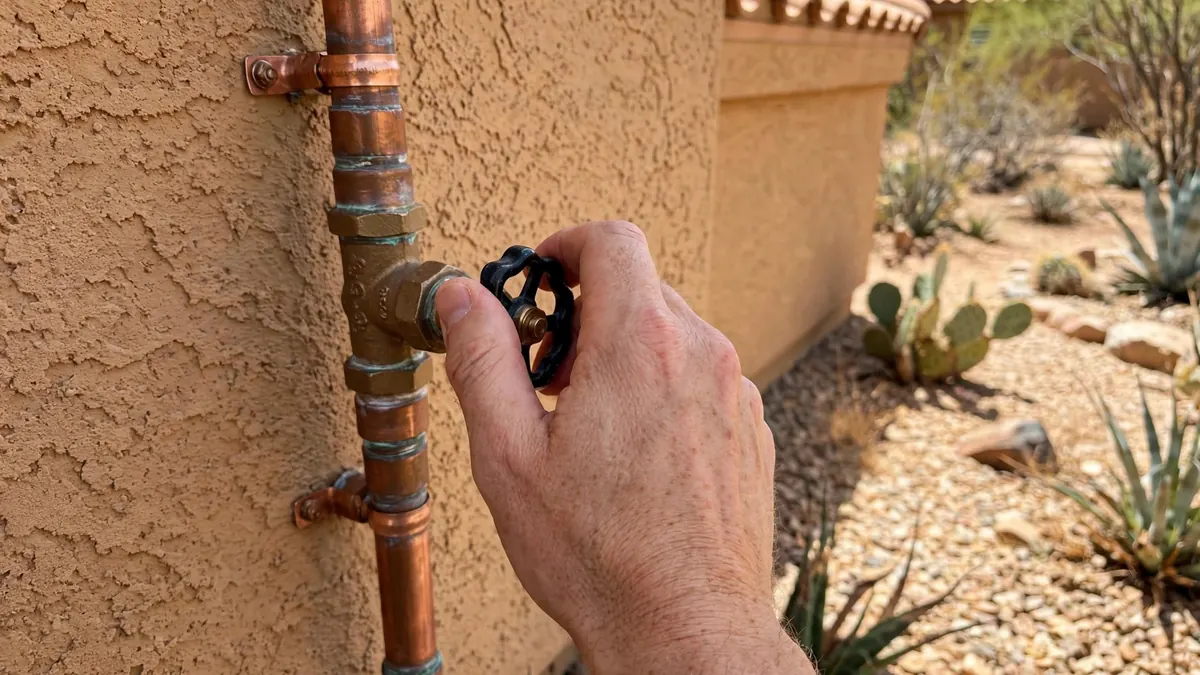
The before-you-leave checklist
Work through this list a few days before you go, not the morning you leave. Some items, like a stuck valve or a clogged condensate line, need a plumber or HVAC visit to fix.
| Task | Why it matters | How to do it |
|---|---|---|
| Close the main water valve | A failed line cannot flood the house if no water can reach it | Turn the house shutoff fully closed, then open a low faucet to drain pressure |
| Turn off the water heater | Protects the tank and avoids heating water nobody uses | Gas: set to vacation or pilot. Electric: switch off its breaker |
| Close appliance valves | Backup protection if the main is left on or reopened by a checker | Close the washer valves, the ice-maker valve and toilet angle stops |
| Clear the AC condensate line | The AC still runs and a clog can overflow into a closet or ceiling | Have it flushed and the float switch tested |
| Set the thermostat higher, not off | Keeps heat and humidity from damaging finishes and electronics | Pick a setting with your HVAC tech and leave it there |
| Clear scuppers, drains and gutters | Blocked roof drains are a common monsoon leak in empty homes | Remove debris on a cool morning or hire it out |
| Check roof penetrations | Cracked seals at vents and cooler stands let wind-driven rain in | Look from a ladder or have a roofer check |
| Shut down the evaporative cooler | A stuck float valve can overflow all summer | Close and drain the supply line if you will not use it |
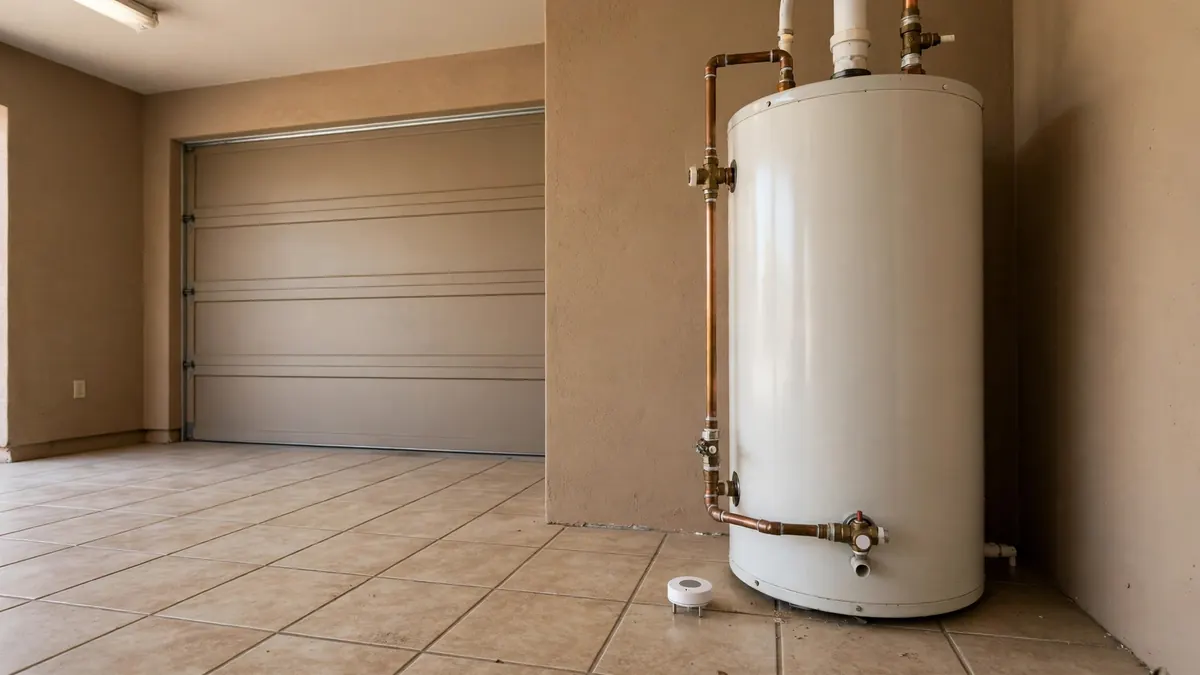
| Set up leak sensors | An alert gets someone there before the floor is soaked | Place sensors at the heater, sinks, toilets, washer and AC closet |
| Arrange a house checker | Someone has to see what sensors miss, especially after storms | Agree on a schedule, a written checklist and who to call |
| Read your policy | Vacancy clauses can limit water damage coverage | Check the vacancy wording and call your agent |
| Take baseline photos | Shows the condition of the home before you left | Photograph ceilings, floors, under sinks and the water heater |
Should you shut off the main water or leave it on?
For most seasonal homes, shut it off. A closed main is the single step that turns a burst supply line into a non-event. The exceptions are things that still need water while you are gone, and each one can usually be handled another way.
Start by finding out what your house shutoff actually controls. In many Arizona homes, the irrigation line branches off between the meter and the house valve. That means closing the house valve stops water to the plumbing inside but leaves the drip system running, which is usually what you want for yard plants through the summer. Close the valve and run an outdoor timer zone to see.
- Irrigation. If irrigation is downstream of your house valve, ask a plumber about adding a separate valve so you can shut the house off and keep the yard watered.
- Pool auto-fill. Pools lose water fast in summer heat. If the auto-fill is fed from the house plumbing, a pool service can top it off on visits, or a plumber can separate the line.
- Water softener. It does not need water while you are away. Put it in bypass or let it sit with the main closed.
- Fire sprinklers. Some newer homes have them. If yours does, ask the installer or a plumber before closing anything, because the sprinkler supply may need to stay on.
After you close the main, open a faucet at the lowest point in the house and a hose bib outside to relieve pressure. The lines will not be empty, but there will be no pressure pushing water out through a weak fitting.
Test the main valve before your departure week. Old gate valves and ball valves that have not moved in years can stick or fail to close fully. If yours will not shut tight, have it replaced while you are still in town.
What should you set the AC to while the house is empty?
Leave the AC on at a higher setting rather than turning it off. An Arizona house closed up in July with no cooling gets very hot inside, which is hard on wood, adhesives, electronics, candles and anything stored in the garage. Your HVAC technician can suggest a setting that fits your home.
Leaving the AC running also means the condensate system is working all summer with nobody watching it. That is why the condensate line belongs on the checklist. Algae and dust build up in the line, and when it clogs, water backs up into the pan and overflows. In an attic unit, that water comes through the ceiling. In a hall closet, it soaks the floor and the bottom of the walls. A working float switch shuts the unit down when the pan fills, which stops the water but also stops the cooling, so a checker needs to notice either one. Our page on AC condensation water damage covers what that cleanup involves.
Ask the HVAC tech to change the filter before you leave too. Summer dust storms load filters quickly, and a clogged filter makes the coil colder and wetter.
Do smart leak sensors and automatic shutoff valves work?
They work well as an early warning, and an automatic shutoff valve can stop a leak with nobody home. They are not a replacement for closing the main and having a house checker, because they depend on batteries, power and internet, all of which can fail during a monsoon storm.
Types of leak protection
- Spot sensors. Small battery units that sit on the floor and send an alert to your phone when they touch water. They only detect water that reaches them, so placement is everything.
- Automatic shutoff valves. A motorized valve installed on the main line that closes when a paired sensor gets wet, or when it detects unusual flow. These need a plumber to install.
- Flow monitors. Devices that watch water flow through the main and alert you when water runs with no reason, such as a steady trickle at 3 a.m. Some are paired with a shutoff valve.
- Smart thermostats. Not a leak device, but an alert that the house is getting hot can tell you the AC has shut down, which may mean the condensate float switch tripped.
Where to put sensors
- On the floor next to the water heater, or in its drain pan.
- Under the kitchen sink and each bathroom sink.
- Behind each toilet near the supply line.
- Behind the washing machine.
- Behind the refrigerator near the ice-maker line.
- In the AC closet or the secondary pan of an attic air handler.
- Near the water softener and any filter system.
Two details matter here. Monsoon storms knock out power and internet, so a sensor that alerts through a Wi-Fi hub may go quiet exactly when you need it. And batteries in a hot garage wear out faster, so put fresh ones in before you leave. If you rely on alerts, make sure the alerts also go to the person who has a key.
What should a house checker look for on each visit?
A house checker should walk every room, look at every place water can come from, and look up at the ceilings, especially after a storm. Give them a written list so nothing gets skipped, and agree on what they do if they find water.
- Note the date and time of the visit, and take a few photos.
- Check that the AC is running and the house is near the set temperature.
- Look at the floor around the water heater, under each sink and behind each toilet.
- Open the AC closet or look at the air handler pan.
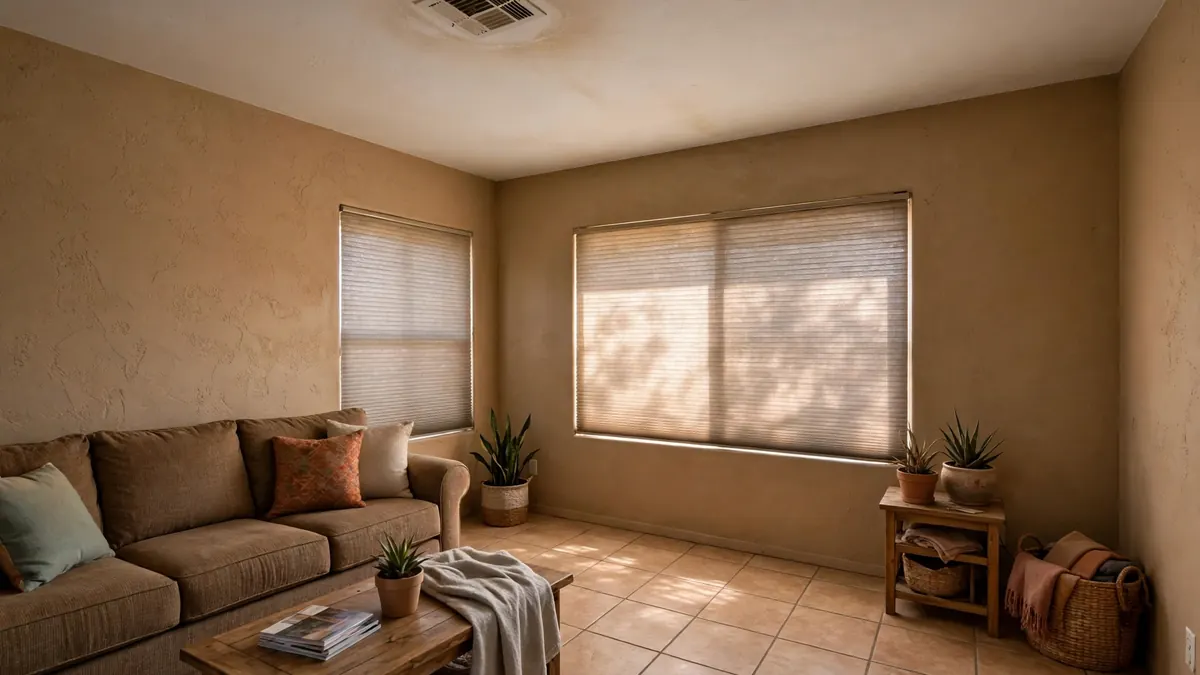
- Scan every ceiling for new stains, especially under the roof drains and the cooler.
- Smell for musty odor in closets and bathrooms.
- Look at the water meter. If the main is closed, the leak indicator should be still.
- Walk outside after storms. Look for debris in scuppers, damaged roof tiles, standing water against the foundation and wet stucco.
- Check for pests, broken windows and anything that looks disturbed.
Many owners have someone check every week or two, and after any big storm. Some policies set their own expectations for how often an empty home is checked, which is one more reason to read the vacancy section. Leave the checker your phone number, your insurer's claim number, the location of the main shutoff and the breaker panel, and written permission to let a restoration crew in if needed.
How do vacancy clauses in homeowners insurance work?
Many homeowners policies limit or exclude certain types of damage once a home has been vacant for a stated number of consecutive days, often 30 or 60. Water damage from plumbing is one of the coverages that can be affected. The exact wording varies by carrier, so read your own policy and ask your agent.
A few general points hold across most policies:
- Vacant and unoccupied are not always the same. Some policies treat a home that is furnished but empty for the season differently from a home with no furniture or belongings. The definitions in your policy are what count.
- Some policies set conditions. A policy may expect you to shut off the water, keep the home heated or cooled, or have it checked. Meeting those conditions and keeping a record of them protects you.
- Seasonal homes may need a different policy. If the house is a second home, your carrier may write it as a seasonal or secondary dwelling. That is a conversation to have before you leave, not after a loss.
- Slow leaks are still slow leaks. Most standard policies cover sudden, accidental water damage and exclude long-term seepage. A leak that ran for months in an empty house can be harder to claim than one found in a day, which is the real value of sensors and checks.
Keep your checker's visit log, your before-you-leave photos and any receipts for plumber or HVAC work. If you ever file a claim, those records show the home was looked after.
What happens if a leak is found while you are away?
The person who finds it should close the main, photograph the water, and call for help. You can handle the rest by phone. You do not need to fly back for a crew to start extraction and drying.
- Have the checker close the main and, if the water heater is the source, turn it off.
- Ask for photos and video of the source and every wet room before anything is moved.
- Call your insurer to report the loss and get a claim number.
- Arrange for a restoration crew to meet your checker, neighbor or property manager at the house.
- Ask the crew for moisture readings, photos and drying logs, and have them sent to you.
- Have the failed part kept for the adjuster.
Leaks in empty homes cost more than the same leak in a lived-in house, because the water has more time to spread under tile, into baseboards and up the drywall. Prices are set by the restoration company and vary. Most water damage jobs in the area run about $1,300 to $5,500, and a leak that ran for days or weeks can cost more. The Arizona City page covers how crews handle access when the owner is out of state.
What should you check when you get back in the fall?
Open the main slowly, then walk the house looking and listening for leaks before you settle in. Fittings and washers that sat dry and hot for months can weep when pressure comes back.
- Open the main valve slowly, partway at first, and listen for hissing.
- Close the faucets you left open once water runs steady.
- Check under every sink, behind toilets and at the washer for drips.
- Open appliance valves one at a time and watch each connection.
- Turn the water heater back on and check the base and relief valve.
- Run each tap for a minute to flush water that sat in the pipes.
- Look at ceilings for stains from monsoon storms you were not here for.
- Read the meter with everything off to confirm nothing is leaking.
Owners in Robson Ranch and other Eloy communities often find the damage on this first walk, after a summer storm or a slow condensate overflow. The Eloy page covers common causes there. If you find water, a stain that is still damp, or a musty room, call (520) 380-1551. The line is open 24/7 and connects you with a local restoration crew in Casa Grande, Eloy, Arizona City and nearby Pinal County.
Questions homeowners ask
Should I turn off the water heater when I leave for the summer?
Will closing the main water valve shut off my irrigation?
How often should someone check a vacant home?
Do leak sensors work during a power outage?
Does insurance cover a leak in a vacant home?
More from the blog
 Local GuidesWater damage restoration cost in Florence, AZMost water damage restoration jobs in Florence, AZ run about $1,300 to $5,500. One room of clean water caught early is often $400 to $1,500, and...
 Local GuidesWater damage in Maricopa, AZ homes: slab leaks, HOAs and newer buildsMost Maricopa homes were built in the 2000s and later on concrete slabs, and many are now old enough that original water heaters, supply lines, washer...
 Local GuidesSan Tan Valley water damage: what homeowners should knowSan Tan Valley is mostly newer slab homes in HOA subdivisions, so the common water problems are slab leaks, PEX fitting failures in walls and ceilings,...
Need help with damage right now?
Speak to a local restoration specialist on the 24/7 line, any time of day.
Call (520) 380-1551When you call: enter your ZIP code, then press 1 for water damage, 2 for fire damage or 4 for sewage backup.