Home › Blog › San Tan Valley water damage: what homeowners should know
San Tan Valley water damage: what homeowners should know
San Tan Valley is mostly newer slab homes in HOA subdivisions, so the common water problems are slab leaks, PEX fitting failures in walls and ceilings, garage water heater leaks and monsoon runoff from open desert. Because the area is unincorporated, permits come from Pinal County and water service from private utilities, not a city.
In this article
- What should San Tan Valley homeowners know about water damage?
- What does being unincorporated change after water damage?
- Where do PEX leaks show up in San Tan Valley homes?
- How can you tell a slab leak from a leak in the walls or attic?
- Why do homes on subdivision edges get monsoon runoff?
- How do HOA rules affect water damage repairs?
- What should you ask a restoration company serving San Tan Valley?
- What should you do first, and what does it cost?
- Questions homeowners ask
What should San Tan Valley homeowners know about water damage?
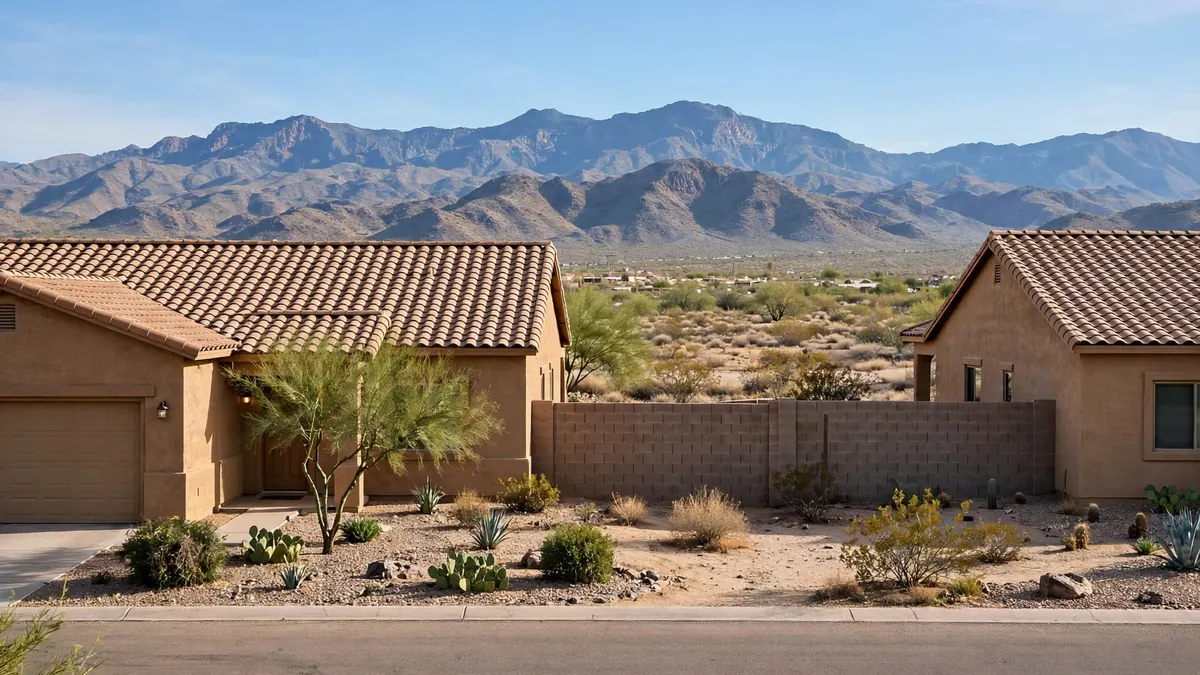
Most homes here are slab-on-grade houses built from the late 1990s on, in master-planned subdivisions with HOAs. That means leaks tend to hide under tile or inside walls and ceilings, water from the open desert can reach homes on subdivision edges, and many decisions run through the HOA and Pinal County rather than a city hall.
San Tan Valley covers a large area off Hunt Highway, Gantzel Road and Ironwood Drive, from Johnson Ranch and Pecan Creek to San Tan Heights, Copper Basin and Encanterra. The San Tan Valley water damage page lists the zip codes and neighborhoods the line covers. This guide covers what is specific to owning a home here when water gets in.
What does being unincorporated change after water damage?
San Tan Valley is not a city, so there is no city building department, city water utility or city code office. Building permits and inspections for repairs that need them go through Pinal County, and water and sewer service come from private utility companies.
- Permits. Most drying and drywall patching does not need a permit. Larger repairs, such as replacing a water heater, rerouting plumbing, or rebuilding a section of wall with electrical work, may. Those go through Pinal County, and the contractor doing the work usually pulls them.
- Your water utility. Your bill comes from a private water company. If you suspect a leak between the meter and the house, or the meter itself, that company is who you call. Your usage history on past bills is useful proof of when a leak started.
- Sewer or septic. Most subdivision homes are on a utility sewer. Some homes on larger lots at the edges of the area use septic systems, which changes what a backup means and who you call first.
- The HOA as the local rulebook. With no city code for things like exterior colors or yard changes, your CC&Rs fill that role. Exterior repairs after water damage may need HOA approval.
Where do PEX leaks show up in San Tan Valley homes?
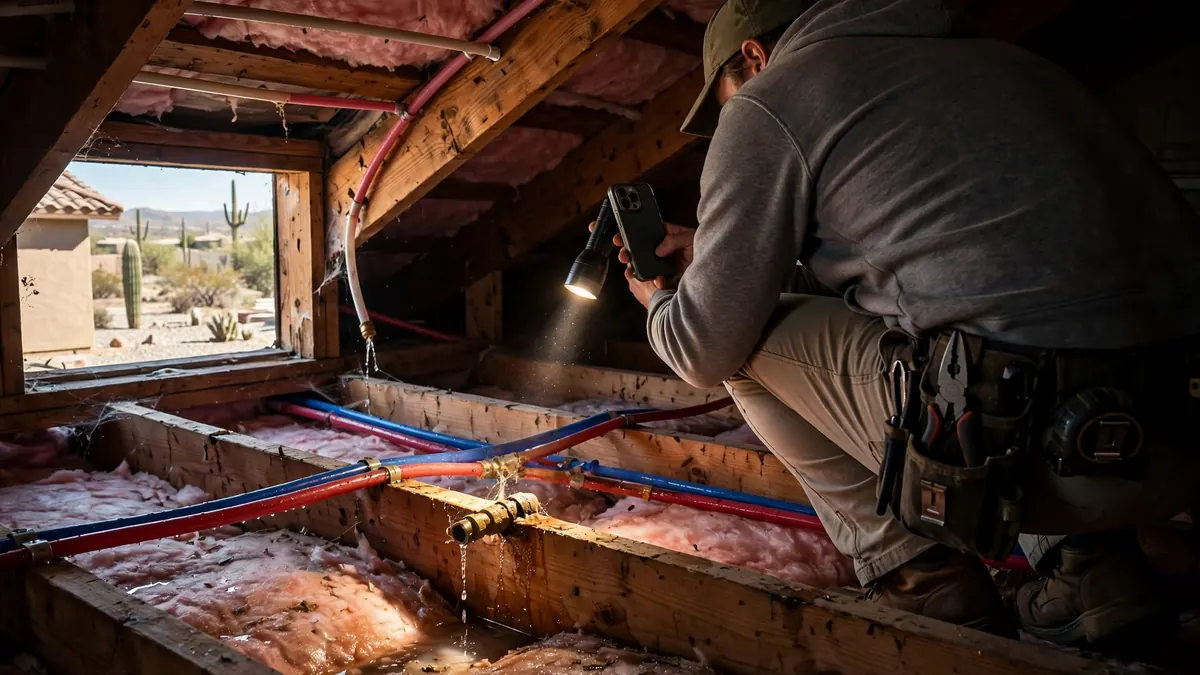
In many newer homes, PEX supply lines run through walls and sometimes overhead through the attic, so a failed fitting often shows up as a ceiling stain, a wet wall or water at a light fixture rather than water on the floor. PEX tubing itself handles hard water well. The fittings and connections are where most leaks start.
Common causes of PEX leaks in these homes:
- A fitting that was not crimped or expanded correctly. It can hold for years and then start to weep or let go.
- Brass fittings and hard water. Some brass fittings can corrode or scale over time with the area's hard water, especially on the hot side.
- Attic heat. Summer attics here get far hotter than the 110°F outdoor air. Lines and fittings in the attic live through that every summer.
- Damage during later work. A nail or screw from hanging a TV or adding a shelf can puncture a line inside the wall. It may leak slowly for weeks.
- Pests in the attic. Rodents in attics can chew plastic lines, so evidence of rodents near plumbing is worth checking.
Signs to watch: a ceiling stain that grows, paint bubbling on a wall with a bathroom or kitchen on the other side, a damp spot that stays after a dry week, or water dripping at a can light. For what a failed line does once it lets go, see burst pipe cleanup.
How can you tell a slab leak from a leak in the walls or attic?
Where the water shows up is the best first clue. Water at floor level with no fixture nearby, or a warm spot on tile, points under the slab. Stains up high, at ceilings or upper walls, point to lines in the walls or attic. A water meter test confirms a leak either way.
| What you notice | Most likely location | Who to call first |
|---|---|---|
| Warm spot on tile, damp carpet along a wall, dark grout | Line under the slab | Plumber for leak detection, then a restoration crew to dry |
| Ceiling stain under a bathroom or in a hallway | Supply line in the attic or a fixture above | Plumber to find the line, restoration crew for the ceiling and insulation |
| Ceiling stain near the air handler or after long AC runs | Clogged condensate line or pan | HVAC company to clear the line, restoration crew if drywall is wet |
| Stain that grows only after storms | Roof or roof penetration | Roofer, then a restoration crew for interior damage |
| Water spreading from the garage into the house | Water heater or a line in the garage wall | Shut off the heater supply, then a plumber and restoration crew |
| Meter moves with all water off, no visible water | Hidden supply leak, slab or wall | Plumber for leak detection |
To run the meter test, turn off every fixture, the irrigation controller and the pool fill, then watch the small leak indicator on the meter. If it spins with nothing running, water is escaping somewhere. Closing the main shutoff at the house and checking again tells you whether the leak is inside the home or between the meter and the house. For drying after an under-slab leak, see slab leak detection and cleanup.
Why do homes on subdivision edges get monsoon runoff?
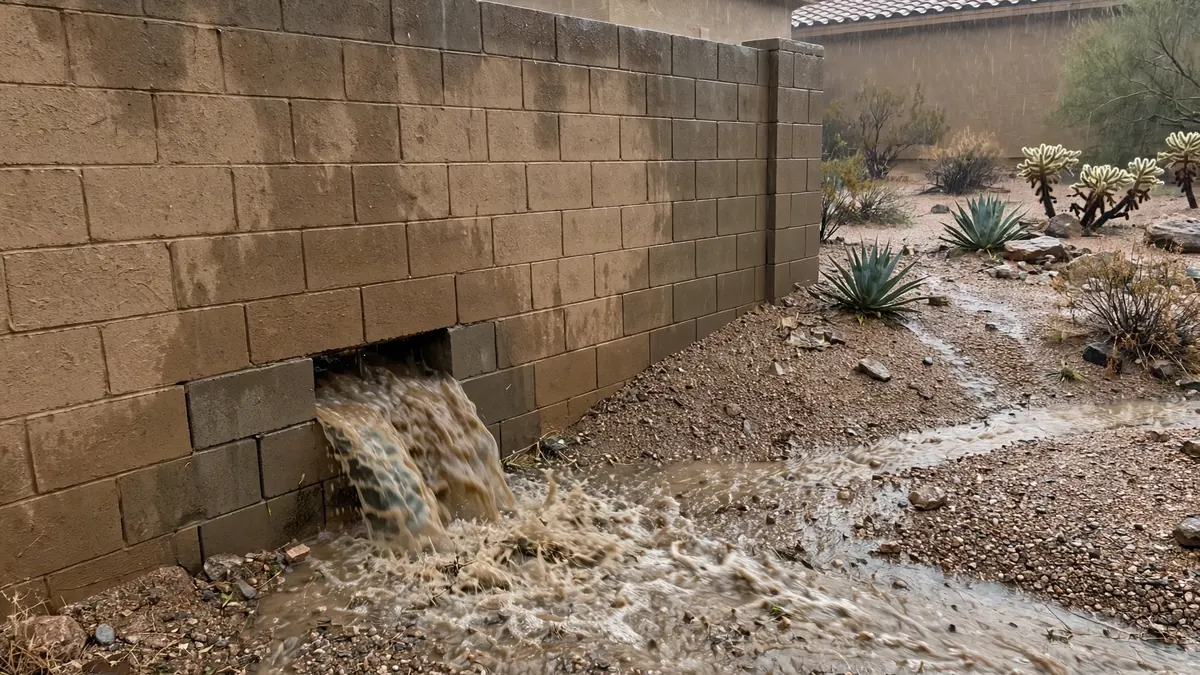
Because there is open desert and the San Tan Mountains on the other side of the wall. In a heavy monsoon cell, water runs off rocky slopes and hard desert ground quickly and follows the low path, which can be a lot wall, a side yard or a garage door at the edge of a subdivision.
Most subdivisions are designed to carry storm water to retention basins and channels. That works for normal storms. Problems show up when a storm is unusually heavy, when a channel or basin outlet is clogged with debris, or when a homeowner's yard work blocks the path water was meant to take.
- Keep drainage openings clear. Openings at the base of block walls let water pass through. Gravel, debris or a planter in front of them pushes water elsewhere, sometimes toward the house.
- Watch the grade near the house. Soil and gravel should slope away from the foundation. Raised beds and pavers set against the stucco can direct water into the wall.
- Clear gutters and scuppers before July. Dust storms ahead of the rain fill them with dirt.
- Report HOA drainage problems in writing. If a common-area channel or basin is overflowing, email the management company with photos.
Water that rises off the ground and comes in under a door is flood. A standard homeowners policy usually does not cover it, and flood policies usually have a waiting period, so buy before the season if your lot takes water.
How do HOA rules affect water damage repairs?
In most San Tan Valley HOAs you are responsible for your own house, so interior water damage goes to your homeowners policy, not the association. The HOA matters when water came from something it maintains and when the repair changes the outside of the house.
- Interior drying does not wait for the HOA. Start drying right away. Policies expect you to limit further damage.
- Exterior work may need approval. A new roof, repaired stucco repainted to match, a changed drainage path, or a new block wall section can need architectural review.
- Common-area sources. A broken HOA irrigation line or an overflowing common basin is the association's to fix. Report it the same day and keep a copy.
- Attached homes. If you own a townhome or condo, read the CC&Rs for who maintains the roof and exterior walls.
What should you ask a restoration company serving San Tan Valley?
Ask where the crew works from, how daily drying visits will be handled, and how the estimate and insurance paperwork will be done. San Tan Valley sits between the Phoenix area and Pinal County, and many restoration companies listing it are based in Mesa, Gilbert, Queen Creek or Chandler. That is normal, but ask how they handle a job here.
The first visit is only the start. A drying job usually needs a visit every day to take moisture readings and move or remove equipment, often for three to five days. A company that is reliable about those daily visits matters more than anything else.
- Where is your crew based, and who will come for the daily moisture checks?
- How will you take and share moisture readings and photos?
- Will mitigation (extraction, drying, removal) and rebuild be on separate itemized estimates?
- Do you bill my insurer directly, or do I pay and get reimbursed?
- What happens if a reading shows water spread farther than expected?
- Will you need HOA or Pinal County approval for any part of the repair?
Arrival time depends on the time of day and current demand, wherever a company is based. When you call, describe the source, how many rooms are wet and whether the water is clean or from a drain or toilet, so the right crew and equipment are matched to the job.
What should you do first, and what does it cost?
Shut off the water, keep away from wet outlets and sagging ceilings, photograph everything, and get the wet areas measured and dried. Most San Tan Valley jobs land between about $1,300 and $5,500, and prices are set by the restoration company.
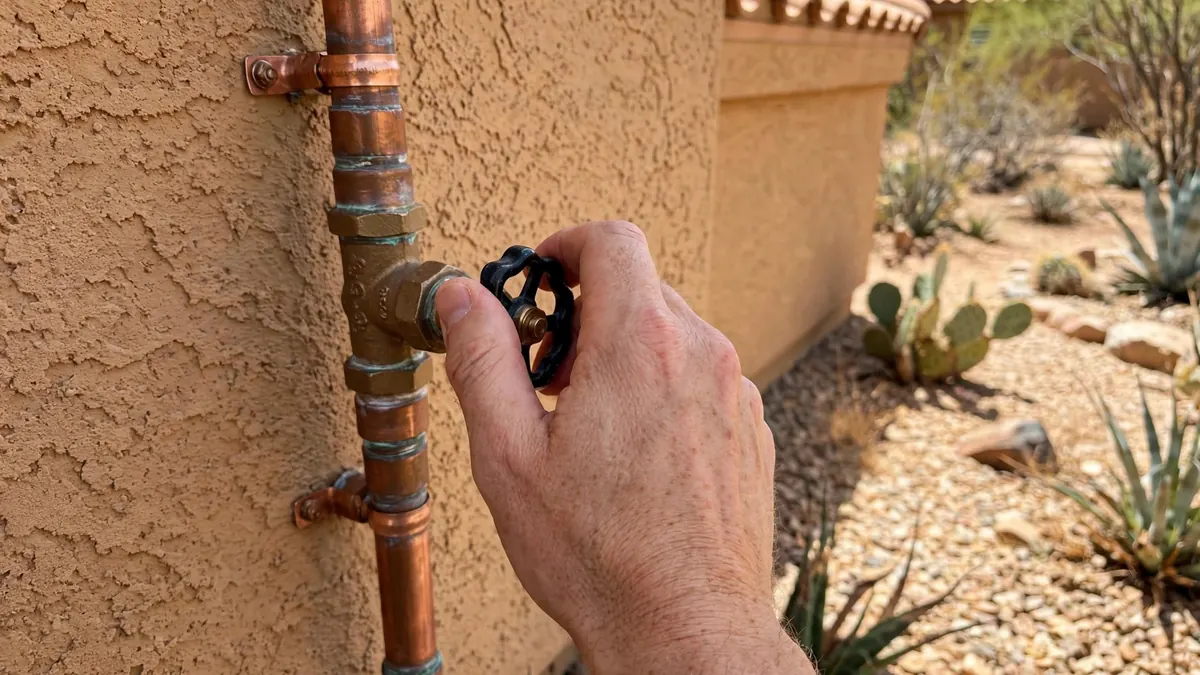
- Close the main shutoff, usually near the front hose bib or in the garage, or the valve at the fixture.
- If the water heater is leaking, turn off its gas or power and close its cold supply valve.
- Turn off breakers to wet rooms only if you can reach the panel without standing in water.
- Photograph the source and each wet area before cleanup, and keep the failed part.
- Call your insurer and, if a common area is involved, your HOA.
- Get moisture readings and drying started.
A single room of clean water caught early is often $400 to $1,500, and a slab leak with detection and drying about $2,000 to $5,000, plus the plumber's repair. Sudden, accidental damage is usually covered by a standard policy minus the deductible, while gradual leaks and outside flood water are commonly excluded.
If you have water in your San Tan Valley home, call (520) 380-1551. The line is open 24/7 for the 85140, 85143 and 85144 zip codes and connects you with a local restoration crew.
Questions homeowners ask
Do I need a permit to repair water damage in San Tan Valley?
Are PEX pipes in San Tan Valley homes likely to leak?
Who do I call if I think the leak is at my water meter?
Does my HOA have to approve water damage repairs?
More from the blog
 Local GuidesWater damage restoration cost in Florence, AZMost water damage restoration jobs in Florence, AZ run about $1,300 to $5,500. One room of clean water caught early is often $400 to $1,500, and...
 Local GuidesWater damage in Maricopa, AZ homes: slab leaks, HOAs and newer buildsMost Maricopa homes were built in the 2000s and later on concrete slabs, and many are now old enough that original water heaters, supply lines, washer...
 Local GuidesSnowbird and vacant home leak checklistBefore leaving a home empty, close the main water valve, turn off the water heater, keep the AC on at a higher setting, clear the condensate...
Need help with damage right now?
Speak to a local restoration specialist on the 24/7 line, any time of day.
Call (520) 380-1551When you call: enter your ZIP code, then press 1 for water damage, 2 for fire damage or 4 for sewage backup.