Home › Blog › Soot damage explained: dry soot, wet soot and protein residue
Soot damage explained: dry soot, wet soot and protein residue
There are three main types of soot. Dry soot is powdery and comes from fast, hot fires in wood or paper. Wet soot is sticky and black, from smoldering plastic or rubber. Protein residue is a nearly invisible amber film from burned food. Each needs a different cleaning method, which is why fire damage crews test before they clean.
In this article
- What is soot, and why are there different types?
- Which type of soot comes from which kind of fire?
- How do you tell which soot you have?
- How is dry soot cleaned?
- How is wet soot cleaned?
- How is protein residue cleaned?
- Why does the wrong cleaning method smear soot permanently?
- How fast does soot damage glass, metal and grout?
- When should soot cleanup be left to a crew?
- Questions homeowners ask
After a fire, people tend to call every dark mark soot and reach for the same rag and spray bottle. The trouble is that soot is not one material. The residue left by a burning paper bag behaves nothing like the residue from a melting plastic trash can or a pan of chicken left on the stove. Clean the wrong type the wrong way and a stain that would have lifted off in minutes becomes part of the paint.
What is soot, and why are there different types?
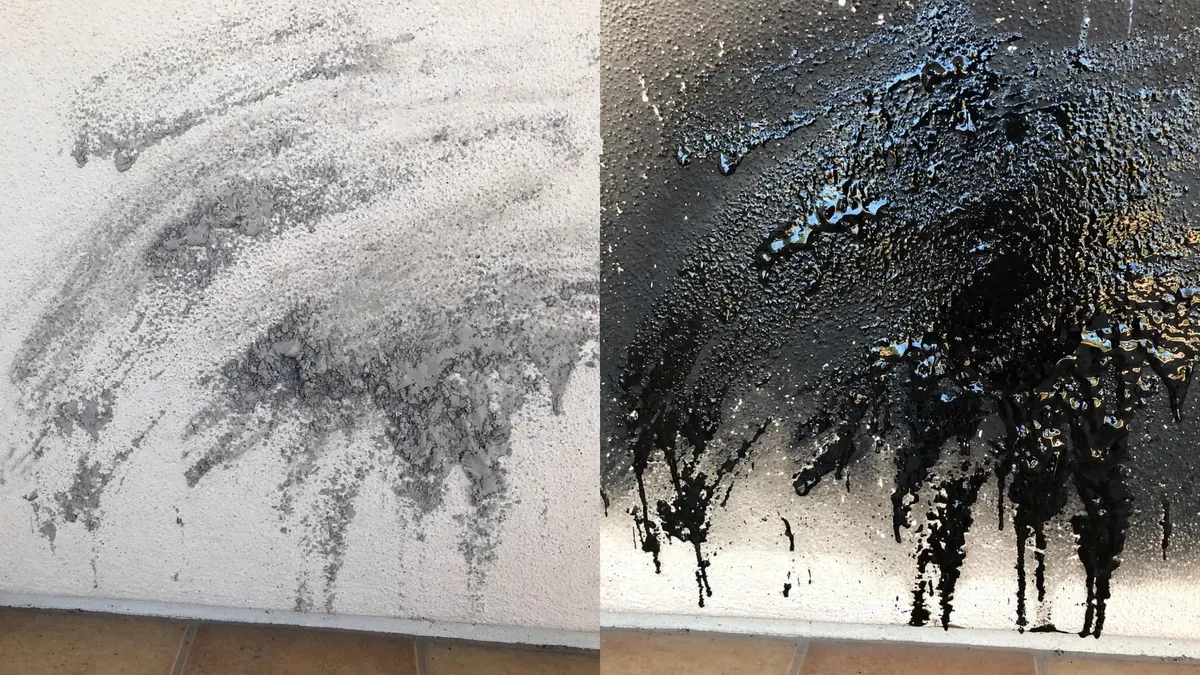
Soot is the leftover carbon and other particles from incomplete burning. Its type depends on two things: what burned, and how much oxygen and heat the fire had. A hot fire with plenty of air burns more completely and leaves a dry, loose powder. A cooler, smoldering fire with little air leaves heavier, oily residue that sticks.
Restoration crews usually sort residue into three main types: dry smoke residue, wet smoke residue, and protein residue. Two others come up often enough to know about: fuel oil soot from a furnace puffback, and slow candle or fireplace soot. Most real fires leave a mix, because a house holds wood, fabric, plastic, and food all at once.
Which type of soot comes from which kind of fire?
Look at what burned first. The material and the burn pattern tell you more about the residue than how dark the walls look.
| Soot type | Typical source | Look and feel | Smell |
|---|---|---|---|
| Dry smoke residue | Fast, hot fire in wood, paper, cardboard, or natural fabric | Gray to black powder, loose, dry to the touch | Woody, campfire |
| Wet smoke residue | Slow, smoldering fire in plastic, rubber, foam, vinyl, or synthetic fabric | Black, shiny or sticky, smears when touched | Sharp, chemical, burnt plastic |
| Protein residue | Burned meat, fat, oil, or other food, usually on a stovetop or in an oven | Thin yellow to amber film, often almost invisible, tacky | Sour, rancid, very strong |
| Fuel oil soot | Puffback from an oil or misfiring gas furnace | Black, oily, streaks around registers | Oily, heavy |
| Candle or fireplace soot | Slow buildup over months or years | Gray lines on ceilings, carpet edges, and over framing | Faint |
In Casa Grande, the most common small fires are kitchen fires, so protein residue shows up more than people expect. Garage fires involving cars, batteries, and stored plastics, and electrical fires that smolder in attics during monsoon storms, tend to leave wet smoke residue, which is the hardest to clean.
How do you tell which soot you have?
A dry sponge test is the simplest way. It takes a minute and does not damage anything if you do it on a hidden spot. Crews do a version of this test in every affected room before choosing a method.
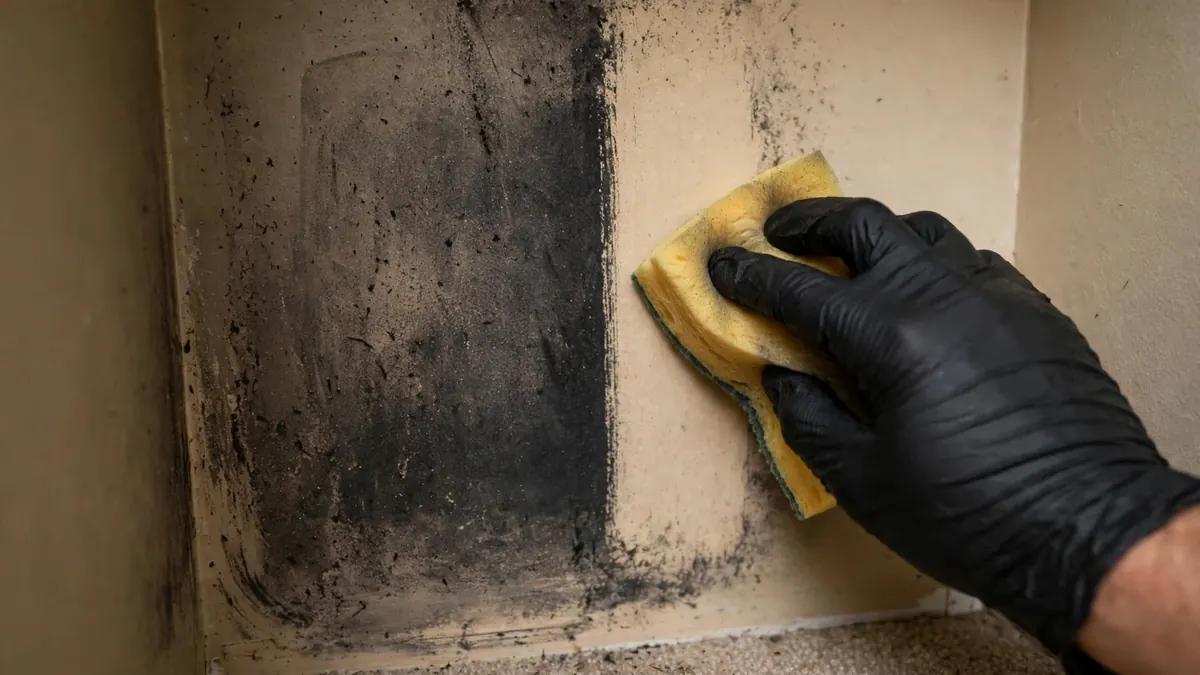
- Get a dry chemical sponge. These are made of vulcanized rubber and sold at hardware stores, sometimes labeled soot sponges. Do not wet it.
- Pick a hidden test spot, such as inside a closet, behind a door, or the top of a wall near the ceiling.
- Make one straight, light stroke about six inches long. Do not scrub or go back and forth.
- Look at the wall. If the stroke left a clean stripe, the residue is mostly dry soot. If it left a gray smear or a darker streak, the residue is oily, meaning wet smoke or fuel oil soot.
- Look at the sponge. A gray or black face that you can trim or knead away points to dry soot. A yellow or brown, slightly sticky face with little visible on the wall points to protein residue.
- Smell the sponge. A sour, rancid smell confirms protein residue. A chemical or burnt plastic smell points to wet smoke.
If the test leaves a smear, stop there. Oily residue needs solvents and a method that lifts it instead of spreading it.
How is dry soot cleaned?
Dry soot is cleaned dry first. Crews HEPA vacuum loose soot, then wipe walls and ceilings with dry chemical sponges in long, single strokes, turning or trimming the sponge as it loads up. Only after the loose soot is off does any liquid cleaner touch the surface.
The order matters because dry soot sits on the surface like flour. Add water and it turns into an ink that soaks into flat paint and drywall paper. After dry removal, surfaces are washed with a mild cleaner, rinsed, and checked for odor. In many rooms, dry soot cleans up well enough that walls only need cleaning, not repainting.
How is wet soot cleaned?
Wet soot is cleaned with solvent-based or degreasing cleaners and a lot more time. Dry sponges do little, because the residue is oily and smears under pressure. Crews often work in small sections, lifting the residue into a clean cloth and changing cloths constantly so they are not spreading it.
Wet smoke residue also carries a heavier odor and soaks deeper into porous materials. That means more of the house is likely to need sealing after cleaning, and soft materials like carpet pad, upholstery, and insulation are more likely to need replacing. Wet smoke from burned plastics can also be irritating to breathe, so crews wear respirators while removing it.
How is protein residue cleaned?
Protein residue is cleaned with degreasers and full surface washing, then deodorized. Because the film is hard to see, crews clean every surface in the affected area, not only the spots that look stained. Spot cleaning leaves most of the residue, and the smell, behind.
Protein residue tends to travel far from the stove. It coats the inside of cabinets and drawers, the ceiling, light fixtures, ceiling fans, window coverings, and the HVAC system. Paint over it without cleaning and the yellow can bleed through while the sour odor keeps coming back. Odor treatment and sealing are usually part of the job, and our page on smoke odor removal explains those steps.
Why does the wrong cleaning method smear soot permanently?
Soot particles are extremely small, and paint and drywall are full of tiny pores. Rubbing pushes the particles into those pores, and water or the wrong cleaner can dissolve the oily part of the residue so it soaks in. Once it is inside the paint film or the paper face of the drywall, cleaning cannot reach it, and the only fixes are sealing and repainting or replacing the material.
The most common mistakes:
- A wet rag on dry soot. Turns powder into a stain.
- A dry sponge on wet soot. Smears the oily residue in a wide streak.
- Scrubbing in circles. Grinds particles into the surface and spreads them.
- All-purpose sprays. Many leave their own film that binds soot to the wall.
- A household vacuum. Blows fine soot back into the air through the exhaust, where it settles on what you just cleaned.
- Touching walls. Fingerprints in soot are surprisingly permanent on flat paint.
Desert dust makes this worse here. Fine dust is on most surfaces in a Casa Grande home, especially after a monsoon dust storm. Soot on top of dust is gritty and oily at once, so wiping it scratches finishes while it smears.
How fast does soot damage glass, metal and grout?
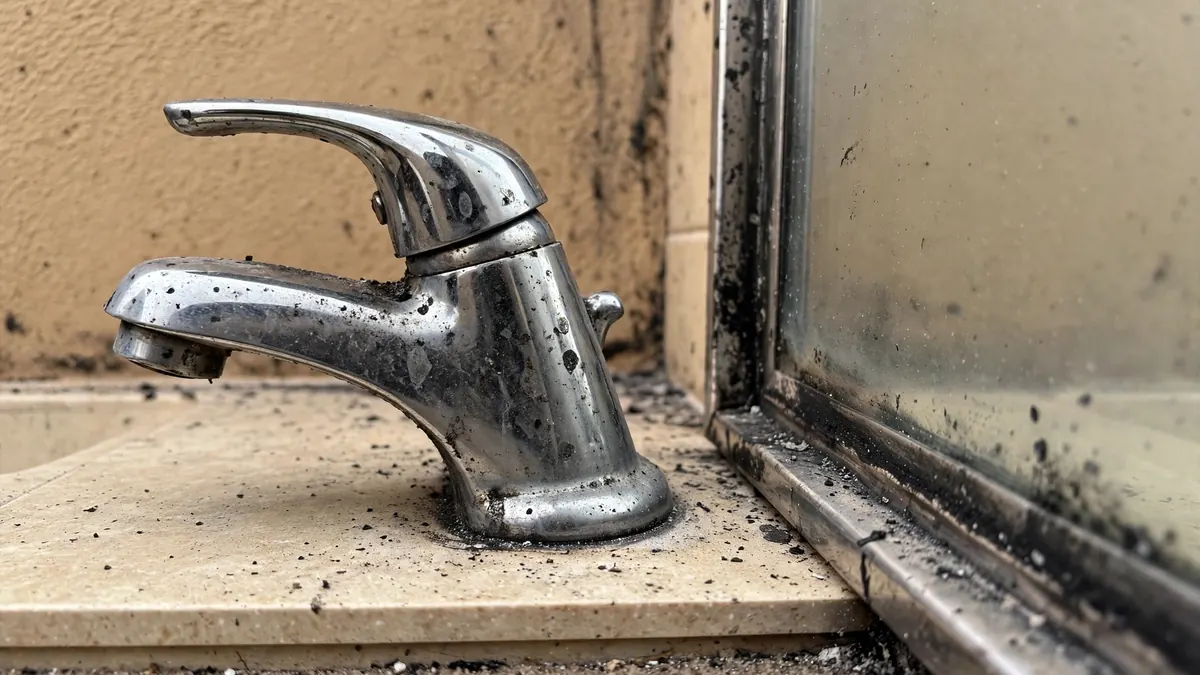
Soot is acidic, and it starts working on surfaces within days. Glass can pick up a permanent haze, polished metal can discolor and pit, and porous stone and grout can stain. That is why crews clean hard surfaces and metal early, even when soft materials look worse.
| Surface | What soot does | When it becomes permanent |
|---|---|---|
| Window glass and mirrors | Etches a haze that polishing may not remove | Can start within days |
| Chrome, brass, and nickel fixtures | Discolors and pits the finish | Pitting can begin within a couple of days |
| Aluminum window frames and appliance trim | Dulls and corrodes | Days to weeks |
| Grout, marble, travertine, unsealed stone | Absorbs residue and stains | Days, faster on light colors |
| Vinyl and plastic | Yellows and discolors | Days to weeks |
| Flat painted drywall | Absorbs residue and odor | Quickly if wiped wrong |
| Electronics | Acidic, conductive residue can damage circuits | Can fail weeks later |
Gray lines on the ceiling that follow the framing, or dark edges along carpet by the walls, are often candle or fireplace soot rather than fire damage. They are also often mistaken for mold. A quick sponge test helps tell them apart, and if it does not lift, have it checked, since mold remediation is a different job.
When should soot cleanup be left to a crew?
Leave it to a crew when the residue smears in a sponge test, when it covers more than a small area, when it has reached rooms far from the fire, or when the HVAC was running. Those signs mean oily residue, spread through the house, that household methods are likely to make worse.
Small patches of dry soot on a hard surface are a reasonable DIY job with a dry sponge and a HEPA vacuum. Everything else is usually cheaper to have cleaned right once than to clean wrong and repaint. Smoke and soot cleaning only often runs about $500 to $4,000, set by the independent restoration company and depending on the job.
The restoration companies we work with clean all three soot types across Casa Grande and Pinal County. If you are not sure what you are looking at, call (520) 380-1551 any time on the 24/7 line.
Questions homeowners ask
Can I clean soot off walls with soap and water?
Which type of soot is hardest to clean?
Is soot dangerous to breathe?
Does soot come off glass?
More from the blog
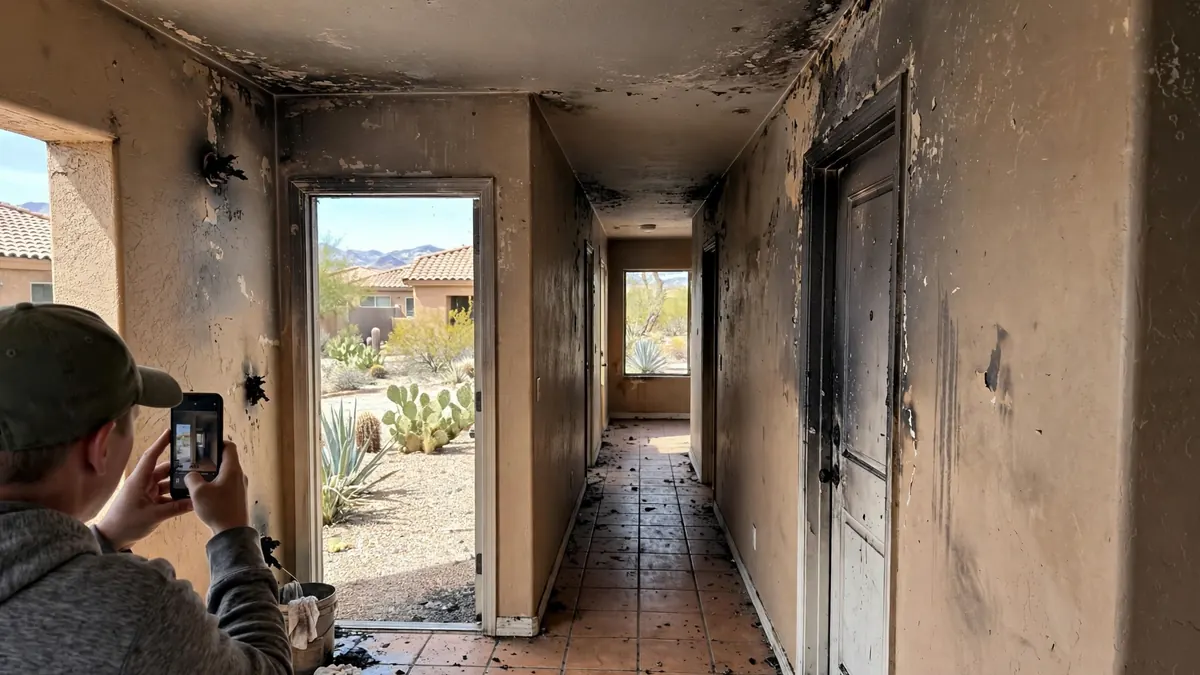 Fire & SmokeSmoke damage cleanup after a house fire: what to do firstStart smoke damage cleanup only after the fire department clears the house. Then keep the AC off, photograph everything, throw out exposed food, and do not...
 Fire & SmokeHow to get smoke smell out of a house in ArizonaTo get smoke smell out of a house, remove the residue instead of covering it. Change the HVAC filter, wash soft goods, clean hard surfaces top...
 Fire & SmokeDoes homeowners insurance cover smoke damage in Arizona?Most standard Arizona homeowners policies cover sudden smoke damage, including smoke from your own fire, a neighbor's fire, or a wildfire, minus your deductible. Gradual buildup...
Need help with damage right now?
Speak to a local restoration specialist on the 24/7 line, any time of day.
Call (520) 380-1551When you call: enter your ZIP code, then press 1 for water damage, 2 for fire damage or 4 for sewage backup.