Home › Blog › Storm damage insurance claims in Arizona: step by step
Storm damage insurance claims in Arizona: step by step
To file a storm damage claim in Arizona, make the home safe, stop more water from getting in, and photograph everything before cleanup. Then report the claim, meet the adjuster with your contractor, and review the estimate line by line. Check whether a separate wind and hail deductible applies. See storm damage restoration.
In this article
- What are the steps of a storm damage insurance claim in Arizona?
- What should you do in the first 24 hours after the storm?
- How do wind and hail deductibles work?
- What counts as storm damage, and what does not?
- How do you document storm damage so the adjuster sees it?
- What happens when the adjuster inspects the house?
- How do you spot storm chasers and contract traps?
- How long does a storm damage claim take, and how does payment work?
- What if the settlement looks too low?
- What should you do right now?
- Questions homeowners ask
What are the steps of a storm damage insurance claim in Arizona?
A storm claim runs in a fairly set order: make the house safe, stop more water from getting in, document everything, report the claim, meet the adjuster, review the estimate, then repair and collect any held-back money. Most of the trouble people run into comes from doing those steps out of order, such as tearing out wet drywall before anyone photographs it.
- Stay safe and stop the water. Tarp the roof, board broken windows, and get standing water out.
- Document before you clean. Photos, video, dates, and a list of what got wet.
- Report the claim. Call your insurer or agent, get a claim number, and write down who you spoke with.
- Keep mitigating. Drying and emergency repairs keep going while you wait for the adjuster.
- Meet the adjuster. Walk the roof, attic, and rooms together, with your roofer or restoration crew there if you can.
- Review the estimate. Compare it line by line with what your contractors found.
- Repair and close out. Finish the work, send invoices, and request any depreciation that was held back.
What should you do in the first 24 hours after the storm?
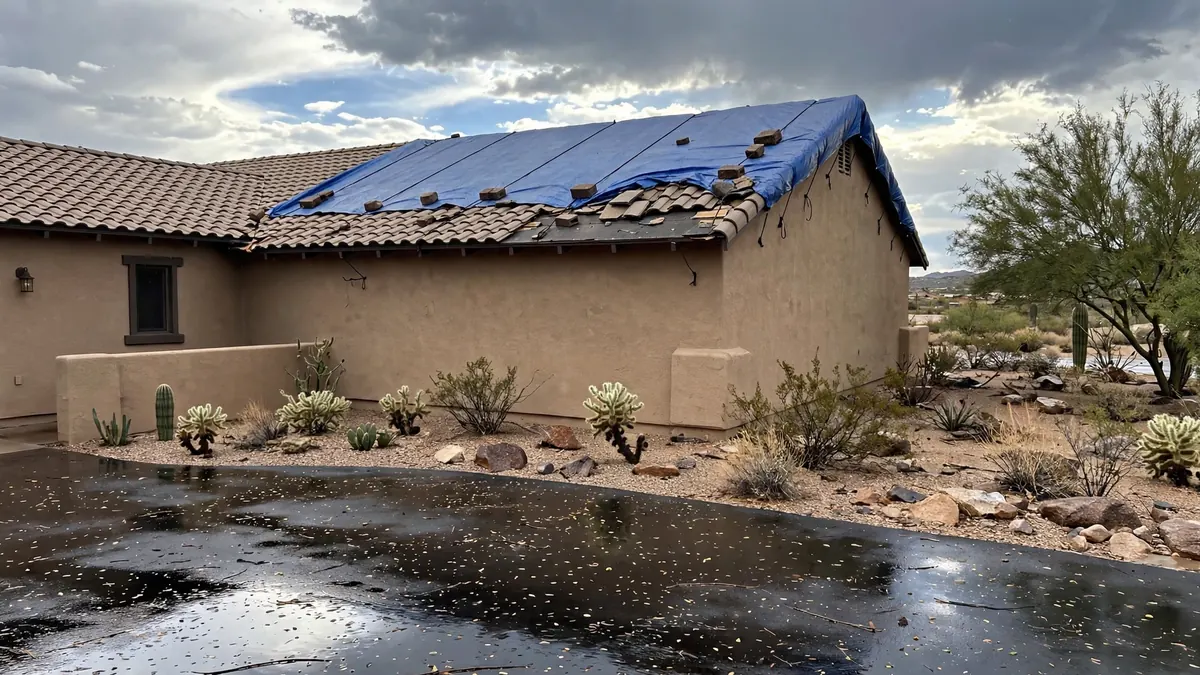
Your first job is to keep people safe and keep the damage from getting worse, because almost every homeowners policy requires you to take reasonable steps to protect the property after a loss. Your second job is to record what happened before anything gets moved, cut, or thrown away.
Safety comes before the claim
Stay away from downed lines in the yard or alley, and do not walk under a ceiling that is sagging or bulging with water. If water is running near outlets or light fixtures, turn off the breaker for that area if you can reach the panel without standing in water. Do not climb onto a wet tile or flat roof at night.
The duty to mitigate
Policies call this the duty to protect the property from further damage. In practice it means you are expected to cover the hole in the roof, board the broken window, and get the water out, and the reasonable cost of doing that is usually part of the claim. What insurers push back on is damage that grew because nobody acted. If a roof opening was left uncovered through three more storms, or a soaked ceiling sat for a week, the later damage can be treated as a separate, uncovered problem.
That is why emergency tarping and water extraction normally happen before the adjuster ever visits. You do not need permission from the insurer to protect your home. You do need to keep receipts and photos of what was done and why. A local restoration crew handling storm damage restoration will usually photograph conditions before they start, log moisture readings, and note the date mitigation began, which becomes part of your file.
Keep a damaged piece of everything you remove: a broken roof tile, a strip of soaked drywall, a corner of carpet pad. Bag it, label it with the date and room, and set it aside in the garage until the adjuster has seen it or says you can toss it.
How do wind and hail deductibles work?
Many Arizona homeowners policies carry a separate deductible for wind and hail losses, and it is often a percentage of your dwelling coverage limit rather than a flat dollar amount. Since monsoon roof damage is usually a wind loss, that percentage deductible is often the one that applies.
The math is simple but the result surprises people. A percentage deductible is figured from the Coverage A limit on your declarations page, not from the size of the damage. If your dwelling limit is $300,000 and your wind and hail deductible is 1%, you pay the first $3,000 of a wind claim. At 2% on the same house, it is $6,000. Your all-other-perils deductible, the flat one you probably remember choosing, might be $1,000 or $2,500, and it does not apply to the wind portion.
A few things to check on your declarations page before you file:
- Is there a separate wind or hail deductible? It may be listed as a percentage, a dollar figure, or both.
- What is your Coverage A limit? Multiply it by the percentage to get your real out-of-pocket number.
- Is the roof on actual cash value? Some carriers settle older roofs at depreciated value, which can shrink the check further.
If the damage is clearly smaller than your wind deductible, filing may not produce a payment. The general rules for how deductibles come off a loss are covered in our guide to whether homeowners insurance covers water damage in Arizona.
What counts as storm damage, and what does not?
Standard policies usually cover sudden damage from wind, hail, and rain that gets in through an opening the storm created. They usually do not cover rising surface water, which is flood, or damage the insurer decides came from age and wear. The source of the water is the question everything else hangs on.
| What happened | How most standard policies treat it | What helps the claim |
|---|---|---|
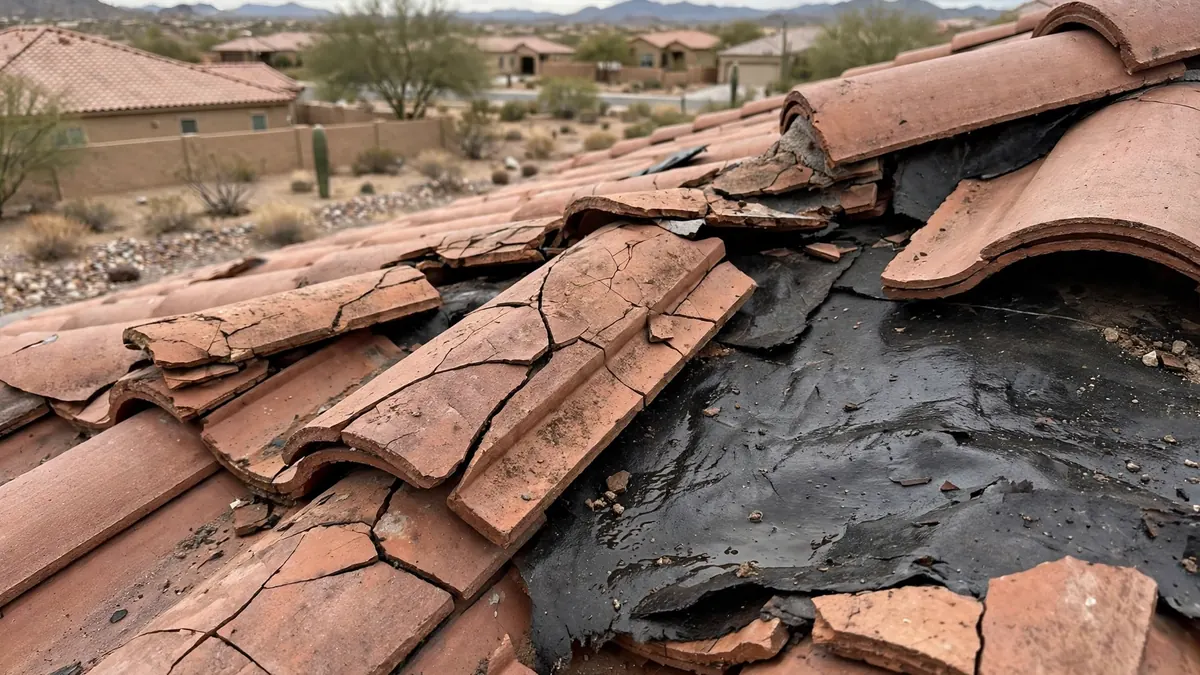
| Wind lifted or broke roof tiles and rain came through | Usually covered as a wind loss, often under the wind and hail deductible | Photos of the broken tiles, the opening, and the ceiling below, with the storm date |
| Hail cracked tiles, dented cooler housings, or split a flat roof coating | Usually covered as a hail loss | Close-ups with a coin or tape for scale, plus the date from local storm reports |
| Water ran across the yard and in under the door | Usually flood, excluded on a standard policy, needs a flood policy | Photos showing the water level outside and where it entered |
| A flat roof leaked because scuppers were packed with debris | May be questioned as a maintenance issue | Proof of recent roof upkeep and photos of storm debris that caused the clog |
| Old underlayment let water in during normal rain | Often denied as wear and tear | A roofer's written opinion on whether storm damage played a part |
Many monsoon losses are mixed: wind breaks tiles while water sheets across a low lot and in under the door. The roof and ceiling may fall under the homeowners policy and the floor under a flood policy, if you have one, so your photos should show where each kind of water came in.
How do you document storm damage so the adjuster sees it?
Take wide shots first, then close-ups, inside and out, before anything is cleaned or removed, and keep a written log with dates. A good file lets someone who was not there understand where the water came in, how far it went, and what it ruined.
- Start outside. Photograph each side of the house, the roof from the ground, broken tiles or torn coating, damaged fences, the cooler, and debris in the yard. A phone held high on a pole, or a ladder at the eave, gives a view without walking the roof.
- Go room by room. Walk in, film the whole room slowly, then take close-ups of stains, drips, wet carpet, and damaged furniture. Say the room name out loud on the video.
- Check the attic if it is safe. From the access hatch, photograph wet insulation, daylight through the roof deck, or water marks on the trusses. Stay on the joists, and skip it on a hot afternoon, since attics here get dangerously hot in summer.
- List damaged contents. Write the item, the room, roughly how old it is, and what you paid. A rug, a sofa, a TV, and a box of photos stored under a leaking ceiling all belong on the list.
- Keep every receipt. Tarps, buckets, a shop vac, a hotel night if the house is unlivable, meals out while the kitchen is torn up. Ask your insurer whether your policy has additional living expense coverage.
- Collect the professional records. The roofer's inspection notes, the restoration crew's moisture logs and photos, and the invoice for tarping and drying.
What happens when the adjuster inspects the house?
The adjuster looks at the roof, attic, and damaged rooms, confirms the cause, measures the damage, and writes an estimate of what the policy should pay. Being there in person, and having your roofer or restoration contractor there too, gives you the best chance that nothing gets missed.
After a large monsoon storm, carriers may send staff adjusters, independent adjusters hired for the storm, or ask you to submit photos for a remote review. You can help:
- Walk them through your log. Start with when the storm hit, when you noticed the damage, and what you did to stop it.
- Point out the less obvious damage. Wet insulation, staining inside closets, a cooler that stopped working, a fence panel down on the side yard.
- Let your contractor talk roof. A roofer who was up there can show the adjuster the broken tiles, slipped flashing, or lifted coating directly.
- Show the drying records. Moisture readings tell the adjuster how far water reached inside walls and under flooring, which is not visible once the surface dries.
Take notes during the visit. Write down the adjuster's name, company, phone number, and anything they say about what is or is not covered. If they say something important out loud, follow up by email asking them to confirm it.
How do you spot storm chasers and contract traps?
Storm chasers are contractors who follow severe weather from town to town, knock on doors right after a storm, and push homeowners to sign quickly.
After a strong cell hits Casa Grande, Maricopa, or San Tan Valley, door hangers and trucks with out-of-state plates can show up in a neighborhood within days. Watch for these signs:
- Pressure to sign today. A real roof problem still needs a real inspection and a written estimate you have time to read.
- An offer to cover or waive your deductible. Your deductible is your share of the loss. A contractor who promises to absorb it is usually planning to inflate the bill to the insurer, and that can cause serious trouble for you and the claim.
- A document that assigns your benefits. An assignment of benefits form lets the contractor deal with the insurer and collect the payment directly. Read anything with that phrase carefully, and talk to your agent before signing.
- No local address or Arizona registration. You can look up a contractor's status with the Arizona Registrar of Contractors before you hire anyone for roof or rebuild work.
Emergency tarping and water extraction are different. Those have to happen right away, and the paperwork for them should be limited to that emergency work. Read it before you sign, and keep the decision on the permanent roof and rebuild for later, when you have the adjuster's estimate in hand.
How long does a storm damage claim take, and how does payment work?
Small claims with clear damage can wrap up in a few weeks. Claims after a big storm, when thousands of roofs are damaged at once, often take longer, especially if the roof, interior, and contents are handled separately or the estimate needs revisions. There is no fixed timeline, and every carrier works differently.
| Stage | What happens | What can slow it down |
|---|---|---|
| Report and claim number | You call in the loss and get assigned an adjuster | Heavy call volume after a widespread storm |
| Mitigation | Tarping, board-up, extraction, and drying | Monsoon humidity stretching drying days, more storms before the roof is covered |
| Inspection | Adjuster visits or reviews photos | Adjuster backlog, rescheduling, a second inspection for the roof |
| Estimate and first payment | Carrier sends a written estimate and a check, minus deductible and any held-back depreciation | Missing documents, disagreements over scope or cause |
| Repairs | Roofer and rebuild contractor do the permanent work | Contractor schedules after a storm, material orders for matching tile |
| Supplements and close-out | Contractor submits hidden damage found during repair, you send final invoices | Back-and-forth on supplement items |
Why the check has your lender's name on it
If you have a mortgage, the payment for structural damage will often be made out to both you and your mortgage company. The lender has a stake in the house and may hold the money and release it in stages as repairs are done. Call your loan servicer early and ask what they need, usually a copy of the estimate, a signed contract, and sometimes an inspection before releasing the next payment.
Depreciation held back
On replacement cost policies, the first check is usually the depreciated value. The remainder is released after you show the work was finished. Keep the final invoices and send them promptly, since many policies set a time limit for claiming that held-back amount.
What if the settlement looks too low?
Start by comparing the adjuster's estimate line by line with your contractor's estimate, then send the differences in writing with photos and a request for a reinspection. Most disputes are about missed items, wrong measurements, or whether something was storm damage, and many get settled at that stage.
- Ask for the full estimate. You want the itemized document with quantities, not just the summary page.
- Find the gaps. Look for missing rooms, too few square feet of drywall, no line for removing wet insulation, or a partial roof repair where the tiles cannot be matched.
- Send a written response. List each item, the reason it belongs, and the supporting photo or moisture reading.
- Request a reinspection. Ask that your contractor be present this time.
- Check your policy's appraisal clause. Many policies include a process for settling disagreements over the amount of a loss, with each side choosing an appraiser.
- Know where to turn. If you believe a claim is being handled unfairly, the Arizona Department of Insurance and Financial Institutions takes consumer complaints, and you can talk with your agent or an attorney about your options.
What should you do right now?
If the storm just passed, focus on the house before the paperwork. Cover the opening, get the water out, and take your photos. Then call your insurer and start the log. Wet ceilings and soaked insulation left sitting are where secondary damage denials start, so get the drying going early. For water coming through the roof, our page on roof leak water damage covers what happens to the ceiling and attic.
To reach a local restoration crew for tarping, extraction, and drying in Casa Grande or nearby Pinal County towns, call (520) 380-1551. The line is open 24/7.
Questions homeowners ask
Should I tarp my roof before the adjuster comes?
Can I file a storm claim if the damage is less than my deductible?
Is monsoon flooding covered by homeowners insurance?
How long do I have to report storm damage?
Do I have to use the contractor my insurer recommends?
More from the blog
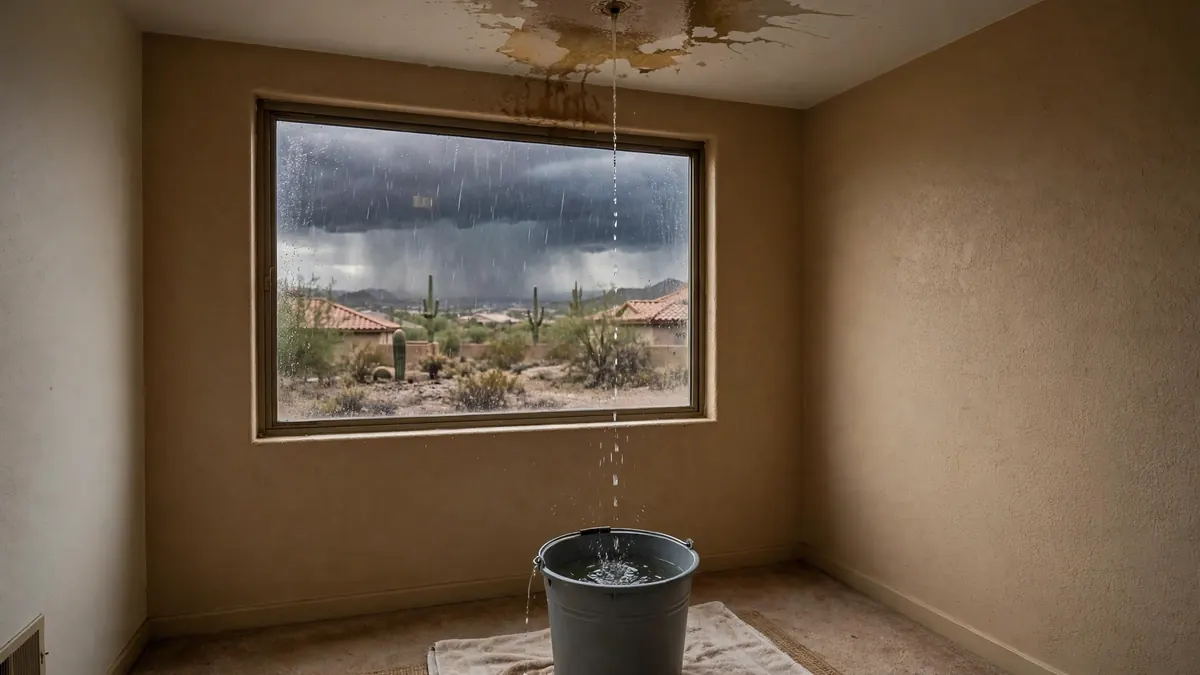 Monsoon & RoofRoof leaking during a monsoon: what to do right nowWhen your roof leaks during a monsoon, stay off the roof, cut power to any wet light fixture, catch the drip in a bucket, move belongings,...
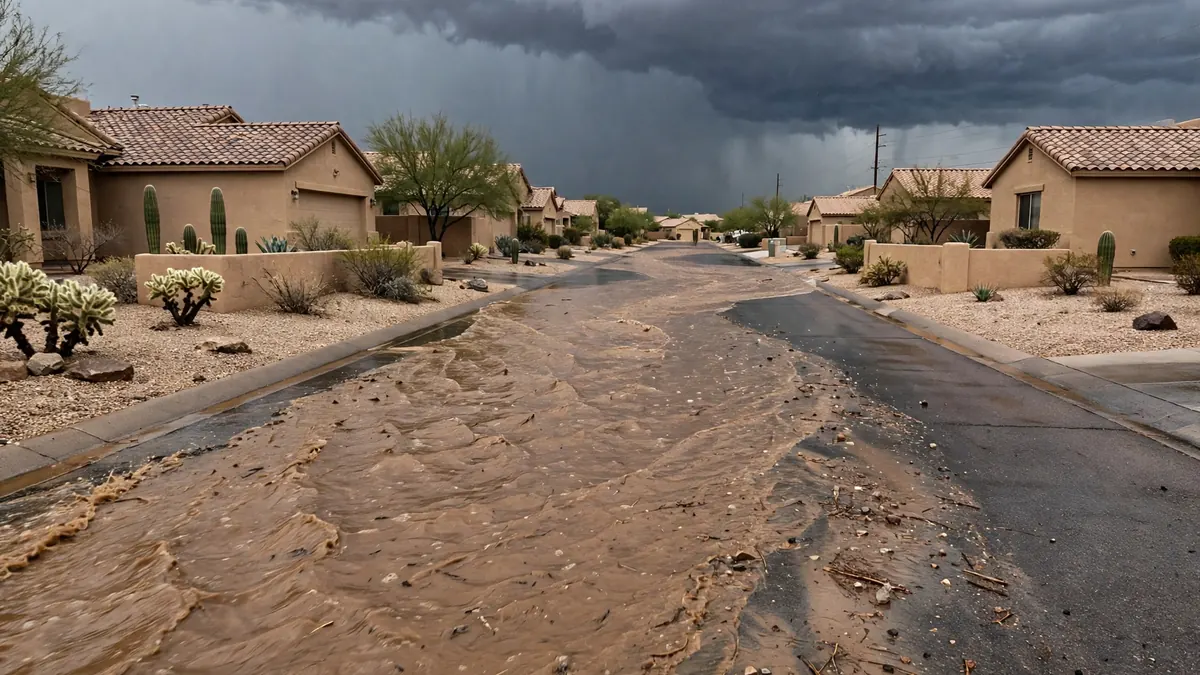 Monsoon & RoofMonsoon flooding in Casa Grande: why homes flood and how to clean upCasa Grande homes flood in monsoon storms because hard, dry ground sheds heavy rain instead of absorbing it, and flat terrain sends runoff toward low lots,...
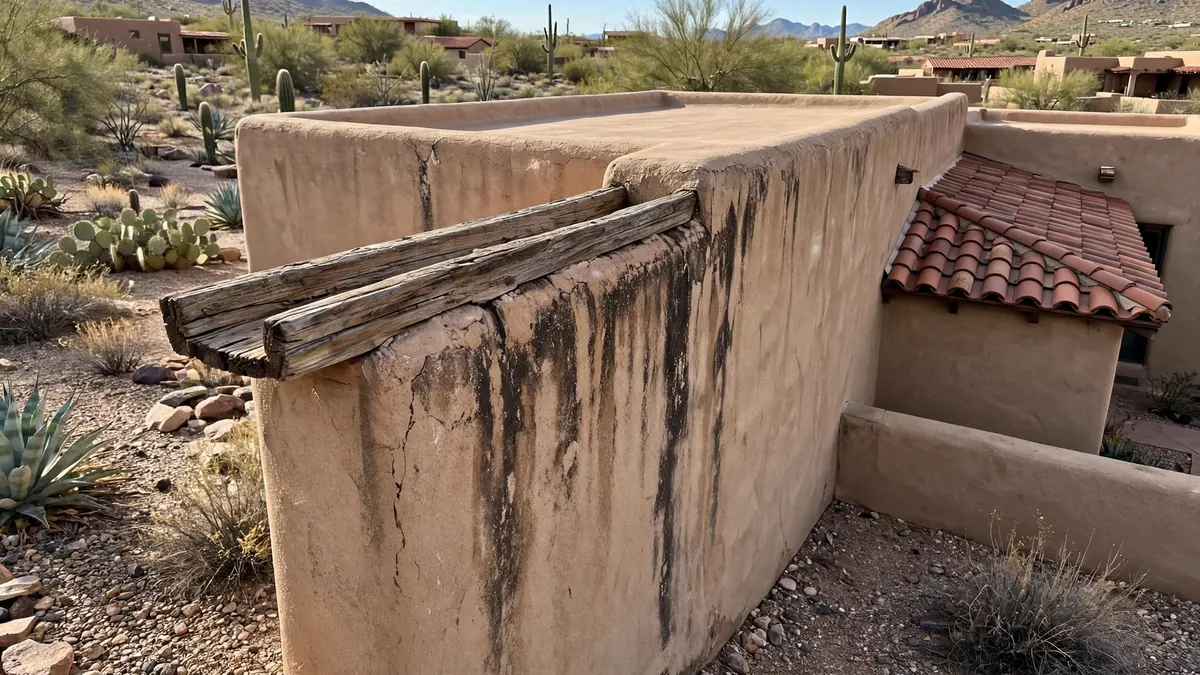 Monsoon & RoofFlat roof leaks and clogged scuppers in ArizonaFlat roofs in Arizona usually leak because water cannot get off them. Scuppers and canales clog with dust and debris, water ponds against the parapet, and...
Need help with damage right now?
Speak to a local restoration specialist on the 24/7 line, any time of day.
Call (520) 380-1551When you call: enter your ZIP code, then press 1 for water damage, 2 for fire damage or 4 for sewage backup.