Home › Blog › Slab leak repair options: spot repair, reroute or repipe
Slab leak repair options: spot repair, reroute or repipe
Most slab leaks are fixed one of three ways: a spot repair through a small opening in the slab, a reroute that abandons the failed line and runs a new one through the walls or attic, or a full repipe. Epoxy lining suits some copper lines. The right choice depends on pipe condition, slab type, and the flooring above.
In this article
- What are the main ways to repair a slab leak?
- How does a spot repair through the slab work?
- When is rerouting the line the better choice?
- What is epoxy pipe lining and when does it fit?
- When does a full repipe make sense?
- How do the slab leak repair options compare?
- Why does a post-tension slab change the repair?
- What should you ask before choosing a repair?
- What happens to the water damage after the repair?
- Will insurance pay for slab leak repair?
- Questions homeowners ask
What are the main ways to repair a slab leak?
There are four common options: break into the slab and fix the one leak, reroute the failed line above the slab, coat the inside of the pipe with epoxy, or replace all the supply lines in the house. Plumbers in Pinal County use all four, and the best one depends on the house in front of them.
The decision usually comes down to a few questions:
- Is this the first leak, or one of several? One leak in otherwise healthy pipe favors a spot repair. Repeat leaks favor a reroute or repipe.
- What is the pipe made of? Copper that hard water has thinned tends to fail again nearby. PEX that failed at one fitting may be fine everywhere else.
- What kind of slab is it? A post-tension slab adds a step and some risk to any cut through the concrete.
- What is on the floor above the leak? Breaking out tile in a kitchen or wood in a living room can cost more to put back than the plumbing itself.
This article is about choosing between those repairs, and about the water damage work that follows. If you are still trying to figure out whether you have a slab leak at all, start with our page on slab leak detection and cleanup in Casa Grande.
How does a spot repair through the slab work?
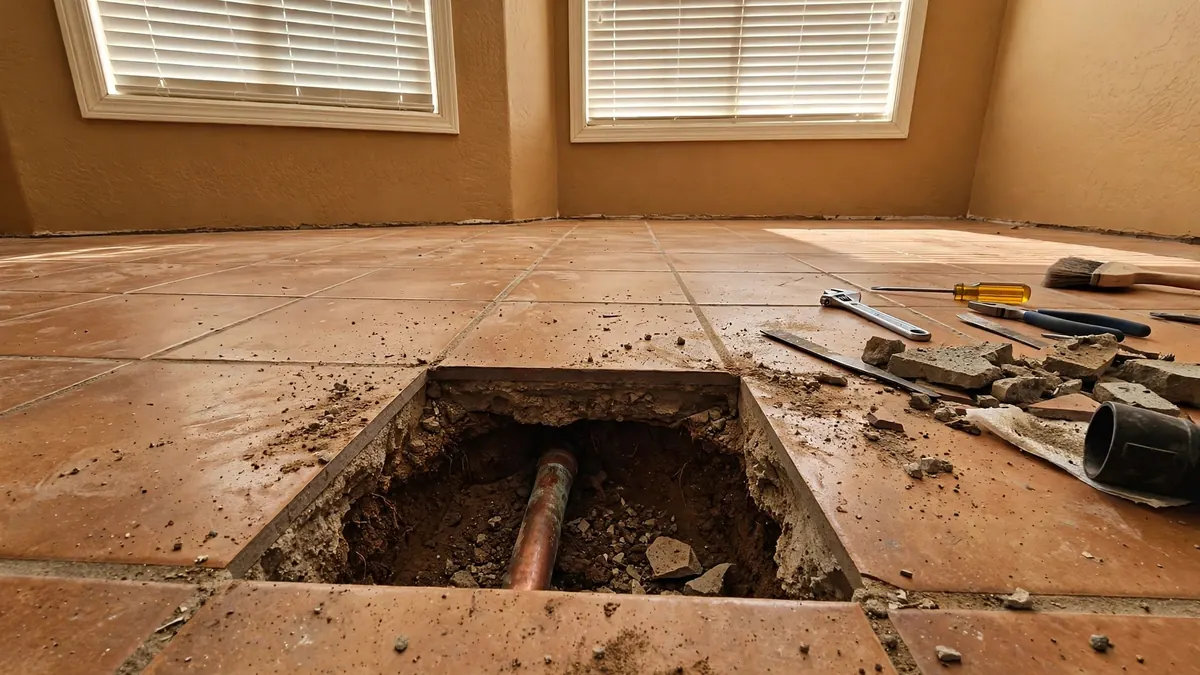
A spot repair opens the floor and slab directly over the leak, fixes that section of pipe, and patches the concrete. It is the most direct fix and touches only one small area of the house, but it only fixes the leak you know about.
The steps usually go like this:
- The leak is pinpointed as closely as possible, since the opening goes where the detection points.
- Flooring over the spot is removed. That might be a few tiles, a section of carpet and pad, or some wood planks.
- The concrete is cut and broken out, and the soil or gravel under it is dug down to the pipe.
- The damaged section is cut out and replaced, and the line is pressure tested.
- The hole is backfilled and the slab is patched with new concrete.
- Once the patch cures and the area is dry, the flooring is replaced.
The strengths are simple. One opening, no new pipe running through the walls, and the rest of the plumbing stays exactly where it was. When the leak is under carpet or in a closet or garage, a spot repair is often the least disruptive choice.
The weaknesses are just as clear. Breaking concrete is noisy and dusty, it means jackhammer work inside the house, and matching tile years after it was installed is often impossible. If you have to replace a whole room of tile to hide one patch, the cost of the repair grows quickly. And on older copper, a pipe that failed in one spot has often thinned in others. A spot repair does nothing about those, so a second leak a few feet away a year later is a real possibility.
When is rerouting the line the better choice?
Rerouting makes sense when the failed line is old, when there has already been more than one leak, or when the leak sits under flooring you do not want torn out. The old line is capped and abandoned under the slab, and a new line runs to the same fixtures through the walls or the attic.
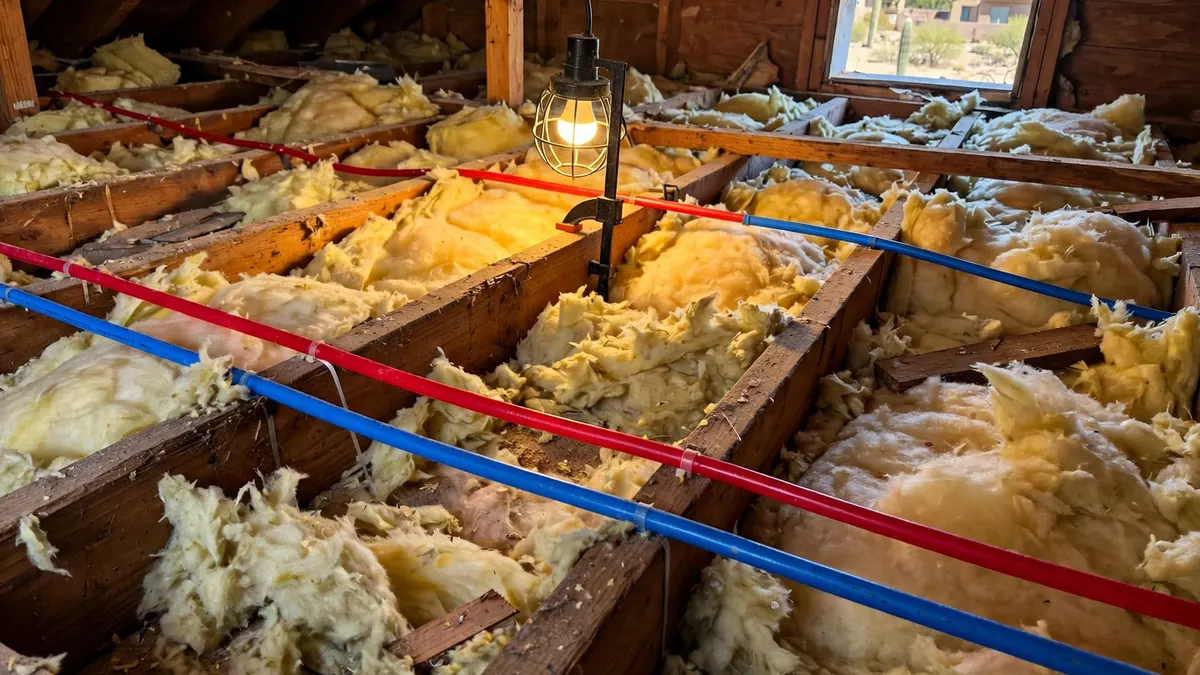
In most Casa Grande homes, the new line is PEX run through the attic and dropped down inside walls to the fixtures it serves. The work involves cutting holes in drywall at the top and bottom of those walls, then patching and painting. There is no concrete work and the floor stays in place.
A few things are specific to Arizona attics:
- Heat. Attics here get very hot in summer. PEX is rated for hot-water temperatures, but lines in the attic should be buried under the insulation or wrapped, not lying on top of it or against the roof deck.
- Warm cold water. A cold line rerouted through a hot attic can deliver warm water at the tap for a while in July before it runs cool. Good insulation and routing reduce this. It is worth asking about.
- Freezes. Casa Grande gets occasional hard freezes in winter. Lines in an attic or an exterior wall should be insulated so a cold night does not become a burst pipe.
- Access. Low-slope roofs and tight attics can make the run harder, and some walls are easier to reach from the garage side.
A reroute usually fixes only the line that failed, such as the hot line to one bathroom. If other lines under the slab are the same age and material, they can still leak later. That is the point where some homeowners decide to go further.
What is epoxy pipe lining and when does it fit?
Epoxy lining seals a pipe from the inside without opening the slab or the walls. The line is drained and dried, the inside is cleaned of scale and corrosion, and an epoxy coating is blown through it to form a new inner surface. It is mainly used on copper.
Lining can be a reasonable choice when the pipe is still structurally sound but has small pinholes or thin spots, and when getting to the line any other way would mean breaking a lot of finished floor. It is less suited to pipe that has split, separated at a joint, or collapsed, and it is not the usual fix for PEX. Not every plumber offers it. If one recommends it, ask what pipe conditions it works on, how they confirm the lining covered the whole line, and what warranty comes with it.
Because lining leaves the old pipe in place, the question of the rest of the plumbing is the same as with a spot repair. It treats the line that was lined.
When does a full repipe make sense?
A full repipe replaces every supply line in the house, usually with new PEX run through the attic and walls, and abandons all the old lines under the slab. It makes sense when the house has had repeated leaks, when the copper is visibly thin or corroded at exposed fittings, or when the next leak would land under flooring you just paid to replace.
Signs that point toward a repipe:
- Two or more slab leaks in a few years, especially on different lines.
- Green or white crusty buildup at copper fittings you can see under sinks or at the water heater.
- Older copper in a home where neighbors with the same builder have also had slab leaks.
- You are already remodeling, so walls and ceilings are open anyway.
A repipe is the most disruptive of the above-slab options. It means drywall openings in many rooms and usually a few days with the water off for part of each day. In return it ends the slab leak question for that house, because no supply line runs under the floor anymore. A plumber can give you a written scope and price. Repair costs are set by the plumber and vary a lot with the size and layout of the house, so ask for a quote for each option on the same visit.
How do the slab leak repair options compare?
Each option trades disruption now against the chance of another leak later. This table puts them side by side.
| Option | Best for | Pros | Cons |
|---|---|---|---|
| Spot repair | A first leak in pipe that is otherwise in good shape | One small opening, original plumbing layout stays, often the smallest plumbing bill | Concrete work inside the house, flooring may not match, does nothing about weak pipe nearby |
| Reroute | A failed line under tile or wood, or a line with repeat leaks | No slab cutting, floors stay in place, new pipe on that line | Drywall patches, attic routing in Arizona heat, other old lines remain under the slab |
| Epoxy lining | Copper with pinholes or thinning but still sound | No slab or wall openings beyond access points | Not for split or separated pipe, not usual for PEX, not every plumber offers it |
| Full repipe | Repeat leaks, aging copper, or a remodel | Ends under-slab supply leaks for the house | Most drywall work, several days of disruption, largest plumbing scope |
If you are comparing quotes, make sure each one says which lines are being fixed, what happens to the old lines, and who patches the drywall or concrete. Two quotes that look far apart are often covering different amounts of work.
Why does a post-tension slab change the repair?
A post-tension slab has steel cables, called tendons, running through the concrete under very high tension. Cutting one can damage the slab and can be dangerous to the person cutting, so nobody should core or jackhammer a post-tension slab until the tendons near the opening are located and marked.
Many newer homes in Casa Grande subdivisions such as Villago, McCartney Ranch, Mission Royale, and Cottonwood Ranch, along with much of Maricopa and San Tan Valley, are built on post-tension slabs. Builders often stamp a warning in the garage floor near the door. If you are not sure what you have, the builder's plans or the HOA may know, and an experienced plumber will check before any cut.
What this means for your choice:
- A spot repair is still possible, but it adds a step. Tendons are located with scanning equipment, and the opening is placed to avoid them.
- If the leak sits right at a tendon, a spot repair may not be practical, and a reroute moves up the list.
- A damaged tendon is a structural repair, usually involving a specialist, and is far more expensive than the original leak.
Do not let anyone cut into a post-tension slab until they have explained how they located the tendons. It is a fair question to ask before work starts.
What should you ask before choosing a repair?
Ask enough to compare options on the same terms. A good plumber will answer these without hesitation.
- Which line failed, hot or cold, and what is it made of?
- What condition is the rest of the pipe in, and how do you know?
- Is this slab post-tension, and how will you locate the tendons if you cut?
- For a spot repair, how large will the opening be, and who replaces the flooring?
- For a reroute, where will the new line run, how will it be insulated in the attic, and how many drywall openings will there be?
- What happens to the old line? Is it capped at both ends?
- Who patches the concrete or drywall, and is painting included?
- What warranty comes with the repair, and does it cover only the new section or the line?
- Will you write down the cause of the leak on the invoice? Your insurer will want it.
We do not do plumbing work, and the line does not connect you with plumbers for the pipe repair. That part is between you and the plumber you choose. The drying and water damage repair are a separate job, covered next.
What happens to the water damage after the repair?
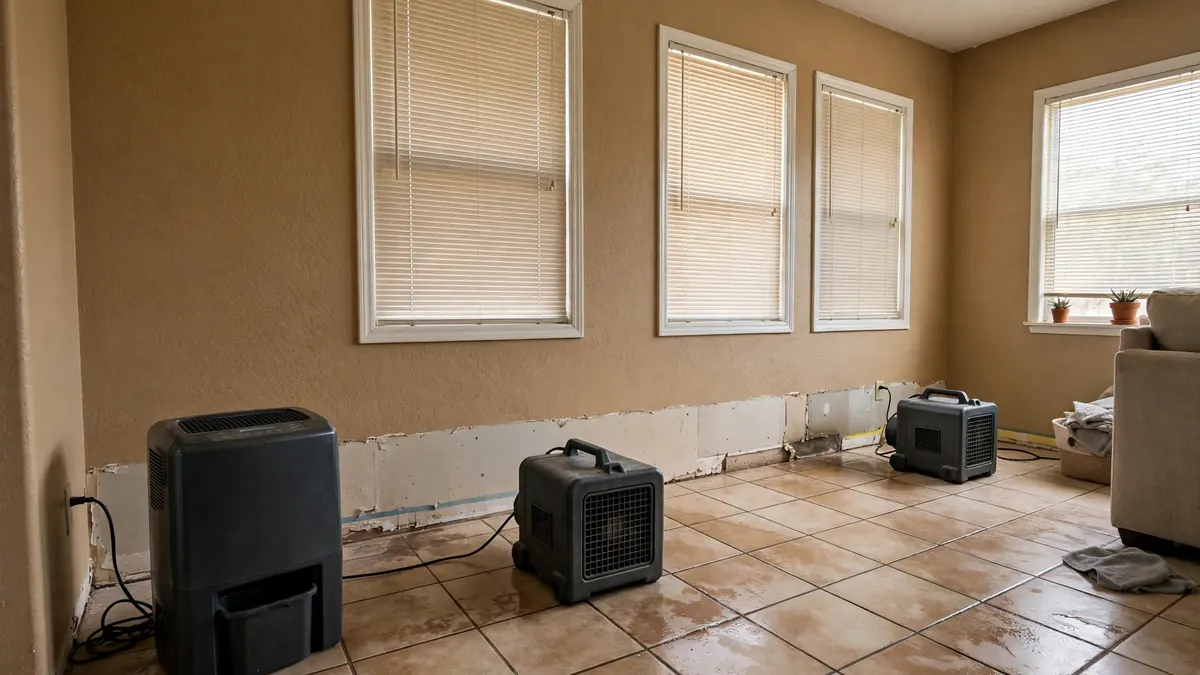
Fixing the pipe stops new water, but the water the leak already put into the slab, tack strip, baseboards, and drywall is still there. It has to be dried and measured, or it can lead to mold, a musty smell, and flooring that fails months later.
The repair method changes how this goes:
- After a spot repair, the open hole in the slab is a direct view of how wet the soil and concrete are. Drying usually happens before the flooring goes back down, and new tile or wood should not be installed over a slab that still reads wet.
- After a reroute or repipe, the slab is never opened, so the old leak's water stays under the floor. Moisture readings show how far it spread, and a crew dries through the flooring where possible or pulls baseboards and carpet pad to reach it.
- Either way, concrete gives up moisture slowly. Drying a slab often takes longer than drying a room of drywall, and readings each day show when it is actually done.
A local restoration crew handles extraction, structural drying, and the moisture logs that go into your claim. If the leak reached wood floors, our page on hardwood floor water damage explains why wood needs extra time before any sanding or refinishing. Slab leak detection plus drying of the affected rooms usually runs about $2,000 to $5,000 in the Casa Grande area, before the plumbing repair and any new flooring. Prices are set by each restoration company and vary with the job.
Will insurance pay for slab leak repair?
Often in part. Most standard homeowners policies do not pay to fix the failed pipe itself, but many cover the cost of opening the floor to reach it and the water damage the leak caused, if the leak was sudden and accidental.
The pieces usually break down like this:
- The pipe repair: commonly treated as wear and tear and not covered.
- Access, sometimes called tear-out: many policies pay to break out and replace the floor or slab needed to reach the pipe. Some policies have a specific limit for this.
- The resulting water damage: drying, damaged flooring, baseboards, and drywall are often covered when the leak was sudden.
- Long-running leaks: damage the insurer decides built up over weeks or months is commonly excluded.
A reroute raises its own question. Because a reroute avoids tearing out the floor, there may be little access cost to claim, and carriers handle that differently. Ask your adjuster before work starts how they treat a reroute compared with a spot repair, and get the answer in writing if you can. For more on how deductibles and sudden versus gradual damage work, see our guide on whether homeowners insurance covers water damage in Arizona. Every policy is different, so check your declarations page and the water damage section of your policy.
If the leak has already been found and you have wet flooring or baseboards to deal with, call (520) 380-1551. The line is open 24/7 and connects you with the restoration companies we work with in Casa Grande and nearby Pinal County towns for the drying and repair side of the job.
Questions homeowners ask
Is it better to reroute or repair a slab leak?
Can a slab leak be repaired without breaking the floor?
Is it safe to cut into a post-tension slab?
Do I still need drying if the leak was rerouted?
More from the blog
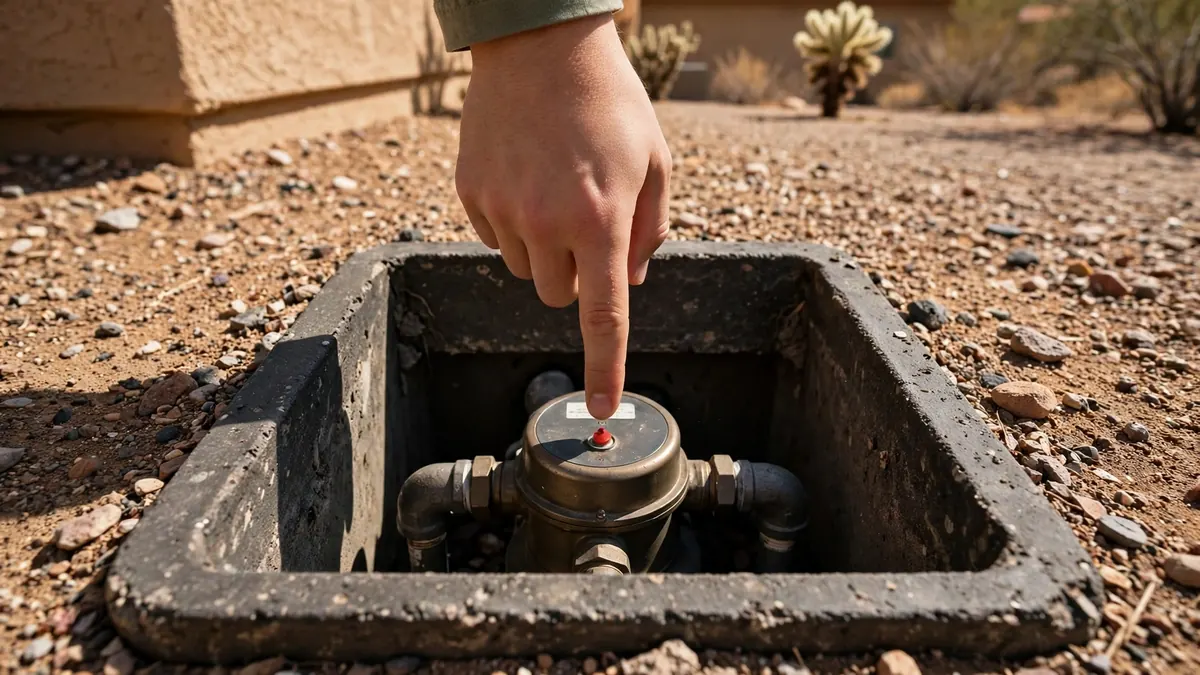 Leaks & PipesHow leak detection works: finding hidden leaks without tearing up your homeLeak detection finds hidden leaks without tearing up your home by narrowing the search step by step. A meter test confirms water is escaping, pressure tests...
 Leaks & PipesSlab leak signs in Casa Grande homes and what each one meansThe clearest slab leak signs are a warm spot on the floor, a water bill that rises with no change in habits, running water sounds with...
 Leaks & PipesBurst pipe in your house: what to do in the first 15 minutesIn the first 15 minutes after a pipe bursts, shut off the water at the main, keep away from water near outlets and cut power only...
Need help with damage right now?
Speak to a local restoration specialist on the 24/7 line, any time of day.
Call (520) 380-1551When you call: enter your ZIP code, then press 1 for water damage, 2 for fire damage or 4 for sewage backup.