Home › Blog › Casa Grande water damage calendar: what fails each season
Casa Grande water damage calendar: what fails each season
In Casa Grande, winter brings rare freezes on exposed outdoor lines, spring brings cooler and irrigation start-up leaks, early summer brings AC condensate overflows, the monsoon from mid-June through September brings roof and doorway leaks, and fall reveals hidden storm damage. See the monsoon preparation guide.
In this article
- What fails in a Casa Grande home each season?
- The month-by-month calendar
- What goes wrong in winter?
- What fails in spring?
- Why does early summer bring AC and appliance leaks?
- What fails during the monsoon?
- What should you check in the fall?
- How do the seasons affect drying and insurance?
- Questions homeowners ask
What fails in a Casa Grande home each season?
In Casa Grande, winter brings the occasional freeze on exposed outdoor lines, spring brings cooler and irrigation start-up leaks, early summer brings AC condensate overflows and heat-worn hoses, the monsoon brings roof and doorway leaks, and fall is when hidden storm damage and end-of-season equipment problems show up.
The local climate does not spread risk evenly across the year. Some months are quiet, and some months the same few failures show up in house after house. Knowing which part of the house is under stress in which month lets you check the right thing at the right time, instead of trying to inspect everything at once.
The month-by-month calendar
Use this table as a yearly schedule. The left column is what tends to fail, the right column is the check that heads it off.
| Month | What tends to fail | What to check or do |
|---|---|---|
| January | Exposed outdoor lines on a rare freeze night, water heaters working their hardest | Cover hose bibs and backflow devices on cold nights, check the heater base for drips |
| February | Freeze-cracked lines that start leaking when the weather warms | Walk outdoor plumbing and irrigation for wet spots after any cold snap |
| March | Irrigation lines and drip emitters as watering ramps up | Run each zone and look for geysers, soggy spots and water against the foundation |
| April | Evaporative coolers at start-up, first AC runs of the year | Service the cooler pan, float and supply line, flush the AC condensate line |
| May | Roof seals and coatings after months of sun, seasonal homes closing up | Check roof penetrations and scuppers, shut off water in homes left empty |
| June | AC condensate clogs, washer and fridge hoses aging in heat, first monsoon storms late in the month | Check the AC pan and float switch, replace worn hoses, clear roof drains |
| July | Roof leaks, clogged scuppers, water at door thresholds and garage doors | Watch ceilings after each storm, keep sandbags handy for low doors |
| August | The same storm leaks, plus attic condensate overflows during long cooling days | Look in the attic or AC closet after storms and in heat waves |
| September | Late monsoon storms, slow leaks that started in July now showing as stains | Walk every ceiling and baseboard for new stains or soft spots |
| October | Hidden storm damage in attics, seasonal owners reopening homes | Inspect the attic and roof, open the main slowly in returning seasonal homes |
| November | Coolers left with water in the line, water heater sediment | Drain and shut down the cooler, flush the water heater if due |
| December | Heavy use from holiday guests, kitchen and toilet drain backups | Go easy on grease down the drain, know where the main shutoff is |
What goes wrong in winter?
Winter is the quietest season for water damage here, but not an empty one. A hard freeze is rare in Casa Grande, and when one comes, it mostly hits plumbing that sits outside or on the roof.
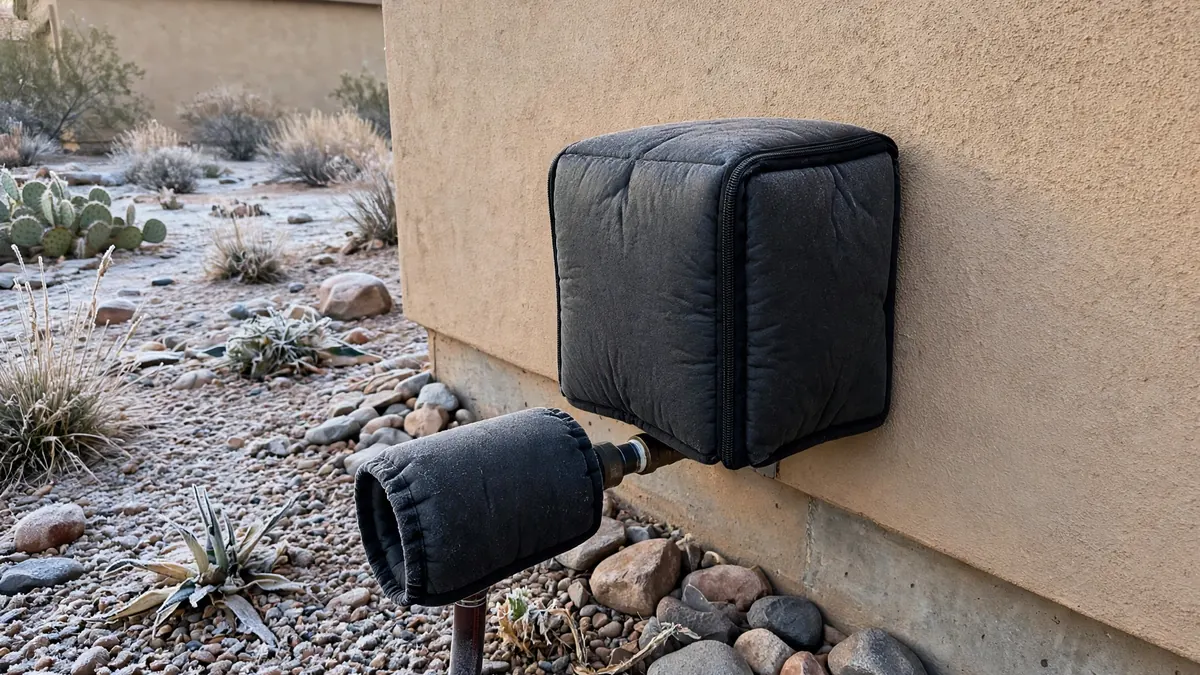
- Exposed lines. Hose bibs, irrigation backflow preventers, pool equipment plumbing and the supply line to a rooftop cooler sit in open air. On a cold night, water in a thin exposed line can freeze and split it.
- The delayed leak. A line that cracked overnight often does not leak until it thaws in the afternoon. Many freeze leaks are found a day later, not during the cold.
- Water heaters. Cold incoming water makes the heater work harder, and an aging tank that has been weeping a little may start leaking more.
- Drains. Holiday cooking sends more grease down kitchen drains, and extra guests put more load on toilets and older sewer lines.
On a forecast freeze night, cover outdoor valves and backflow devices with an insulated cover or wrap. If your cooler supply line still has water in it, shut it off and drain it.
What fails in spring?
Spring is start-up season. Equipment that sat idle through winter, mainly coolers, irrigation and the AC, gets turned on again, and that is when weak parts show themselves.
Evaporative coolers are the big one in older homes. A float valve that was crusted with scale in the fall may stick open on the first run and overflow the pan onto the roof. A pan that rusted through over winter starts dripping as soon as it fills. Our page on evaporative cooler leaks covers how those leaks reach the ceiling.
Irrigation is next. As watering times increase, broken drip lines and stuck valves show up as soggy patches. A drip line leaking against the stem wall puts water right at the edge of the slab, where it can soak in under baseboards.
Spring is also the best window for roof work. The roof is cool enough to work on safely in the morning, and the first monsoon storm is still weeks away. Seasonal owners heading out for the summer should close up the house in this window too.
Why does early summer bring AC and appliance leaks?
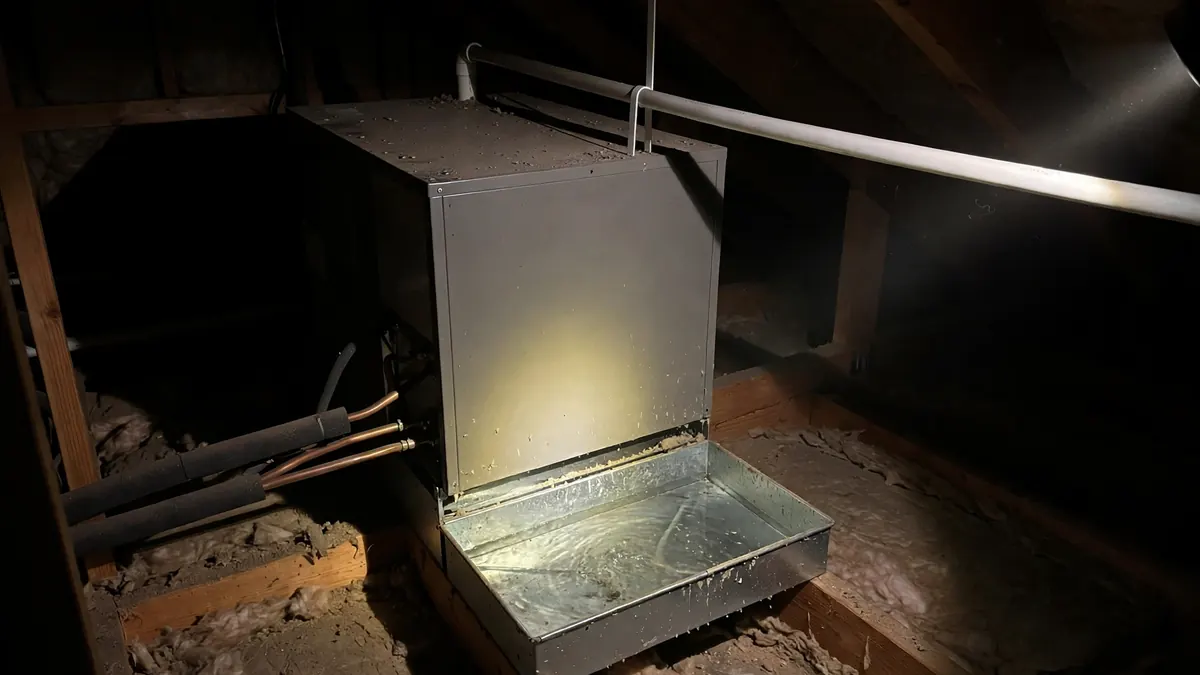
From late May on, the AC runs for long stretches every day, and the condensate system has to carry away a steady stream of water. When the line clogs with algae or dust, the pan overflows into a closet, ceiling or attic.
Attic air handlers are the most at risk. A clogged line fills the primary pan, then the secondary pan, and if the float switch fails or was never installed, water comes through the ceiling. Garage and closet units soak drywall and flooring instead. The page on AC condensation water damage explains what that cleanup involves.
Heat also ages rubber. Washing machine hoses, toilet supply lines and the plastic ice-maker line behind the fridge get stiff and brittle faster in a hot garage or laundry room. Early summer is a good time to look at each one and replace any that bulge, crack or show rust at the crimp.
Before the first 110°F week, pour a cup of white vinegar or a cleaner recommended by your HVAC tech into the condensate line access, and check that the float switch shuts the unit off when you lift it. Ten minutes in June saves a ceiling in August.
What fails during the monsoon?
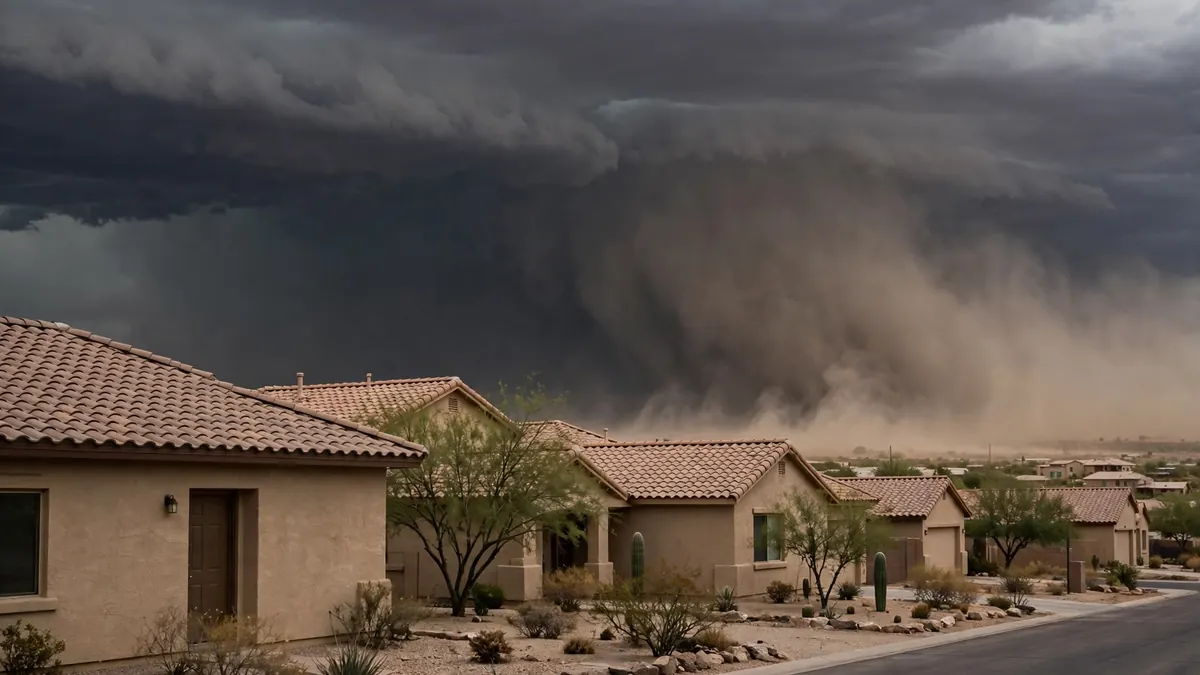
From mid-June through September, the main failures are roof leaks, blocked scuppers and roof drains, and storm water coming in at doors and garages. Short, intense cells and dust storms are what drive them.
The pattern is predictable. A dust storm loads the roof and scuppers with dirt and debris, then the rain arrives before it can be cleared. Flat roofs pond, and water finds a cracked seam or a vent boot. Wind-driven rain gets under tile and into window frames on the side of the house facing the storm. At ground level, hard soil sheds water toward thresholds and garage doors with worn seals.
Storm damage in July often does not show until September. Water that soaks attic insulation can take weeks to reach the drywall below. That is why a careful walk of every ceiling at the end of the season matters as much as watching during storms. For roof-specific damage, see our page on roof leak water damage. The full before-season checklist is in our monsoon preparation guide, so it is not repeated here.
What should you check in the fall?
Fall is the time to find damage the summer left behind and shut down summer equipment properly. October and November are also when seasonal owners come back and turn the water on.
- Inspect the attic. On a cool day, look for stained or matted insulation under roof penetrations and around the air handler.
- Walk the ceilings and baseboards. Look for faint stains, bubbling paint and soft baseboard, especially in rooms under the roof drains.
- Look at the roof. Check for cracked tiles, worn coatings and debris left in scuppers after the last storm.
- Shut down the cooler. Drain the pan, shut off and drain the supply line, and cover the unit if you will switch to heat.
- Check the AC pan. Look for rust or standing water now that the heavy cooling season is over.
- Flush the water heater. Hard water sediment builds up all year. Many owners flush once a year, and fall is a convenient time.
- Reopen seasonal homes slowly. Open the main partway, listen for hissing and check every fixture before you leave it on.
How do the seasons affect drying and insurance?
The season changes how quickly a wet house dries and which part of your policy applies. Drying is usually slower in the humid weeks of the monsoon, and storm losses can fall under a different deductible than a plumbing leak.
Outdoor air in Casa Grande is dry most of the year, but a closed, air-conditioned house does not dry itself, and monsoon humidity makes it harder. Restoration crews use dehumidifiers and air movers to control drying inside the house in any season, and the dry standard is confirmed with a moisture meter, not by how the surface feels.
On insurance, most standard policies cover sudden, accidental water damage like a burst hose or a failed water heater. Storm damage through a roof is often covered, but some policies apply a separate wind and hail deductible. Water that rises from the ground in a flood is usually excluded. Check your declarations page before the monsoon so you know which deductible applies to what.
Prices are set by the restoration company and vary. Most water damage jobs in the area run about $1,300 to $5,500. Whatever the month, if you find water on the floor, a ceiling stain that keeps growing, or a musty room after a storm, call (520) 380-1551. The line is open 24/7 and connects you with a local restoration crew in Casa Grande and nearby Pinal County.
Questions homeowners ask
Do pipes freeze in Casa Grande?
When should I service my evaporative cooler?
Which month has the most water damage in Arizona?
How often should I flush my AC condensate line?
More from the blog
 Local GuidesWater damage restoration cost in Florence, AZMost water damage restoration jobs in Florence, AZ run about $1,300 to $5,500. One room of clean water caught early is often $400 to $1,500, and...
 Local GuidesWater damage in Maricopa, AZ homes: slab leaks, HOAs and newer buildsMost Maricopa homes were built in the 2000s and later on concrete slabs, and many are now old enough that original water heaters, supply lines, washer...
 Local GuidesSan Tan Valley water damage: what homeowners should knowSan Tan Valley is mostly newer slab homes in HOA subdivisions, so the common water problems are slab leaks, PEX fitting failures in walls and ceilings,...
Need help with damage right now?
Speak to a local restoration specialist on the 24/7 line, any time of day.
Call (520) 380-1551When you call: enter your ZIP code, then press 1 for water damage, 2 for fire damage or 4 for sewage backup.