Home › Blog › High water bill but no visible leak? Where to look, in order
High water bill but no visible leak? Where to look, in order
When the water bill jumps and nothing looks wet, check in this order: the bill's meter reading, toilets, irrigation, the pool auto-fill, the softener and evaporative cooler, the water heater relief line, then the lines under the slab and in the yard. Most high bills trace to the first four. See slab leaks.
In this article
- Why is my water bill high when I cannot see a leak?
- Is the bill itself right?
- How do you check toilets for silent leaks?
- Could irrigation or a pool be using the water?
- Can a softener, RO filter or evaporative cooler waste water?
- Is the water heater draining water outside?
- How do you tell a slab leak from a service line leak?
- What order should you check things in?
- What should you do once you find the source?
- Questions homeowners ask
Why is my water bill high when I cannot see a leak?
Because most of the water a house wastes goes somewhere you do not look: down a toilet drain, into the ground through an irrigation line, into a pool, out a drain line from a softener or cooler, or under the slab. None of those leave a puddle on the floor.
In Casa Grande and the rest of Pinal County, a lot of homes have equipment that uses water automatically. Drip irrigation on a timer, a pool with an auto-fill valve, a water softener that regenerates overnight, an evaporative cooler with a bleed line, a reverse osmosis filter under the sink. Each one can fail in a way that runs water quietly for weeks.
You can check almost all of them yourself in an afternoon. Go in order, easiest first, and use the water meter to confirm each step.
Is the bill itself right?
Start with the bill. Look at the gallons used, not the dollar total, and compare it to the same month last year. Then read your meter and compare it to the reading printed on the bill. A rate increase, a longer billing cycle, or an estimated reading can all make a bill look like a leak.
- Gallons, not dollars. Water rates and fees change. Usage is what tells you whether more water went through the meter.
- Same month, last year. Summer bills here are higher because of irrigation, pool evaporation, and coolers. A July bill compared to April tells you little. A January bill that looks like last July tells you a lot.
- Estimated reads. If the bill says the reading was estimated, the next actual read can catch up all at once.
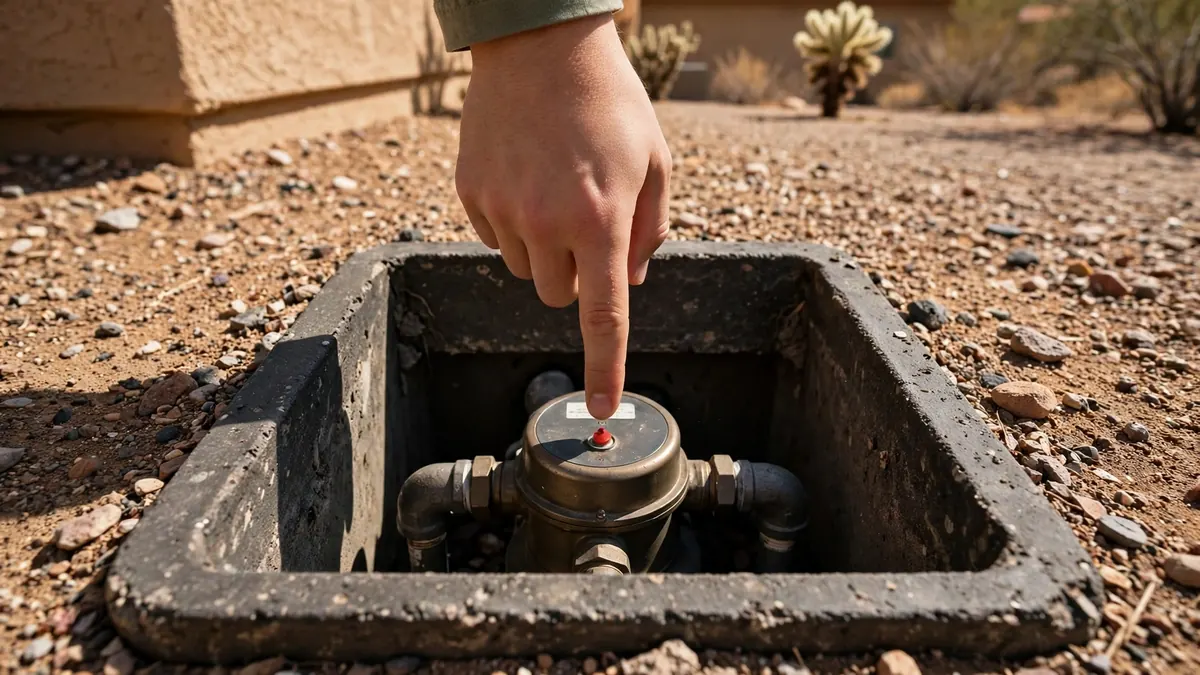
If the reading on your meter is close to what the bill says, the bill is right and the water really went somewhere. Now find out if it is still going. Turn off every fixture and watch the small leak indicator on the meter. If it moves, water is leaving the plumbing right now. If it does not, the extra use may have already stopped, like a toilet that ran for a week and then sealed.
How do you check toilets for silent leaks?
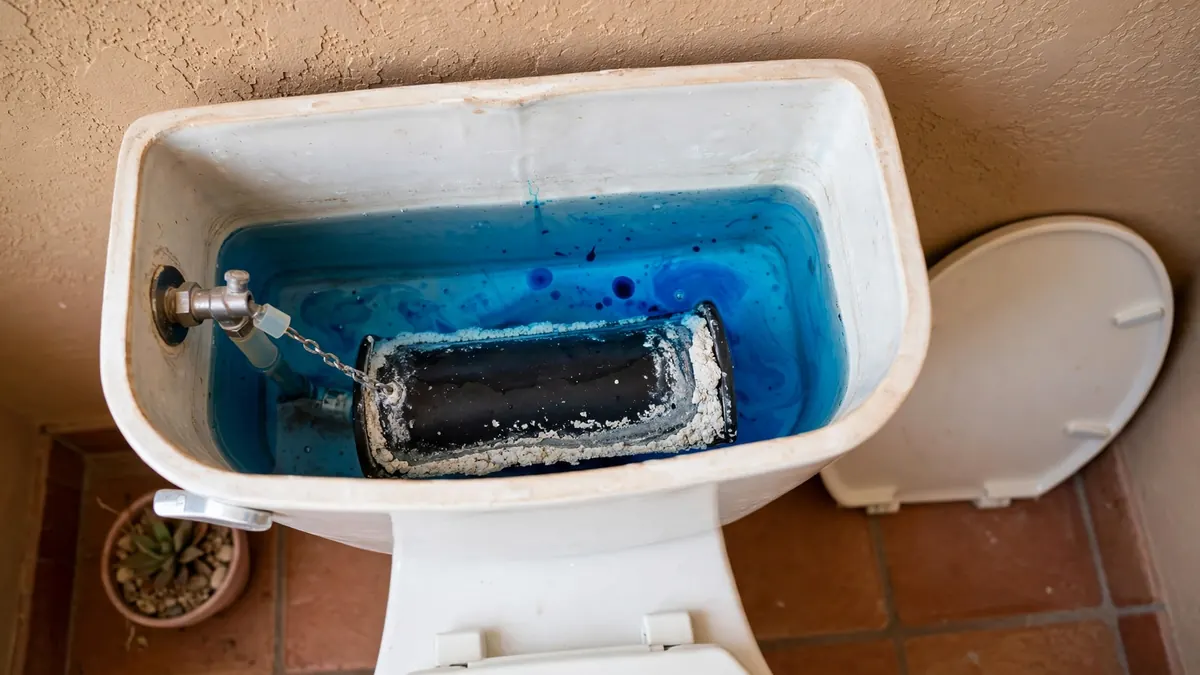
Put a few drops of food coloring in each toilet tank, wait 15 minutes without flushing, and look in the bowl. If color shows up, the flapper is leaking. Toilets are the most common cause of a high bill with no visible leak, because the water goes straight down the drain.
Other clues are a toilet that refills on its own with a short hiss, or water running into the overflow tube because the fill valve is set too high.
Hard water is part of why this happens so often here. White mineral scale builds up on flappers and fill valves, so they stop sealing properly.Check every toilet, including the guest bath nobody uses.
Could irrigation or a pool be using the water?
Yes, and outside water is often the biggest line on a Casa Grande bill. A broken drip line, a valve that will not fully close, a controller set to water too often, or a pool auto-fill that is stuck open can each run a lot of water without anything looking wrong from inside the house.
Irrigation
- Check the controller. Look at every program and start time. Power outages during monsoon storms can reset some controllers to a default schedule, and an extra program you did not set is common.
- Walk the yard while it runs. Run each zone and look for a geyser or a puddle.
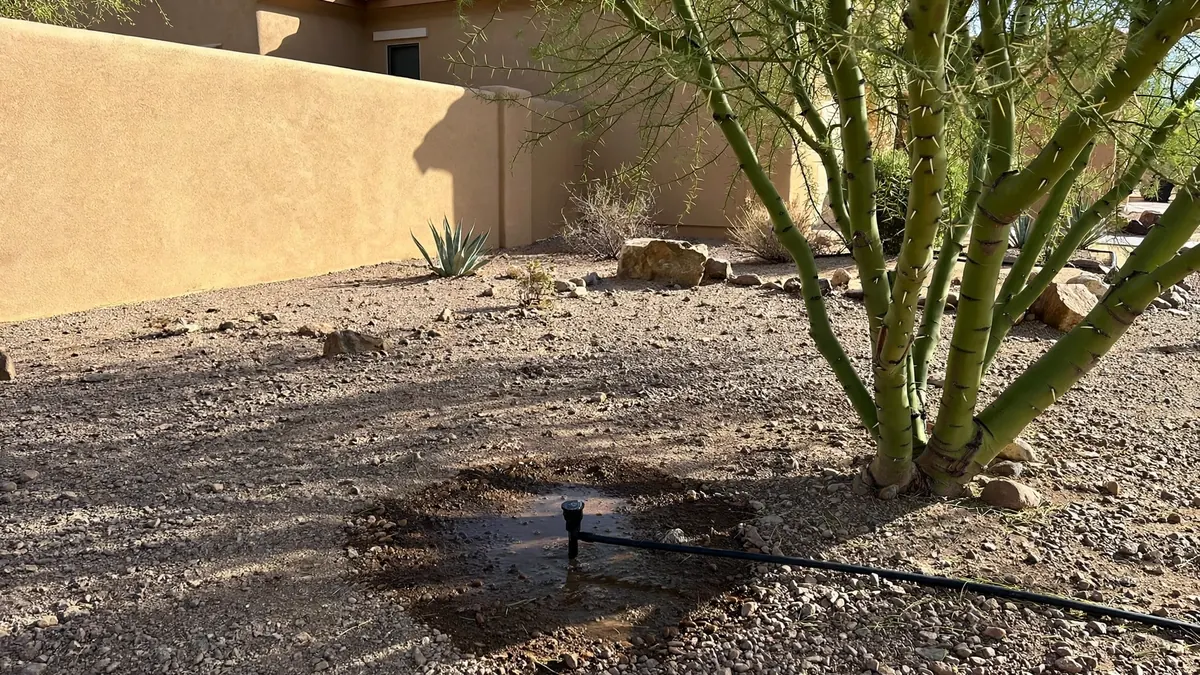
- Look for wet spots in dry weather. Damp gravel or soft soil a day after watering, or a valve box with water in it, means a line or valve is leaking.
- Check for leak-by. With the controller off, watch the meter. If it moves, then stops when you close the irrigation shutoff, a valve is letting water through when it should be closed.
Pool auto-fill
An auto-fill valve tops up the pool when the level drops. If the float sticks, it keeps feeding water. If the pool itself has a leak, the auto-fill hides it by replacing the water. Pools in Arizona lose a lot to evaporation in summer, so some top-off is normal. To test, turn off the auto-fill for a few days and mark the water level with tape. If the level drops much faster than usual for the weather, the pool may be leaking.
Can a softener, RO filter or evaporative cooler waste water?
Yes. All three send water down a drain line by design, and all three can get stuck doing it. Because the drain lines go to a sink, a standpipe, or the roof, the waste is easy to miss.
- Water softener. Softeners flush water through the resin during regeneration, usually overnight. A stuck valve or a timer that lost its setting can keep it regenerating or running water to the drain. Listen near the softener and the drain it empties into. If water is running there with nothing in the house turned on, the softener is likely the cause.
- Reverse osmosis filter. An under-sink RO system sends some water to the drain as it makes filtered water. If the shutoff valve inside it fails, it can run to the drain constantly. Listen for a steady trickle in the sink drain.
- Evaporative cooler. Many older Casa Grande, Coolidge, and Eloy homes still have a roof-mounted cooler. A stuck float valve can overflow the pan, and the bleed-off line can be set to dump more water than needed. Water on the roof around the cooler or a damp ceiling below is a clue. Our page on evaporative cooler leaks covers the roof damage side.
To test, shut off each one at its own valve and watch whether the meter indicator stops.
Is the water heater draining water outside?
It can be. The water heater's temperature and pressure relief valve, or T&P valve, has a discharge pipe that often runs through the garage wall to the outside. If the valve is weeping, water drips out of that pipe where you never see it.
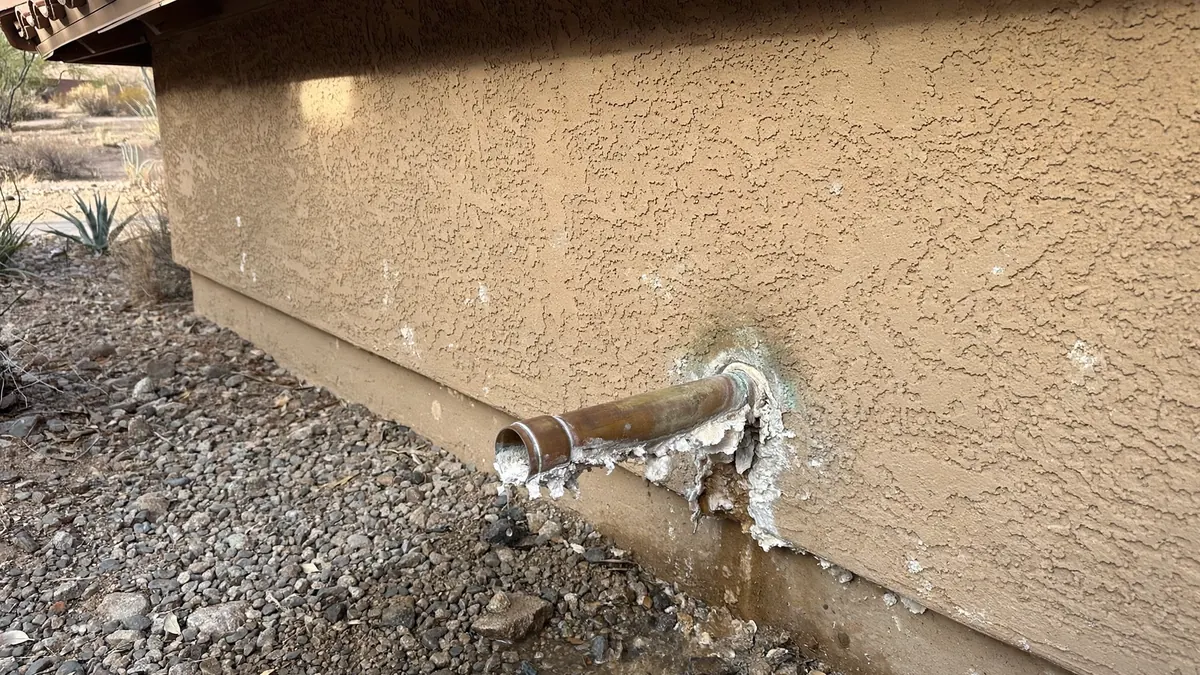
Look at the outside end of the T&P discharge pipe, usually near the garage. A wet spot, a mineral crust, or a steady drip there means the valve is releasing water. The cause is a plumber's call. Also look at the base of the heater and inside the drain pan if it has one. If you find water around the bottom of the tank, our page on water heater leaks explains what to do next.
How do you tell a slab leak from a service line leak?
Close the main shutoff where the water enters the house and watch the meter. If the meter stops, the leak is inside the house, which includes lines under the slab. If it keeps moving, the leak is between the meter and the house, in the service line or an outdoor branch.
Before you do this, make sure the irrigation and pool lines are off, since in many homes they branch off before the house shutoff.
- Leak inside the house, with no running toilet or appliance: a slab leak or a line inside a wall is likely. Look for a warm spot on the floor, the sound of water with everything off, dark grout, or a water heater that runs more than usual. Our page on slab leak detection and cleanup covers what happens next.
- Leak outside the house: the service line from the meter is usually your responsibility on your side of the meter. Look for a wet patch along the path from the meter to the house.
If the meter keeps moving after you close the house shutoff and you cannot find the outdoor leak, call your water provider. Many can tell you whether the leak is on their side of the meter or yours.
What order should you check things in?
Go from most likely and easiest to least likely and hardest. Confirm each step with the meter before you move on.
| Order | Check | How | What points to it |
|---|---|---|---|
| 1 | The bill | Compare gallons to the same month last year and your meter to the bill | Estimated read, longer cycle, rate change |
| 2 | Toilets | Food coloring in each tank, 15 minutes, no flushing | Color in the bowl, toilet refills on its own |
| 3 | Irrigation | Check the controller, run each zone, watch the meter with the controller off | Wet spots in dry weather, extra programs, meter moves until the irrigation valve is shut |
| 4 | Pool auto-fill | Turn auto-fill off and mark the level with tape | Level drops faster than evaporation, auto-fill runs often |
| 5 | Softener and RO | Listen at their drains, shut their valves, watch the meter | Water running to the drain with the house idle |
| 6 | Evaporative cooler | Shut its supply valve, check the roof and pan | Overflowing pan, wet roof, ceiling stain below |
| 7 | Water heater | Check the T&P discharge outside and the base of the tank | Drip or crust at the discharge pipe, water in the pan |
| 8 | House vs yard | Close the house shutoff and watch the meter | Stops: inside or slab. Keeps going: service line or outdoor branch |
If you get to step 8 and the leak is inside the house with no fixture or appliance to blame, it is time to have the lines under the slab checked by a leak detection specialist.
What should you do once you find the source?
Fix or shut off the source, then check whether the water caused any damage. A toilet flapper or irrigation valve usually leaves nothing to dry. A slab leak, a cooler overflow, or a water heater leak often does.
- Keep the evidence. Photograph the meter, the failed part, and the bills. Most standard homeowners policies do not cover the extra water itself, but they may cover sudden water damage the leak caused, and a clear record helps.
- Ask your water provider about adjustments. Some providers have a leak adjustment policy if you show the leak was repaired. Ask what they need.
- Check for hidden moisture. If the leak was under the slab, inside a wall, or above a ceiling, the materials around it may still be wet even after the leak stops.
If the search ends at a slab leak, a wet ceiling, or flooring that feels damp, call (520) 380-1551. The line is open 24/7 and connects you with a local restoration crew in Casa Grande or nearby Pinal County towns to check moisture and dry what got wet. Prices are set by each restoration company and vary with the job.
Questions homeowners ask
What is the most common cause of a high water bill with no visible leak?
How do I know if the leak is under my slab?
Will insurance pay for my high water bill?
More from the blog
 Leaks & PipesHow leak detection works: finding hidden leaks without tearing up your homeLeak detection finds hidden leaks without tearing up your home by narrowing the search step by step. A meter test confirms water is escaping, pressure tests...
 Leaks & PipesSlab leak signs in Casa Grande homes and what each one meansThe clearest slab leak signs are a warm spot on the floor, a water bill that rises with no change in habits, running water sounds with...
 Leaks & PipesBurst pipe in your house: what to do in the first 15 minutesIn the first 15 minutes after a pipe bursts, shut off the water at the main, keep away from water near outlets and cut power only...
Need help with damage right now?
Speak to a local restoration specialist on the 24/7 line, any time of day.
Call (520) 380-1551When you call: enter your ZIP code, then press 1 for water damage, 2 for fire damage or 4 for sewage backup.