Home › Blog › Hard water and pipe leaks in Casa Grande: what scale does and how to prevent it
Hard water and pipe leaks in Casa Grande: what scale does and how to prevent it
Hard water speeds up most leaks in Casa Grande homes rather than causing them directly. Mineral scale corrodes fittings, cements valves, wears out water heaters, and thins copper over time. Most hard water leaks start at a connection, valve, or tank. Regular checks, a water softener, and replacing supply lines on schedule prevent most of them.
In this article
- Does hard water actually cause pipe leaks?
- What is scale doing inside your plumbing?
- Which pipe types suffer most from hard water?
- Why do water heaters fail so often in Casa Grande?
- Can a water softener cause a leak?
- What are the early signs that hard water is wearing out your plumbing?
- How do you prevent hard water leaks?
- Is hard water damage covered by homeowners insurance?
- What should you do when a hard water leak finally shows up?
- Questions homeowners ask
Does hard water actually cause pipe leaks?
Hard water rarely punches a hole in a pipe by itself, but it speeds up the things that do. Scale narrows lines and raises pressure on fittings, minerals cake valve seats so they stop sealing, and sediment shortens the life of water heaters. In Casa Grande, most leaks you can trace back to hard water start at a part, not in the middle of a pipe.
Hard water is water carrying a lot of dissolved calcium and magnesium. Pinal County homes run on groundwater that picks up minerals from rock and soil. When it is heated or evaporates, those minerals come out and stick to whatever they touch. The white crust on your shower head is the visible part. The same thing happens inside parts you cannot see.
What is scale doing inside your plumbing?
Scale builds in layers wherever water is heated, slowed down, or left standing. It does the most harm in hot-water lines, small openings, and moving parts, and the least in cold, straight runs of pipe that carry a steady flow.
Hot water makes it worse
Heat pushes minerals out of water, so the water heater and the hot side of your plumbing scale up first. A hot line you use every day carries more buildup than the cold line beside it.
Small openings clog first
Faucet aerators, shower cartridges, toilet fill valves, ice-maker valves, and the screens on washing machine hoses all have tiny passages. Scale closes them down. Usually that means weak flow. Sometimes it means a valve that cannot fully shut, which is how a toilet runs all night or an ice maker overfills.
Moving parts seize
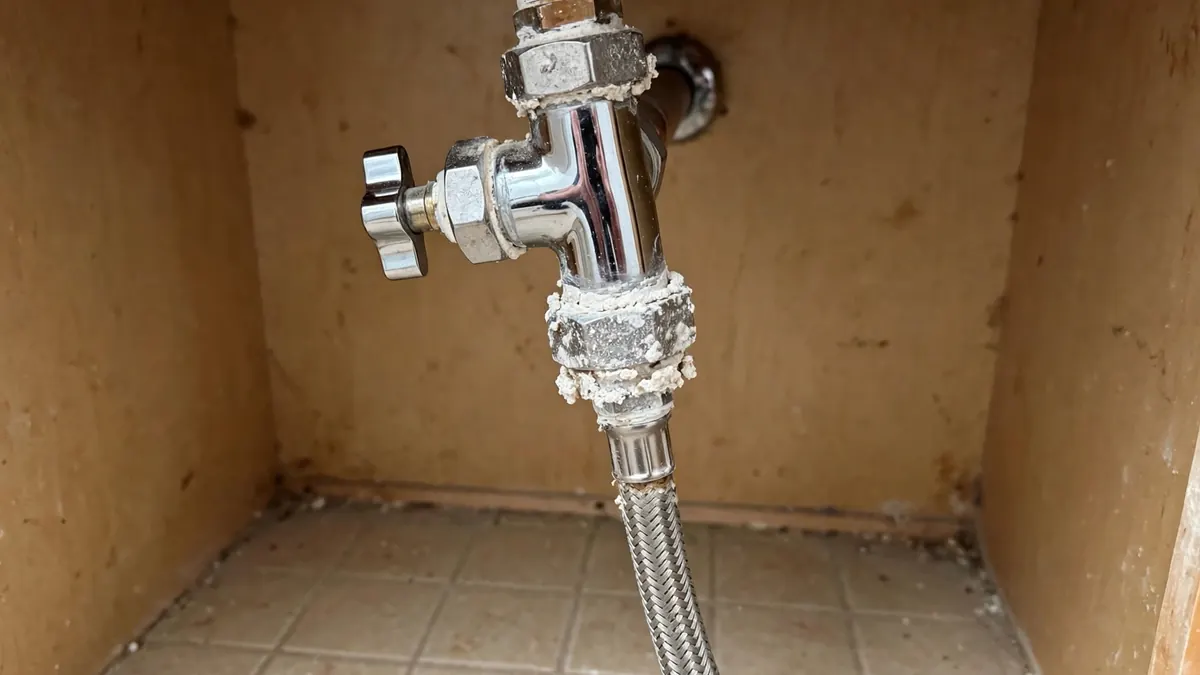
Valves that sit in one position for years get cemented in place by scale. The shutoff under your sink, the angle stop behind the toilet, and the main shutoff to the house are the common ones. When you finally force a seized valve, the stem packing or a corroded connection often starts to drip, and you may not be able to stop water when something else fails.
Which pipe types suffer most from hard water?
Every common pipe material in Casa Grande homes reacts to hard water differently. Older galvanized steel suffers the most, copper is in the middle, and PEX resists scale in the tubing itself while still depending on fittings that can wear.
| Pipe or part | Where you find it here | What hard water does | How it usually leaks |
|---|---|---|---|
| Galvanized steel | Older homes near downtown Casa Grande, Coolidge and Eloy | Rust and scale build inside together and shrink the opening | Rust-through at threaded joints, low pressure, brown water first |
| Copper | Many homes built before the mid-2000s, often under the slab | Scale and water chemistry wear the pipe wall over time, more on hot lines | Pinholes, often in more than one spot, and slab leaks |
| PEX tubing | Newer subdivisions such as Villago, McCartney Ranch and Mission Royale | The plastic itself does not scale much | Brass or plastic fittings and crimp rings, not the tubing |
| Braided and rubber supply lines | Under sinks, behind toilets, at the washer | Corrodes the crimped ends and fittings | Sudden burst at the connection |
If one pinhole in copper under your slab has been repaired, the rest of that line lived in the same water, which is why a second leak often follows. Our page on slab leaks in Casa Grande covers what happens when one of those lines fails under the floor.
Why do water heaters fail so often in Casa Grande?
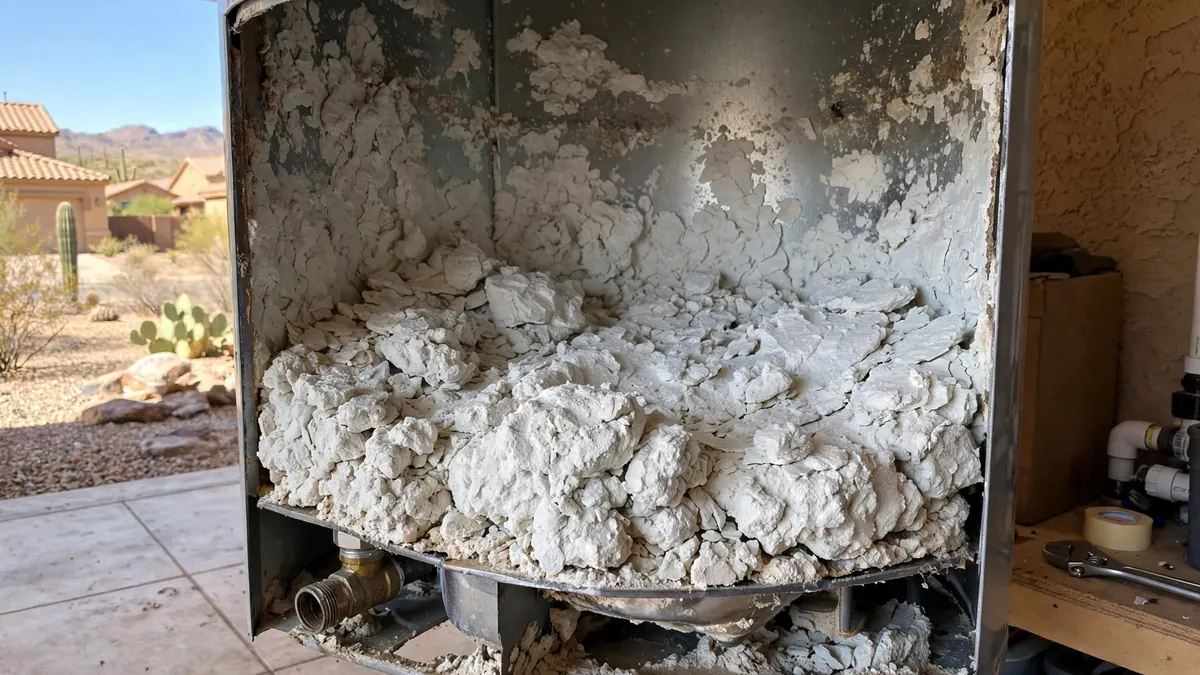
A water heater is where hard water does its heaviest damage, because it heats a large volume of water every day. Minerals settle into a crust at the bottom of the tank, the tank runs hotter and harder to push heat through it, and the steel wears out from the inside sooner than it would on softer water.
Three parts are worth knowing:
- Sediment layer. In a gas tank, the burner heats the bottom of the tank through that crust. You may hear popping or rumbling as water trapped under the scale boils. In an electric tank, the lower element can get buried and burn out.
- Anode rod. This is a metal rod inside the tank that corrodes on purpose so the tank does not. Hard water uses it up faster. Once it is gone, the tank lining is next.
- Drain valve and relief valve. Scale can keep the drain valve from closing tight after a flush, and mineral buildup can affect the temperature and pressure relief valve. Either can drip onto the floor.
Our water heater leak page covers what to do when a tank lets go. Prevention is simpler: flush the tank, have the anode rod checked, and replace the heater on your schedule rather than waiting for it to empty into a hall closet.
Can a water softener cause a leak?
Yes. A softener solves the scale problem for the rest of the house, but it adds its own set of connections and a brine tank that can overflow. Most softener leaks are slow and happen in a garage, where nobody looks for days.
- Bypass and inlet connections. The softener tees into your main line, usually in the garage, and those fittings can weep.
- Brine tank overflow. If the float or the control valve sticks, the brine tank can keep filling and spill salty water across the garage slab and under the drywall at the base of the wall.
- Drain line. The regeneration cycle sends water down a small drain hose. If the hose pops loose from the drain or standpipe, that water lands on the floor during the night cycle.
A softener is still one of the best tools against hard water damage. Treat it, and any reverse osmosis unit under the sink, as one more appliance that needs a look a few times a year.
What are the early signs that hard water is wearing out your plumbing?
The early signs are small and easy to ignore: crusty fixtures, weak flow, a toilet that runs, valves you cannot turn, and a water heater that makes noise. On their own they are maintenance items. When they show up alongside a damp spot or a jump in the water bill, they point to a leak.
- White or green crust at a connection. Look at the nuts under sinks and behind toilets. Green on copper or a white crust on a fitting usually means it has been weeping a tiny amount and the water evaporated, leaving minerals behind.
- Weak flow through the whole house. In a home with galvanized pipe, the lines themselves may be closing up.
- A toilet that cycles on its own. Scale on the flapper or fill valve.
- Rumbling from the water heater, or rusty hot water. Sediment or corrosion in the tank.
- Swollen cabinet floors under sinks. A slow drip from a scaled-up shutoff or supply line, often going on for weeks.
- A warm spot on the floor or a higher bill. These are the signs of a hidden leak, which on a slab home usually means a hot-water line.
Try the crust test each season. Wipe a crusty connection clean and check it a week later. If the crust comes back, that fitting is weeping and should be replaced.
How do you prevent hard water leaks?
Prevention comes down to replacing wear parts before they fail, keeping scale out of the water heater, and making sure you can shut the water off when something does go wrong. None of it is expensive compared with drying out a room.
| Task | How often | Why it matters here |
|---|---|---|
| Check connections under sinks and behind toilets for crust or damp | Every few months | Catches weeping fittings before the cabinet floor swells |
| Turn each shutoff valve closed and open again | Once or twice a year | Keeps scale from cementing the valve so it works in an emergency |
| Flush the water heater | Follow the maker's guidance, often yearly in hard water areas | Removes sediment that wears out the tank |
| Have the anode rod checked | Every few years | Hard water uses it up faster than the label suggests |
| Replace washer, toilet and faucet supply lines | About every five years | Crimped ends corrode and burst |
| Look over the softener and brine tank | When you add salt | Catches overflow and drain hose problems early |
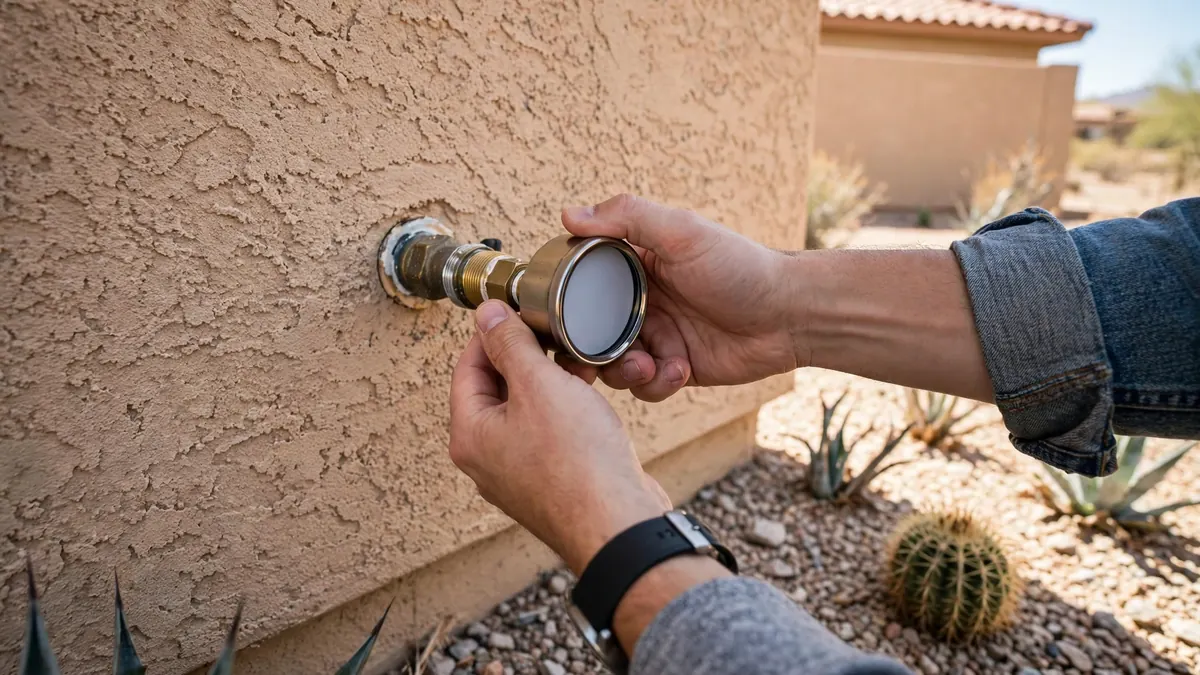
| Check house water pressure with a gauge | Once a year | High pressure plus scaled fittings is a common leak recipe |
A gauge that screws onto a hose bib is a cheap hardware store item. If pressure reads high, a plumber can check or install a pressure regulator, since high pressure on scaled fittings often turns a weak spot into a burst.
If you leave for weeks, as many snowbird and seasonal owners do, close the main and set the water heater to vacation or off.
Is hard water damage covered by homeowners insurance?
The sudden water damage from a failed fitting or a burst tank is often covered under a standard policy, minus your deductible. The worn part itself, and damage from a slow leak that went on for a long time, are commonly not covered. Hard water wear is usually treated as maintenance.
A scaled supply line that bursts and floods the kitchen is usually treated as sudden. A fitting that wept under a sink for months until the cabinet floor rotted may be called gradual and denied, and the crust and staining are what an adjuster looks at. Check your declarations page and the water damage section of your policy, and keep the failed part, because it is the best evidence of how the leak happened.
What should you do when a hard water leak finally shows up?
Close the fixture shutoff if it still turns, or the main if it does not. For a water heater, also turn off the gas or the breaker. Then deal with what got wet.
- Photograph the failed part, the crust around it, and every wet area.
- Keep the part after the plumber replaces it.
- Pull the toe-kick or check the cabinet floor and the wall base, where water from under-sink leaks hides.
- Have the moisture mapped. A slow leak often spreads far past the spot you can see.
The Coolidge water damage page covers what local crews see in older neighborhoods. If water is already under the floor or inside a wall, call (520) 380-1551. The line is open 24/7 and connects you with a local restoration crew to dry what the leak left behind.
Questions homeowners ask
Does a water softener stop pipe leaks?
Is the white crust on my faucets a sign of a leak?
How often should I flush my water heater in Casa Grande?
Why does my shutoff valve leak after I turn it?
More from the blog
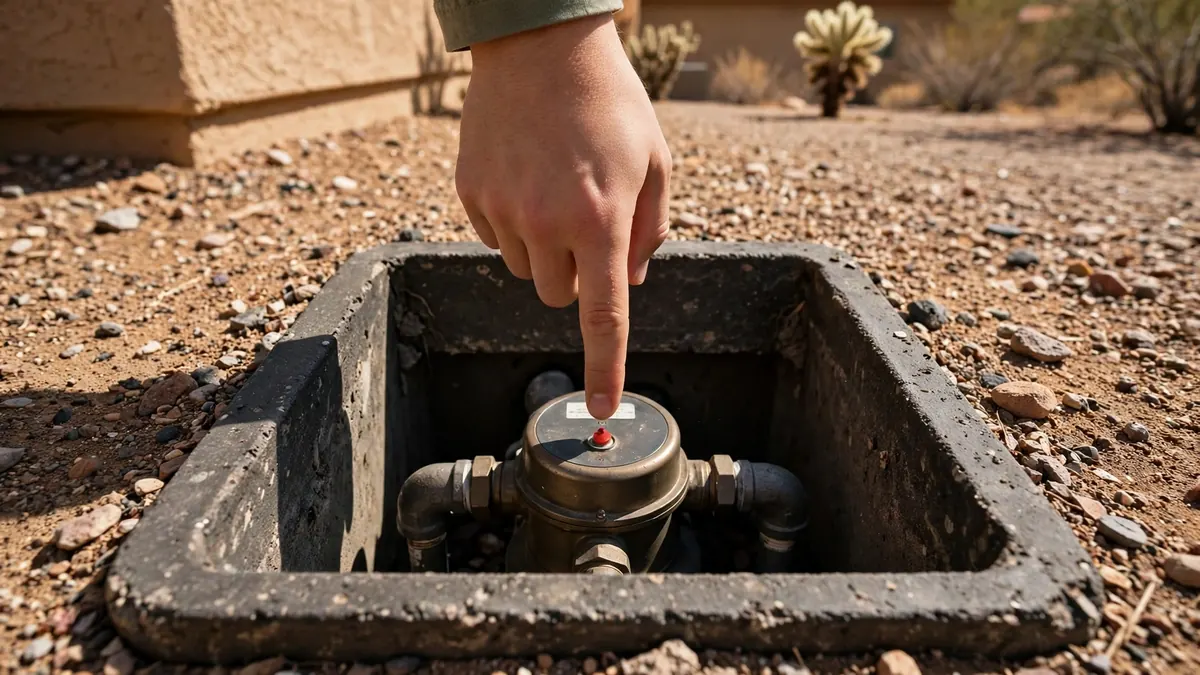 Leaks & PipesHow leak detection works: finding hidden leaks without tearing up your homeLeak detection finds hidden leaks without tearing up your home by narrowing the search step by step. A meter test confirms water is escaping, pressure tests...
 Leaks & PipesSlab leak signs in Casa Grande homes and what each one meansThe clearest slab leak signs are a warm spot on the floor, a water bill that rises with no change in habits, running water sounds with...
 Leaks & PipesBurst pipe in your house: what to do in the first 15 minutesIn the first 15 minutes after a pipe bursts, shut off the water at the main, keep away from water near outlets and cut power only...
Need help with damage right now?
Speak to a local restoration specialist on the 24/7 line, any time of day.
Call (520) 380-1551When you call: enter your ZIP code, then press 1 for water damage, 2 for fire damage or 4 for sewage backup.