Home › Blog › Garage flooding during a storm: cleanup and what to throw out
Garage flooding during a storm: cleanup and what to throw out
A garage floods first because its slab sits lower than the house and slopes toward the door. After a storm, keep power off, check the water heater before using it, separate spilled chemicals, remove mud, throw out soaked cardboard and porous items, then disinfect and dry the slab and lower drywall. See flood cleanup.
In this article
- Why does the garage flood before the rest of the house?
- What should you do first after the garage floods?
- What do you do if the water heater is in the garage?
- Is garage flood water contaminated?
- What should you throw out after a garage flood?
- How do you clean and dry a flooded garage?
- When does a flooded garage need a restoration crew?
- How do you keep the garage from flooding again?
- Questions homeowners ask
Why does the garage flood before the rest of the house?
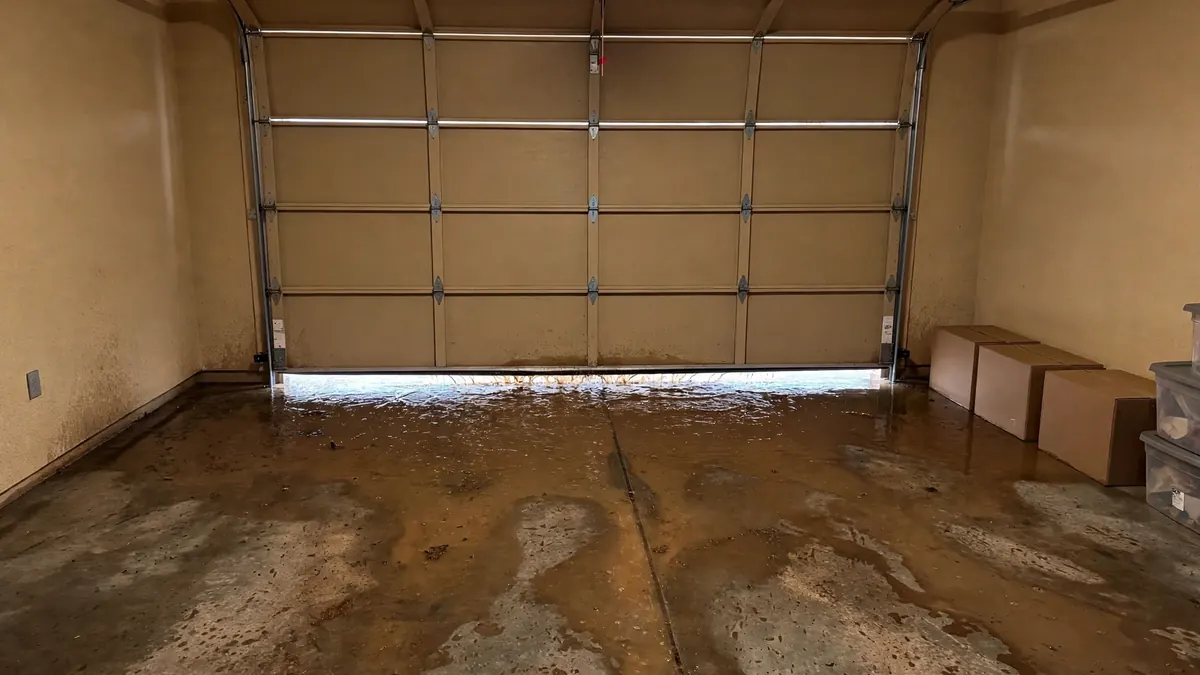
The garage is usually the lowest floor in the home and the closest to the street. Garage slabs are commonly set a step below the house floor and slope toward the big door so water and car drips run out. In a monsoon storm, that same slope runs the other way when water rises on the driveway, and the garage door is the widest opening in the house.
Most Casa Grande driveways slope down to the street, which normally carries water away. When a strong cell fills the street gutter, water backs up the driveway, and the garage door seal is the only thing between it and your floor.
- Bottom seal wear. Rubber garage door seals dry out and crack in summer heat, leaving gaps at the corners.
- Uneven slab. A slab edge that has settled or cracked leaves low spots where the seal cannot reach the concrete.
- Driveway grade. Some driveways are nearly flat or pitch slightly toward the garage, especially on corner and cul-de-sac lots.
- Roof runoff. A downspout or scupper that dumps right beside the garage door adds a lot of water to that one spot.
What should you do first after the garage floods?
Make it safe before you start cleaning. A flooded garage often has outlets near the floor, a water heater, extension cords, and chemicals all in the same water.
- Turn off power to the garage at the breaker panel, from a dry spot. Many garage outlets sit low on the wall, and freezers, chargers, and power tools are often plugged in near the floor.
- Do not walk through water near a live outlet or a cord lying on the floor. If you cannot reach the breaker without doing that, wait.
- Check the water heater before you relight or reset anything. See the next section.
- Open the big door once the storm has passed to let water drain out.
- Photograph everything before you move it: the water line on the walls, the floor, the door seal, and stored items.
- Look for spilled chemicals. Floating containers, an oily sheen, or a sharp smell means some of what was stored on the floor got into the water.
Never mix cleanup chemicals in a flooded garage. Pool chlorine, bleach, acids, and ammonia-based cleaners can react with each other and give off dangerous fumes. Move spilled containers outside, keep them apart, and air the garage out before you start.
What do you do if the water heater is in the garage?
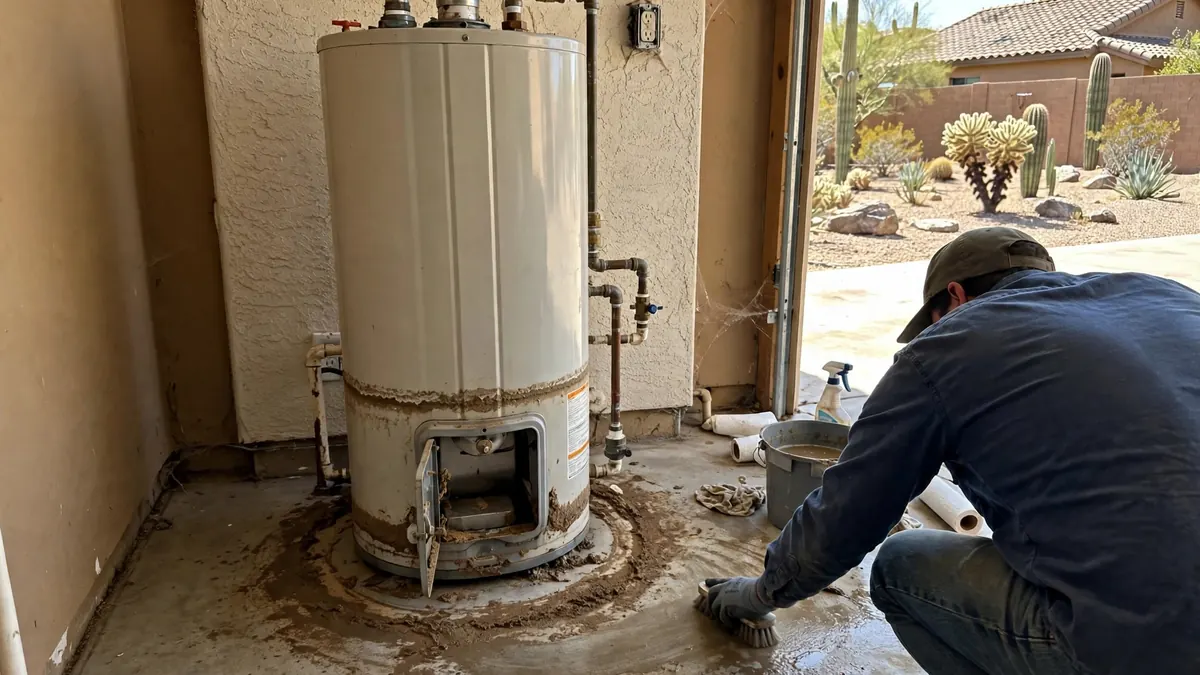
If flood water reached the burner area of a gas water heater or the controls of an electric one, do not turn it back on yourself. Many manufacturers say a gas unit whose controls were under water should be replaced rather than dried and restarted, and either type should be checked by a plumber or gas appliance technician first.
Many Casa Grande homes have the water heater in the garage, often on the floor or on a short platform. Gas units draw combustion air near the bottom and have the burner and gas control there too, which is exactly where flood water reaches first.
- Gas water heater. If water came up to the burner door or the gas control, shut the gas valve on the supply line to the heater and leave it off. Silt and water in the burner and control valve are a safety issue.
- Electric water heater. Turn off its breaker. Water around the lower element cover or wiring means it needs to be checked before power goes back on.
- Water softener and filters. Softener heads, timers, and brine tanks on the garage floor can take in dirty water. The brine tank may need to be cleaned out.
A water heater that starts leaking from the tank itself is a separate problem. The page on water heater leaks covers what that damage looks like.
Is garage flood water contaminated?
Yes, more than most people expect. Storm water that ran up the driveway is outside water that crossed soil and pavement, and in a garage it also picks up motor oil, antifreeze, fertilizer, weed killer, pool chemicals, paint, and whatever else was stored on the floor.
Restoration crews treat outside flood water as contaminated, which means porous materials it soaked are usually removed rather than dried. The garage adds a chemical layer on top of that. Antifreeze is toxic to pets and tastes sweet to them, so keep dogs and cats out until the floor is cleaned. If you see a rainbow sheen on the water, an oily film was released and should be cleaned up with detergent, not just rinsed into the yard or street.
Wear rubber boots, gloves, and eye protection. Use an N95 mask once mud starts drying into dust. Wash your hands and change clothes before going into the house.
What should you throw out after a garage flood?
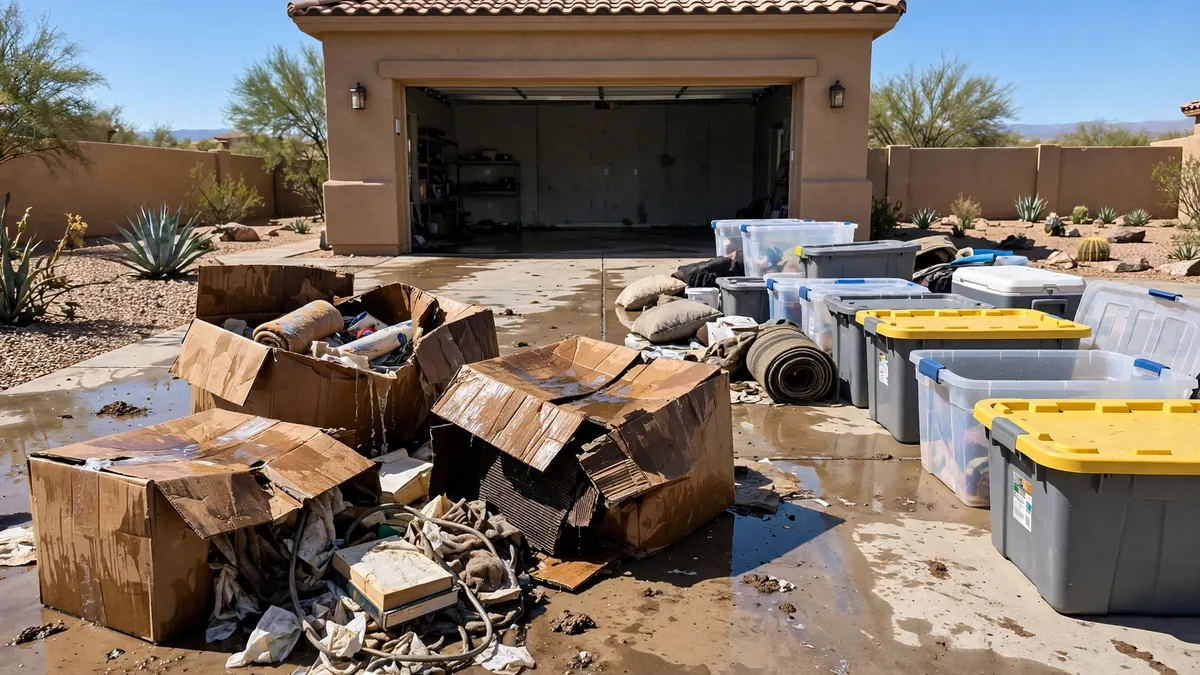
Throw out anything porous that soaked in storm water and anything that held food or medicine. Keep and clean hard items like metal tools, plastic bins, and sealed containers that stayed closed.
| Item | Usually | Notes |
|---|---|---|
| Cardboard boxes and their contents | Discard or repack | Cardboard soaks up water and grows mold. Check what is inside before tossing. |
| Paper, books, and documents | Discard unless important | Photograph and dry important papers flat, or ask about document drying |
| Food, pet food, and drinks stored in the garage | Discard | Includes cans and bottles that sat in flood water |
| Upholstered furniture, rugs, mattresses | Discard | Foam and fabric hold contaminated water |
| Particleboard shelving and workbenches | Discard if swollen | Swells and weakens once soaked |
| Plastic bins with lids | Clean and keep | Check the contents. Lids often leak at the bottom edge. |
| Metal tools and hardware | Clean, dry, and oil | Wet steel rusts within days |
| Power tools and appliances on the floor | Have them checked | Do not plug in anything that was under water until it has dried and been inspected |
| Chest freezer or second fridge | Have it checked | Water in the compressor area or wiring is a safety issue. Discard food if power was lost too long. |
| Chemical containers | Dispose of damaged ones properly | Take leaking or contaminated containers to a household hazardous waste drop-off, not the trash |
Make a list as you go, with a photo of each item and an approximate age. Keep large items until you know whether an adjuster wants to see them.
How do you clean and dry a flooded garage?
Get the water and mud out, clean and disinfect the slab and the lower walls, then dry the drywall and the stud bays behind it. Concrete is tough, but finished garage walls and the wall shared with the house need more attention than the floor.
- Push out the water and mud with a squeegee and flat shovel while it is still wet, then wet vac the corners. Desert silt dries into a hard crust.
- Scrub the slab with detergent and a stiff brush, then rinse. Clean oil spots with a degreaser.
- Disinfect the floor and the lower walls, following the product label.
- Pull baseboards and check the drywall. Many garages have drywall that runs right to the slab. If it wicked up flood water, the wet section is usually cut out above the water line.
- Look at the house wall closely. The wall between the garage and the house is often built as a fire separation. Water can wick into the bottom plate and through to the laundry room or hallway on the other side, and any drywall replaced there should match what was originally installed.
- Check the door into the house. Water that reached the step or ran under the door may have soaked the flooring, tack strip, or baseboard just inside.
- Dry with air movers and a dehumidifier and close the big door while they run. A garage open to monsoon humidity dries slowly.
Garages get hot in summer, and that heat helps surfaces dry, but it also speeds up mold on wet drywall and cardboard. Moisture readings in the drywall and bottom plate tell you when the walls are actually dry, not just dry to the touch.
When does a flooded garage need a restoration crew?
Call in a crew when water got past the garage into the house, when drywall or insulation wicked up flood water, or when the garage is finished living space. A bare concrete garage with an inch of water that drained out is usually manageable on your own.
- Water ran under the door into the laundry room, hallway, or kitchen.
- The garage has been converted into a room, gym, or office with flooring and finished walls.
- Drywall is wet more than a few inches up, or the wall shared with the house reads wet on the other side.
- Chemicals spilled and mixed with the flood water across the floor.
- A musty smell develops in the days after the storm.
Insurance for a flooded garage depends on how the water got in. Most standard homeowners policies exclude surface water that flows in from outside, while water from a burst pipe or a failed water heater is usually treated differently. Check your declarations page and policy wording before you assume either way.
How do you keep the garage from flooding again?
Seal the bottom of the door, move water away from the driveway and walls, and get stored things off the floor. Do it in spring, before monsoon season starts in mid-June.
- Replace the garage door bottom seal and check the retainer that holds it. Close the door and look for daylight at the corners.
- Add a threshold seal. A rubber strip bonded to the slab just inside the door gives the bottom seal something to press against.
- Fix low spots and cracks at the slab edge where the door meets the floor.
- Move downspout and scupper outlets away from the garage door and the driveway.
- Raise the bottom shelf off the floor and store chemicals and papers higher up.
- Keep sandbags or a door barrier ready if your garage has flooded before.
The monsoon preparation guide covers the rest of the house. If storm water has gotten past the garage into your home or soaked the walls, call (520) 380-1551. The line is open 24/7 and connects you with a local restoration crew in Casa Grande and nearby Pinal County towns.
Questions homeowners ask
Can I use my water heater after the garage flooded?
Is it safe to clean a flooded garage myself?
Why does my garage flood when the rest of the house stays dry?
Should I keep my stored items in the garage after a flood?
More from the blog
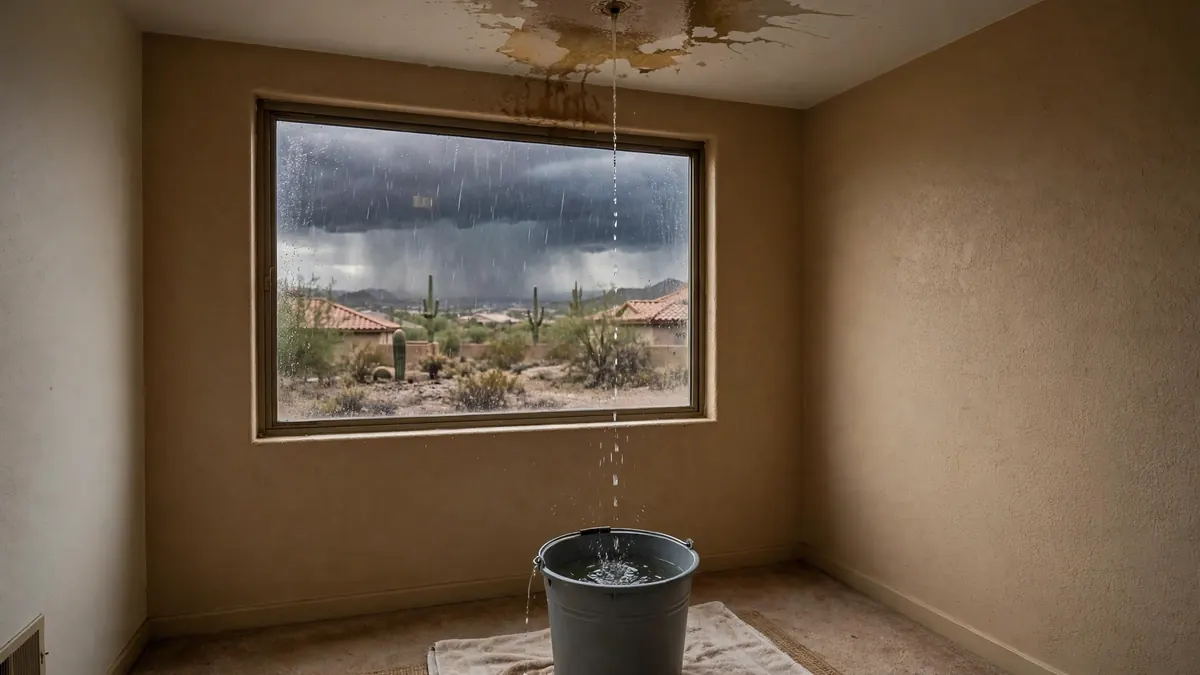 Monsoon & RoofRoof leaking during a monsoon: what to do right nowWhen your roof leaks during a monsoon, stay off the roof, cut power to any wet light fixture, catch the drip in a bucket, move belongings,...
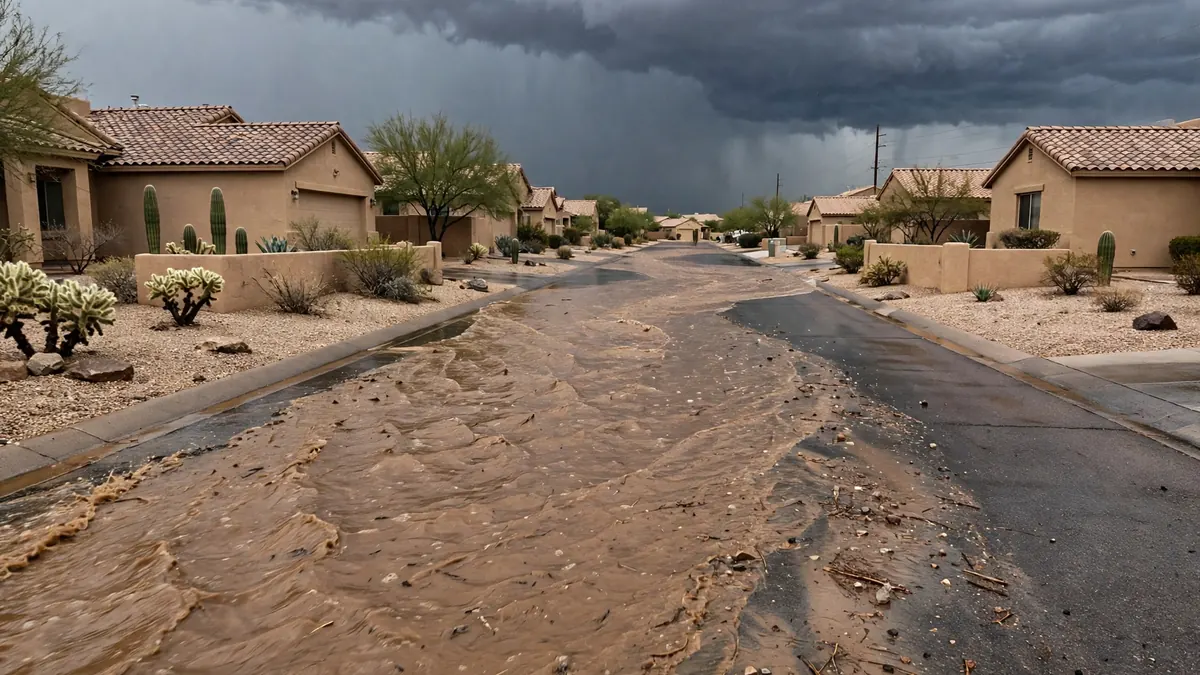 Monsoon & RoofMonsoon flooding in Casa Grande: why homes flood and how to clean upCasa Grande homes flood in monsoon storms because hard, dry ground sheds heavy rain instead of absorbing it, and flat terrain sends runoff toward low lots,...
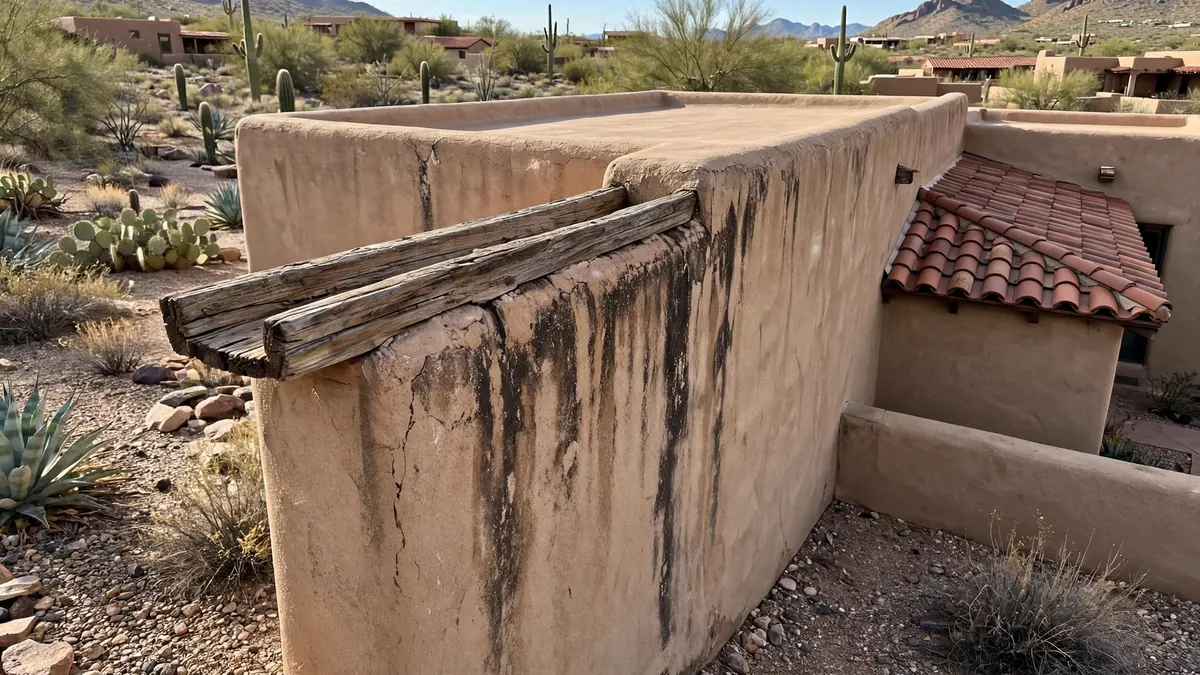 Monsoon & RoofFlat roof leaks and clogged scuppers in ArizonaFlat roofs in Arizona usually leak because water cannot get off them. Scuppers and canales clog with dust and debris, water ponds against the parapet, and...
Need help with damage right now?
Speak to a local restoration specialist on the 24/7 line, any time of day.
Call (520) 380-1551When you call: enter your ZIP code, then press 1 for water damage, 2 for fire damage or 4 for sewage backup.