Home › Blog › Cleaning your home after wildfire smoke in Pinal County
Cleaning your home after wildfire smoke in Pinal County
To clean up after wildfire smoke, shut off the evaporative cooler, replace the HVAC filter, and remove ash with a HEPA vacuum and damp cloths instead of sweeping or blowing it. Wash soft goods and wipe hard surfaces top down. If the smell lingers or soot reached ducts and insulation, it may need professional smoke odor removal.
In this article
- How does wildfire smoke get inside a closed house?
- What should you do while smoke is in the air?
- Why do evaporative coolers pull smoke into the house?
- How do you clean wildfire ash safely?
- How do you clean fine smoke particles off indoor surfaces?
- What should you do with HVAC filters and ducts after wildfire smoke?
- When is wildfire smoke damage an insurance claim?
- When should you call a crew for wildfire smoke cleanup?
- Questions homeowners ask
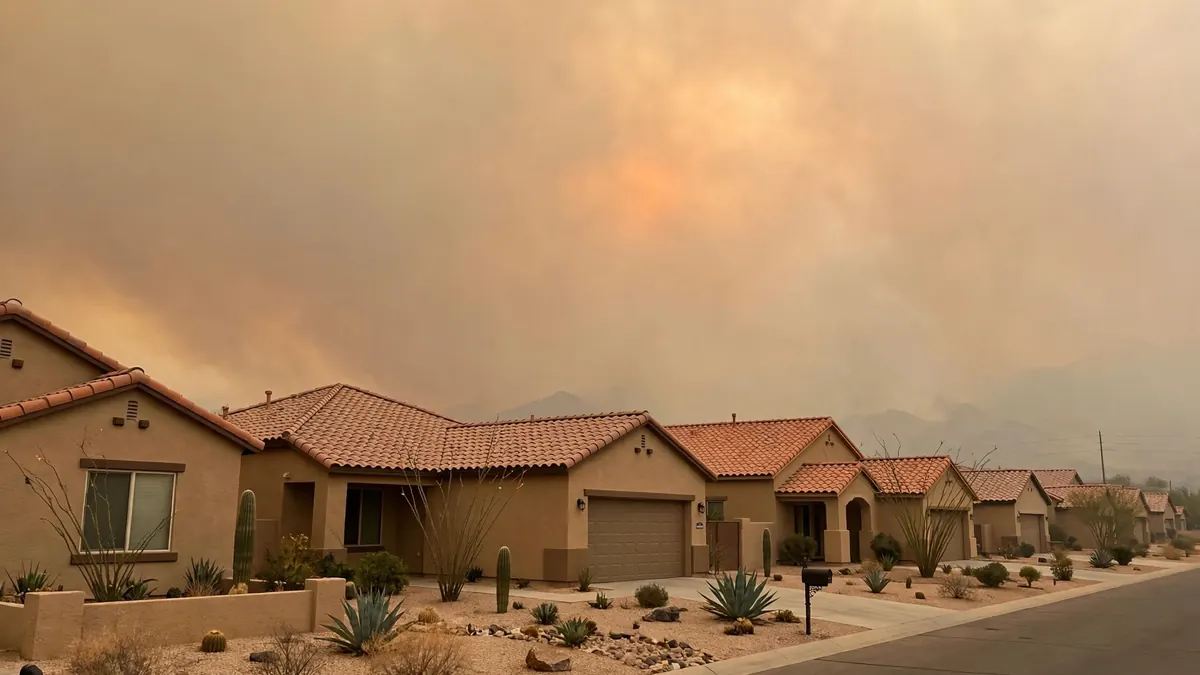
You do not need a fire on your street to have smoke in your house. Large wildfires elsewhere in Arizona, and brush fires on open desert and farmland around Casa Grande, Eloy, Arizona City, and Maricopa, can send smoke across Pinal County for days. A home with closed windows still pulls some of it in, and a home with an evaporative cooler running can fill with it.
Most homes need only a careful cleaning afterward. Some, especially those close to a fire or with a cooler that ran through the smoke, end up with ash in the attic, soot in the ducts, and an odor that does not leave.
How does wildfire smoke get inside a closed house?
Wildfire smoke gets in through every small gap a house has: around doors and windows, through attic and soffit vents, past recessed lights and attic hatches, through the dryer and bath fan vents, and through any system that brings outside air in. The finest particles are small enough to pass through gaps you cannot see.
Those fine particles are the main concern indoors. They are too small to see one by one, but together they settle as a gray film on window sills, furniture, and floors, and they stay in the air for a long time. Larger ash flakes mostly land outside, on patios, cars, and roofs, but they track in on shoes and blow in through open doors and cooler vents.
The attic deserves attention too. Attic vents are open to the outside by design, so ash and fine particles can settle into insulation, and odor can drift down into the house on hot afternoons.
What should you do while smoke is in the air?
Keep as much smoke out as you can, and filter what gets in. The less residue that settles, the less you have to clean later.
- Turn off the evaporative cooler and close its ceiling vent or damper if it has one.
- Close windows and doors. Close the fireplace damper on homes that have one.
- Run the AC on recirculate. Central AC in most homes recirculates indoor air through the filter. If your system has a fresh-air intake, close it.
- Upgrade the HVAC filter to the highest-rated pleated filter your system is designed to handle. Check your system's manual or ask an HVAC technician, since some systems lose airflow with very dense filters.
- Run a HEPA air purifier in the bedroom, with the door closed, to give yourself one cleaner room.
- Avoid adding indoor smoke. Skip candles, frying, and vacuuming with a non-HEPA vacuum until the air clears.
- Check air quality using a public air quality forecast such as AirNow, which reports conditions for Pinal County, so you know when it is reasonable to open up and clean.
Why do evaporative coolers pull smoke into the house?
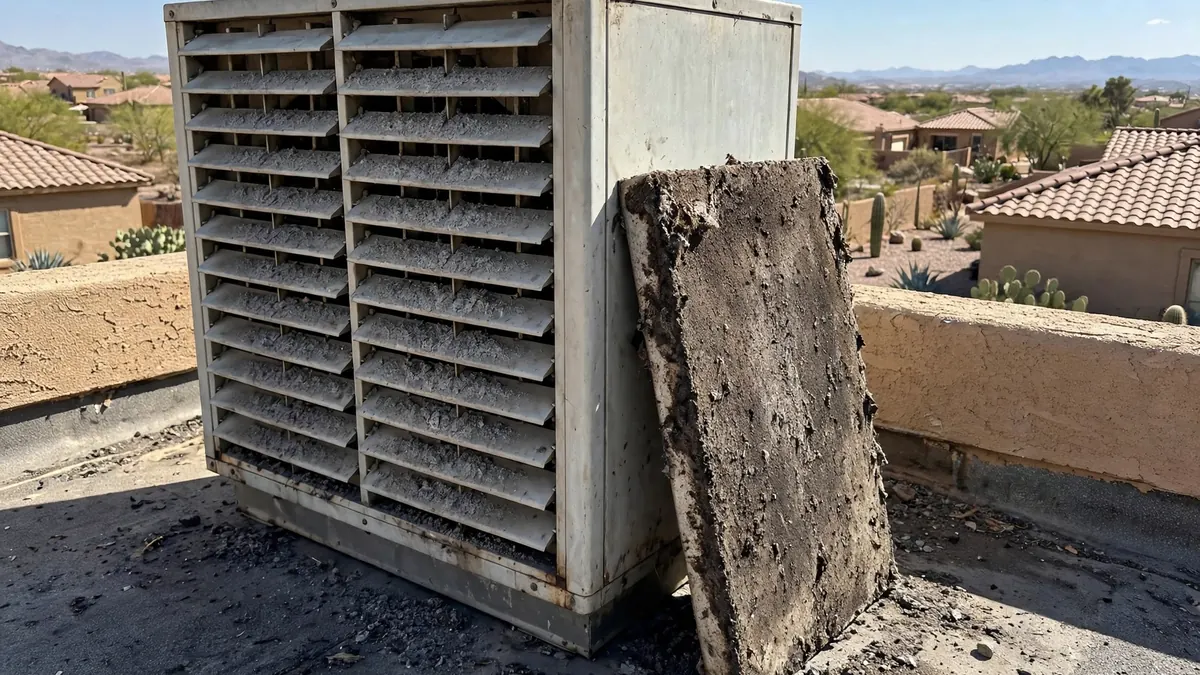
An evaporative cooler works by pulling outside air through wet pads and blowing it into the house, with windows cracked so the air can push out. During a wildfire, that means it pulls smoke straight in and pushes it through every room. The pads also catch ash and soak up smoke odor.
Many older homes in Casa Grande, Coolidge, and Eloy still use coolers, sometimes alongside central AC. After smoke, the cooler is often the main source of lingering smell. Here is how to deal with it:
- Shut it off as soon as you see or smell smoke, and leave it off until the air clears.
- Replace the pads after the smoke event. Pads that pulled smoke hold odor and will release it into the house every time the cooler runs.
- Drain and clean the pan. Ash settles in the water and turns into a gray sludge.
- Clean the duct and ceiling vent. Wipe the vent grille and, if you can reach it, the first part of the cooler duct.
- Check the roof around it. While you are up there, or while someone else is, look for ash buildup in the cabinet and around the roof jack. Our evaporative cooler leak page covers what can go wrong with cooler pans and roof jacks.
If wildfire smoke arrives during cooler season, it is often better to put up with a warmer house for a day than to run the cooler. Pulling smoke in for hours can coat the whole interior and turn a light cleaning into a professional job.
How do you clean wildfire ash safely?
Clean ash with a HEPA vacuum or by gently dampening it and wiping or scooping it up. Do not dry sweep, use a leaf blower, or use a regular shop vac without a HEPA filter, because all three throw fine ash back into the air. Wear an N95 mask, gloves, long sleeves, and eye protection.
Ash can irritate skin, eyes, and lungs, and it can be more irritating when wet. Ash from burned buildings and cars can also contain metals and chemicals, so take more care if a structure burned near you. Keep children and pets away while you work.
Outside
- Lightly mist ash on patios and walkways with a hose so it does not blow around. Do not hose it hard into the storm drain or garden.
- Gently sweep the damp ash into a pile, scoop it into a plastic bag, and tie it closed.
- Wipe outdoor furniture and grills with a damp cloth. Wash children's toys before they are used.
- Leave the roof to someone who works on roofs. Rinse gutters and scuppers only if you can do it safely from the ground or a stable ladder.
Inside
- Wait until the outdoor air has cleared before opening the house to clean.
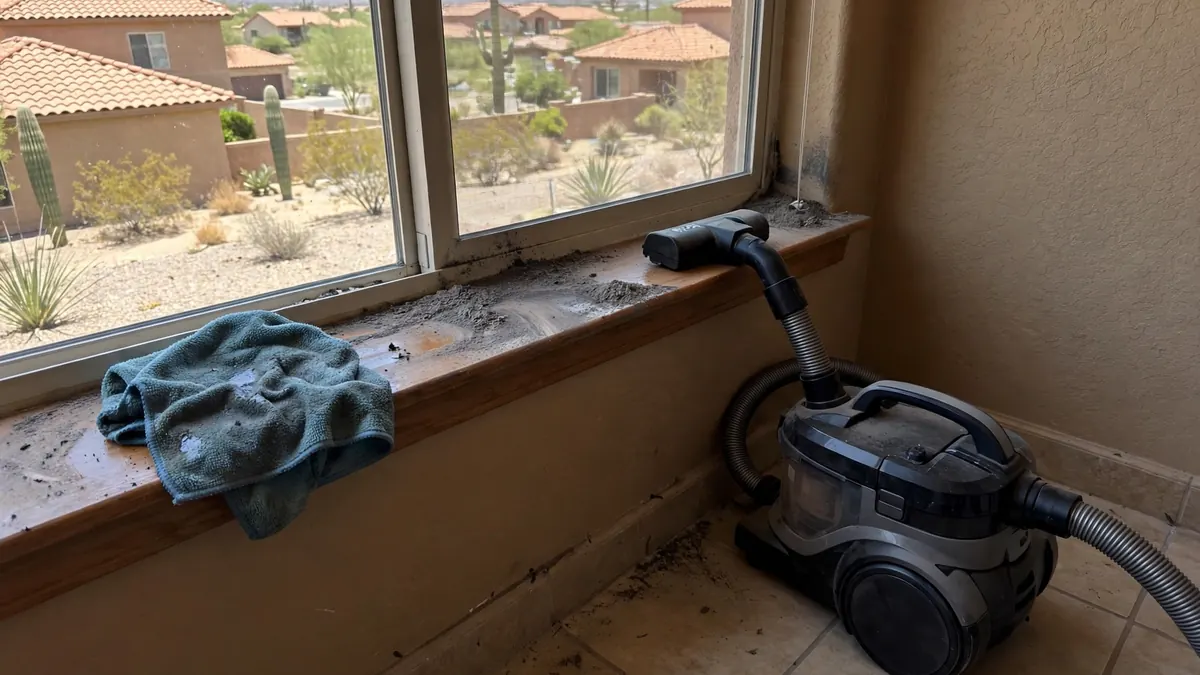
- HEPA vacuum floors, rugs, upholstery, and window tracks.
- Wipe hard surfaces with a damp cloth and a mild detergent, rinsing the cloth often. Work top down, from ceiling fans and shelves to floors.
- Damp mop hard floors, changing the water when it turns gray.
- Wash curtains, bedding, and clothing that were out in rooms with smoke.
- Bag used cloths, mop heads, and filters and throw them out.
How do you clean fine smoke particles off indoor surfaces?
For a light gray film, a damp cloth with a mild detergent works on most sealed hard surfaces. Do a quick test first. If wiping leaves a gray smear rather than coming up clean, the residue is heavier or oilier than ordinary dust and should be removed with a dry chemical sponge or left to a crew.
Window sills, door tracks, and the tops of cabinets usually collect the most. Glass, mirrors, and polished metal should be cleaned early, since smoke residue can dull those finishes if it sits. Carpet usually comes clean with HEPA vacuuming and a hot water extraction cleaning. Upholstery and mattresses that still smell after airing out may need professional cleaning.
Do not paint over a smoke film or cover the smell with sprays. If the house still smells smoky after cleaning, the residue is in materials you have not reached, most often the attic insulation, the ducts, or the cooler.
What should you do with HVAC filters and ducts after wildfire smoke?
Replace the HVAC filter once the smoke clears, even if you changed it recently, and check it again a week or two later. A filter that turned gray in a few days is a sign the system pulled in a lot of smoke.
In most smoke events that is enough. Duct cleaning is worth considering if:
- You see gray or black residue around supply registers.
- The smell gets stronger when the AC blows.
- The home has a fresh-air intake or cooler duct that ran during heavy smoke.
- Ash got into the attic, where many Casa Grande homes have their air handler and flexible ducts.
Flexible duct is hard to clean thoroughly, so after heavy contamination it is sometimes replaced. That is a call for a crew or HVAC technician who can inspect it.
When is wildfire smoke damage an insurance claim?
Wildfire smoke damage can be an insurance claim when smoke leaves physical damage in the home, such as soot or ash residue, odor in materials, or contaminated ducts and insulation. Most standard homeowners policies cover sudden smoke damage even when the fire was miles away. A smell that cleared on its own after a day usually is not a claim.
If you think you have a claim:
- Photograph ash and residue before cleaning, including window sills, HVAC filters, cooler pads, and the attic from the hatch.
- Keep the dirty filters and pads in bags.
- Write down the dates of the fire, the smoke, and when you noticed damage.
- Keep receipts for filters, cleaning supplies, air purifiers, and any hotel stay if smoke made the home unlivable.
- Report it promptly. Late reports make it harder to tie damage to a specific fire.
Coverage depends on your policy, so check your declarations page and deductible. For a small amount of cleaning, the cost may be below your deductible. Our guide to how Arizona homeowners policies work explains deductibles and replacement cost in more detail.
When should you call a crew for wildfire smoke cleanup?
Call when ash got into the attic or ducts, when residue smears instead of wiping clean, when the smell is still there a week after cleaning, or when anyone in the home has asthma or other breathing problems. Homes close to a fire, or homes where the cooler ran through heavy smoke, are the most likely to need it.
Smoke and soot cleaning only often runs about $500 to $4,000, set by the independent restoration company and depending on how many rooms, the ducts, and the attic are involved. For homes that were close enough to the fire to take heat or ember damage, our page on fire damage restoration covers the larger job.
The restoration companies we work with handle wildfire smoke cleanup across Casa Grande, Eloy, Arizona City, Maricopa, Florence, and the rest of Pinal County. To talk through what you are seeing, call (520) 380-1551 any time on the 24/7 line.
Questions homeowners ask
Is wildfire ash dangerous to clean up?
Should I run my swamp cooler during wildfire smoke?
How long does wildfire smoke smell last in a house?
Do I need duct cleaning after wildfire smoke?
More from the blog
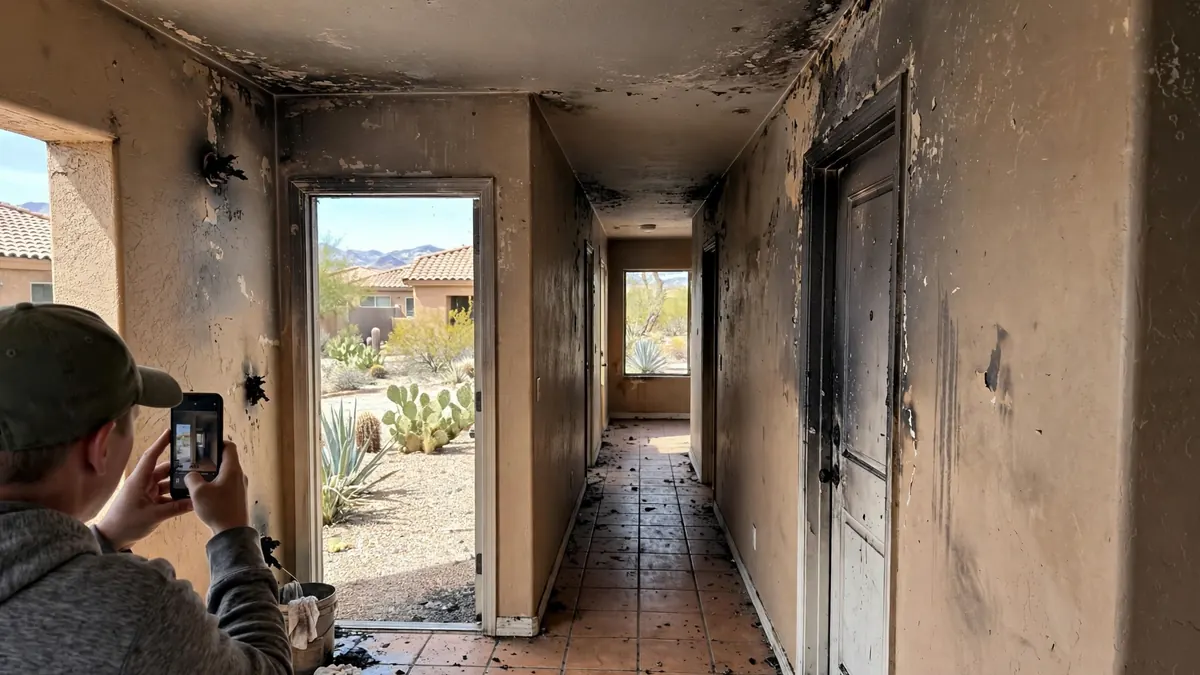 Fire & SmokeSmoke damage cleanup after a house fire: what to do firstStart smoke damage cleanup only after the fire department clears the house. Then keep the AC off, photograph everything, throw out exposed food, and do not...
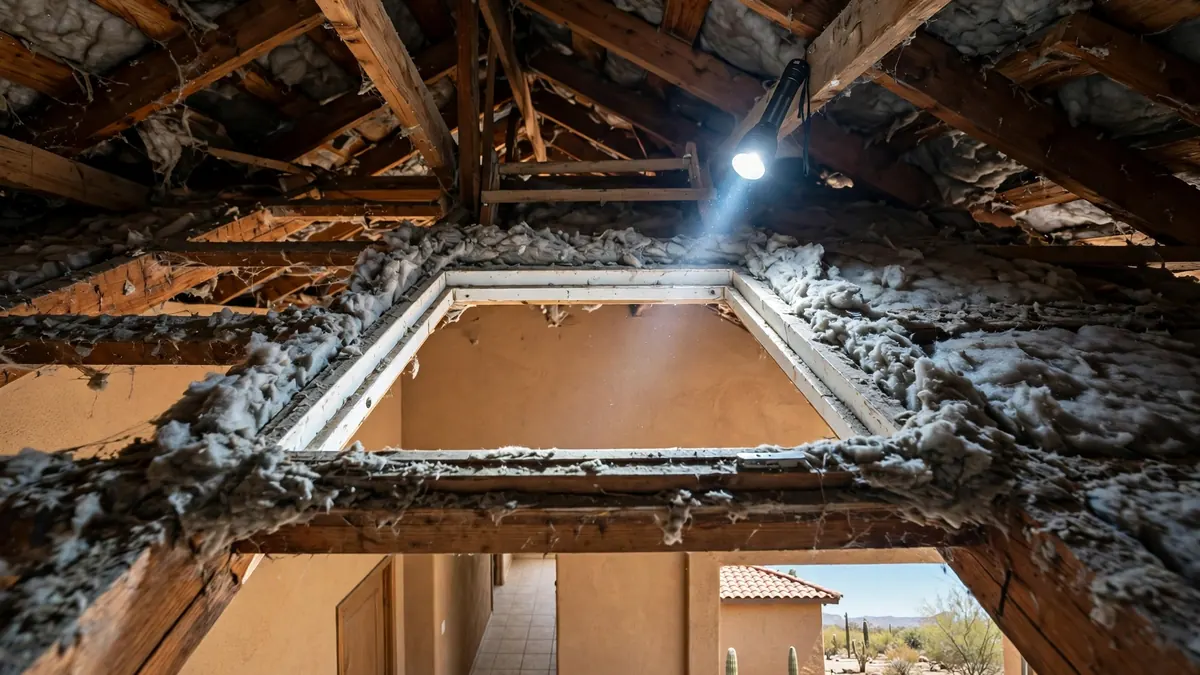 Fire & SmokeHow to get smoke smell out of a house in ArizonaTo get smoke smell out of a house, remove the residue instead of covering it. Change the HVAC filter, wash soft goods, clean hard surfaces top...
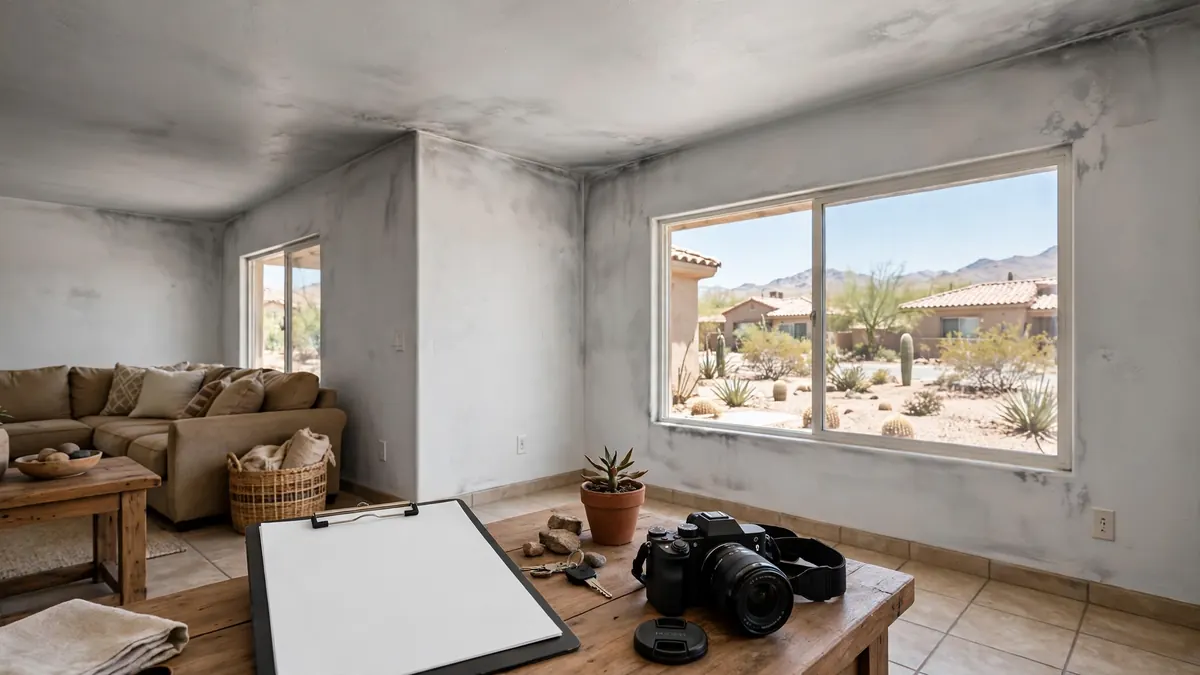 Fire & SmokeDoes homeowners insurance cover smoke damage in Arizona?Most standard Arizona homeowners policies cover sudden smoke damage, including smoke from your own fire, a neighbor's fire, or a wildfire, minus your deductible. Gradual buildup...
Need help with damage right now?
Speak to a local restoration specialist on the 24/7 line, any time of day.
Call (520) 380-1551When you call: enter your ZIP code, then press 1 for water damage, 2 for fire damage or 4 for sewage backup.