Home › Blog › What happens on the first visit from a restoration crew
What happens on the first visit from a restoration crew
On the first visit, a restoration crew walks the home with you, checks safety, confirms the leak is stopped, maps wet areas with moisture meters, photographs the damage, extracts standing water, removes materials that cannot dry, and sets air movers and dehumidifiers. You sign a work authorization and get a plan for the next visit. See the full process.
In this article
- What happens on the first visit from a restoration crew?
- How should you get ready before the crew gets there?
- What questions will the crew ask you?
- How do they find out how far the water went?
- What gets extracted, moved or removed on day one?
- What is it like living with drying equipment?
- What paperwork will you be asked to sign?
- What should you have when the crew leaves?
- Questions homeowners ask
What happens on the first visit from a restoration crew?
On the first visit, a restoration crew walks the home with you, checks for safety hazards, confirms the source is stopped, maps the wet area with moisture meters, photographs everything, extracts standing water, removes materials that cannot be dried, and sets drying equipment. Before they leave, you sign work paperwork and get a plan for the next visit.
Most first visits take a few hours, longer if there is a lot of standing water, several rooms, or contents to move. The order below is typical, though every crew runs the visit a little differently.
| Step | What the crew does | What you do |
|---|---|---|
| 1. Walk-through | Asks what happened, looks at every affected room | Show them the source and where you first saw water |
| 2. Safety check | Looks for electrical hazards, sagging ceilings, slip risks | Point out the breaker panel and any rooms with power off |
| 3. Source check | Confirms the water is stopped | Tell them what you shut off and when |
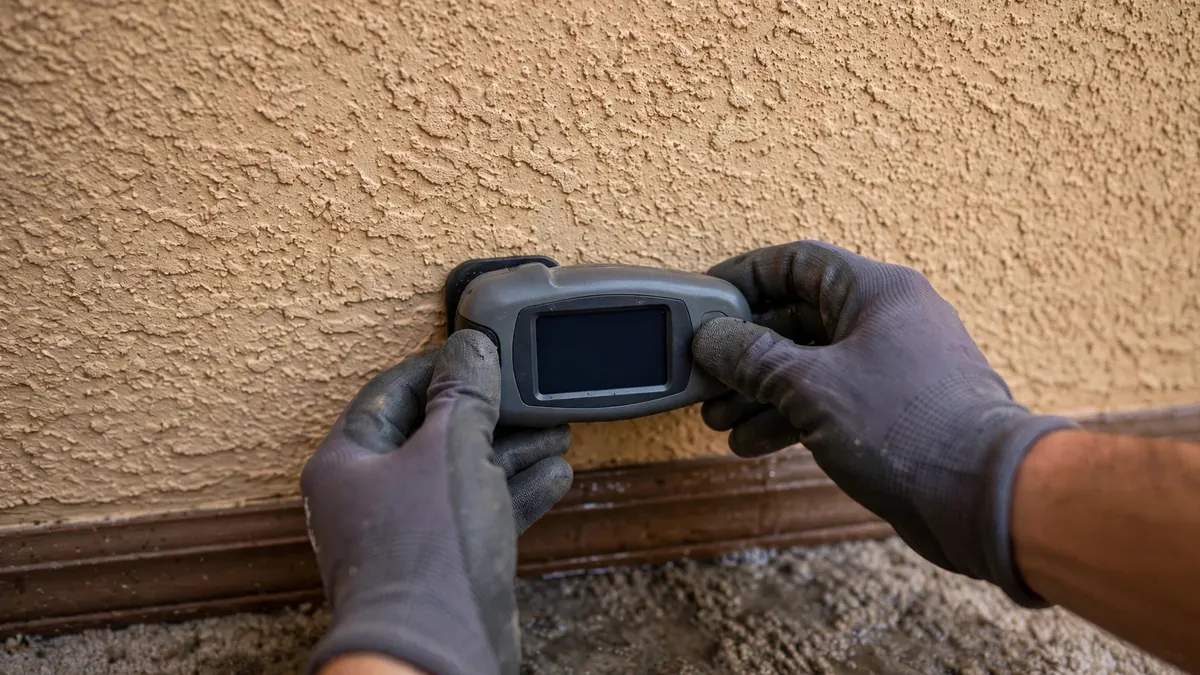
| 4. Readings and mapping | Meters and often a thermal camera to trace the wet area | Ask to see the readings and the wet boundary |
| 5. Photos | Documents the source, damage and readings | Keep your own photos too |
| 6. Contents | Moves furniture, blocks legs, sets aside wet items | Say which items matter most to you |
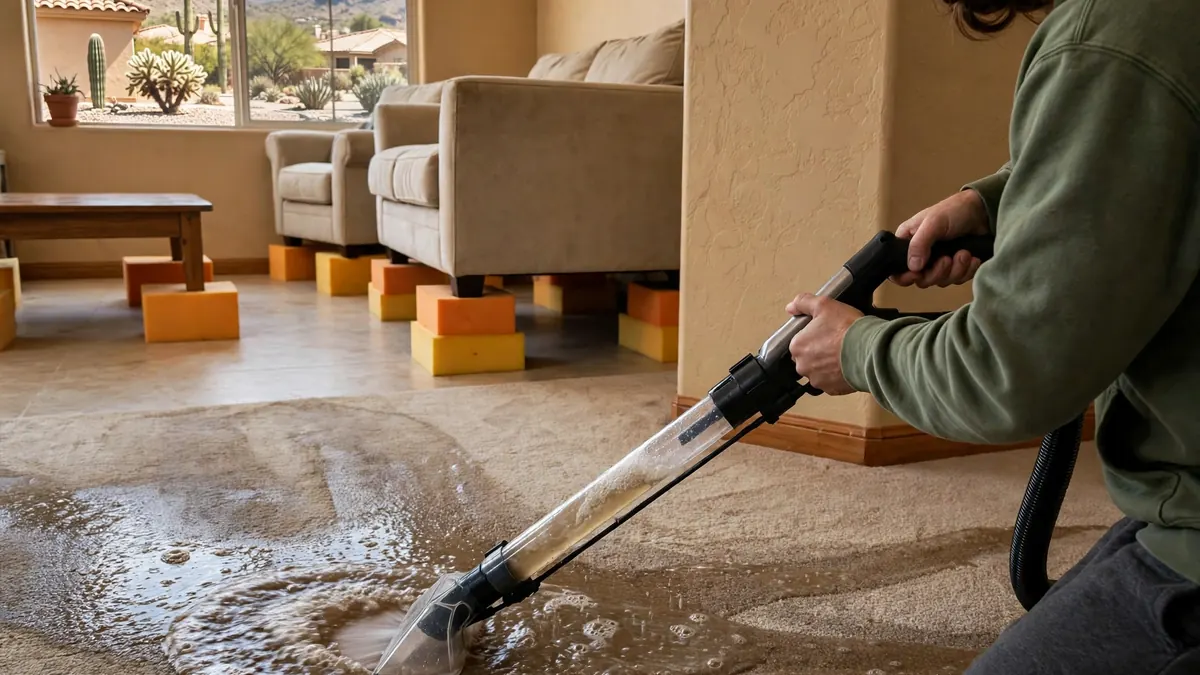
| 7. Extraction | Removes standing water from carpet and floors | Keep kids and pets out of the work area |
| 8. Removal | Pulls wet pad, baseboards, or the bottom of soaked drywall if needed | Ask what is coming out and why |
| 9. Equipment | Sets air movers and dehumidifiers based on readings | Learn which outlets and breakers they use |
| 10. Paperwork | Work authorization, drying plan, next visit | Read before you sign, keep copies |
How should you get ready before the crew gets there?
Stop the water if you can, take your own photos and video, write down when you found the water, have your insurance information handy, and clear a path to the affected rooms. Those five things make the visit go smoother and protect your claim.
- Shut off the source. Close the main valve or the fixture's supply. If a water heater is involved, turn off its gas or power. See what to do after water damage for the safe order.
- Take photos and video first. The crew will document too, but your pictures show what it looked like before anyone touched it.
- Write a short timeline. When you found the water, when you last saw the area dry, what you shut off. The crew and your adjuster will both ask.
- Find your policy details. Your insurer's name, policy number and claim number if you have one.
- Clear the way. Open the garage or side gate, move cars if the crew needs to run hoses from the driveway, and put pets in a room away from the work.
- Lift what you can safely. Electronics, papers, photos and small rugs off the wet floor.
In summer, keep the AC running at a normal setting unless the crew tells you otherwise. Shutting it off in 110-degree heat makes the house hot and humid, which is the opposite of what drying needs.
What questions will the crew ask you?
Expect questions about when and how you found the water, what the source was, whether it has happened before, how many rooms were affected, and who your insurer is. The answers help them classify the water and decide what can be saved.
- When did you first notice the water, and when was the area last dry?
- What was the source, and is it fully off?
- Did the water come from a clean line, an appliance drain, a toilet, or outside?
- Have there been leaks, stains or repairs in this spot before?
- Which rooms have you seen water in, and has anything been moved or thrown out?
- Is there tile on a slab, hardwood, or laminate under the carpet in any room?
- Have you reported it to your insurer yet?
Answer as exactly as you can. The time the water sat changes its category. Clean supply-line water that sat for days, especially in a warm house, may be handled as gray water, which changes what has to be removed.
How do they find out how far the water went?
The crew uses moisture meters, and often a thermal camera, to trace the wet area well past what you can see. They mark the wet boundary and record readings at fixed points so the same spots can be checked on every visit.
Water on a slab floor rarely stays where it landed. It runs under walls into the next room, under baseboards, and into the bottom few inches of drywall. A thermal camera shows cooler areas where water is evaporating, and a meter confirms whether those areas are actually wet. Pinless meters read through the surface without marks. Pin meters take readings from inside drywall or wood through two small holes.
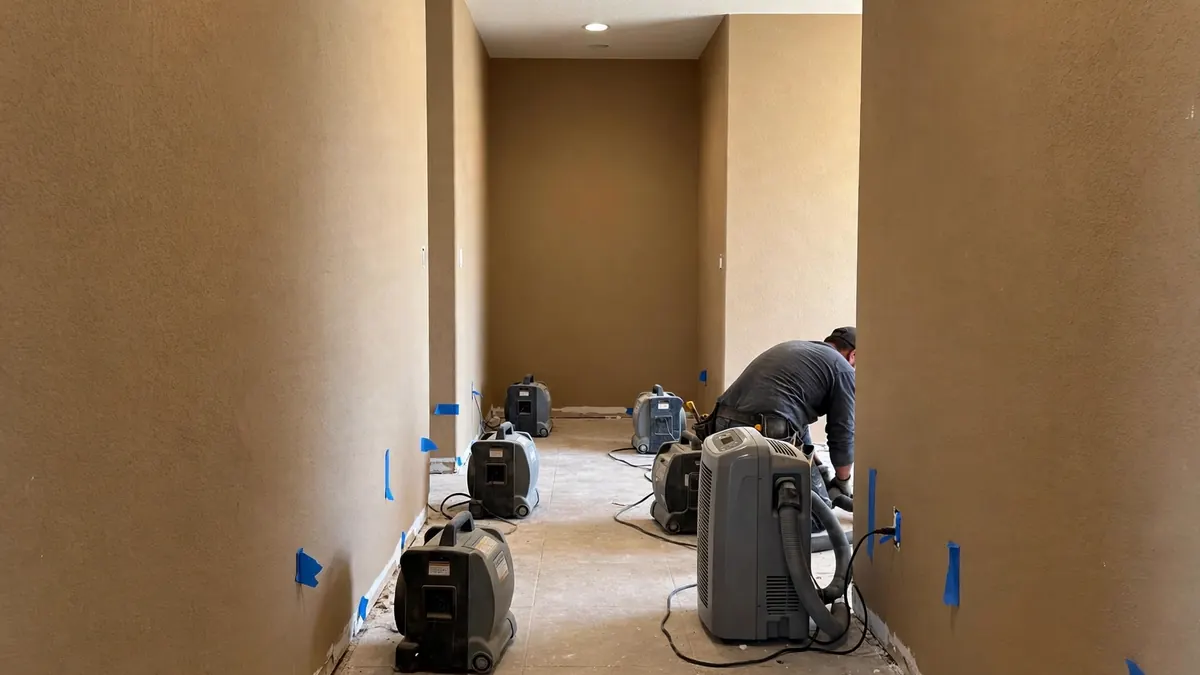
You may see blue tape, small numbered marks, or pencil lines on the walls. Those are reading points and the wet boundary. Ask the crew lead to walk you along the line and show you a reading inside it and outside it. They should also take a reading of a dry wall or floor of the same material elsewhere in the house as a baseline.
What gets extracted, moved or removed on day one?
Standing water is extracted first, furniture is moved or set on blocks, and materials that hold water and cannot dry in place, most often carpet pad and swollen baseboards, are removed. Drywall is cut only where readings show water wicked up inside it, or where the water was contaminated.
Extraction
Truck-mounted or portable extractors pull water out of carpet and pad. Good extraction removes far more water than drying alone ever could, and it shortens the drying time that follows.
Contents
Furniture is moved out of the wet area or lifted onto foam blocks or plastic tabs so stains do not transfer into carpet. Wet boxes and items are set aside and photographed. Ask the crew to list anything that leaves the house.
Removal
Removal decisions follow the readings and the water category:
- Carpet pad soaks up water like a sponge and is often replaced, even when the carpet itself can be dried.
- Baseboards come off so air can reach the wall bottom, and can sometimes be reinstalled.
- Drywall may be cut a set height above the floor where it is soaked, or have small holes drilled behind the baseboard to vent the wall cavity.
- Cabinet toe-kicks may be removed so air can dry under the cabinets.
- Anything touched by sewage or outside flood water that is porous, such as carpet, pad and lower drywall, usually comes out. See sewage backup cleanup for how that work differs.
Ask what is being removed and why before it happens. A good crew will show you the reading that supports each decision.
What is it like living with drying equipment?
Expect steady noise, warm air and a few rules. Air movers and dehumidifiers run around the clock, usually for several days, and they work best when doors and windows stay closed and the equipment stays where the crew placed it.
- Leave the machines on. Turning them off at night slows drying and can stretch the job. If the noise is a problem in a bedroom, ask the crew about options.
- Do not move them. Air movers are aimed at specific wet areas. Moving one can leave a wall wet.
- Keep doors and windows shut. Dehumidifiers work on the air inside the drying area. Opening windows lets in outside air, and during monsoon that air can be quite humid.
- Watch the breakers. The equipment draws a lot of power. Ask which outlets and circuits are in use so you do not overload one with a space heater, microwave or hair dryer.
- Expect a higher electric bill. Keep it for your claim. Ask your adjuster whether your policy reimburses it.
- Keep kids and pets away from cords and from rooms where drywall or flooring was removed.
A crew member returns on a schedule to take readings at the same marked points and adjust or remove equipment. Our water damage restoration page covers how the full drying process plays out after this first day.
What paperwork will you be asked to sign?
Most crews ask you to sign a work authorization that lets them start, and many ask for a document that lets them bill your insurer or be paid from your claim. You should also get, or be promised, a drying plan, photos and a copy of the readings.
- Work authorization. Permission to do the emergency work, usually with the company's terms and payment conditions. Read the payment section.
- Direction to pay or billing authorization. Lets the insurer pay the company directly. Read exactly what rights it covers. Some versions go further than billing, so take time with anything labeled an assignment of benefits.
- Equipment or rental terms. Some companies list the equipment left in your home and what happens if it is damaged.
- Certificate of completion or satisfaction. Usually signed at the end of the job, not the first day. Do not sign one until the work is actually done.
It is reasonable to ask for a copy of anything you sign before the crew leaves, and to ask for a day to read a longer agreement. Emergency extraction and drying can usually be authorized without signing away control of your whole claim.
What should you have when the crew leaves?
When the first visit ends, you should know the name and number of the project lead, what was removed and why, where the equipment is and how to treat it, the date of the next visit, and how you will get copies of the photos and readings.
- Project lead's name and direct phone number.
- Copies of anything you signed.
- A list of materials and items removed from the home.
- The water category noted in writing.
- The initial readings or a moisture map, or a date you will receive them.
- The plan and timing for the next monitoring visit.
- Any instructions on the AC, doors, and which rooms to avoid.
If you are still waiting on a crew, or you found water and are not sure what to do next, call (520) 380-1551. The line is open 24/7 and connects you with a local restoration company serving Casa Grande and nearby Pinal County towns.
Questions homeowners ask
How long does the first visit from a restoration crew take?
Do I need to be home for the first visit?
Can I turn the drying equipment off at night?
Will they tear out my drywall on the first visit?
More from the blog
 Insurance & CostFlood vs water damage: how Arizona home insurance treats eachMost Arizona homeowners policies cover sudden water from inside the house, like a burst pipe, and often rain through a storm-damaged roof. Surface water that rises...
 Insurance & CostWater damage insurance claim checklist: photos, readings and receiptsA water damage claim checklist covers five things: photos and video of the source and every wet room before cleanup, the date and time you found...
 Insurance & CostWhy insurers deny water damage claims, and how to avoid itInsurers deny water damage claims most often because the leak was long-term, the cause was wear and tear or poor maintenance, the water was flood or...
Need help with damage right now?
Speak to a local restoration specialist on the 24/7 line, any time of day.
Call (520) 380-1551When you call: enter your ZIP code, then press 1 for water damage, 2 for fire damage or 4 for sewage backup.