Home › Blog › Water mitigation vs restoration: what's the difference?
Water mitigation vs restoration: what's the difference?
Water mitigation is the emergency phase: stopping the water, extracting it, removing materials that cannot be saved, and drying the structure until readings confirm it is dry. Restoration is the rebuild phase that follows: drywall, paint, flooring and cabinets. Insurers usually estimate and pay them separately. See how the restoration process works.
In this article
- What is the difference between water mitigation and restoration?
- What does water mitigation include?
- What does the restoration or rebuild phase include?
- Why do insurers separate mitigation from restoration?
- Should the same company do both mitigation and rebuild?
- What happens between mitigation and rebuild?
- How are mitigation and restoration priced?
- What should you do first?
- Questions homeowners ask
What is the difference between water mitigation and restoration?
Water mitigation is the emergency work that stops damage from getting worse: removing water, pulling out materials that cannot be saved, and drying the structure. Restoration, often called rebuild or reconstruction, is the work that puts the home back afterward: new drywall, paint, flooring, baseboards and cabinets. Mitigation ends when the house is dry. Restoration starts there.
The words get mixed up because many companies call the whole job "restoration." Insurers, estimators and contractors, though, treat them as two separate phases with separate scopes, separate estimates and often separate payments. Knowing which phase you are in tells you what to expect, what to sign, and what paperwork to keep.
| Mitigation | Restoration (rebuild) | |
|---|---|---|
| Goal | Stop further damage and get the structure dry | Return the home to its condition before the loss |
| When | Right after the water is found | After drying is confirmed with readings |
| Typical work | Extraction, removing wet pad, baseboards and cut drywall, cleaning, antimicrobial treatment, air movers and dehumidifiers | Drywall, texture, paint, trim, flooring, cabinets, countertops, tile |
| How long | Often three to five days of drying, longer for slabs and hardwood | A few days for one room to several weeks for a kitchen or whole floor |
| Who does it | A water mitigation or restoration company | A general contractor or the restoration company's rebuild side |
| Key paperwork | Moisture map, daily drying logs, equipment records, photos, mitigation invoice | Itemized rebuild estimate, any permits, change orders, final invoice |
| Insurance view | Expected under your duty to limit damage, usually reviewed against the logs | Scope agreed with the adjuster, often paid in stages |
What does water mitigation include?
Mitigation covers everything needed to stop the water, remove it, and dry what is left: safety checks, source control, extraction, controlled removal of wet materials, cleaning, and drying with daily moisture monitoring until the structure reaches a dry standard.
- Source and safety. Confirming the water is off, checking for electrical hazards and sagging ceilings.
- Inspection and moisture mapping. Meters and often a thermal camera trace how far the water traveled, including under tile and inside walls.
- Category and class. Clean, gray or black water, and how much the building absorbed. Together they set what comes out and how much equipment goes in.
- Extraction. Pulling standing water out of carpet, pad and hard floors.
- Selective removal. Wet carpet pad, swollen baseboards, the bottom of soaked drywall (a "flood cut"), insulation, and toe-kicks if cabinets need air underneath.
- Cleaning and treatment. Cleaning surfaces and applying antimicrobial products where the water category calls for it.
- Drying. Air movers and dehumidifiers placed by the readings, checked and adjusted on each visit.
- Final readings. Confirming materials are back to dry levels before equipment leaves.
Mitigation deliberately removes as little as possible. The goal is to save what can be dried and remove only what cannot. Our water damage restoration page covers the categories and classes in more detail, and structural drying explains the equipment.

What does the restoration or rebuild phase include?
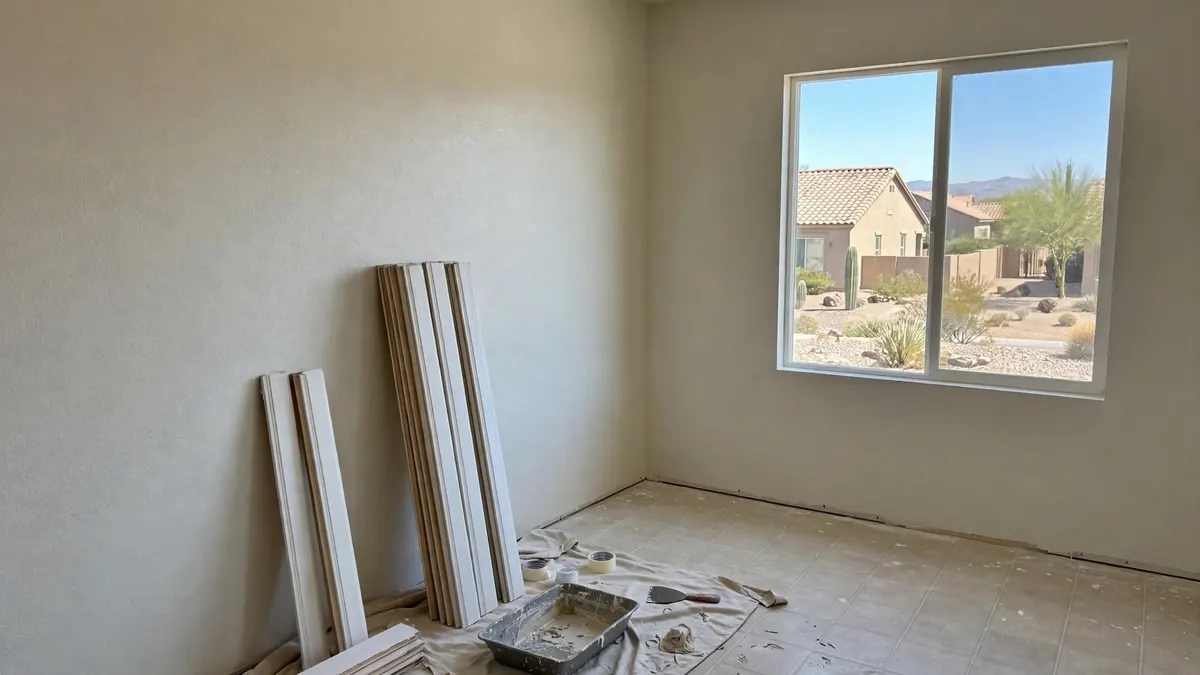
The rebuild phase replaces what mitigation removed and repairs what the water damaged. That usually means hanging and finishing drywall, matching texture and paint, reinstalling or replacing baseboards, replacing flooring, and repairing or replacing cabinets.
In Casa Grande homes, a few rebuild items come up again and again:
- Texture matching. Most local homes have knockdown or orange-peel texture. A patch that does not match stands out, so walls are often retextured and painted corner to corner.
- Tile on slab. If a slab leak repair meant cutting the floor, the tile has to be replaced. Matching a discontinued tile can lead to a whole room, or a whole continuous floor, being redone.
- Cabinets. Particleboard cabinet bases swell and do not come back. Replacing one base cabinet sometimes means matching an entire run.
- Carpet. New pad is common after a clean-water loss. Carpet itself may be dried and reinstalled or replaced depending on category and condition.
Rebuild usually needs more decisions from you than mitigation does. Colors, materials, whether to upgrade, and how to handle matching all come up here.
Why do insurers separate mitigation from restoration?
Insurers separate them because they are different kinds of costs with different timing. Mitigation is emergency work your policy expects you to do right away to limit the loss, so it is usually reviewed after the fact against logs and photos. Rebuild is a planned repair whose scope can be agreed before work starts.
A few practical reasons follow from that:
- The duty to mitigate. Most policies require you to protect the property from further damage. Insurers want that work to start before an adjuster can visit, so they do not want it held up by rebuild negotiations.
- The scope is not known until the house is dry. Nobody can say exactly how much drywall, flooring or cabinetry needs replacing until mitigation is finished and the final readings are in.
- Different pricing. Mitigation is priced largely by equipment days, labor and materials removed. Rebuild is priced by square footage and materials put back. Estimates are often written in estimating software that insurers also use, with each phase as its own estimate.
- Different payments. The mitigation invoice may be paid on its own, sometimes directly to the company. Rebuild payments may involve your mortgage lender and are often released in stages, with depreciation held back until the work is finished.
- Different contractors. Many homeowners use one company for drying and another for rebuild.
If you get one estimate that combines drying and rebuild into a single number, ask for it to be split. Two itemized estimates are easier for your adjuster to review and easier for you to compare against a second opinion.
Should the same company do both mitigation and rebuild?
It can, but it does not have to. Some restoration companies handle both. Others only dry and refer the rebuild out. You can also hire one company to dry and a different contractor to rebuild. Each approach works when the paperwork from the first phase carries cleanly into the second.
| Approach | Upside | Watch for |
|---|---|---|
| One company for both | One point of contact, the rebuild team already knows what was removed | Ask for separate itemized estimates so each phase can be checked on its own |
| Mitigation company, then your own contractor | You choose the rebuild contractor, and can compare bids | Get the full moisture logs, photos and removal list to hand to the contractor |
| Mitigation company with a rebuild partner | Smoother handoff than starting from scratch | Know who you have a contract with for each phase |
Whatever you choose, rebuild work in Arizona is generally contracting work, so look the rebuild company up with the Arizona Registrar of Contractors before you sign.
What happens between mitigation and rebuild?
Between the two phases, the drying equipment leaves, the final readings are recorded, and the rebuild scope is written and sent to the adjuster. This gap is where many claims slow down, because the house is dry but nothing is going back in until the rebuild scope is agreed.
- The mitigation company records final readings and pulls equipment.
- They send their invoice, logs and photos to you and your insurer.
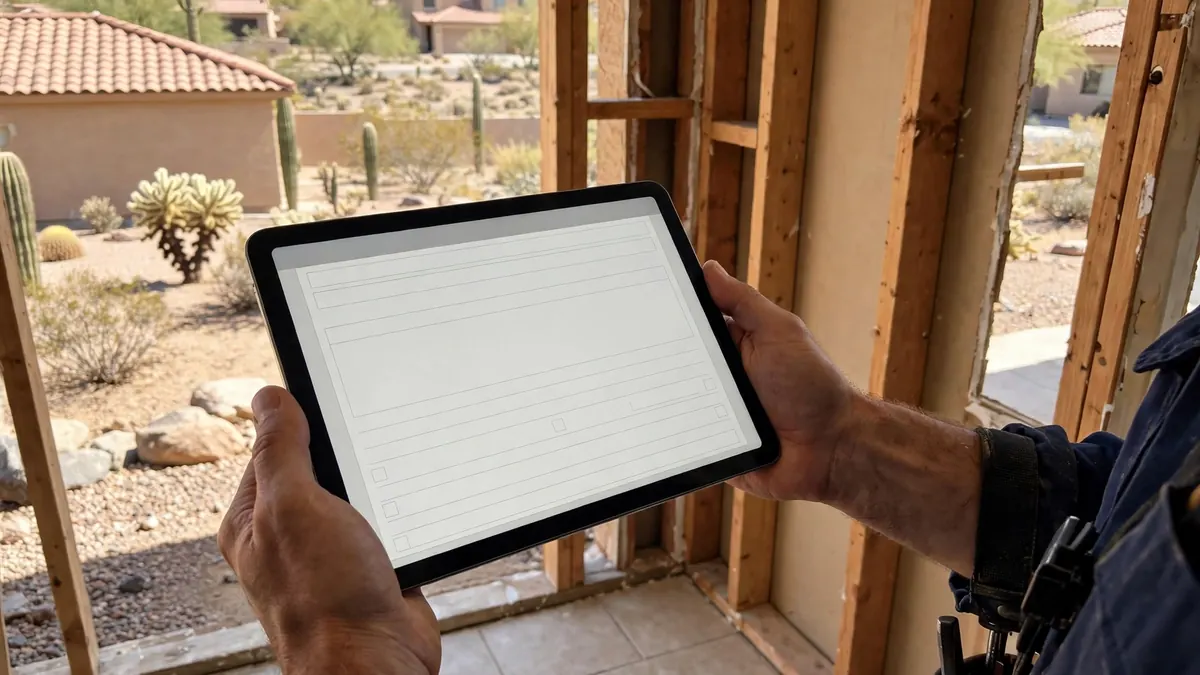
- A rebuild contractor walks the house and writes an itemized estimate.
- The adjuster compares it with their own estimate, and differences are worked out line by line.
- Once the scope is agreed, the contractor orders materials and schedules the work.
You can shorten the gap by having the rebuild contractor walk the house before the drying equipment leaves. They can see the open walls and removed materials, and their estimate can be ready when the final readings come in. Keep the walls open until the dry readings are documented. Closing up a wall that still reads wet is one of the most common ways a mitigation job turns into a mold job a month later.
How are mitigation and restoration priced?
Prices are set by each restoration company and contractor and vary with the job. In the Casa Grande area, most water damage jobs run about $1,300 to $5,500, and one room of clean water caught early is often about $400 to $1,500. A slab leak with detection and drying is often about $2,000 to $5,000, and rebuild is on top of the drying bill.
What moves the mitigation number is the water category, how many square feet got wet, how long it sat, and how many equipment days it takes to reach dry readings. What moves the rebuild number is the materials being replaced, how much matching is needed, and whether cabinets or tile are involved. A large gap between two quotes for "the same job" is often just one quote including rebuild and the other covering drying only. For local ranges in more detail, see water damage restoration cost in Casa Grande.
What should you do first?
Start mitigation first and do not wait on rebuild decisions. Stop the water, photograph everything, report the claim, and get a crew to extract and dry with readings recorded. Rebuild choices can come after the house is dry.
The restoration companies we work with handle the mitigation phase across Casa Grande, Coolidge, Eloy, Maricopa and nearby Pinal County towns, and many also do the rebuild or work with a rebuild contractor. If you have water in the house, call (520) 380-1551 any time to reach a local restoration crew.
Questions homeowners ask
Is water mitigation covered by homeowners insurance?
Can I skip mitigation and go straight to rebuild?
Why do I have two estimates for one water damage job?
Does mitigation mean nothing gets torn out?
More from the blog
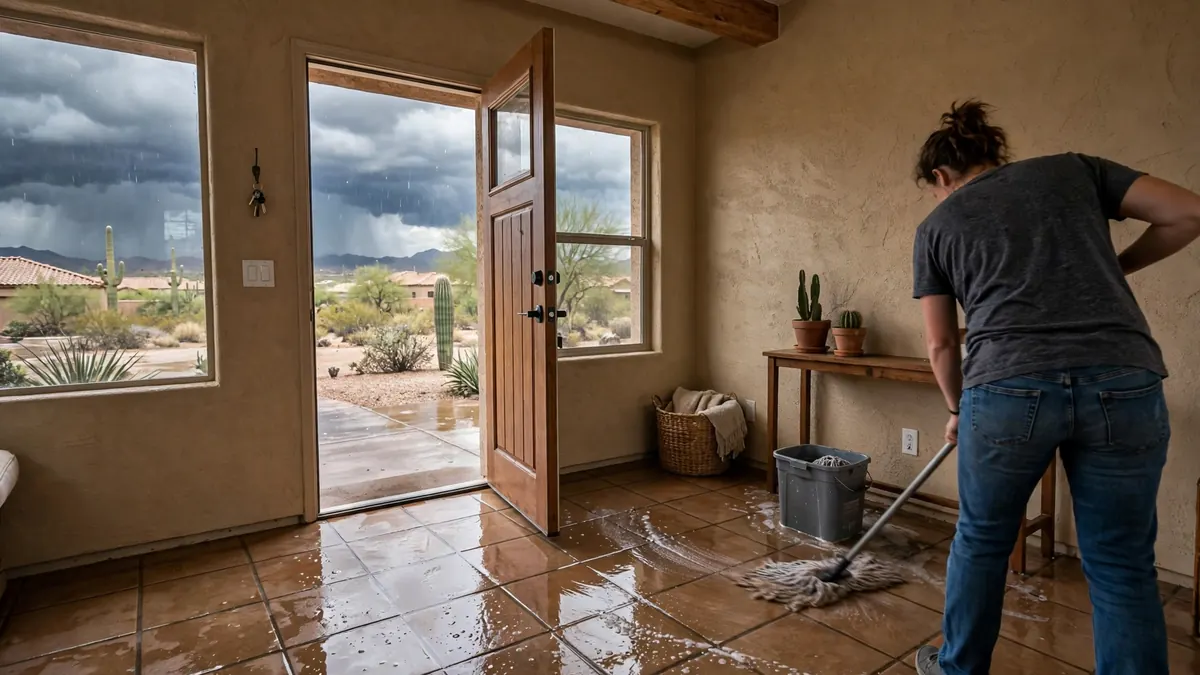 Insurance & CostFlood vs water damage: how Arizona home insurance treats eachMost Arizona homeowners policies cover sudden water from inside the house, like a burst pipe, and often rain through a storm-damaged roof. Surface water that rises...
 Insurance & CostWater damage insurance claim checklist: photos, readings and receiptsA water damage claim checklist covers five things: photos and video of the source and every wet room before cleanup, the date and time you found...
 Insurance & CostWhy insurers deny water damage claims, and how to avoid itInsurers deny water damage claims most often because the leak was long-term, the cause was wear and tear or poor maintenance, the water was flood or...
Need help with damage right now?
Speak to a local restoration specialist on the 24/7 line, any time of day.
Call (520) 380-1551When you call: enter your ZIP code, then press 1 for water damage, 2 for fire damage or 4 for sewage backup.