Home › Blog › Kitchen fire cleanup: grease, soot and what you can clean yourself
Kitchen fire cleanup: grease, soot and what you can clean yourself
After a small kitchen fire you can usually toss exposed food, clean up extinguisher powder, wash the range hood filters, and degrease sealed surfaces yourself. Call a crew when residue or a sour smell has spread past the kitchen, or when cabinets, ceilings, or ducts are coated. Grease fires often need professional odor treatment.
In this article
- Is it safe to start cleaning after a kitchen fire?
- What does a grease fire leave behind?
- What food should you throw out after a kitchen fire?
- How do you clean the range hood and microwave vent?
- Can you clean smoke and grease off kitchen cabinets yourself?
- Are your appliances safe to use after a kitchen fire?
- What kitchen fire cleanup can you do yourself?
- When should you call a crew for kitchen fire cleanup?
- Questions homeowners ask
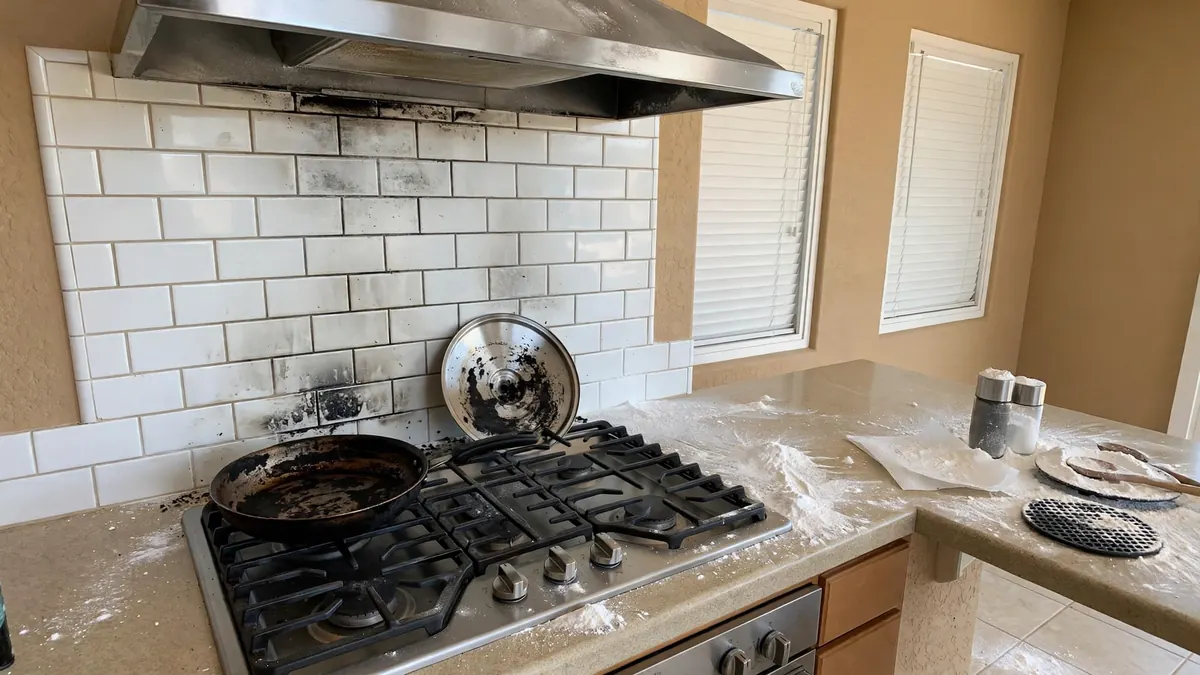
Most kitchen fires are over fast. A pan of oil catches, someone slides a lid on it or empties an extinguisher, and the flames are gone in under a minute. Then you look around and realize the fire was the small part. There is a greasy film on the cabinets, white powder across the counters, and a sour smell that has already reached the bedrooms.
Is it safe to start cleaning after a kitchen fire?
Start only when the fire is fully out, the stove is off, and the room has cooled. If the fire department came, wait for them to tell you the house is safe. If you put the fire out yourself and anything burned beyond the pan, such as the cabinet above the range, the hood, or the wall behind the stove, call 911 or the fire department to check for heat inside the wall or cabinet.
Before you clean:
- Shut off the burner and the power to the range. For a gas range, close the gas valve behind or beside the stove if you can reach it safely. If you smell gas, leave the house and call the gas company from outside.
- Turn off the AC or heat. The system will pull smoke through the return and spread it to every room.
- Open windows for the first few hours if the outside air is clear, then close up once the smoke has cleared.
- Wear gloves, eye protection, and an N95 mask. Grease residue, soot, and extinguisher powder all irritate skin, eyes, and lungs.
- Take photos of the stove, the cabinets, the ceiling, and other rooms before you clean anything, in case you file a claim.
What does a grease fire leave behind?
A grease fire usually leaves protein residue: a thin, sticky, yellow to amber film with a strong, sour odor. It is often hard to see, especially on white or light cabinets, but you can feel it as a tacky surface and smell it everywhere.
Protein residue comes from burning food, especially meat, fat, and cooking oil. It behaves differently from the black, powdery soot of a wood or paper fire. It is oily, so it clings to surfaces, soaks into painted drywall and raw wood, and coats the inside of cabinets and drawers. The odor is often far stronger than the stains suggest, and it travels through the house on air currents and through the HVAC.
You may also be cleaning up what was used to put the fire out:
- Dry chemical extinguisher powder. Most household extinguishers spray a fine yellow or white powder. It is mildly corrosive to metal and electronics over time, so clean it up soon. Vacuum loose powder first, then wipe surfaces with warm water and a mild detergent.
- Baking soda or salt. Easy to sweep and wipe up, and harmless.
What food should you throw out after a kitchen fire?
Throw out any food that was exposed to heat, smoke, or extinguisher chemicals, along with anything in permeable packaging. Smoke and fumes get into food through cardboard, paper, and plastic bags, and heat can spoil food even in sealed containers.
| Food or item | Keep or toss? | Why |
|---|---|---|
| Anything on the counter or near the stove | Toss | Direct smoke, heat, and residue exposure |
| Food in boxes, bags, or paper in the pantry | Toss if the pantry smells smoky | Smoke passes through permeable packaging |
| Canned goods near the fire | Toss | High heat can spoil the contents or damage the seal |
| Canned goods in a closed pantry away from the fire | Usually keep after washing the outside | Only if they were not heated and the cans are not bulging or dented |
| Refrigerator food | Toss if it smells or tastes of smoke, or if power was off more than about 4 hours | Fridge seals are not airtight, and warm food spoils |
| Spices, oils, and open condiments | Toss if near the stove | They absorb odor and residue easily |
| Medicine and vitamins in the kitchen | Toss if exposed | Heat and smoke can affect them |
| Plastic cutting boards, wooden spoons, sponges | Toss if near the fire | Porous, hard to clean residue out |
Dishes, glasses, and metal cookware can usually be saved with a hot wash, repeated if they still feel tacky.
How do you clean the range hood and microwave vent?
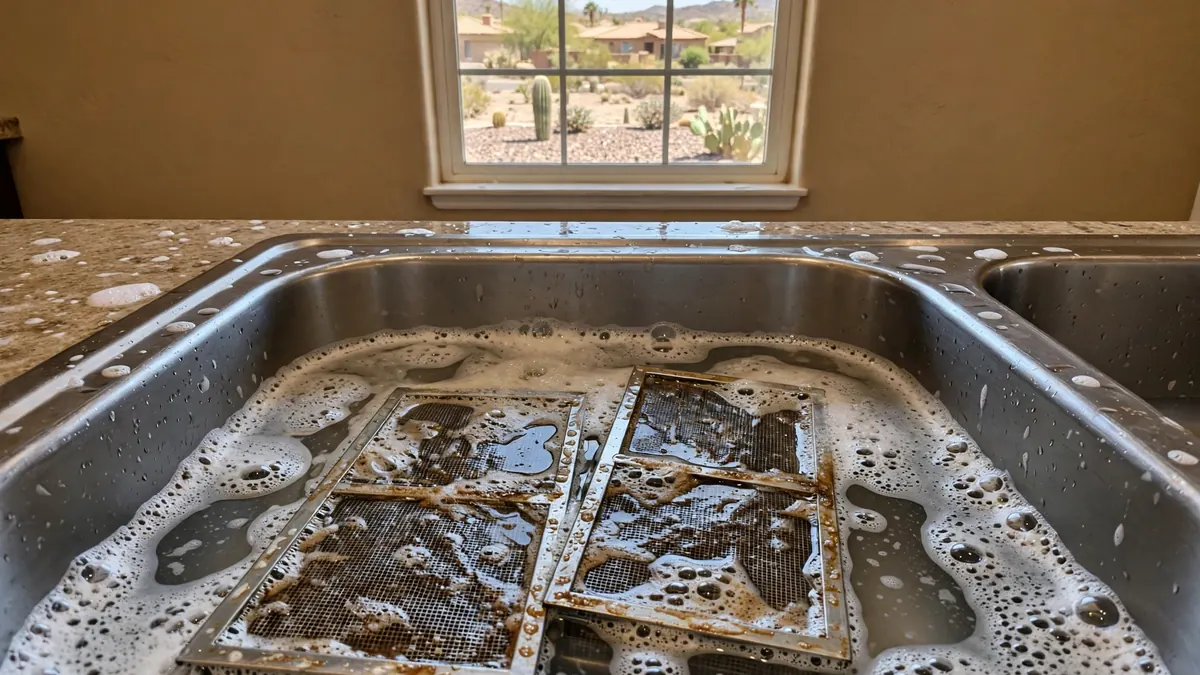
Remove the filters first and clean them separately, then degrease the hood surfaces. If the fire reached the hood or the grease inside it, have the fan, the duct, and the wiring checked before you use it again, because built-up grease in a hood is a fire risk of its own.
Many Casa Grande tract homes have an over-the-range microwave instead of a hood. Its vent pulls cooking smoke and grease straight through its filters, and the plastic housing can warp or melt in a stovetop fire.
- Metal mesh or baffle filters. Soak them in very hot water with a degreasing dish soap or a kitchen degreaser for 15 to 30 minutes, scrub with a soft brush, rinse, and dry. Many can go in the dishwasher. Replace any that are bent or melted.
- Charcoal filters in recirculating hoods and microwaves cannot be cleaned. Replace them, since they will hold smoke odor.
- Hood surfaces. Wipe stainless steel with a degreaser on a soft cloth, following the grain. Avoid steel wool and abrasive powders, which scratch.
- The duct and fan. If the hood vents outside and you can see grease or soot past the filters, the duct needs cleaning. That is a job for a crew or an appliance or HVAC technician.
- Over-the-range microwave. If the bottom is scorched, the plastic is warped, or it smells of burnt plastic when you run the fan, replace it. Do not run a damaged unit.
Can you clean smoke and grease off kitchen cabinets yourself?
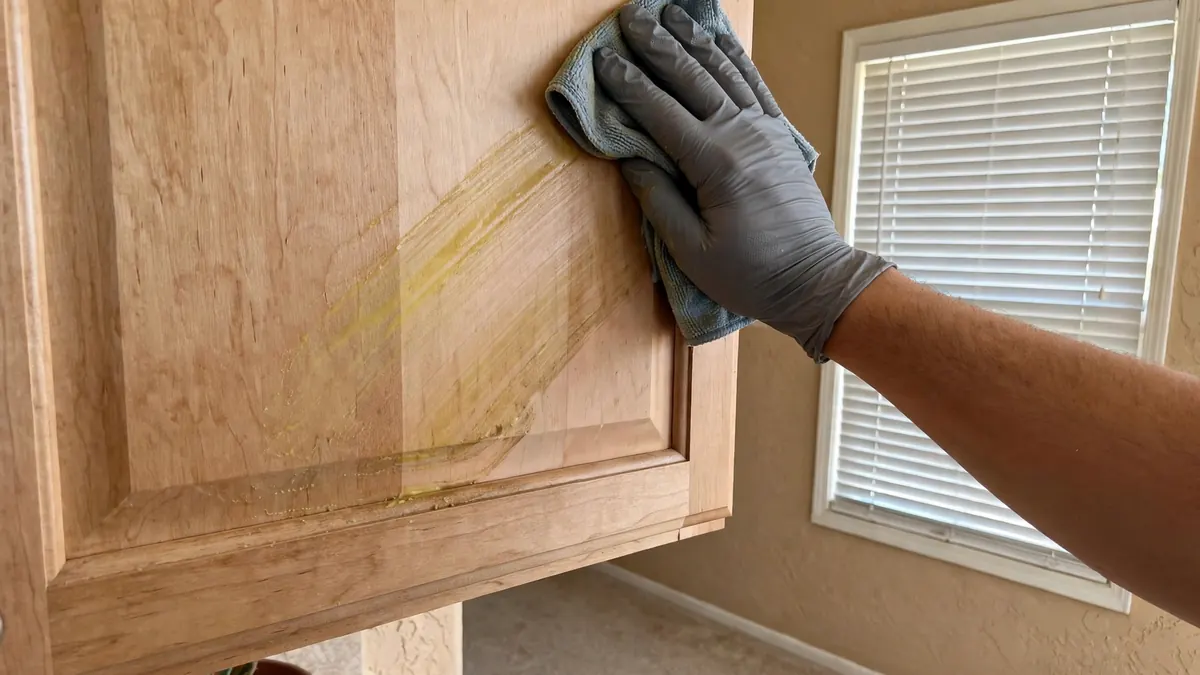
On sealed, finished cabinets with light residue, often yes. Use a degreasing cleaner made for kitchen surfaces, test it on a hidden spot first, and wash the inside of the boxes as well as the doors. Heavy residue, scorched finishes, or cabinets that still smell after two washes need professional cleaning or sealing.
What works depends on the cabinet:
- Factory-finished wood. Wash with a mild degreaser and warm water, wiping with the grain, then dry right away. Do not soak the wood.
- Painted cabinets. Test first. Strong degreasers can soften or dull paint. Light pressure, many passes.
- Thermofoil or laminate. These have a vinyl or plastic skin over a fiberboard core. Heat can make the skin bubble or peel near the stove. Peeling thermofoil usually means the door needs replacing, not cleaning.
- Inside the boxes. The back walls and shelves are often unfinished particleboard or raw wood that soaks up odor. If the inside still smells after washing, it may need a shellac-based sealer.
Work from the top down: ceiling over the stove first, then upper cabinets, the backsplash, counters, and lower cabinets last. Change your rags and cleaning water often, since you are moving grease around until it comes off the cloth clean.
If your home has a textured popcorn ceiling, do not scrub it. Older ceilings in some Casa Grande and Coolidge homes may contain asbestos, and scrubbing or scraping can release fibers. Have it tested or leave it to a crew.
Are your appliances safe to use after a kitchen fire?
Do not use the range that caught fire until it has been inspected, especially a gas range. Other appliances in the kitchen are usually fine to use after cleaning if they were not exposed to direct heat, but anything with melted plastic, scorched cords, or a burning smell when it runs should be replaced.
- The stove. On a gas range, burned knobs, warped grates, or damage near the gas line call for a check by a qualified technician or the gas utility. On an electric range, scorched coils, a cracked glass top, or damaged wiring at the back mean it should not be used.
- Refrigerator. Clean the outside and the door gaskets. Pull it out and vacuum the condenser coils, since the fan will have pulled soot into them.
- Small appliances. Toasters, coffee makers, and air fryers near the stove often have plastic parts that soak up odor or melt. Replace anything warped or smelly.
What kitchen fire cleanup can you do yourself?
You can handle the cleanup when the fire stayed on the stovetop, the residue is light and mostly in the kitchen, and nothing structural burned. Use this order:
- Photograph everything for insurance.
- Throw out exposed food, sponges, and medicine.
- Vacuum extinguisher powder with a HEPA vacuum or shop vac with a fine filter.
- Replace the HVAC filter and keep the system off until the kitchen is cleaned.
- Wash range hood filters and replace charcoal filters.
- Wash the ceiling and walls near the stove, then cabinets, top down.
- Clear and wash the inside of cabinets and drawers.
- Wash dishes, cookware, and utensils.
- Clean the floor last.
- Wait a few days with the house closed up and see if the smell returns in the afternoon heat.
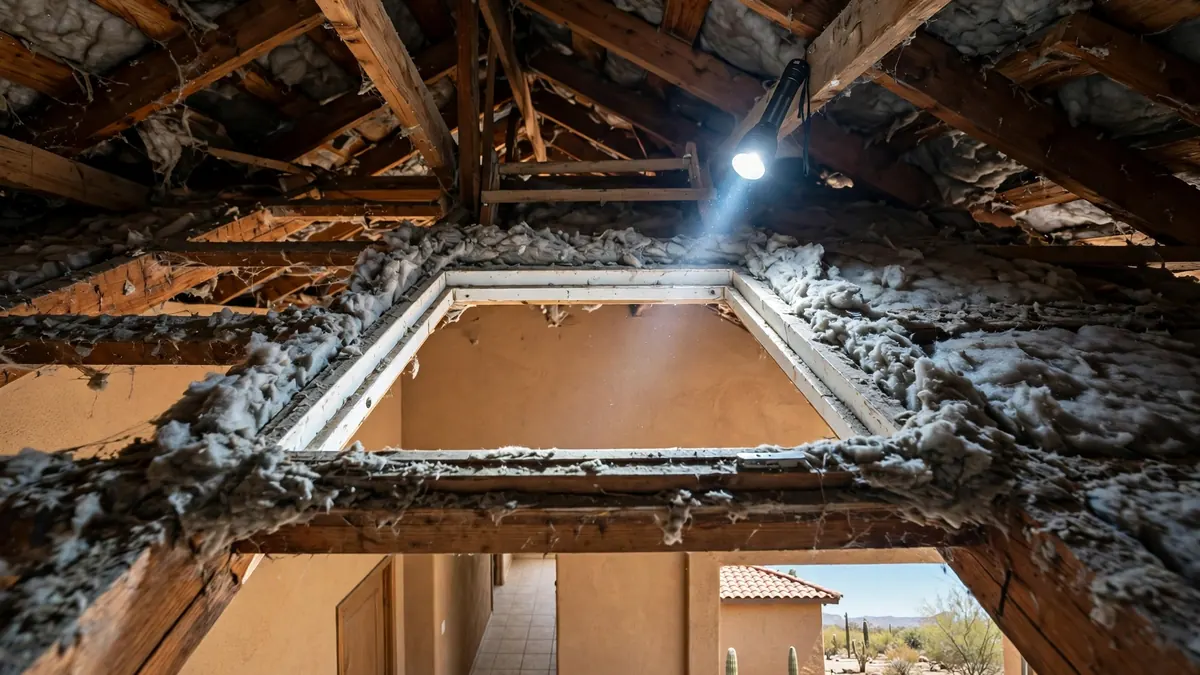
If the house smells sour or smoky after that, residue has spread past what you cleaned, often into the ducts, the attic insulation above the kitchen, or other rooms.
When should you call a crew for kitchen fire cleanup?
Call when residue or odor has spread beyond the kitchen, when cabinets or the ceiling are scorched, when the AC was running during the fire, or when the smell is still there after you have cleaned. Those are the cases where protein residue is in places you cannot reach or clean well with household products.
Smoke and soot cleaning after a small kitchen fire often runs about $500 to $4,000, depending on how many rooms were affected and whether the ducts need cleaning. Prices are set by the independent restoration company and vary. Most standard homeowners policies cover sudden kitchen fire and smoke damage, minus the deductible. Our guide to how Arizona homeowners policies and deductibles work helps you decide whether a small loss is worth filing. For larger fires, our fire damage restoration page covers board-up, water drying, and rebuild.
The restoration companies we work with clean up after kitchen fires across Casa Grande, Maricopa, Coolidge, Eloy, and the rest of Pinal County. To talk through what you are seeing, call (520) 380-1551 any time on the 24/7 line.
Questions homeowners ask
How do you get grease smoke smell out of a kitchen?
Is fire extinguisher powder toxic?
Does insurance cover a small kitchen fire?
More from the blog
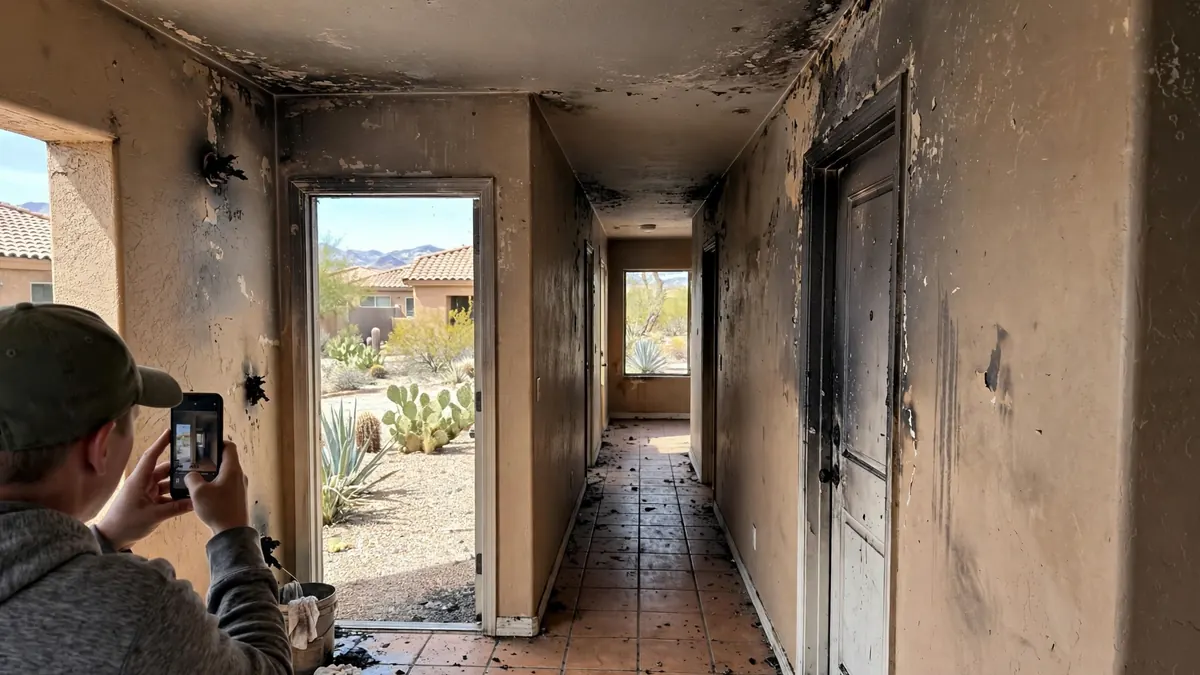 Fire & SmokeSmoke damage cleanup after a house fire: what to do firstStart smoke damage cleanup only after the fire department clears the house. Then keep the AC off, photograph everything, throw out exposed food, and do not...
 Fire & SmokeHow to get smoke smell out of a house in ArizonaTo get smoke smell out of a house, remove the residue instead of covering it. Change the HVAC filter, wash soft goods, clean hard surfaces top...
 Fire & SmokeDoes homeowners insurance cover smoke damage in Arizona?Most standard Arizona homeowners policies cover sudden smoke damage, including smoke from your own fire, a neighbor's fire, or a wildfire, minus your deductible. Gradual buildup...
Need help with damage right now?
Speak to a local restoration specialist on the 24/7 line, any time of day.
Call (520) 380-1551When you call: enter your ZIP code, then press 1 for water damage, 2 for fire damage or 4 for sewage backup.