Home › Blog › How long does a water damage insurance claim take?
How long does a water damage insurance claim take?
A small clean-water claim often closes in a few weeks to a couple of months, while a large loss with rebuild, contents and a mortgage lender on the check can take several months. Drying usually takes days. Inspection, estimate agreement, lender endorsement and the rebuild take most of the time. See how coverage usually works.
In this article
- How long does a water damage insurance claim usually take?
- What are the stages of a water damage claim?
- Why is drying fast but the claim slow?
- Why are mitigation and rebuild paid separately?
- Why does the mortgage company get involved?
- What slows a water damage claim down?
- How can you keep your claim moving?
- What should you do first to avoid delays?
- Questions homeowners ask
How long does a water damage insurance claim usually take?
A simple water damage claim, one or two rooms of clean water with no coverage questions, often wraps up in a few weeks to a couple of months. A larger loss with tear-out, rebuild, contents, and a mortgage lender on the check can run several months. The drying itself is usually the short part. Paperwork, scope agreement and the rebuild take most of the calendar.
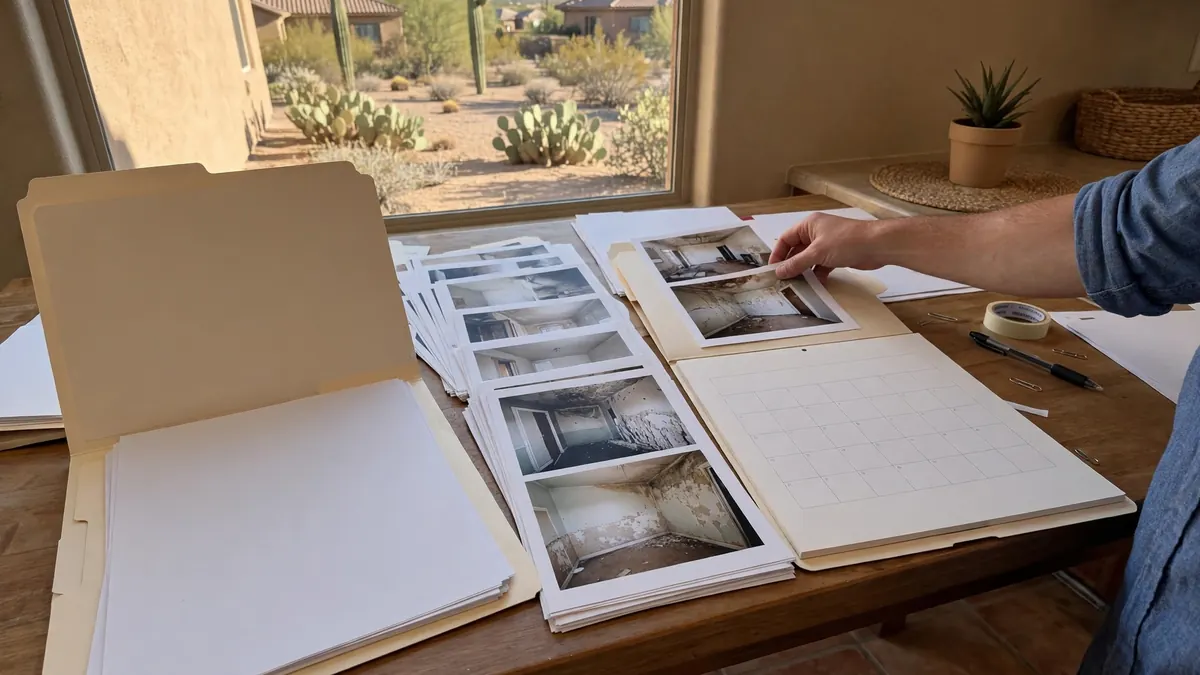
It helps to think of a claim as two clocks running side by side. One is the physical job: stop the water, dry the house, rebuild. The other is the insurance file: report, inspect, estimate, pay. They overlap, and most delays happen where one clock is waiting on the other.
What are the stages of a water damage claim?
Most claims move through the same stages in the same order: report, mitigation, adjuster inspection, estimate and scope agreement, mitigation payment, rebuild, and final payment with any depreciation released. Each stage has its own typical pace.
| Stage | What happens | Typical pace | What it waits on |
|---|---|---|---|
| 1. Report the claim | You call your insurer or agent and get a claim number | Same day you find the water | You |
| 2. Mitigation | Extraction, removal of wet materials, drying equipment, daily readings | Starts as soon as a crew is on site, drying often three to five days, longer for slabs and hardwood | The structure reaching dry readings |
| 3. Adjuster contact and inspection | An adjuster calls, then inspects in person, by video, or from photos | Days to a couple of weeks, longer after a big storm | Adjuster workload and your availability |
| 4. Estimate and scope | The adjuster writes an estimate and compares it with the restoration and rebuild estimates | One to several weeks | Complete documentation and agreement on line items |
| 5. Mitigation payment | The insurer pays the drying invoice, to you, the company, or both | After the drying invoice and logs are submitted and reviewed | The drying logs and invoice |
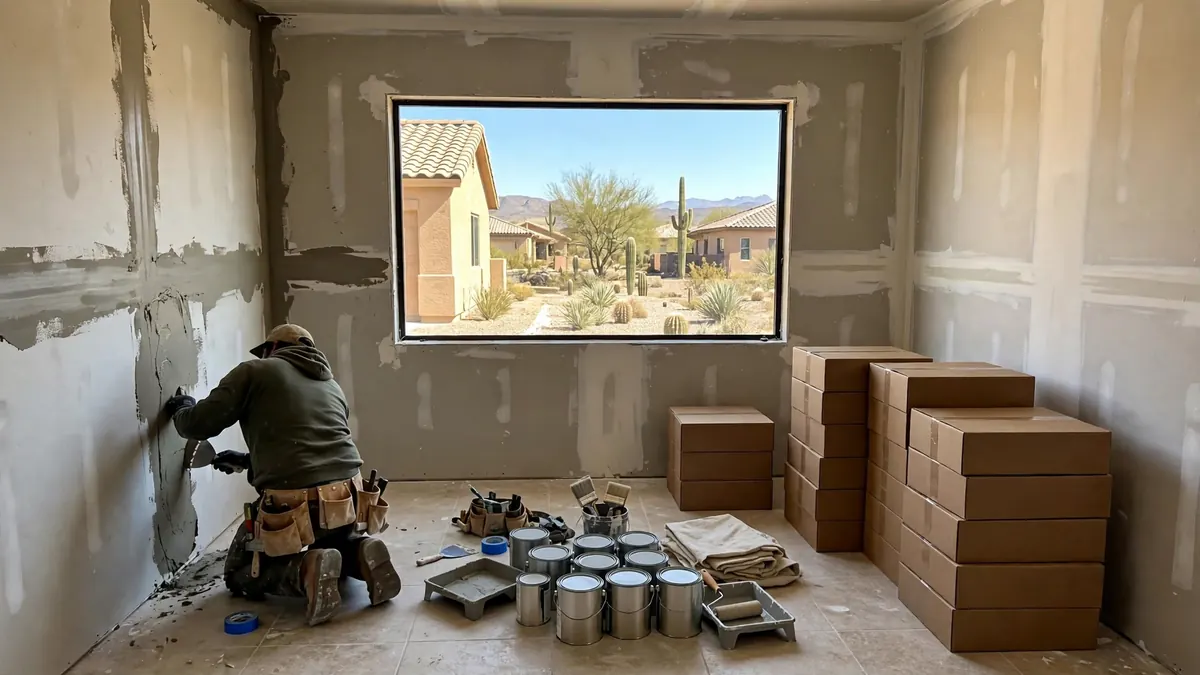
| 6. Rebuild | Drywall, paint, flooring, cabinets, trim | A few days for a small room to several weeks for a kitchen or whole floor | Contractor schedule, materials, permits, HOA approval |
| 7. Final payment and depreciation | Remaining funds and any recoverable depreciation released | After you show the work is finished and paid for | Final invoice, lender inspection if a mortgage is involved |
These are broad patterns, not promises. Your carrier, your policy, and the size of the loss set the real pace.
Why is drying fast but the claim slow?
Drying is a physical job that follows the readings, so it ends when the materials are dry. The claim is a negotiation over scope and price, and it moves only as fast as the slowest document, person or approval in the chain.
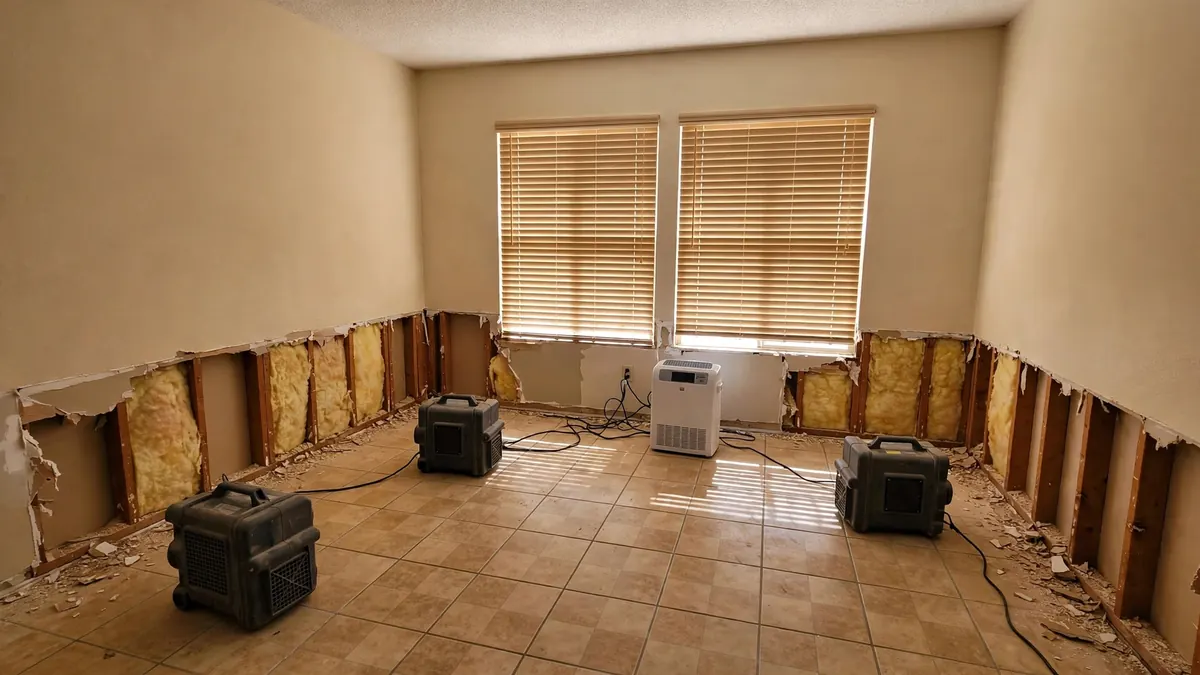
In a Casa Grande home with drywall and carpet, a crew can often bring readings down in under a week. The adjuster, though, has to confirm the cause, check it against the policy, review the restoration company's estimate, and write their own. If the two estimates differ, someone has to explain why. If contents are involved, the inventory has to be built and priced. Each of those steps can take days, and they often happen one after another rather than all at once.
That gap is why you should never hold off drying while you wait for the adjuster. Most policies expect you to limit further damage right away, and emergency drying is the standard way to do that. The adjuster can review the moisture logs and photos afterward. Our page on how insurance treats water damage in Arizona covers why secondary damage from waiting gets denied.
Why are mitigation and rebuild paid separately?
Insurers usually treat mitigation, the emergency drying, and the rebuild, putting the house back, as two separate parts of the claim with separate estimates and often separate payments. The drying bill is fixed once the equipment leaves. The rebuild scope often is not settled until the house is dry and everyone can see what is left.
That split has a practical effect on timing. You may see a payment for mitigation while the rebuild estimate is still being worked out. The mitigation company may be paid directly if you signed a direction to pay, or the check may come to you to pass along. The rebuild payment often comes later and may come in parts.
Replacement cost and the second check
Many policies pay the actual cash value of the repair first, which is replacement cost minus depreciation for age and wear. The difference, called recoverable depreciation, is released after you show the work was completed. That means the last check comes after the rebuild is done, not before. If you plan to do the work yourself or slowly, ask your adjuster how long you have to complete repairs and claim that balance. Policies set a time limit, and it varies.
Why does the mortgage company get involved?
If you have a mortgage, your lender is usually named on your homeowners policy, and claim checks for damage to the structure are often made out to both you and the lender. You cannot cash a two-party check without the lender's endorsement, and that step adds time.
For a small check, many lenders endorse it and send it back. For a larger one, the lender's loss draft department may deposit the money into a holding account and release it in stages as the repairs progress, sometimes after an inspection. Each lender has its own process and thresholds. Here is what usually speeds it up:
- Call the lender's loss draft or insurance claims department as soon as you know a structure payment is coming, and ask for their exact requirements.
- Ask what they need with the check, often the adjuster's estimate, a signed contractor agreement, and a lender form.
- Ask how they release funds, whether all at once or in draws, and whether an inspection is required before each draw.
- Send the check by a trackable method and keep a copy of both sides.
- Log every call in your claim diary with the name of the person you spoke with.
Mitigation checks are sometimes issued differently from rebuild checks, but that depends on the insurer. If a check you expected to go straight to a restoration company shows up with your lender's name on it, call the adjuster before you do anything with it.
What slows a water damage claim down?
The biggest slowdowns are missing documentation, questions about the cause, disagreements over the scope, contents that are not inventoried, a busy storm season, and material or contractor delays during the rebuild. Most of them can be reduced by having the file complete from the start.
- A cause nobody wrote down. If there is no plumber's or roofer's note on what failed, the adjuster may need to investigate, and that takes time. A slab leak that may have been running a while gets more scrutiny than a split supply line.
- Thin drying records. An invoice without daily moisture logs and equipment counts invites questions. Good logs answer them before they are asked.
- Two estimates far apart. When the adjuster's estimate and the contractor's differ, each line has to be reconciled. Ask both sides to explain the gap in writing.
- Contents left until the end. A big inventory started months later delays the contents payment. Start it in the first week.
- Monsoon season. After a hard storm cell hits Casa Grande, Maricopa and Arizona City in one evening, adjusters and contractors all get busy at once. Expect slower callbacks from July through September.
- Reinspection. If hidden damage turns up during the rebuild, such as wet framing behind cabinets, the contractor has to submit a supplement and the adjuster may need to look again.
- Materials and approvals. Matching discontinued tile, custom cabinets, or an HOA that wants to approve exterior work can stretch the rebuild.
- Coverage questions. If the insurer sends a reservation of rights letter, it is still investigating whether the loss is covered. Respond to what it asks for and keep copies.
Arizona has rules that require insurers to acknowledge and respond to claims within set timeframes. If your claim goes quiet for a long stretch after you have sent everything requested, ask the adjuster in writing for a status and a date. The Arizona Department of Insurance and Financial Institutions takes consumer complaints if you cannot get an answer.
How can you keep your claim moving?
Report it the day you find the water, start drying right away with readings recorded, send the adjuster a complete package early, and follow every phone call with a short email. A claim that has everything the adjuster needs on file tends to move faster than one that is pieced together over weeks.
- Send one organized package. Source photos, room photos, the plumber's invoice, the moisture map, and your written timeline, all at once.
- Ask what is missing. On every call, end with "Is there anything else you need from me to move this forward?"
- Get dates in writing. "You'll have the estimate by the 20th" in an email is something you can follow up on.
- Keep the mitigation and rebuild separate in your own file. It makes it easier to see which payment is stuck.
- Start the rebuild conversation during drying. Get the rebuild contractor out before the drying equipment leaves, so their estimate is ready when the adjuster is.
For seasonal homes in Mission Royale or Robson Ranch, name a local contact who can let the adjuster and the contractors in. A claim can sit for weeks just waiting for someone to open the door.
What should you do first to avoid delays?
Stop the water, photograph everything, report the claim, and get drying started with documentation from the first visit. Those four steps protect both clocks at once: the house stops getting worse and the file starts out complete.
A restoration crew handles the readings, photos and drying logs that adjusters work from, and many can talk with your insurer directly. For what the drying stage looks like in practice, see water damage restoration and how long water damage takes to dry. If you have water in the house now, call (520) 380-1551 any time to reach a local restoration company serving Casa Grande and Pinal County.
Questions homeowners ask
Should I wait for the adjuster before starting water damage cleanup?
Why is my mortgage company's name on my insurance check?
When do I get the depreciation back on a replacement cost claim?
What can I do if my claim has stalled?
More from the blog
 Insurance & CostFlood vs water damage: how Arizona home insurance treats eachMost Arizona homeowners policies cover sudden water from inside the house, like a burst pipe, and often rain through a storm-damaged roof. Surface water that rises...
 Insurance & CostWater damage insurance claim checklist: photos, readings and receiptsA water damage claim checklist covers five things: photos and video of the source and every wet room before cleanup, the date and time you found...
 Insurance & CostWhy insurers deny water damage claims, and how to avoid itInsurers deny water damage claims most often because the leak was long-term, the cause was wear and tear or poor maintenance, the water was flood or...
Need help with damage right now?
Speak to a local restoration specialist on the 24/7 line, any time of day.
Call (520) 380-1551When you call: enter your ZIP code, then press 1 for water damage, 2 for fire damage or 4 for sewage backup.