Home › Blog › Water damage in an HOA home: who is responsible?
Water damage in an HOA home: who is responsible?
It depends on where the water started and what your CC&Rs say the association maintains. In most single-family HOA neighborhoods, you are responsible for your whole house and the HOA only for common areas. In condos and many townhomes, the association's master policy and your own HO-6 policy split the building between them.
In this article
- Who is responsible for water damage in an HOA?
- What should you look for in your CC&Rs?
- How do the master policy and your HO-6 work together?
- Who pays when water comes from a neighbor's unit?
- Who handles water from the roof or common areas?
- Which water damage scenarios usually fall on whom?
- What should you do in the first day?
- What about 55+ and seasonal HOA homes?
- Questions homeowners ask
Who is responsible for water damage in an HOA?
The answer comes from two documents: your CC&Rs, which say who maintains each part of the property, and the association's insurance, which says who insures it. Whoever is responsible for the part that failed usually handles that repair, and each owner's policy usually covers what that owner is responsible for.
Before anything else, figure out which kind of HOA you live in. That one question changes almost everything below.
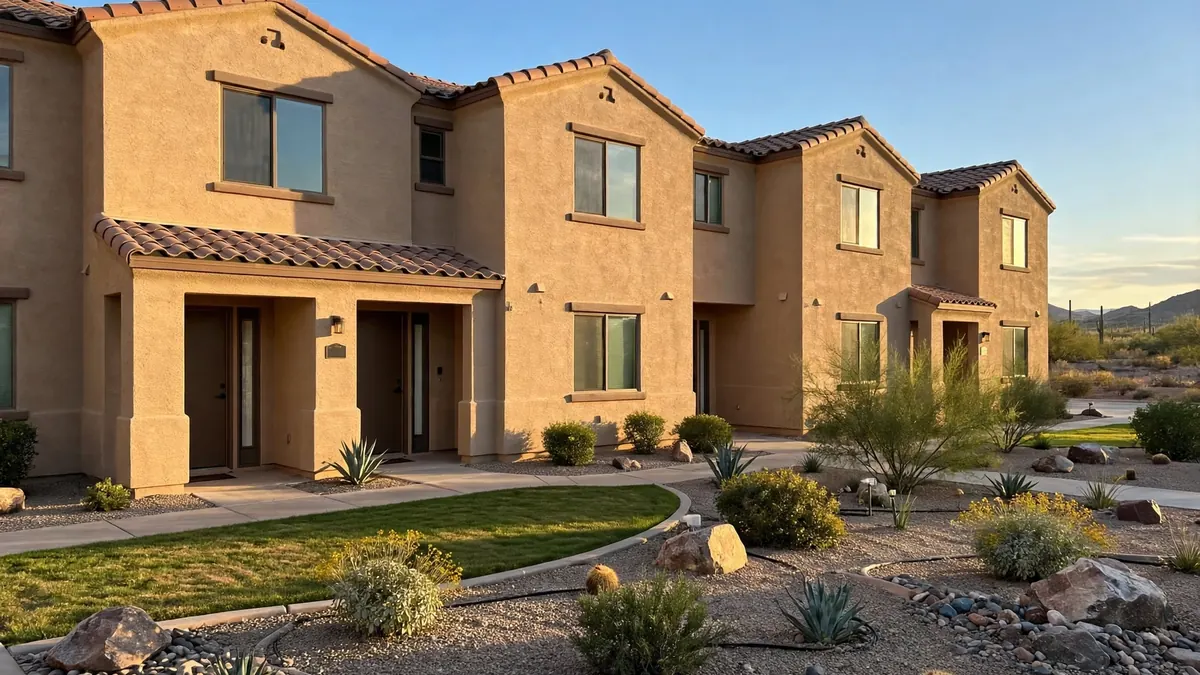
- Single-family planned community. This is most HOA neighborhoods around Casa Grande, Maricopa and San Tan Valley. You own your house and lot. The association owns and maintains common areas like parks, pools, entry walls and retention basins. Your house is covered by your own homeowners policy, usually an HO-3.
- Condominium. You own the inside of your unit. The association owns the building shell, roof and shared spaces as common elements, and carries a master policy on them. You carry an HO-6 policy for your unit.
- Townhome. These can be set up either way. Some townhome owners own the lot and the whole structure, like a single-family home with a shared wall. Others are legally condos. Your deed and declaration tell you which.
In Arizona, single-family HOAs generally fall under the Planned Communities Act and condos under the Condominium Act. Both largely defer to the community's own declaration, which is why reading your CC&Rs matters more than any general rule.
What should you look for in your CC&Rs?
Look for the maintenance and repair section, the insurance section, and any definitions of what counts as part of a unit or lot. Those three parts decide who fixes what and whose insurance pays.
- Maintenance responsibility. Find the list of what the association maintains. Roofs, exterior walls, perimeter walls, landscaping, irrigation and shared plumbing lines are the items that matter for water damage.
- Boundaries. Condo declarations usually say where the unit ends, often at the unfinished drywall or the studs. Anything inside that line is usually the owner's.
- Pipes serving one unit. Many declarations say a pipe, fixture or water heater that serves only your unit is yours, even if it runs through a common wall.
- Insurance. This section says what the master policy must cover and whether owners must carry their own policy.
- Deductible allocation. Some declarations let the association pass the master policy deductible to the owner whose unit caused or suffered the loss.
- Notice rules. Some require you to report water damage to the association or management company within a set time.
Many management companies also publish a maintenance responsibility chart. If yours has one, it is the fastest way to answer the question. If the chart and the CC&Rs disagree, the recorded CC&Rs usually control.
How do the master policy and your HO-6 work together?
In a condo, the master policy covers the parts the association owns, and your HO-6 covers the parts you own, your belongings, and often the master policy deductible if it is passed to you. Where the line falls depends on the type of master policy.
| Master policy type | What the association's policy usually covers | What your HO-6 usually needs to cover |
|---|---|---|
| Bare walls | Structure and common elements, not the unit's interior finishes | Drywall, flooring, cabinets, fixtures, upgrades, belongings |
| Single entity | Structure plus original interior finishes as built | Upgrades you or a past owner added, belongings |
| All-in | Structure, interior finishes and many upgrades | Belongings, liability, and the deductible if assessed to you |
Two parts of an HO-6 come up often after water damage:
- Dwelling or improvements coverage pays for the interior parts of the unit you are responsible for, such as tile you added or replaced cabinets.
- Loss assessment coverage can help pay your share when the association charges owners for a loss, including a deductible passed to you. Check the limit. It is often lower than a master deductible.
In a single-family HOA, there is usually no master policy on your house at all. The association's policy covers common areas and its own liability. Your HO-3 has to cover the full house, and the usual sudden-versus-gradual rules apply. Our guide to whether homeowners insurance covers water damage in Arizona covers those rules.
Who pays when water comes from a neighbor's unit?
Usually each owner starts with their own policy for damage inside their own unit, and the insurers sort out fault afterward. If the neighbor was careless, their insurer may end up paying, but you generally should not wait for that before drying starts.
Shared walls and stacked units are where this happens. A washer hose lets go in the townhome next door. A toilet overflows in the condo above and comes through your ceiling. A water heater in the neighbor's closet fails against your common wall.
- Stop the water. Knock or call. If the neighbor is away, call the management company's emergency line. In some buildings the association can shut off water to a unit or a stack.
- Document both sides. Photograph the source if you can see it, the path the water took, and the damage in your unit.
- Notify in writing. Tell the neighbor and the association what happened and when, by email or letter.
- File with your insurer. Report the damage to your own policy. Your insurer may pursue the neighbor's insurer later, which is called subrogation.
- Get drying started. Every policy expects you to limit further damage. Water left in a shared wall for a week becomes a mold problem for both units.
If water is coming through a shared wall or ceiling, both units usually need moisture readings. The wall cavity between you is wet on both sides even if only one side shows a stain.
Who handles water from the roof or common areas?
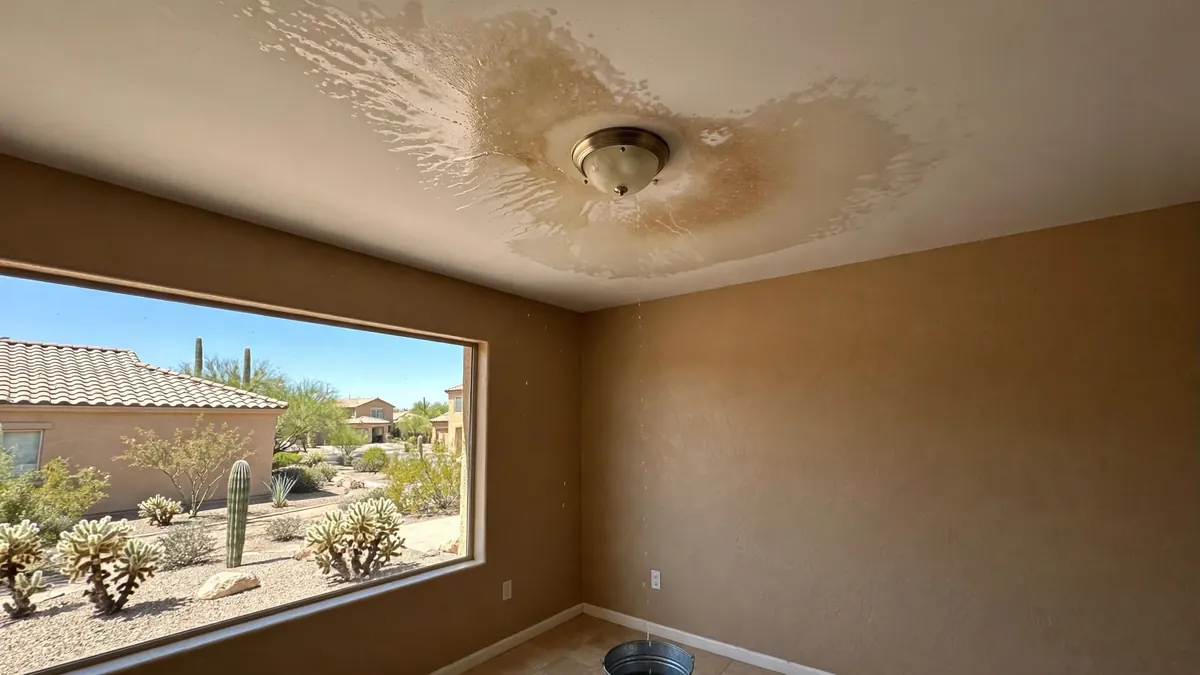
If the association maintains the roof or the area the water came from, report it to the association right away. In many townhome and condo communities the HOA is responsible for roofs, and in single-family HOAs it is usually responsible for common landscaping, irrigation and drainage it controls.
Common examples in Pinal County HOA neighborhoods:
- Roof leaks in townhomes and condos. A monsoon cell finds a cracked tile or a clogged flat-roof scupper. If the CC&Rs put roofs on the association, the roof repair is theirs. Interior damage may still fall to your policy, depending on the master policy type. See roof leak water damage for what the interior side involves.
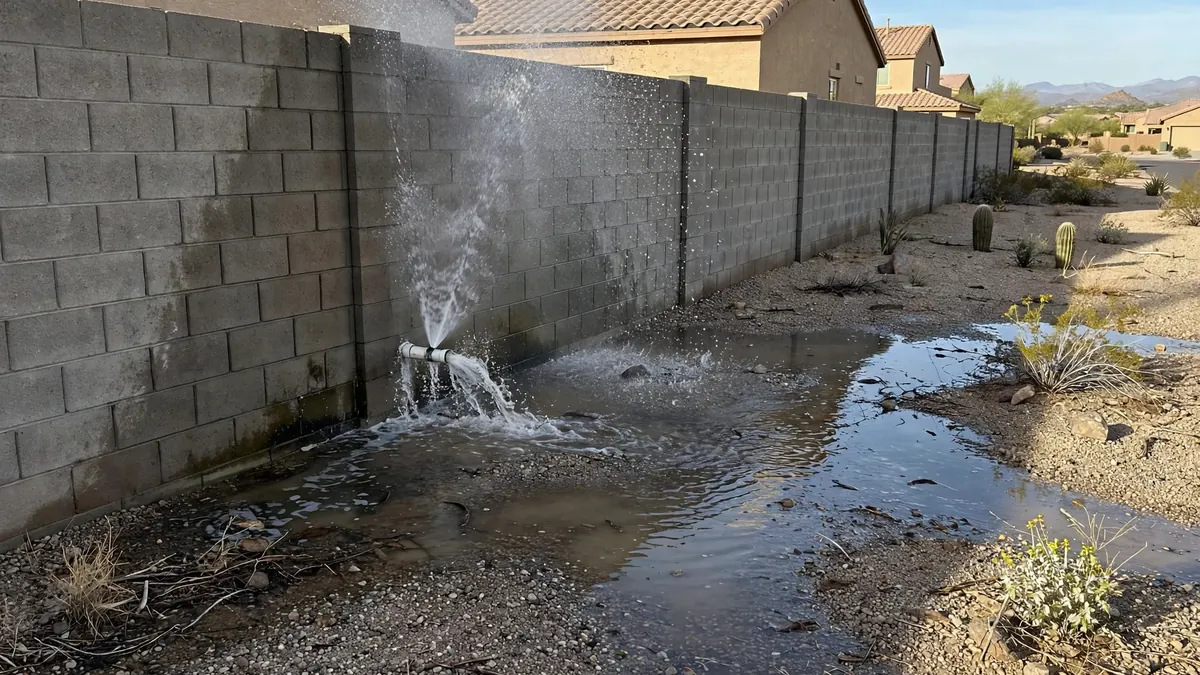
- HOA irrigation. A broken common-area sprinkler line can run all night against a lot wall or a foundation. That is usually the association's repair, and possibly its responsibility for resulting damage.
- Drainage and retention basins. Many subdivisions route storm water to HOA basins. If a basin or channel the association maintains is clogged and water backs up onto lots, report it in writing. Water rising off the ground into a home is still flood for insurance purposes.
- Shared plumbing. In condos, a main line or stack serving several units is often a common element. A line serving only your unit is often yours.
The city pages for Maricopa and San Tan Valley both suggest telling the HOA the same day. The reason is practical: the association cannot fix a roof or an irrigation valve it does not know about, and a dated report protects you if responsibility is argued later.
Which water damage scenarios usually fall on whom?
Here is how common situations tend to split. Your CC&Rs and policies can change any line of this table.
| Scenario | Single-family HOA | Condo or condo-style townhome |
|---|---|---|
| Your water heater or supply line fails | You, through your HO-3 | You for the failed item, damage split by master policy type |
| Slab leak under your floor | You, through your HO-3 | Often you if the line serves only your unit |
| Neighbor's appliance floods your unit | Not common, no shared walls | Start with your HO-6, insurers sort fault |
| Roof leak in a monsoon | You, unless CC&Rs say otherwise | HOA for the roof, interior depends on policy |
| Common-area irrigation break | HOA for the line, damage depends on fault | HOA for the line, damage depends on fault |
| Storm water rising into the home | Flood, needs a flood policy | Flood, needs a flood policy |
What should you do in the first day?
Stop the water, document it, report it to the association and your insurer in writing, and get the wet areas dried. Do not wait for the HOA and your insurer to agree on who pays before drying starts.
- Close the main shutoff or the fixture valve. In a condo, call management if the source is outside your unit.
- Photograph the source, the water path and each damaged area before cleanup.
- Email the management company with the date, time, source and affected rooms.
- Call your own insurer and give them the HOA contact.
- Ask the association for its master policy information if you are in a condo or townhome.
- Have a local restoration crew take moisture readings and start drying, and keep their logs.
If drying waits on a disagreement, mold can start in 24 to 48 hours in a warm house, and insurers commonly deny that secondary damage. The drying record is useful to every party, so share it with the association and both insurers.
What about 55+ and seasonal HOA homes?
Owners who leave for the summer should know what their association will and will not do in an empty house. Most single-family HOAs do not enter homes or watch for leaks inside them, even when they maintain the yard.
In communities with many seasonal owners, like Province in Maricopa, Mission Royale in Casa Grande and Robson Ranch in Eloy, a leak can run for weeks before anyone sees water. Shut off the main before you leave, set the water heater to vacation mode, and give the association and a neighbor a contact who can let a crew in. Some CC&Rs require owners to name a local contact for exactly this reason.
If water is spreading in your HOA home or a neighbor's leak is coming through your wall, call (520) 380-1551. The line is open 24/7 and connects you with a local restoration crew in Casa Grande, Maricopa, San Tan Valley and nearby Pinal County towns.
Questions homeowners ask
Does my HOA pay for water damage inside my house?
What is the difference between a master policy and an HO-6?
Can my HOA charge me the master policy deductible?
My upstairs neighbor's leak damaged my ceiling. Whose insurance pays?
More from the blog
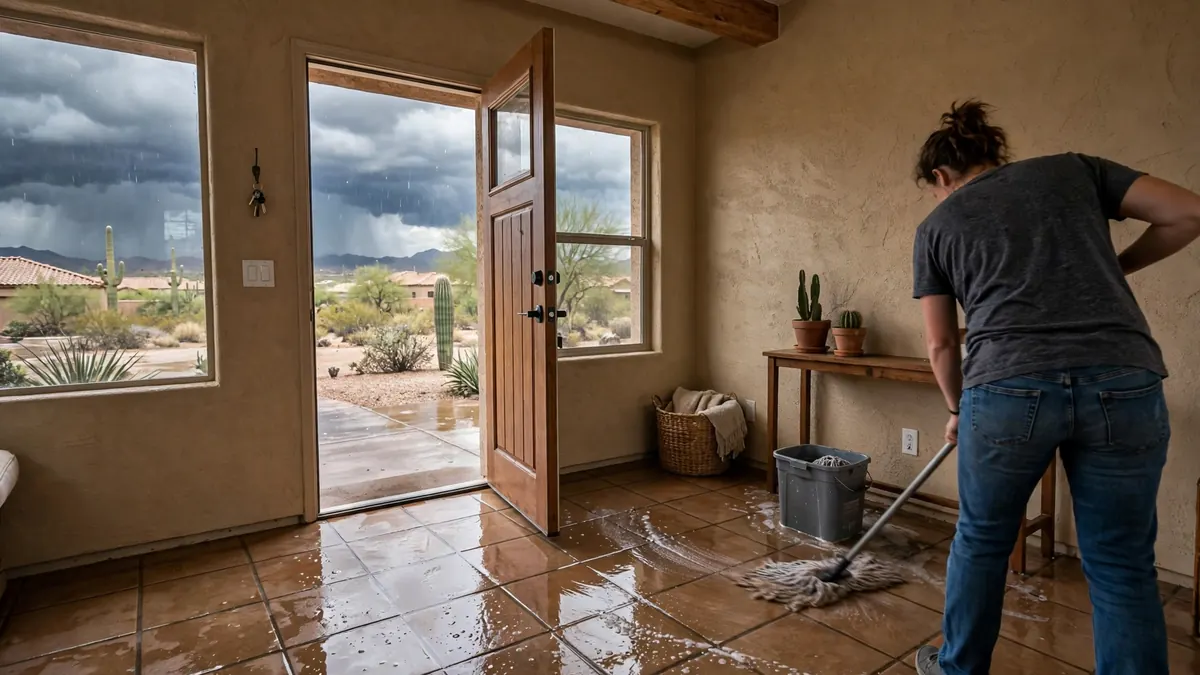 Insurance & CostFlood vs water damage: how Arizona home insurance treats eachMost Arizona homeowners policies cover sudden water from inside the house, like a burst pipe, and often rain through a storm-damaged roof. Surface water that rises...
 Insurance & CostWater damage insurance claim checklist: photos, readings and receiptsA water damage claim checklist covers five things: photos and video of the source and every wet room before cleanup, the date and time you found...
 Insurance & CostWhy insurers deny water damage claims, and how to avoid itInsurers deny water damage claims most often because the leak was long-term, the cause was wear and tear or poor maintenance, the water was flood or...
Need help with damage right now?
Speak to a local restoration specialist on the 24/7 line, any time of day.
Call (520) 380-1551When you call: enter your ZIP code, then press 1 for water damage, 2 for fire damage or 4 for sewage backup.