Home › Blog › Restaurant and retail flooding: health codes and cleanup
Restaurant and retail flooding: health codes and cleanup
After a restaurant or retail store floods, stop food service in affected areas, discard food that touched the water, and call the county environmental health office if water was contaminated or reached food areas. Then extract, clean, sanitize and dry, and document all stock and food losses. See commercial water damage.
In this article
- Can a restaurant stay open after it floods?
- When should you contact Pinal County environmental health?
- What food has to be thrown out after a flood?
- How do you clean a commercial kitchen after water damage?
- Why do restaurant floors and walk-ins need special attention?
- How should a retail store handle wet inventory?
- What makes monsoon flooding different for a storefront?
- What do you need to reopen?
- Questions homeowners ask
Can a restaurant stay open after it floods?
Usually not in the affected area, and often not at all until it is cleaned. Food safety rules generally treat a sewage backup, flooding in food areas, or loss of safe water or refrigeration as reasons to stop preparing and serving food until the problem is fixed and the space is cleaned and sanitized. Your county food permit office decides when you can reopen if it gets involved.
A retail store has more room to work with. If the wet area can be closed off and the water was clean, many shops keep part of the floor open. A restaurant kitchen is different, because water that touches food, prep surfaces or food storage creates a health question, not just a property one.
Three things decide how serious the event is for a restaurant:
- Where the water came from. A burst supply line is clean at first. A backed-up floor drain, grease interceptor or toilet, or monsoon water coming in under the door, is contaminated.
- What it touched. Floors only, or food, packaging, prep tables, ice and equipment.
- Whether your water, hot water, power and refrigeration still work. Losing any of these can stop operations even if the floor stayed dry.

When should you contact Pinal County environmental health?
Contact the environmental health office that issued your food permit when water is contaminated, when it reached food or food-contact areas, or when you lose water, hot water, power or refrigeration. Ask what they need from you and whether they want to inspect before you reopen.
In Pinal County, food establishment permits and inspections are handled by the county's environmental health program. The exact requirements are theirs to set, so call the office listed on your permit rather than guessing. When you call, have this ready:
- Your business name, address and permit number.
- What happened, when, and the source of the water.
- Which areas were affected: kitchen, dish area, dry storage, walk-in, dining room, restrooms.
- What food and equipment it touched, and what you have already discarded or set aside.
- Your plan for cleanup and who is doing it.
Write down the date, the name of the person you spoke with and what they told you. If they inspect, keep any written notes they leave. That record matters for your insurance claim and for your landlord.
If sewage or storm water reached your kitchen, stop food service in that area right away. Keep staff out of the water without boots and gloves, and do not try to wipe it up and keep cooking.
What food has to be thrown out after a flood?
Throw out any food that came into contact with flood or sewage water, and any food in packaging that is not waterproof, such as paper, cardboard, plastic bags, screw-top or snap lids. When in doubt, it goes. Food that sat without proper refrigeration too long also has to go, even if the water never touched it.
| Item | If it touched contaminated water | Notes |
|---|---|---|
| Open or unpackaged food, produce, bulk bins | Discard | Includes anything on low shelves or the floor |
| Food in paper, cardboard, plastic bags or flour sacks | Discard | Water wicks through packaging |
| Bottles and jars with screw caps, crimped caps or snap lids | Discard | Water can get under the seal |
| Undamaged commercially canned goods | Ask your health office | Some guidance allows cleaning and sanitizing sealed, undamaged cans. Dented, swollen or rusted cans are discarded |
| Ice and ice machine contents | Discard | Machine cleaned and sanitized, filters changed, lines flushed |
| Refrigerated food after a power loss | Check temperature logs | Most food codes set cold holding at 41°F or below. Food that sat above that too long is discarded |
| Single-use items: cups, lids, napkins, to-go containers | Discard | Cannot be sanitized |
Before anything goes in the dumpster, photograph it and write a list with quantities and costs. Your carrier will ask for it, and the health office may too. Ask your adjuster whether they want to see the food before disposal, but do not keep contaminated food in the building for days waiting.

How do you clean a commercial kitchen after water damage?
Remove contaminated materials, clean every affected surface, then sanitize food-contact surfaces and equipment. Hidden places like wall panels, coved base, equipment legs and the space under cooking lines need the most attention, because water and debris collect there.
- Stop the source and check power. Shut off water and turn off power to equipment and outlets in the wet area before anyone steps in.
- Extract standing water. Wet vacuums or truck-mounted extraction pull water off the floor and out of floor sinks and drains.
- Pull equipment out from the walls. Ranges, fryers, reach-ins and prep tables on casters get moved so the floor and walls behind them can be cleaned and dried.
- Look behind wall panels. Fiberglass-reinforced panels on kitchen walls are easy to clean on the surface, but water trapped behind them soaks the drywall underneath. Crews check with moisture meters and remove panels where the backing is wet.
- Clean, then sanitize. Wash surfaces with detergent to remove soil first. Sanitizer does not work well on a dirty surface. Then sanitize food-contact surfaces with an approved method.
- Service water-connected equipment. Ice machines, beverage dispensers, coffee brewers and dish machines need their lines flushed and filters changed, following the manufacturer's directions.
- Dry the structure. Dehumidifiers and air movers dry walls, base and any wood framing. Readings confirm when it is done.
Contaminated water work is the same Category 3 process described on our sewage backup cleanup page, with the added step of meeting food safety rules before reopening.
Why do restaurant floors and walk-ins need special attention?
Because the materials that make a kitchen easy to clean also hide water. Quarry tile and sealed concrete look dry fast, but grout lines, cracked tiles and the joint between floor and coved base let water reach the slab and the bottom of the walls.
- Quarry tile and grout. Water gets under loose or cracked tiles and stays in the mortar bed. Hollow-sounding tiles and darkened grout lines are clues.
- Coved base. The curved base where floor meets wall can hold water behind it. If the wall behind is drywall, it may need to be opened.
- Walk-in coolers and freezers. Insulated floor and wall panels can take on water at the seams. A walk-in with a wet floor panel should be checked before it goes back into service.
- Floor drains and floor sinks. These are often where a backup started. They need cleaning and a check that the line is clear before you run water again.
- Dining room flooring. Carpet in dining rooms usually has to come out after contaminated water. Vinyl plank on a slab can trap water underneath and may need to be lifted to dry the slab.
How should a retail store handle wet inventory?
Sort it, document it and get it out of the wet area fast. Stock sitting in water or on wet pallets keeps wicking water and raises humidity for the whole space. Separate goods into three groups: dry, damp but possibly salvageable, and ruined.
- Photograph stock where it sits before moving it, with wide shots and close-ups of labels and quantities.
- Move dry stock first to an unaffected area or off-site storage so it stays dry.
- Pull wet goods off the floor and bottom shelves. Cardboard cases collapse when wet and pull water up into what is stacked on them.
- List everything damaged with SKU, quantity, cost and retail price. Your point-of-sale or inventory system can export most of this.
- Do not sell water-damaged goods that touched contaminated water, especially food, personal care items, baby products, cosmetics or anything people put on their skin or in their mouths.
- Ask vendors about returns or credits. Some suppliers have policies for damaged goods.
- Hold the ruined stock or detailed photos until the adjuster says it can go.
Fixtures matter too. Particleboard shelving, slat wall and display bases swell when wet and usually do not recover. Metal gondola shelving can be cleaned and reused once the base and floor beneath are dry.

What makes monsoon flooding different for a storefront?
Monsoon water usually comes in at the front door or the back service door, moves fast, and carries mud, oil and debris from the parking lot and street. That makes it contaminated water, even if it looks like rainwater.
Many strip centers and pads in Casa Grande sit on flat, paved lots, and a short, heavy monsoon cell can drop more water than the drains take. Water then runs to the lowest door. Back service doors near loading areas and dumpster pads are common entry points, and they often open straight into the kitchen or stockroom.
Most standard commercial property policies treat water rising from outside differently from a broken pipe or a roof leak, so ask your agent which coverage applies. For cleanup of outside water, see flood cleanup in Casa Grande.
What do you need to reopen?
A clean, dry, sanitized space, working utilities and equipment, food you can trust, and, where the health office got involved, their approval. Plan for those in parallel instead of one after another.
- Moisture readings showing walls and floors are dry.
- Food-contact surfaces and equipment cleaned and sanitized.
- Ice machines and water-connected equipment serviced.
- Refrigeration back at temperature and logged before you restock.
- Restocked food from approved sources.
- Any inspection or sign-off the health office asked for.
- Your cleanup records, photos, food disposal list and invoices filed for the insurance claim.
For how commercial drying and containment work on larger spaces, see commercial water damage. If your restaurant or store is wet now, call (520) 380-1551. The 24/7 line connects you with a local restoration crew in Casa Grande and nearby Pinal County. Prices are set by the restoration company and vary with the job.
Questions homeowners ask
Do I have to report a flood to the health department?
Can I save canned food after a restaurant flood?
Does a monsoon flood in my store count as contaminated water?
More from the blog
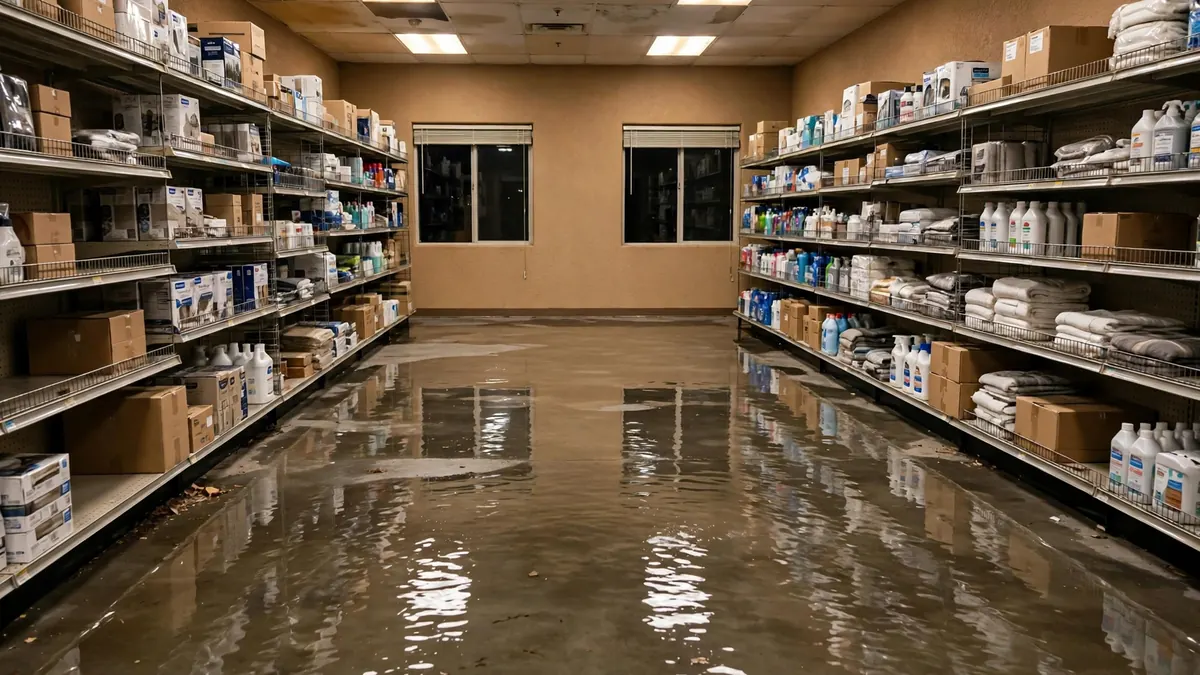 CommercialCommercial water damage: getting a business back openGetting a business back open after water damage means stopping the source, documenting everything, removing what cannot be dried, drying with commercial equipment, then rebuilding. Containing...
 Fire & SmokeSmoke damage cleanup after a house fire: what to do firstStart smoke damage cleanup only after the fire department clears the house. Then keep the AC off, photograph everything, throw out exposed food, and do not...
 Fire & SmokeHow to get smoke smell out of a house in ArizonaTo get smoke smell out of a house, remove the residue instead of covering it. Change the HVAC filter, wash soft goods, clean hard surfaces top...
Need help with damage right now?
Speak to a local restoration specialist on the 24/7 line, any time of day.
Call (520) 380-1551When you call: enter your ZIP code, then press 1 for water damage, 2 for fire damage or 4 for sewage backup.